

The Ultimate Guide to Choosing and Using a Car Battery Charger
Dec 01,2025
Dead battery at the worst moment? I’ve been there – stuck in a cold garage at 5 AM because I picked the wrong charger last winter.
The right car battery charger can save you hundreds of dollars and countless headaches. It keeps your battery healthy, starts your car every time, and can even double the battery’s life if you use it correctly.
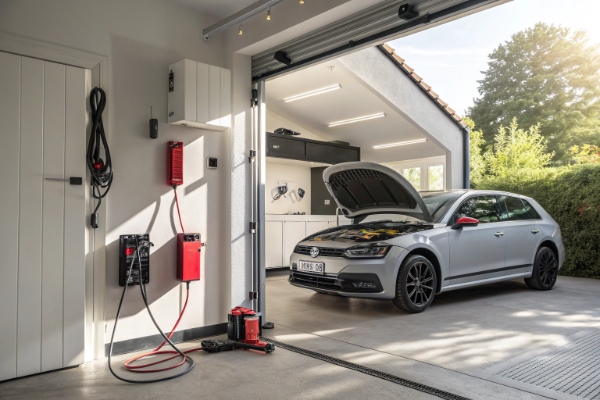
Car battery charger connected to a vehicle
Ready to stop guessing and start charging the smart way? Let’s dive in.
Why Does Investing in the Right Car Battery Charger Really Matter?
A weak battery is the number one reason cars won’t start. Most people only think about chargers when they are already late for work.
I once killed a brand-new AGM battery in six months because I kept using a cheap manual charger. It overcharged the battery every night. The plates warped and the battery was gone. That mistake cost me $220.
A good charger protects your battery, saves you money, and gives you peace of mind – especially if you have a second car, motorcycle, boat, or RV that sits for weeks.
Smart chargers can add 2–3 extra years to a normal lead-acid battery. For expensive lithium or AGM batteries, the savings are even bigger.
What Types of Car Battery Chargers Are Available, and Which One Do You Need?
Five main types exist. Each one has its own job.
- Standard/manual charger – cheap, fast, but easy to overcharge.
- Trickle charger – very slow (1–2 A), safe for long-term storage.
- Smart/maintainer charger – automatic, multi-stage, perfect for most people.
- Solar charger – good for boats or off-grid storage.
- Heavy-duty/jump-start charger – high amps for big trucks or dead batteries.
For daily drivers that sit a few days, a smart maintainer (6–10 A) is perfect. Browse our full range of smart car battery chargers and maintainers here — from portable 10A models to heavy-duty 200A units.
For seasonal vehicles like motorcycles or classic cars, go with a true maintainer (1–4 A). Fleet operators and workshops need heavy-duty models.
Which Key Features Should You Look for When Choosing a Battery Charger?
Not all chargers are equal. Here are the features I never skip.
Must-Have Safety Features
- Reverse-polarity protection – saves your charger if you mix up the clamps.
- Short-circuit protection – stops sparks.
- Over-temperature shutdown – prevents fire risk.
- Spark-proof clamps – important in garages full of fuel vapor.
Smart Charging Technology
Multi-stage charging (bulk, absorption, float) is a must. Automatic shut-off and maintenance mode keep the battery at 100 % without cooking it.
Temperature Compensation
Cold weather needs higher voltage. Hot weather needs lower voltage. A charger with temperature compensation adjusts itself and can add 10–15 % life to lead-acid batteries.
IP Rating for Real Life
If you charge outside or in a damp garage, get at least IP65. That means dust-tight and safe from water jets.
Stable Voltage for Modern Cars
New cars hate voltage drops during ECU flashing. A good charger holds 13.6 V rock-solid. I use this when I update software on customer cars.
Look for these features and you will never damage a battery again.
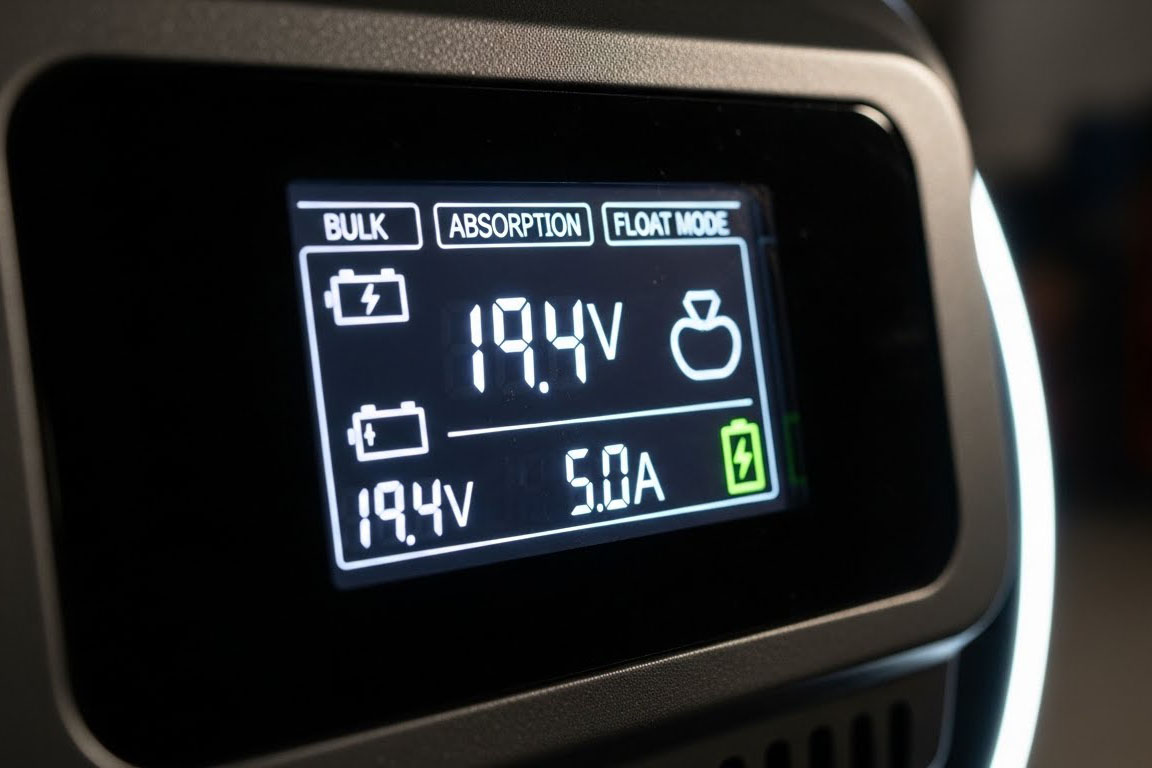
Smart car battery charger display showing stages
How Do You Match the Right Charger to Your Vehicle and Driving Habits?
Match the charger to your battery chemistry and your lifestyle.
Battery Chemistry First
- Flooded lead-acid → any charger works.
- AGM → needs AGM mode or it will undercharge.
- Gel → needs gel mode.
- LiFePO₄ → only use a lithium charger or you risk fire.
Driving Habits Matter
Daily short trips → battery never fully charges → get a 8–10 A smart charger and plug it in overnight once a week.
Weekend car or motorcycle → use a 1–4 A maintainer plugged in all the time.
RV or boat stored 6 months → solar maintainer or temperature-compensated smart charger.
Fleet or workshop → 40–100 A heavy-duty with engine-start function.
See our complete lineup of chargers matched to different vehicles and use cases — portable, smart maintainers, heavy-duty, and more.
Simple Rule for Amps
Charge at 10–20 % of the battery’s Ah rating. A 60 Ah battery likes 6–12 A. Faster is possible but generates more heat.
Pick the wrong match and you either wait forever or cook the battery. I match every charger to the battery sticker – it takes 30 seconds and saves years of life.
What Are the Most Common Charging Mistakes and How Can You Avoid Them Safely?
I see the same mistakes every week in my factory and from customers.
Top 5 Mistakes
- Connecting clamps while the charger is on → huge spark, damaged clamps.
- Charging in a closed garage → hydrogen gas builds up → explosion risk.
- Leaving a manual charger on for days → battery boils dry.
- Using a lithium charger on lead-acid → over-voltage damage.
- Ignoring temperature → cold battery stays half-charged all winter.
Safe Charging Steps (Every Time)
- Turn charger OFF.
- Connect red clamp to positive post.
- Connect black clamp to chassis ground (away from battery).
- Plug in and turn charger ON.
- When finished, turn charger OFF first, then remove clamps in reverse order.
Wear safety glasses, charge in a well-ventilated area, and never smoke nearby. Follow these steps and charging is 100 % safe.
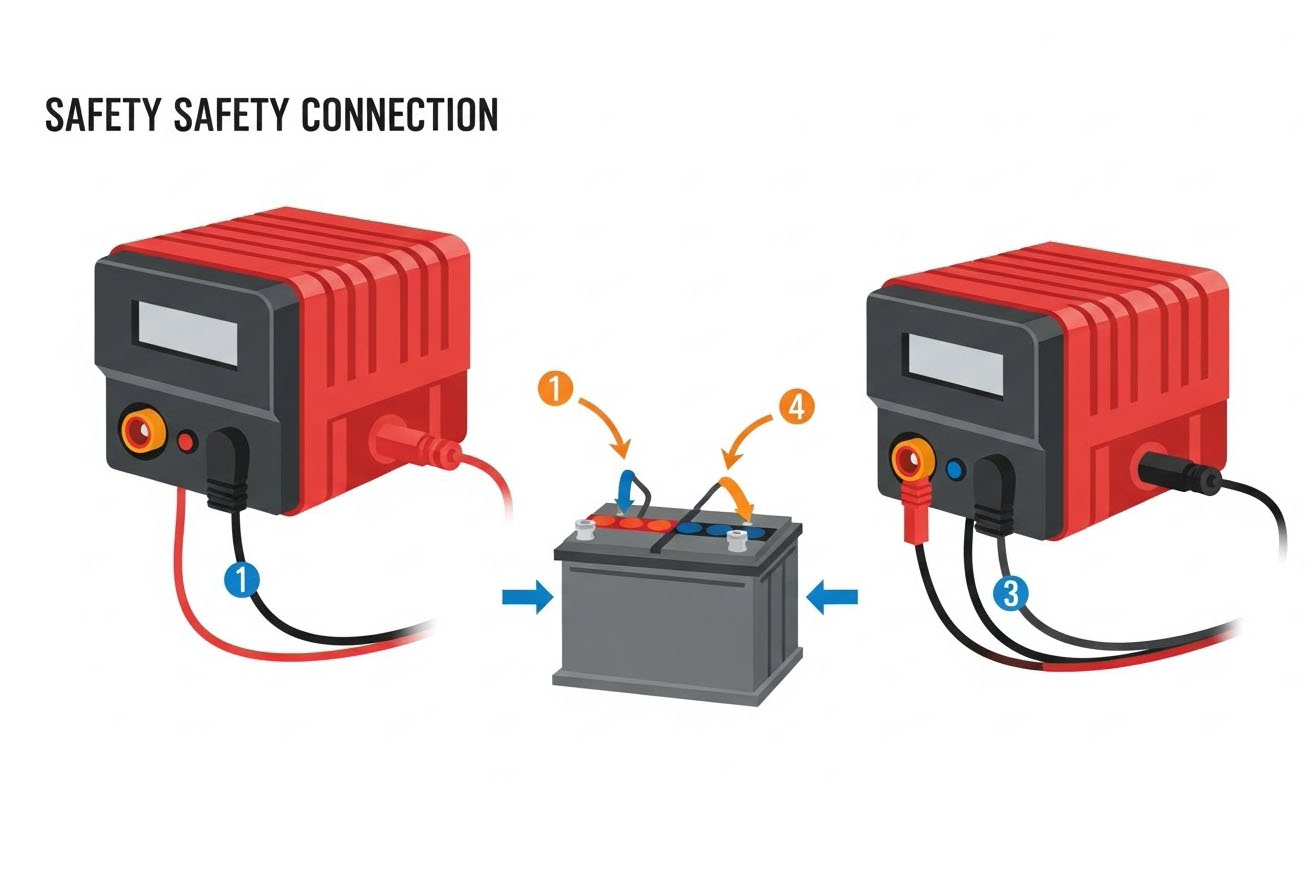
Step-by-step safe connection diagram
Conclusion
The right car battery charger is cheap insurance for your battery and your peace of mind. Match voltage and chemistry, choose smart features, and follow basic safety rules – your battery will thank you with years of reliable starts.
FAQ
Can I leave a smart charger plugged in all the time?
Yes. Smart maintainers switch to float mode and keep the battery perfect without overcharging.
How long does it take to charge a dead battery?
A 50 Ah battery with a 10 A charger takes about 6–8 hours from completely flat to full.
Is it safe to charge a battery inside the car?
Yes, if you connect the negative clamp to chassis ground and keep the area ventilated.
Do I need a special charger for lithium batteries?
Yes. Lithium chargers have a different voltage curve. Using a lead-acid charger can cause fire.
Can a charger fix a sulfated battery?
Some smart chargers have desulfation mode that can recover lightly sulfated batteries, but heavily sulfated ones are usually beyond repair.
--- END ---
Related Posts
Industry News

Industry News


Product News
