

How to Charge Your EV Faster Home vs. Public Charging?
Dec 31,2025
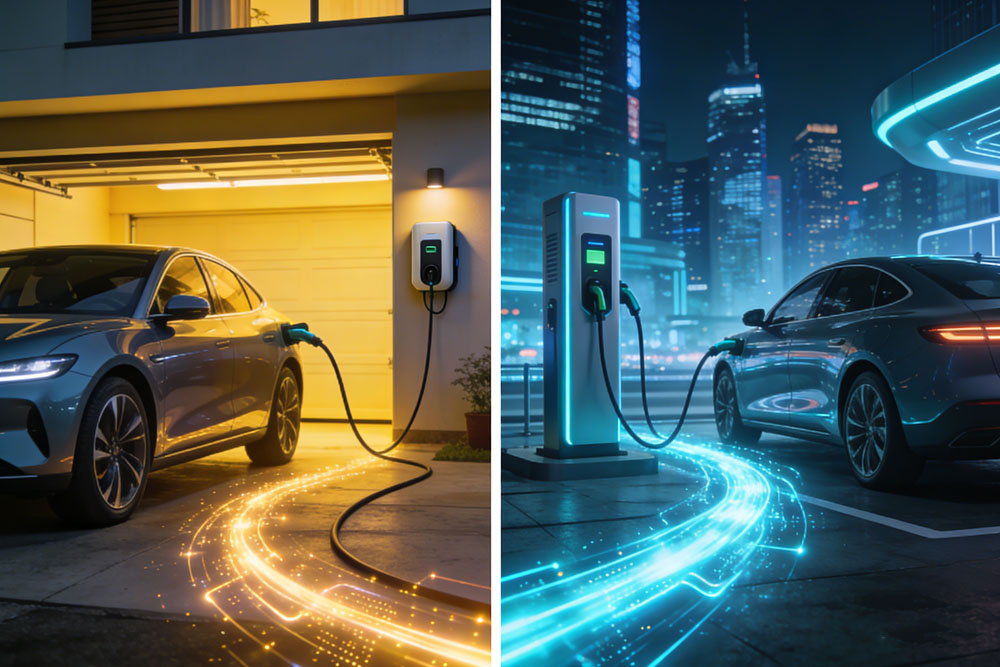
Electric vehicles are becoming increasingly common on the road. As more and more drivers switch from gasoline-powered cars to electric vehicles, a question arises: how and where to charge?
Charging infrastructure is now an integral part of daily driving, and understanding how it works can make driving an electric vehicle easier and more convenient.
Understanding different charging levels, home installation options, and charging performance under different conditions can help alleviate range anxiety and make daily driving smoother.
This guide will take you through the essentials of electric vehicle charging, from basic home charging solutions to fast public charging stations.
The EV Revolution and Charging Basics
Charging is no longer simply about stopping at a gas station, but rather taking place at home, at work, or at planned stops on long trips. Charging is more than just plugging in a power source; it involves power levels, connectors, smart controls, and grid integration.
Choosing the right charging solution can save time, maintain battery health, and integrate more naturally into daily life.
EV Charging Levels: Level 1, Level 2, and DC Fast Charging
Level 1 Charging: Basic and Accessible
Level 1 charging uses a standard 120V household outlet. This is the simplest form of EV charging and usually does not require additional equipment beyond the cable that comes with the vehicle.
- Charging speed is slow, often adding 3–5 miles of range per hour
- Works well for plug-in hybrids or very short daily commutes
- Convenient for overnight charging if driving needs are minimal
Level 1 charging is accessible, but it may feel limiting for drivers who rely on their EV for daily commuting.
Level 2 Charging: The Common Choice for Home and Public Use
Level 2 chargers operate on a 240V circuit, similar to what large household appliances use. This charging level is widely adopted for home garages, apartment complexes, and commercial parking areas.
- Typical charging speeds range from 20–40 miles of range per hour
- Compatible with most EVs sold in North America
- Often supports smart features such as scheduled charging and app control
For many drivers, Level 2 charging offers a balance between speed and practicality.
Level 3 / DC Fast Charging: Designed for Long-Distance Travel
DC fast chargers bypass the vehicle’s onboard charger and deliver power directly to the battery. These chargers are usually found along highways or at dedicated charging hubs.
- Can add significant range in 20–40 minutes
- Uses connectors such as CCS or NACS
- Charging speed may slow as the battery approaches higher states of charge
DC fast charging supports road trips but is not typically used as a daily charging solution.

How to Choose the Right Home EV Charger?
Power Output: Matching the Charger to Your Vehicle
Home chargers are often rated at 7kW, 11kW, or 22kW. The right choice depends on your vehicle’s onboard charger (OBC), which limits how much AC power the car can accept.
Installing a higher-rated charger than your vehicle supports will not increase charging speed, so checking vehicle specifications is a useful first step.
Tethered vs. Socketed Chargers
- Tethered chargers come with a permanently attached cable, offering quick plug-in convenience
- Socketed chargers require a separate cable, allowing flexibility across different connector types
The choice often comes down to personal preference and whether multiple vehicles may use the same charger.
Smart Charging Features
Many home chargers now include smart functions that support everyday convenience:
- App-based monitoring and control
- Scheduled charging to take advantage of off-peak electricity rates
- Integration with solar systems or home energy management platforms
- These features help charging fit naturally into household energy use.
Outdoor Installation and Protection Ratings
For outdoor setups, protection ratings such as IP55 or IP65 indicate resistance to dust and water. This is especially relevant for driveway or exterior wall installations exposed to weather.
EV Charger Installation: More Than Plug & Play
Electrical Load Assessment
Before installation, it’s necessary to evaluate whether your home’s electrical panel can support an EV charger. Some homes may require panel upgrades or load management solutions.
Why Professional Installation Matters?
Certified electricians ensure that wiring, grounding, and circuit protection meet local codes. Proper installation also supports warranty coverage and long-term safety.
Choosing the Installation Location
When selecting a location, consider:
- The vehicle’s charge port position
- Cable length and routing
- Potential future needs, such as a second EV
Planning ahead can reduce the need for changes later.
Charging Performance in Extreme Weather Conditions
Cold Weather Charging
Low temperatures can affect battery performance and charging speed. Many EVs slow charging rates in cold conditions to protect battery health.
Using features like battery preconditioning before charging can help improve performance during winter months.
Safety Features for All Conditions
Modern chargers often include built-in protections such as:
- Overload protection
- Residual current devices (RCD)
- Surge and lightning protection
These features support consistent operation in a wide range of environments.
Cost and Incentives: What to Expect
Upfront Costs
The total cost of home charging includes:
- Charger hardware
- Installation labor
- Possible electrical upgrades
- Costs vary depending on location and existing infrastructure.
Operating Costs and Off-Peak Charging
Charging at home is often less expensive than public fast charging. Many utilities offer lower rates during off-peak hours, making scheduled overnight charging more economical.
Incentives and Rebates
Government programs in many regions offer rebates or tax credits for EV charger installation. These incentives can reduce upfront expenses and encourage wider adoption.
Finding the Right Connector
The global electric vehicle market relies on several key connector standards. Understanding these standards is crucial for seamless integration into residential and public charging networks:
J1772: The universal standard for Level 1 and Level 2 AC charging in North America.
CCS: The industry standard for high-speed DC fast charging, adding two power pins to the Type 1 socket.
NACS: Originally a proprietary design by Tesla, NACS is rapidly becoming the new benchmark in North America, with major automakers transitioning to this compact, high-power interface.
Smart Infrastructure: OCPP and Network Intelligence
Modern EV chargers are no longer just “plugs”, they are intelligent nodes in the digital grid. Protocols like OCPP are the “universal language,” enabling hardware to communicate with management platforms.
- For homeowners and network operators, OCPP compliance is non-negotiable. It supports:
- Remote Diagnostics: Real-time troubleshooting without on-site visits.
- Load Balancing: Intelligent power distribution across multiple vehicles to prevent grid overload.
- Firmware Updates: Ensuring your hardware remains compatible with the latest EV software.
Conclusion
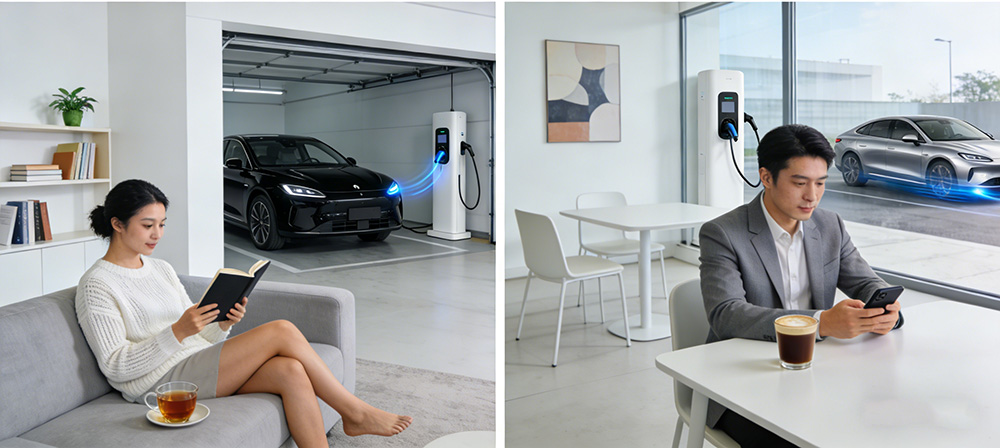
Electric vehicle charging is an indispensable part of daily electric vehicle use. From understanding charging levels to choosing the right home charging solution, informed decisions can make your driving experience more convenient and flexible.
As charging technology continues to evolve, choosing equipment that matches your driving habits, home environment, and future plans will help you transition to electric mobility more smoothly.
If you are considering a home charging solution, browsing available charger configurations or consulting a technical expert can help you find a solution that suits your current lifestyle and can be flexibly adapted to changing needs.
--- END ---
Related Posts
Industry News

Industry News


Product News
