

Cost Breakdown: Commercial EV Charging Station Installation
Aug 14,2026
Most commercial property owners focus only on the price of the EV charger itself. They then discover that electrical upgrades, trenching, and site work often cost more than the hardware. Budgets expand quickly and projects stall. At Parwatt I see this surprise happen on far too many commercial installations.
Commercial EV charging station installation costs vary widely by site conditions and power level. Level 2 projects commonly range from $3,500 to $15,000 per port all-in, while DC fast charging can reach from the high tens of thousands to well over $300,000 per port once electrical and civil work are included. Understanding the full cost structure is essential for realistic budgeting in 2026.
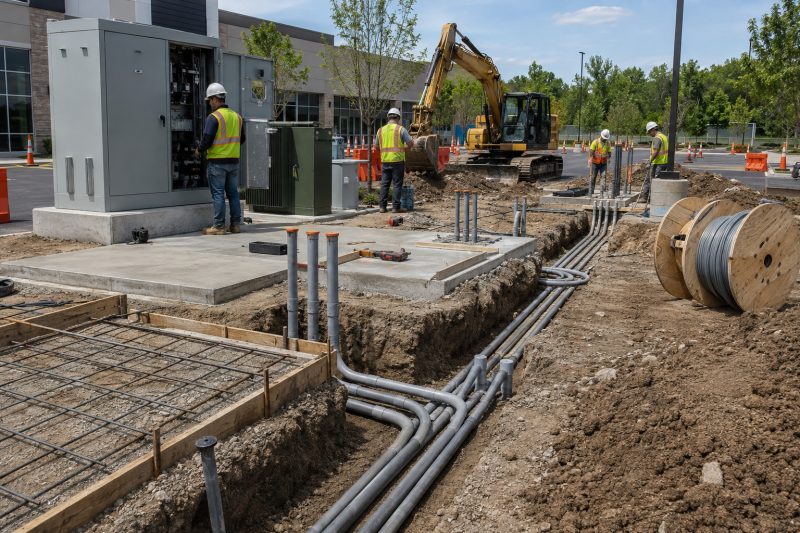
I have worked with real estate developers, charge point operators, and facility managers for years as general manager at Parwatt New Energy. We supply DC chargers and power modules used in commercial projects across many markets. I regularly review project budgets that looked complete on paper yet missed major electrical or civil items. Our products such as the FES-D30 DC EV Charger and modular systems are designed for efficient installation, yet the final cost still depends heavily on the site. In this article I break down the real cost components of commercial EV charging installations in 2026 and show how owners can keep projects under control.
Why Commercial EV Charging Costs Are Higher (and More Variable) Than Most Owners Expect?
Owners often start with the charger price and assume installation will be a modest add-on. In reality the distance to electrical capacity, the need for panel or transformer upgrades, and the amount of trenching or concrete work can multiply the total. Soft costs and compliance requirements add further layers. The final number becomes both higher and far more variable than the initial hardware quote suggested.
Commercial EV charging costs exceed simple hardware estimates because electrical infrastructure, trenching, civil work, and compliance items frequently dominate the budget. Site-specific factors create wide cost ranges, so early assumptions based only on charger price almost always understate the true investment required.
The Gap Between Hardware Price and Total Project Cost
I have reviewed many project files where the charger line item looked reasonable. The electrical and site-work lines then arrived at two or three times that amount. A parking space far from the main electrical room required long conduit runs. An older building needed a panel upgrade or even a new transformer. Each of these items moved the budget significantly.
Variability is extreme. Two sites with the same number of chargers can produce very different totals because one has spare capacity at the panel and the other does not. One site allows surface-mounted conduit while another requires full trenching through pavement. These differences explain why published “average” costs have such wide ranges.
Soft costs also accumulate. Engineering drawings, permitting, utility coordination, project management, and temporary traffic control each add percentage points. ADA compliance for accessible spaces introduces additional concrete and signage work. None of these items appear in a simple hardware quotation.
Here is a table that shows why totals rise and vary:
| Cost Driver | Why It Appears | Typical Impact on Budget | How Variable It Is |
|---|---|---|---|
| Electrical upgrades | Insufficient panel or service capacity | Often largest single add-on | Extremely site-dependent |
| Trenching and conduit | Distance from power source to parking | $75–$150 per linear foot common | High – depends on layout |
| Civil and surface work | Concrete, asphalt, bollards, striping | Adds thousands per stall | Moderate to high |
| Soft costs | Permits, engineering, management | 3–5% or more of project each | Moderate |
| Compliance (ADA, codes) | Accessible spaces and safety features | $3,000–$7,000 per accessible stall | Moderate |
This table reflects the patterns I see across commercial projects. At Parwatt we encourage owners to look beyond the charger price when they evaluate solutions such as those in our EV Charger Category. Hardware choice matters, yet site conditions usually decide the final number.
In 2026 the same pattern continues. Owners who begin with a complete site assessment avoid most of the later surprises. Those who start with only a hardware quote almost always face budget pressure once the full scope becomes clear.
The Common Budgeting Traps That Blow Up Project Costs
Several recurring assumptions cause commercial EV charging budgets to expand after the project starts. Owners assume existing electrical capacity is adequate. They underestimate the cost of distance and trenching. They treat network software as a one-time fee. They leave too little contingency. Each trap turns a planned number into an overrun.
Common budgeting traps include assuming existing electrical capacity is sufficient, underestimating trenching and distance costs, overlooking ADA and permitting expenses, treating network fees as one-time costs, and setting inadequate contingency. These errors regularly produce significant budget overruns on commercial projects.
Traps That Appear Again and Again
One of the most frequent traps is the belief that the current electrical service can support the new chargers without major work. A quick look at the panel is not enough. A proper load study often reveals that new circuits, a panel upgrade, or even a service upgrade is required. The cost appears late and is rarely small.
Distance is another major trap. When parking stalls sit far from the electrical room, trenching or directional boring becomes necessary. At typical rates the linear footage adds up quickly. Owners who measure the distance only on a drawing and apply a low unit cost are often surprised by the final civil invoice.
ADA and accessibility requirements are easy to under-budget. Accessible charging spaces need specific dimensions, pathways, signage, and sometimes additional concrete work. These items are mandatory in most commercial settings and carry real cost.
Network and software fees are sometimes entered as a single upfront number. In reality most platforms charge annual per-port fees for connectivity, payment processing, and management. The ongoing expense must be recognized in the operating budget as well as any capital model.
Contingency is frequently set too low. Unexpected rock, utility conflicts, or design changes occur on many sites. A thin contingency leaves no room for these items and forces difficult choices later.
Here is a table of the main budgeting traps:
| Trap | Why It Happens | Budget Consequence | Prevention |
|---|---|---|---|
| “Existing capacity is enough” | Visual inspection only | Late electrical upgrade costs | Professional load study |
| Under-estimated trenching | Optimistic distance or unit cost | Large civil overruns | Accurate site measurement and quotes |
| Light ADA allowance | Treated as minor compliance | Extra concrete and layout costs | Include full accessible-space scope |
| Network fees as one-time | Confusion with hardware pricing | Unexpected annual operating cost | Model multi-year software fees |
| Low contingency | Desire to keep total attractive | No buffer for surprises | 10–15% contingency on complex sites |
This table captures the issues I discuss most often with project owners. At Parwatt we support better early planning when customers evaluate our hardware, including the 30kW Power Module and 40kW Power Module. Clear scope definition protects both the budget and the schedule.
I have seen projects delayed for months because an electrical upgrade was discovered only after equipment was ordered. I have also seen owners absorb large unexpected civil costs because trenching quantities were never verified. Avoiding the common traps is largely a matter of disciplined early investigation rather than advanced engineering.
Full Cost Breakdown: Hardware, Electrical, Site Work, Soft Costs, and Ongoing Expenses
A complete commercial EV charging budget contains several distinct categories. Hardware is only one part. Electrical infrastructure, site and civil work, soft costs, compliance items, and ongoing operating expenses must all be quantified. Separating these categories makes the total understandable and controllable.
A full cost breakdown for commercial EV charging includes charger hardware, electrical upgrades and circuits, trenching and civil work, soft costs such as permitting and project management, ADA compliance, and ongoing network and maintenance expenses. Each category can materially change the final project total.
The Major Cost Categories Explained
Hardware covers the chargers themselves and any required power modules or mounting equipment. Prices vary by power level, number of ports, and features such as cable management or payment systems. Dual-port units can improve the per-port hardware cost when the site layout allows shared infrastructure.
Electrical work includes new circuits, conduit, wiring, panel upgrades, transformers, and utility interconnection. This category is often the largest variable. Sites with spare capacity keep the number lower. Sites that need a new service or long feeder runs see much higher figures.
Site and civil work covers trenching or boring, concrete pads or repairs, asphalt patching, bollards, wheel stops, striping, and signage. The distance from power source to stall and the surface conditions drive most of the cost in this group.
Soft costs include engineering and design, permitting fees, utility coordination, project management, and temporary traffic or safety control. These items typically add a noticeable percentage to the construction total.
ADA and accessibility work ensures compliant spaces, routes, and signage. The cost is real and should be estimated per accessible stall rather than treated as a minor allowance.
Ongoing expenses begin after commissioning. Network software and payment processing fees commonly range from a few hundred dollars per port per year. Preventive maintenance, repairs, and energy costs (including demand charges) form the rest of the operating picture.
Here is a structured breakdown of the cost components:
| Category | Typical Items Included | Notes on Magnitude |
|---|---|---|
| Hardware | Chargers, modules, mounts, cable management | Visible but often not the largest share |
| Electrical | Circuits, panels, transformers, interconnection | Frequently the biggest variable |
| Site / Civil | Trenching, concrete, asphalt, bollards, striping | Driven by distance and surface conditions |
| Soft Costs | Design, permits, management, traffic control | Usually percentage-based |
| Compliance | ADA spaces, pathways, signage | Per accessible stall |
| Ongoing | Network fees, maintenance, energy | Annual and recurring |
This organization helps owners see where money actually goes. At Parwatt we provide clear hardware pricing for products such as the Battery Buffered Ultra Rapid EV Charger so the remaining site-specific categories can be estimated accurately. Additional background on system choices is available in our article on Electric Vehicle Charging.
I recommend that every commercial budget show these categories separately. When a single number is presented without detail, it becomes impossible to manage or to compare alternatives. Transparency at the category level is the foundation of cost control.
Level 2 vs DC Fast Charging: Side-by-Side Cost Ranges and What Drives the Difference
Level 2 and DC fast charging produce very different total installed costs. Level 2 projects usually fall into a lower and narrower range. DC fast charging requires substantially more capital because of higher power equipment and heavier electrical infrastructure. The right choice depends on site needs, dwell time, and available electrical capacity.
Level 2 commercial installations commonly range from $3,500 to $15,000 per port all-in, while DC fast charging installations frequently range from the high tens of thousands to more than $300,000 per port. The difference is driven by power level, electrical infrastructure requirements, and the extent of site work.
Comparative Cost Realities
Level 2 hardware and installation remain relatively accessible for many commercial sites. Straightforward projects with nearby electrical capacity and simple mounting often land in the lower half of the published range. Dual-port configurations can further improve the per-port figure when parking layout permits.
DC fast charging changes the scale. The charger itself costs more. The electrical service must support much higher power, which often triggers panel upgrades, new transformers, or utility-side work. Trenching and civil costs also rise because the equipment is larger and the power feed is heavier. Mid-to-high power units therefore produce totals that are several times higher than Level 2 on a per-port basis.
Utilization and dwell time should guide the choice. Level 2 suits workplace, multifamily, and destination sites where vehicles stay for an hour or longer. DC fast charging suits locations with short stays and high turnover, provided the electrical capacity and budget can support it.
Cost sensitivity differs as well. Level 2 budgets are most sensitive to distance and basic electrical capacity. DC fast budgets are dominated by power availability and the need for major electrical infrastructure.
Here is a side-by-side comparison of the two approaches:
| Factor | Level 2 | DC Fast Charging | Practical Implication |
|---|---|---|---|
| Typical all-in range per port | $3,500–$15,000 | $18,000–$350,000+ | Level 2 far more accessible for many sites |
| Dominant cost drivers | Distance, basic electrical capacity | Power capacity, transformers, heavy feeders | Electrical work decides DC fast totals |
| Best-fit dwell time | 1 hour or longer | 20–45 minutes | Match technology to how long drivers stay |
| Sensitivity to site conditions | Moderate | Very high | DC fast needs careful site selection |
| Scalability path | Add ports or dual units | Modular power or additional cabinets | Plan electrical capacity for future growth |
This comparison helps owners avoid mismatched expectations. At Parwatt we supply both Level 2-compatible solutions and higher-power systems so customers can align equipment with their budget and use case. You can review the range of options in the EV Charger Category.
I have seen Level 2 projects delivered smoothly on modest budgets when the site had available capacity. I have also seen DC fast projects succeed when the electrical work was scoped early and incentives were captured. The technology decision and the cost model must be developed together.
How to Control Costs and Improve Project Economics Before You Break Ground
Installation cost is not fixed. Owners who perform proper early assessment, use existing capacity where possible, apply load management, phase the work, and pursue available incentives consistently produce better numbers. Experienced turnkey partners further reduce the risk of overruns.
Owners can control commercial EV charging costs by conducting professional site assessments, prioritizing locations with existing electrical capacity, using load management to avoid or defer upgrades, phasing deployment, capturing state and utility incentives, and working with experienced turnkey contractors. These steps keep projects closer to budget and improve long-term economics.
Practical Levers That Reduce Total Cost
Start with a professional site assessment and load study. Accurate knowledge of available capacity, distance to stalls, and surface conditions prevents the largest surprises. The cost of the study is small compared with the value of the information.
Prefer locations or stall positions that minimize electrical and civil work. Using existing capacity or short conduit runs delivers immediate savings. When new capacity is unavoidable, size it with future expansion in mind so a second upgrade is not required later.
Apply smart load management. Dynamic power sharing across multiple chargers can keep the total draw within existing limits and avoid or postpone a major service upgrade. Modular hardware designs support this approach and allow capacity to grow in steps.
Phase the installation when full deployment is not required on day one. Installing a first group of ports and adding more later spreads capital and lets real utilization data guide the next phase.
Pursue remaining incentives. Although some federal credits have changed, state programs, utility make-ready support, and local rebates still reduce net capital on many projects. Early application is essential because funds and windows are limited.
Select partners who have delivered commercial EV projects before. Experienced contractors manage permitting, utility coordination, and realistic contingency more effectively than teams learning on the job.
Here is a concise action list for cost control:
- Commission a professional site assessment and electrical load study early.
- Prioritize stall locations that minimize trenching and electrical distance.
- Evaluate load management to stay within existing service capacity.
- Design modular or phased deployment where appropriate.
- Identify and apply for all eligible state and utility incentives.
- Include adequate contingency based on site complexity.
- Choose contractors with proven commercial EV charging experience.
At Parwatt we support owners with hardware that fits efficient installation practices, including the 30kW Power Module and related solutions. Further guidance on system selection appears in our comparison of AC vs DC EV Charging.
Owners who treat cost as a set of controllable variables rather than a single fixed quote consistently deliver projects that stay closer to budget. The combination of early information, smart design, incentives, and experienced execution turns a highly variable expense into a manageable investment.
Conclusion
Commercial EV charging station installation costs in 2026 are highly site-specific. Level 2 projects commonly land between $3,500 and $15,000 per port all-in, while DC fast charging can range from the high tens of thousands to well over $300,000 per port once electrical upgrades, trenching, and utility work are included. At Parwatt we help owners understand these realities when they evaluate our chargers and power modules. Hardware is rarely the dominant expense—electrical infrastructure, distance to the panel, and civil work usually decide the final number. Accurate budgeting starts with a professional site assessment, realistic contingency, and a clear understanding of incentives still available at the state and utility level. Owners who treat cost as a controllable variable rather than a fixed quote consistently deliver projects that stay on budget and deliver stronger long-term returns.

--- END ---
Related Posts
Business Ideas

Business Ideas

Industry News

Business Ideas


