

Funding and Grants for EV Charging Projects
Aug 13,2026
High upfront costs stop many commercial EV charging projects before they start. Without grants and incentives the payback period stretches too long and the investment looks unattractive. Projects get delayed or cancelled. At Parwatt I see funding make the difference between a stalled plan and a completed station.
Funding and grants remain essential for making commercial and public EV charging projects financially viable in 2026. Federal programs such as NEVI and CFI, together with state initiatives and utility make-ready support, can cover a large share of capital costs when projects align with program goals. Securing the right mix of incentives significantly improves project economics and accelerates deployment.
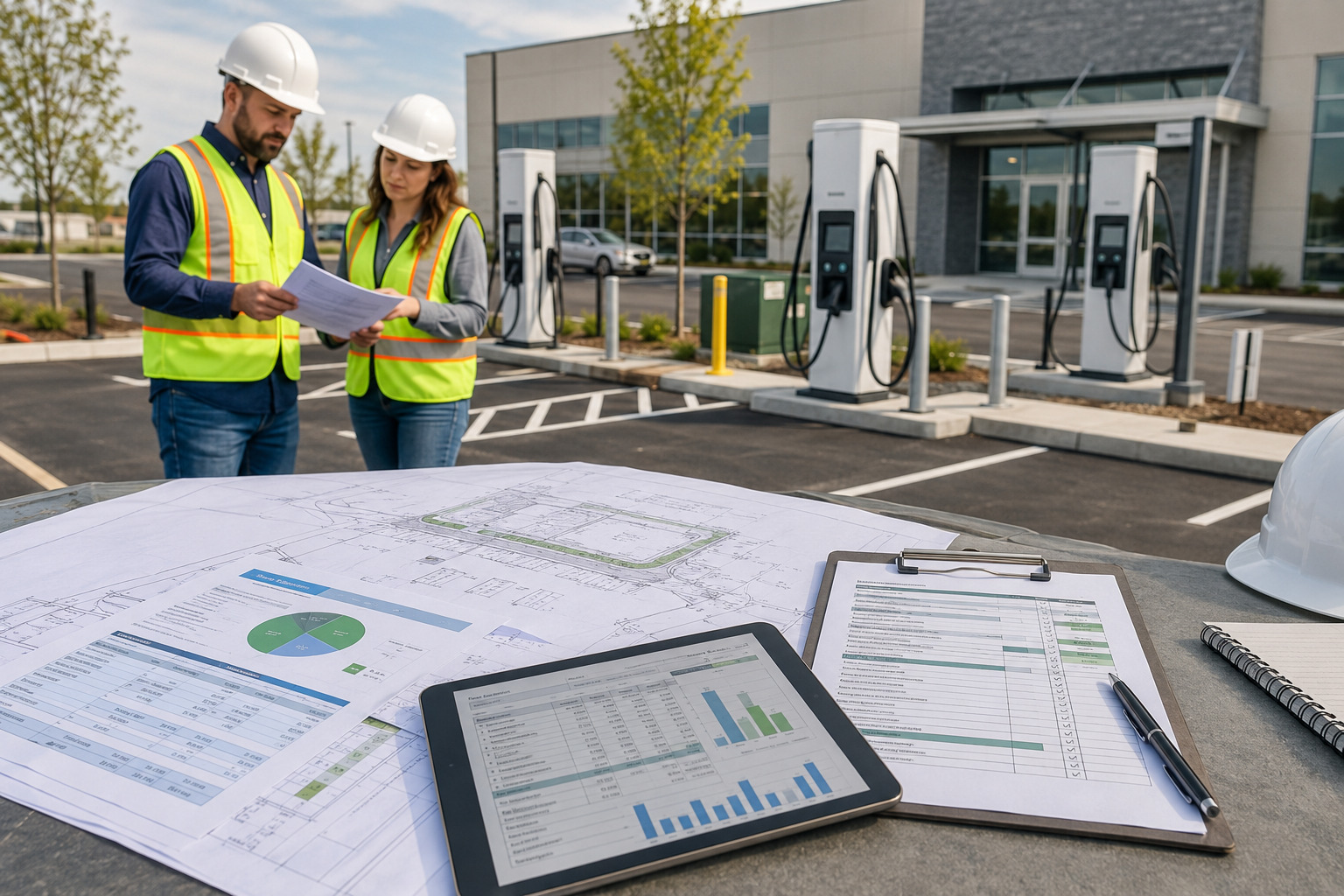
I have worked with developers, municipalities, and charge point operators for years as general manager at Parwatt New Energy. We supply DC chargers and power modules used in publicly accessible and commercial installations. I regularly review projects that only became viable after the right combination of federal, state, and utility funding was secured. Our equipment, including the FES-D30 DC EV Charger and modular systems, is designed to meet the technical standards most funding programs require. In this article I explain the main funding sources available in 2026 and how project owners can build a practical strategy to capture them.
Why Securing Funding Is Critical to Making Commercial EV Charging Projects Viable?
Commercial EV charging requires substantial capital for hardware, electrical upgrades, and site work. Without external funding the full cost falls on the owner and the payback period often stretches beyond comfortable limits. Many projects never move forward. Grants and incentives change the math by lowering the net investment and improving returns.
Securing funding is critical because high capital costs can make commercial EV charging projects difficult to justify on direct revenue alone. Grants and incentives reduce the net outlay, shorten payback periods, and allow more sites to move from planning into construction. Without this support many viable locations remain undeveloped.
The Financial Reality Without Incentives
I have examined project pro formas that looked marginal or negative until incentives were applied. A DC fast charging installation with significant electrical work can easily reach six figures per port before any offset. When utilization is still ramping up in the early years, the cash flow struggles to cover the full capital recovery.
Funding changes that picture. An 80 percent federal share under certain programs, combined with state rebates or utility make-ready contributions, can cut the owner’s net capital dramatically. The same project that looked unattractive suddenly shows a workable return.
Public and corridor sites feel the pressure most strongly. These locations often serve broader policy goals yet may not generate the highest private returns. Funding exists precisely to close that gap and ensure the network expands where it is needed.
Here is a table that shows why funding matters:
| Challenge Without Funding | What Happens | Project Outcome | How Funding Helps |
|---|---|---|---|
| High capital barrier | Full cost borne by owner | Project delayed or cancelled | Reduces net investment |
| Long payback | Revenue takes years to recover cost | Weak internal rate of return | Shortens payback period |
| Risk of low early utilization | Cash flow negative in early years | Reluctance to proceed | Improves early economics |
| Limited private appetite for public sites | Corridor and equity locations underserved | Incomplete network | Enables policy-priority sites |
| Competition for capital | Other investments preferred | EV charging deprioritized | Makes charging competitive |
This table reflects conversations I have with developers and public agencies. At Parwatt we see more projects reach construction when owners treat funding as a core part of the plan rather than an optional extra. Our solutions in the EV Charger Category are built to satisfy the technical requirements that funding programs impose.
In 2026 the need for external support remains strong. Electricity costs, electrical infrastructure expenses, and the desire for reliable high-power charging keep capital requirements elevated. Funding continues to be one of the most effective tools for turning plans into operating stations.
The Common Traps That Cause Applications to Fail or Leave Money on the Table
Many projects miss funding opportunities through avoidable mistakes. Applications arrive after deadlines. Sites fail to meet minimum technical or equity requirements. Matching funds are not secured. Owners focus only on federal sources and overlook state and utility programs. These traps leave money unclaimed and projects under-funded.
Common traps include missing application windows, failing to meet technical or equity standards, lacking site readiness and matching funds, ignoring state and utility programs, and under-preparing operational commitments. These errors cause rejections or result in projects that capture far less support than available.
Mistakes That Reduce Funding Success
One frequent trap is late engagement. Funding windows open and close on fixed schedules. Owners who begin the process only when construction is imminent often find the current round closed and the next one months away.
Technical and equity requirements are another common stumbling point. Programs set minimum standards for charger power, uptime, accessibility, data sharing, and location in underserved communities. Applications that do not clearly demonstrate compliance are scored poorly or rejected.
Matching funds and site control must be real. Many programs require the applicant to show that the remaining capital is available and that the site is secured. Vague commitments or incomplete ownership documentation weaken the application.
Focusing exclusively on large federal programs while ignoring state and utility incentives is a missed opportunity. In many cases the combination of sources produces a better overall result than any single program alone.
Operational and maintenance commitments are sometimes treated lightly. Funders want assurance that the chargers will remain in service for years and will meet reliability targets. Weak operations plans raise concerns about long-term performance.
Here is a table of the main application traps:
| Trap | Why It Happens | Result | Prevention |
|---|---|---|---|
| Missed deadlines | Late start on process | Ineligible for current round | Track calendars early |
| Incomplete technical compliance | Standards not fully addressed | Low scores or rejection | Map requirements to design |
| Weak equity narrative | Location or benefits not highlighted | Missed priority scoring | Document community benefits |
| Uncertain matching funds | Capital not fully committed | Application viewed as risky | Secure financing letters |
| Single-source focus | Only federal programs considered | Lower total support | Stack state and utility funds |
| Thin operations plan | Focus only on construction | Concerns about long-term viability | Include O&M and uptime approach |
This table highlights issues I see when reviewing unsuccessful or under-funded efforts. At Parwatt we help customers understand the technical standards that programs require so their equipment choices, such as the 30kW Power Module and 40kW Power Module, support compliance from the start.
I have watched strong sites lose funding simply because the application package was incomplete or arrived late. The difference between success and failure is often preparation and timing rather than the inherent quality of the location.
Key Federal, State, and Utility Funding Sources Available in 2026
Several major funding channels remain active in 2026. The NEVI Formula Program continues to direct money to states for corridor and public charging. The CFI competitive grant program supports both corridor and community projects with an emphasis on equity. State programs and utility make-ready offerings provide additional layers of support that can be combined with federal dollars.
Key funding sources in 2026 include the NEVI Formula Program, the Charging and Fueling Infrastructure (CFI) competitive grants, state-administered programs such as CALeVIP, and utility make-ready initiatives. Each source has distinct eligibility rules, priorities, and application processes that project owners must understand.
Overview of the Main Channels
The NEVI Formula Program allocates federal funds to states over a multi-year period. States then run their own solicitations or deployment plans focused first on Alternative Fuel Corridors and later on broader public access. The federal share is typically high, often 80 percent, and projects must meet national minimum standards.
The CFI Discretionary Grant Program awards competitive grants to eligible public entities. It supports both corridor and community charging, with a significant share directed toward rural, low-income, and underserved areas. Applications are evaluated on technical merit, equity impact, and project readiness.
State programs vary widely but remain important. California’s CALeVIP and related initiatives continue to offer substantial incentives for publicly accessible chargers, often with enhanced support for disadvantaged communities. Other states run their own NEVI implementation rounds and complementary rebate or grant programs.
Utility make-ready programs cover some or all of the electrical infrastructure work needed to prepare a site. These programs reduce one of the largest and most variable cost categories and can be stacked with equipment incentives in many territories.
Here is a structured view of the primary sources:
| Funding Source | Type | Primary Focus | Typical Applicants |
|---|---|---|---|
| NEVI Formula | Formula to states | Corridors then public access | States and their partners |
| CFI Grants | Competitive federal | Corridor and community equity | States, localities, tribes, public authorities |
| State programs (e.g. CALeVIP) | State rebates/grants | Publicly accessible charging | Varies – often broader eligibility |
| Utility make-ready | Utility infrastructure support | Electrical preparation | Site hosts and developers |
| Other (CMAQ, etc.) | Various | Air quality and mobility | Public and partnered projects |
This overview helps owners see the landscape. At Parwatt we design equipment to meet the technical requirements common across these programs so that funded projects can proceed with compliant hardware. You can explore suitable options in the EV Charger Category.
I recommend that every project team map the specific programs open in their state and utility territory at the time of planning. The combination of sources changes from year to year and from place to place. Local knowledge and current program status are essential.
NEVI vs CFI vs State/Utility Programs: How the Funding Streams Differ and Where They Overlap
The major funding streams serve different purposes and operate under different rules. NEVI is formula-based and state-administered with a strong corridor focus. CFI is competitive and places heavy emphasis on equity and community access. State and utility programs often provide more flexible or complementary support that can fill gaps left by federal sources.
NEVI provides formula funding through states with priority on Alternative Fuel Corridors and public access. CFI offers competitive grants that emphasize both corridors and underserved communities. State and utility programs add further options that can be combined with federal support to improve overall project economics.
Key Differences and Complementary Roles
NEVI funds flow to states according to a formula. Each state develops its own deployment plan and solicitation process. The early focus is on building reliable DC fast charging along designated corridors at required intervals. Later rounds expand to other publicly accessible locations. Projects must meet federal minimum standards and typically receive a high federal cost share.
CFI is competitive. Applicants submit proposals that are scored against published criteria. A substantial portion of the funding is reserved for projects that expand access in rural, low- and moderate-income, and disadvantaged communities. Eligible applicants are primarily public entities, so private developers usually need public partners.
State programs can be more accessible to a wider range of applicants. Some offer direct rebates to site hosts or businesses. Others focus on specific regions or equity tiers. Because they are designed to complement federal efforts, they often cover costs or locations that federal programs treat less generously.
Utility make-ready support targets the electrical infrastructure that is frequently the largest cost variable. By funding or performing the make-ready work, utilities reduce the capital burden on the site host and speed interconnection.
Here is a comparison of the main streams:
| Aspect | NEVI Formula | CFI Competitive | State / Utility Programs |
|---|---|---|---|
| Funding type | Formula to states | Competitive grants | Rebates, grants, make-ready |
| Primary priority | Corridors then public | Corridor + equity/community | Varies – often flexible or targeted |
| Typical applicants | States and partners | Public entities | Broader in many cases |
| Cost share | High federal share (often 80%) | Varies by award | Depends on program |
| Best use | Corridor build-out | Equity and community gaps | Stacking and gap-filling |
This comparison shows why a single-source strategy is rarely optimal. At Parwatt we encourage customers to consider the full stack of available support when they plan installations using our hardware, including solutions such as the Battery Buffered Ultra Rapid EV Charger. Additional context on system requirements appears in our article on Electric Vehicle Charging.
I have seen projects succeed by using NEVI or CFI for the core charging equipment and utility make-ready for the electrical work, then adding a state rebate for remaining costs. The layered approach consistently produces lower net capital than any individual program alone.
How to Build a Winning Funding Strategy and Application Roadmap
A successful funding strategy begins early and treats incentives as a core project component rather than a late-stage add-on. Owners must assess eligibility, prepare technical and site information, engage the right public partners, combine complementary sources, and meet all standards for technology, equity, and long-term operation.
Build a winning funding strategy by assessing project eligibility early, preparing site and electrical evaluations, partnering with eligible public entities when required, stacking federal, state, and utility sources, meeting technical and equity standards, and following program timelines with complete applications.
Practical Steps That Improve Success Rates
Start with a clear-eyed eligibility review. Determine whether the site and ownership structure fit NEVI, CFI, state, or utility programs. Identify any need for public partners early so relationships can be built before deadlines.
Conduct site and electrical assessments. Funders want evidence that the location is ready or can be made ready, that power is available or planned, and that the design meets minimum standards. Professional studies strengthen the technical narrative.
Engage state departments of transportation and program administrators. State NEVI plans and solicitation schedules are public. Early conversations clarify requirements and often reveal technical assistance resources.
Design the project to satisfy the highest-priority criteria. For equity-focused programs, document benefits to underserved communities. For corridor programs, demonstrate compliance with spacing, power, and reliability rules.
Stack funding intentionally. Map which costs each source can cover and structure the application package so the sources complement rather than conflict. Utility make-ready, state rebates, and federal grants can often be combined when rules are respected.
Prepare strong operations and maintenance commitments. Show how the chargers will be kept online, how data will be shared, and how long-term performance will be ensured. These elements address funder concerns about lasting impact.
Here is a practical roadmap:
- Map all potentially applicable federal, state, and utility programs for the site.
- Complete professional site and load assessments.
- Identify and engage required public partners early.
- Align project design with technical and equity requirements.
- Structure a stacked funding package that covers major cost categories.
- Prepare complete applications with clear narratives and supporting documents.
- Track deadlines and follow up after submission.
- Build operational plans that satisfy uptime and reporting rules.
At Parwatt we support project teams with equipment that meets the technical standards common to major funding programs. Our power modules and chargers are selected by owners who need compliant, reliable hardware. You can review options in the EV Charger Category and find additional system guidance in our comparison of AC vs DC EV Charging.
Owners who begin the funding process at the same time as site selection and design consistently capture more support and move faster to construction. Treating funding as an integral part of project development rather than a separate afterthought is the most reliable path to success.
Conclusion
Funding and grants remain one of the most powerful levers for making commercial and public EV charging projects financially feasible in 2026. At Parwatt we design our chargers and power modules to meet the technical standards that major programs require so funded projects can proceed with confidence. Federal programs such as NEVI and CFI, combined with state initiatives and utility make-ready support, can cover a substantial share of capital costs when projects are well-aligned with program goals. Success depends less on chasing every dollar and more on matching the right funding stream to the right site, preparing strong technical and equity narratives, and stacking complementary incentives. Property owners, developers, and municipalities that treat funding strategy as a core part of project planning—not an afterthought—consistently reduce net investment, accelerate deployment, and improve long-term viability.

--- END ---
Related Posts
Business Ideas

Business Ideas

Business Ideas

Business Ideas


