

Workplace EV Charging: Attracting and Retaining Talent
Aug 12,2026
Traditional employee benefits no longer fully address the needs of EV-driving talent. Commuting costs and range concerns grow as more staff switch to electric vehicles. Without workplace charging, employers lose a practical advantage in hiring and keeping people. At Parwatt I see this gap affect recruitment conversations more each year.
Workplace EV charging helps attract and retain talent by removing daily commuting friction and signaling a modern, sustainable culture. Employees gain convenient charging during work hours, lower personal costs, and reduced range anxiety. In 2026 organizations that offer reliable workplace charging strengthen both satisfaction and employer brand.
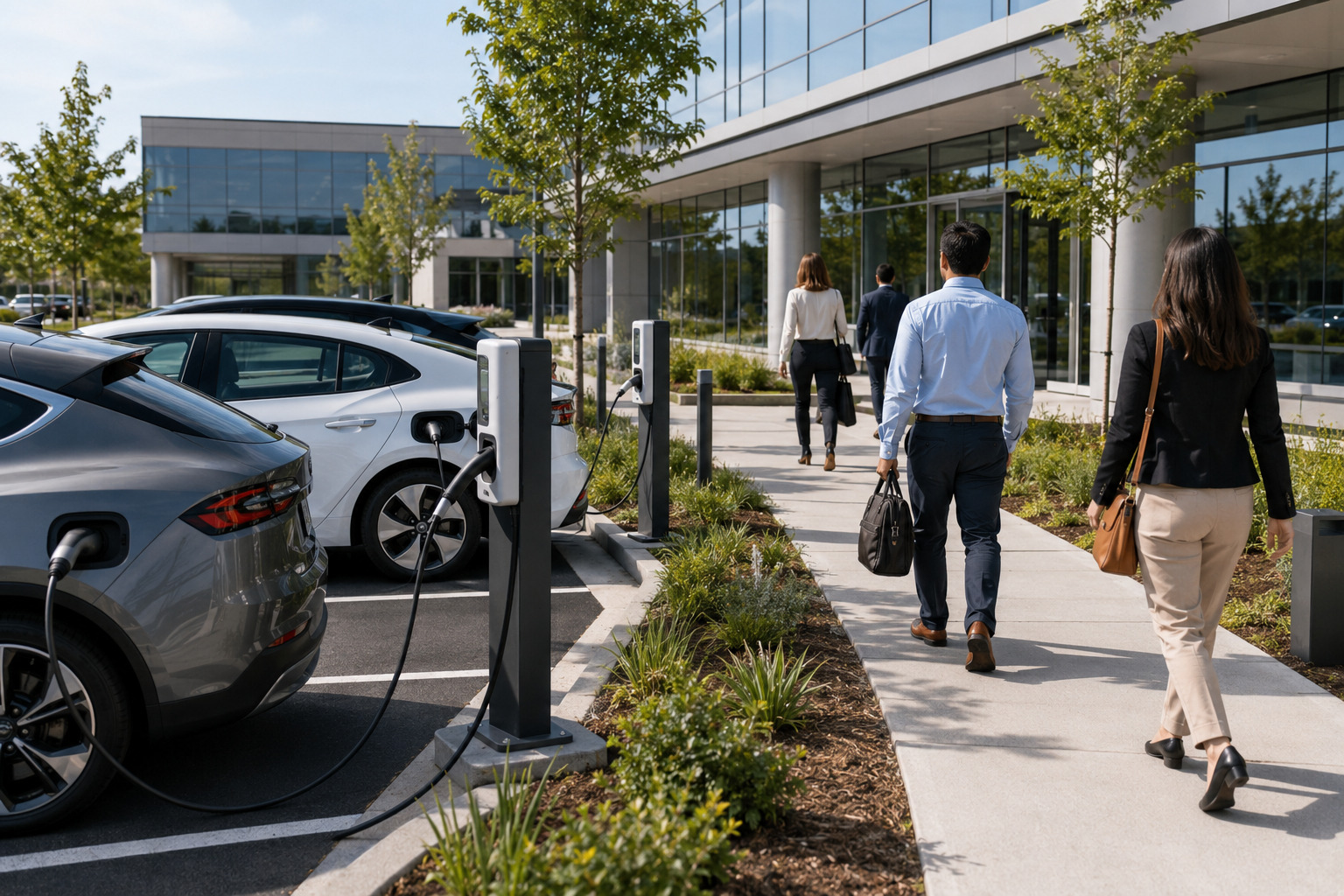
I have worked with corporate facility managers and workplace operators for years as general manager at Parwatt New Energy. We supply chargers and power modules used in employee parking areas across many sites. I regularly hear from HR and facilities teams who first viewed charging as a facilities cost and later recognized its value as a tangible employee benefit. Our equipment, including solutions in the EV Charger Category, is designed for reliable daily use so the talent benefit can actually be delivered. In this article I explain how workplace charging supports attraction and retention and how employers can implement it effectively in 2026.
Why Traditional Benefits Packages Are No Longer Enough to Win EV-Driving Talent?
Salary, health coverage, and flexible work remain important. Yet a growing share of candidates and employees drive electric vehicles and face real daily charging constraints. Those without reliable home charging feel the problem most acutely. When a workplace offers no solution, the employer becomes less competitive for this group.
Traditional benefits packages often miss the practical daily needs of EV drivers. Lack of workplace charging creates commuting friction, range anxiety, and extra personal cost, especially for employees who cannot charge at home. This gap turns into a quiet disadvantage in both recruitment and retention.
The Rising Importance of Commuting Convenience
I have spoken with employees who plan their entire workday around public charging stops. They leave early, arrive stressed, or avoid certain roles because the commute becomes complicated. When a competing employer offers on-site charging, the decision becomes easier for the candidate.
The share of workers who drive electric continues to climb. Many live in apartments or homes without dedicated parking or electrical capacity for a home charger. For these people, workplace charging is not a luxury. It is the difference between a smooth day and a constant logistical burden.
Younger talent and environmentally conscious professionals also weigh employer sustainability signals. The presence of workplace charging communicates that the organization understands modern mobility and is willing to support it. The absence of charging can quietly signal the opposite.
Here is a table that shows how the lack of workplace charging affects talent:
| Challenge for EV Employees | Daily Impact | Effect on Employer | Who Feels It Most |
|---|---|---|---|
| No home charging access | Must seek public stations | Higher turnover risk | Apartment and urban workers |
| Range anxiety on commute | Extra planning and stress | Lower job satisfaction | Longer-distance commuters |
| Added time and cost | Detours and public charging fees | Weaker retention | Cost-sensitive staff |
| Perception of outdated workplace | Employer seems behind | Harder attraction | Younger and green-focused talent |
| Uneven benefit access | Some colleagues have home charging | Fairness concerns | Mixed housing workforce |
This table reflects patterns I hear in discussions with corporate clients. At Parwatt we design workplace-appropriate solutions, including reliable Level 2 capable systems, so employers can close this gap without unnecessary complexity. You can explore suitable options in our EV Charger Category.
In 2026 the competitive pressure continues to increase. As EV adoption grows, the employers who still treat charging as optional will find themselves explaining why a basic daily convenience is missing. Those who act early turn the same issue into a visible advantage.
The Common Traps Employers Fall Into When Considering Workplace Charging
Many organizations approach workplace charging with the wrong frame. They view it only as a capital cost. They overlook employees who cannot charge at home. They install stations without clear usage rules and then face “squatting.” They also underestimate how strongly sustainability features influence candidate perception. These traps limit the talent value of the investment.
Common traps include treating charging purely as a cost, ignoring employees without home charging, failing to set fair usage policies, and underestimating the cultural signal of sustainability. These mistakes reduce utilization, create frustration, and weaken the benefit’s impact on attraction and retention.
Mistakes That Undermine the Benefit
One frequent trap is the cost-only perspective. When charging is evaluated solely as a facilities expense, the project competes poorly against other capital needs. The talent and satisfaction benefits never enter the calculation, so the program is delayed or under-scoped.
Another trap is assuming most employees can charge at home. In reality a substantial share cannot. Programs designed only for the home-charging majority leave the highest-need group underserved and reduce overall perceived fairness.
Policy gaps create operational problems. Without time limits, idle rules, or clear access guidelines, a few vehicles can occupy stations all day. Other employees then find no available charger and the benefit loses value.
Some employers install chargers but never communicate the benefit during recruitment or onboarding. Candidates never learn the amenity exists. Existing staff treat it as an afterthought rather than a valued part of the workplace experience.
Here is a table of the main traps:
| Trap | Why It Happens | Result | Better Approach |
|---|---|---|---|
| Cost-only view | Facilities budget framing | Project delayed or minimized | Include talent and satisfaction value |
| Ignoring non-home chargers | Assumption that most have home access | High-need employees underserved | Prioritize those without home options |
| No usage policy | Focus only on hardware | Stations blocked by idle vehicles | Set time limits and fair-access rules |
| Weak communication | Treated as infrastructure only | Low awareness and under-use | Promote as an employee benefit |
| Over-building power | Desire for “future-proof” DC fast | Unnecessary cost and complexity | Match Level 2 to workday dwell times |
This table captures issues I discuss with employers. At Parwatt we help organizations select practical hardware that supports fair, reliable workplace use, including efficient power modules such as the 30kW Power Module and 40kW Power Module.
I have seen workplaces install chargers and then watch frustration grow because a handful of cars sat connected long after they were full. I have also seen well-designed programs become quiet recruiting advantages. The difference is usually policy and communication rather than the chargers themselves.
How Workplace EV Charging Directly Supports Attraction, Satisfaction, and Retention
Workplace charging removes a daily friction point. Employees can arrive, plug in, and work while the vehicle gains range. Those without home charging gain a reliable solution. The convenience lowers stress and personal cost. At the same time the visible presence of charging signals that the employer is modern and attentive to employee needs.
Workplace EV charging supports talent goals by reducing commuting friction, eliminating range anxiety for many drivers, lowering personal energy costs, and demonstrating a practical commitment to sustainability. These effects improve daily satisfaction and strengthen both attraction and retention.
The Practical and Cultural Mechanisms
The most immediate benefit is convenience. A typical workday provides six to eight hours of parking time. Level 2 charging can deliver substantial range during that window. Employees no longer need to detour to public stations or worry about arriving home with a low battery.
Cost savings matter as well. Public fast charging is often more expensive than workplace or home rates. When the employer provides charging, either free or at a modest cost, the employee keeps more of their paycheck. Over a year the difference becomes noticeable.
Range anxiety declines. Drivers who once planned every trip around charging opportunities gain a predictable daily top-up. The mental load of managing state of charge drops, which improves the overall workday experience.
The cultural signal is real. Candidates evaluating offers notice whether a workplace supports electric vehicles. Employees who care about environmental impact see charging as evidence that the organization’s values extend beyond statements. This perception supports both acceptance of offers and longer tenure.
Here is a breakdown of how the benefit operates:
| Benefit Mechanism | Employee Experience | Talent Outcome |
|---|---|---|
| Daily convenience | Plug in and work | Higher satisfaction |
| Cost reduction | Lower personal charging expense | Stronger retention |
| Range confidence | Predictable workday top-up | Reduced stress |
| Sustainability signal | Visible employer action | Better attraction among values-driven talent |
| Fairness for non-home chargers | Reliable option for apartment dwellers | Broader appeal |
This structure shows why the impact exceeds simple energy delivery. At Parwatt we focus on reliable workplace solutions so the daily experience remains positive. Products such as the FES-D30 DC EV Charger and related systems are chosen by employers who need consistent performance.
I have heard employees describe workplace charging as one of the more tangible benefits they use every week. When the stations work and the rules are fair, the value compounds through daily convenience rather than occasional use. That frequency is what turns an amenity into a retention factor.
Evidence and Real Benefits: What Surveys and Employer Experience Show
Survey data and employer feedback consistently link workplace charging to higher interest, greater satisfaction, and stronger perceptions of the employer. Employees without home charging show especially strong interest. Organizations that offer the benefit report it as a useful differentiator in competitive hiring markets.
Surveys show strong employee interest in workplace charging and higher job satisfaction among those who have access. The benefit is particularly valuable for drivers without home charging and contributes to perceptions of a modern, supportive workplace culture.
What the Data and Experience Indicate
Interest levels are high. Large majorities of EV drivers without workplace access express interest in obtaining it. When the benefit is present, it ranks among the practical factors that influence how employees feel about their workplace.
Satisfaction scores show measurable differences. Employees with workplace charging access report higher job satisfaction in multiple surveys. The gap is large enough to matter in retention discussions, especially when combined with other culture and convenience factors.
Employers who have implemented programs often describe secondary effects. Candidates mention the chargers during interviews. Current staff use the stations regularly and view them as evidence that the organization listens to daily needs. Sustainability reporting also becomes easier when concrete actions such as workplace charging are in place.
Level 2 charging proves sufficient for most workplaces. The longer dwell time of a full workday aligns well with Level 2 power delivery. Employers avoid the higher cost and electrical demands of DC fast charging while still meeting the core need.
Here is a summary of observed benefits:
- High expressed interest among EV drivers who lack workplace access
- Higher reported job satisfaction when workplace charging is available
- Stronger value for employees without reliable home charging
- Positive contribution to employer brand and sustainability perception
- Practical fit of Level 2 charging with typical workday parking durations
- Reduced daily friction and planning burden for commuting drivers
At Parwatt we see the strongest results when employers combine reliable hardware with clear communication of the benefit. Our workplace-focused solutions help deliver the consistency that keeps satisfaction high. Additional guidance on charging system choices is available in our article on Electric Vehicle Charging.
I have compared workplaces that treat charging as a quiet facilities project with those that actively present it as an employee benefit. The second group captures far more of the talent value. Hardware alone is not enough; the organizational framing determines how much attraction and retention benefit is realized.
How to Design and Launch a Workplace Charging Program That Actually Delivers Talent Value
A successful workplace charging program starts with a clear understanding of employee needs and electrical capacity. It prioritizes Level 2 charging for most sites, establishes fair usage rules, communicates the benefit openly, and phases deployment so early experience guides later expansion. Incentives and utility support can further improve the economics.
Design an effective workplace program by assessing demand and capacity, selecting appropriate Level 2 solutions, creating clear and fair usage policies, communicating the benefit as part of the employee value proposition, and phasing installation while capturing available incentives.
Practical Steps for Implementation
Begin with a needs assessment. Survey employees about current EV ownership, home charging access, and commuting patterns. Combine the responses with an electrical capacity review so the design matches both demand and infrastructure reality.
Choose Level 2 as the default for most workplaces. The power level aligns with workday parking durations and keeps electrical requirements manageable. Higher-power options can be added later for specific use cases if data supports them.
Create usage policies before the stations open. Time limits, idle fees or move-request processes, and clear access rules prevent a small number of vehicles from blocking the benefit. Fairness protects long-term value.
Communicate the program as an employee benefit. Include it in recruitment materials, onboarding, and internal announcements. Make certain candidates and staff understand that the organization invested in their daily convenience.
Phase the rollout. Install a first group of stations, gather utilization and feedback data, then expand. This approach controls capital and allows policy refinement based on real behavior.
Explore incentives. Utility rebates, state programs, and other support can reduce net cost and improve the internal business case.
Here is a concise implementation list:
- Survey employees on EV ownership and home charging access.
- Conduct an electrical capacity and site assessment.
- Select reliable Level 2 equipment matched to expected use.
- Write and communicate clear time-limit and access policies.
- Promote the benefit in hiring and internal channels.
- Start with a limited phase and expand on the basis of data.
- Apply for applicable utility and public incentives.
- Monitor utilization and satisfaction, then adjust.
At Parwatt we help employers select hardware that supports these steps. Our power modules and chargers, including the Battery Buffered Ultra Rapid EV Charger, are built for dependable daily operation. Further reading on system design appears in our comparison of AC vs DC EV Charging.
Employers who follow a structured approach turn workplace charging into a working talent tool rather than an under-used amenity. The combination of right-sized hardware, fair rules, and clear communication delivers the daily convenience and cultural signal that support both attraction and retention.
Conclusion
Workplace EV charging has evolved from a nice-to-have amenity into a practical talent tool. As more employees drive electric vehicles—and as return-to-office policies bring commuting costs back into focus—convenient, reliable charging at work reduces friction, lowers personal expenses, and signals that an employer is modern, sustainable, and employee-centric. At Parwatt we design chargers and power modules for the reliable workplace performance that makes this benefit real. Organizations that treat charging as part of their benefits and culture strategy, rather than a pure facilities expense, gain an edge in attracting environmentally conscious and high-value talent while improving day-to-day satisfaction for existing staff. Start with a clear needs assessment, fair usage policies, and visible communication of the benefit, and workplace charging can become one of the more cost-effective retention investments available.

--- END ---
Related Posts
Business Ideas

Business Ideas

Business Ideas

Business Ideas


