

Wet/Dry vs. Dry-Only Car Vacuums: Which Should Distributors Stock?
Oct 12,2026
The wrong vacuum type creates returns and customer disappointment. Drivers may use a dry-only vacuum on liquid spills and damage the motor, or they may expect more liquid capacity from a compact wet/dry model than it can safely handle. Wrong positioning leads to motor failure, odor, leakage and after-sales complaints. At Parwatt I see these mismatches raise support costs for distributors every season.
Dry-only car vacuums suit everyday dust, crumbs, sand and hair and form the practical core range for most retail and e-commerce channels. Wet/dry models add value for spills and damp debris when they include genuine liquid management. In 2026 distributors who verify real wet capability and keep the assortment focused reduce returns and improve sell-through.
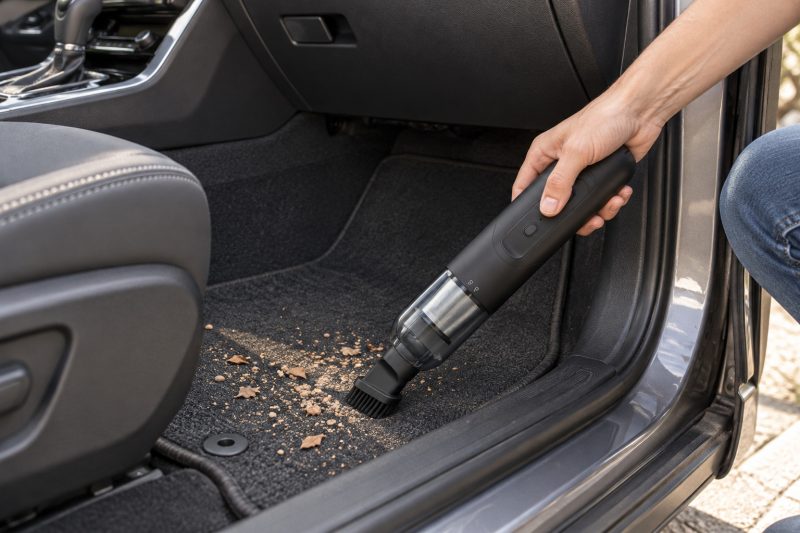
I have worked with automotive accessory wholesalers and importers for years as general manager at Parwatt New Energy. We supply cordless car vacuums and related car-care products. I regularly review assortments where wet/dry claims were based only on a washable filter, or where dry-only units were returned after customers tried to pick up spilled drinks. Our range in the car vacuum cleaner category is positioned so partners can match each model to real customer use. In this article I explain how wet/dry and dry-only car vacuums differ and which types distributors should stock in 2026.
Why the Wrong Vacuum Type Creates Returns and Customer Disappointment?
Customers buy car vacuums for specific jobs. When the product cannot safely do the job they expect, they return it or leave negative reviews. Dry-only units that meet liquid will often suffer motor damage or persistent odor. Compact wet/dry units that offer only a small liquid capacity disappoint users who expected to clear larger spills. Both outcomes create the same commercial result: higher returns and weaker brand trust.
The wrong vacuum type creates returns because customers either misuse dry-only machines on liquids or over-expect liquid capacity from portable wet/dry designs. Motor damage, odor, leakage and unmet expectations follow.
How Mismatches Appear in the Field
I have examined returned dry-only vacuums whose motors failed after liquid entered the airflow path. The customer had used the unit on a spilled soft drink. The filter may have been washable, yet the machine was never designed to keep liquid away from the motor and electronics.
Wet/dry models generate a different complaint pattern. Users fill the small collection chamber quickly, tilt the machine, or fail to empty and dry it after use. Leakage, sludge and odor appear, and the product is described as “hard to clean” or “not truly wet/dry.”
Unclear packaging amplifies both problems. If the front of the box emphasizes “wet/dry” without stating usable liquid volume and cleaning steps, customers form the wrong expectation before they open the product.
Channel placement also matters. A wet/dry unit sold into a pure convenience e-commerce channel without clear instructions produces more support tickets than the same unit sold through a channel that can explain its proper use.
Here is a table that links wrong type to commercial outcomes:
| Mismatch | Typical Customer Action | Product Result | Business Impact |
|---|---|---|---|
| Dry-only used on liquid | Picks up spilled drink | Motor damage / odor | Warranty claims |
| Overstated wet capacity | Attempts large spill cleanup | Overflow or leakage | Returns and poor reviews |
| Unclear wet/dry claim | Assumes full wet capability | Misuse and disappointment | Support load |
| Complex wet maintenance | Skips cleaning / drying | Sludge and odor | Negative ratings |
| Wrong channel placement | Unprepared buyers | High return rate | Margin erosion |
This table reflects the patterns I discuss with distributors. At Parwatt we position each model in the car vacuum cleaner category according to its real capability so partners can avoid these mismatches.
In 2026 online reviews make misuse and unmet expectations visible quickly. Clear type selection and honest packaging remain essential.
The Wet/Dry Marketing Claims Buyers Should Verify Carefully
Many products use language that suggests wet capability without providing a true liquid-management system. A washable filter, the ability to pick up slightly damp crumbs, or a rubber nozzle does not automatically mean the vacuum can safely collect free liquid. Buyers must verify the claim with design evidence and test results.
Wet/dry marketing claims that buyers should verify include washable filters, damp-debris pickup and rubber nozzles presented as proof of liquid capability. Genuine wet/dry design requires a liquid collection path, sealing and motor protection.
Claims That Need Supporting Evidence
A washable filter is useful for dry maintenance. It does not create a sealed liquid path or protect the motor from water. Treating “washable filter” as equivalent to “wet/dry” is one of the most common specification errors.
Some units can tolerate a small amount of moisture in debris without immediate failure. That tolerance is not the same as controlled liquid pickup with defined capacity and overflow behavior.
Rubber or soft nozzles improve surface contact and reduce scratching. They say nothing about the internal liquid path or shutoff method.
Packaging that shows a liquid spill without stating capacity, filter arrangement for wet mode, or cleaning steps encourages over-expectation. The claim must be matched by the manual and by laboratory results.
Buyers should request drawings of the liquid path, description of overflow protection, filter instructions for wet use, and test data for leakage and motor-compartment condition after liquid runs.
Here is a table of claims that require verification:
| Claim Presented | Why It Is Incomplete | What to Verify Instead |
|---|---|---|
| Washable filter | Not a liquid system | Liquid path, seals, motor protection |
| Handles damp debris | Not free-liquid capability | Measured liquid capacity and shutoff |
| Rubber nozzle | Surface contact only | Internal wet design features |
| “Wet/dry” on packaging | May lack real design | Drawings, manual, test results |
| Easy clean claim | May still trap sludge | Disassembly and drying procedure |
This table keeps evaluation disciplined. At Parwatt we require clear evidence before any wet/dry positioning is approved for products in the car vacuum cleaner category.
I advise buyers to reject wet/dry claims that rest only on filter language. Design and test data are the only reliable basis.
How Wet/Dry and Dry-Only Car Vacuums Differ in Design and Use
Wet/dry and dry-only designs differ in liquid collection, anti-backflow structure, full-tank protection, sealing, filtration arrangement, cleaning requirements, weight, dust capacity and daily maintenance. These differences decide which jobs each type can safely perform and how much care the user must give the product.
Wet/dry and dry-only car vacuums differ in liquid handling, sealing, filtration setup, cleaning effort, weight and maintenance. Dry-only designs stay simpler and lighter; wet/dry designs add liquid management at the cost of more care after use.
Design and Use Differences
Dry-only vacuums route air and dry debris through a dust cup and filter to the motor. They have no dedicated liquid chamber or float-type shutoff. Their advantages are lower weight, simpler emptying and easier everyday maintenance for crumbs, sand, dust and hair.
Wet/dry vacuums add a collection volume that can hold liquid, seals that keep liquid away from the motor, and usually a method to stop intake when the liquid reaches a set level. Some use a float; others use a different geometry or sensor. The exact method must be understood and tested.
Filter arrangements often change between modes. A foam or special wet filter may be required for liquid work, while a fine dry filter is used for normal dust. The manual must state which filter is used in which mode and whether any filter stays installed for both.
After wet use the tank, seals, filter and nozzle should be emptied, rinsed and fully dried. Residual liquid mixed with dust creates sludge and odor if this step is skipped. Easy disassembly is therefore a practical product feature, not only a convenience.
Weight and size usually increase with wet capability because of the extra chamber and sealing parts. Portable car use still demands a design that can be handled with one hand and stored in a small space.
Here is a design comparison:
| Design Aspect | Dry-Only | Wet/Dry | User Impact |
|---|---|---|---|
| Liquid collection | Not designed | Dedicated volume + seals | Spill capability vs dry-only limit |
| Overflow protection | Not applicable | Float or equivalent | Safety when full |
| Filter arrangement | Single dry system | Often mode-specific | Correct setup required |
| Cleaning after use | Empty dust / clean filter | Empty, rinse, dry thoroughly | Higher maintenance |
| Weight / complexity | Lower | Higher | Portability trade-off |
| Typical debris | Dust, crumbs, sand, hair | Above + liquid spills | Broader job range |
This comparison keeps expectations realistic. At Parwatt we document these differences clearly for models in the car vacuum cleaner category.
I recommend that buyers inspect the liquid path and filter instructions on every wet/dry sample before accepting the claim. The physical design is more reliable than the front-of-box wording.
Which Vacuum Type Fits Each Customer and Sales Channel
Dry-only models fit the majority of everyday vehicle-cleaning tasks and therefore suit automotive retailers, e-commerce and most general consumers. Wet/dry models fit households, fleets, dealerships and users who regularly deal with drink spills or damp debris. Matching type to customer and channel improves sell-through and reduces misuse returns.
Dry-only vacuums fit mainstream retail and e-commerce for everyday dry debris. Wet/dry vacuums fit spill-prone users, fleets and garage environments when the wet design is genuine. Channel and customer use should decide the mix.
Customer and Channel Fit
Most routine car cleaning involves dry material. A reliable dry-only vacuum that is light, easy to empty and strong on crumbs and sand satisfies the largest customer group. Automotive specialty stores and major e-commerce listings perform well with a clear dry-only core range.
Customers who frequently transport children, drinks or sports equipment meet liquid spills more often. For them a verified wet/dry model reduces the temptation to misuse a dry-only unit and can justify a higher price point.
Fleet and dealership users often need both dry cleaning and occasional liquid pickup. A wet/dry unit with clear capacity limits and robust sealing can serve these accounts if maintenance discipline is realistic for the operator.
Pure convenience channels with minimal product explanation should stay cautious with wet/dry models. Without clear on-pack limits and cleaning steps, return rates rise. Channels that can demonstrate the product or supply better instructions handle wet/dry more successfully.
Price tier also guides placement. Entry-level assortments usually perform better with strong dry-only models. Mid-to-premium assortments can carry one well-validated wet/dry option as a differentiated SKU.
Here is a channel and customer guide:
| Customer / Channel | Preferred Type | Reason | Caution |
|---|---|---|---|
| General retail / e-commerce | Dry-only core | Everyday dry debris, simple use | Keep wet claims honest |
| Spill-prone households | Wet/dry (verified) | Drink and damp debris | Capacity and cleaning clarity |
| Fleets / dealerships | Wet/dry or both | Mixed dry and liquid jobs | Operator maintenance |
| Value / entry assortments | Dry-only | Cost and simplicity | Avoid weak wet claims |
| Premium / specialist | One strong wet/dry | Differentiation | Prove liquid performance |
This guide helps distributors allocate inventory. At Parwatt we support both types inside the car vacuum cleaner category so partners can build a channel-appropriate mix.
I advise each distributor to list the main jobs their customers actually perform. The list usually shows that dry-only should remain the volume base.
How to Build and Test the Right Wholesale Product Mix
A practical mix starts with proven dry-only best-sellers that cover mainstream demand, then adds wet/dry models only where local use and channel support justify them. Before ordering, wet/dry candidates must pass liquid pickup, pour, full-tank, leakage, cleaning and repeat-cycle tests so the capability is real.
Build the mix around dry-only volume models and add wet/dry only after verified liquid performance. Test liquid capacity, overflow behavior, leakage, cleaning and repeated use before committing inventory.
Assortment and Validation Steps
Select one or two strong dry-only models that deliver reliable suction, acceptable runtime and easy emptying. These form the core that most customers will buy.
Review local and channel demand for spill handling. If inquiries and competitor sell-through show real wet/dry interest, shortlist candidates with clear liquid specifications.
For each wet/dry candidate, measure usable liquid capacity, pickup rate, behavior when tilted, overflow or shutoff response, and condition of the motor area after liquid tests.
Empty, clean and dry the unit according to the manual. Confirm that the process is practical and that seals and filters can be maintained without special tools.
Run repeated wet and dry cycles to expose any decline in sealing or filter performance.
Confirm packaging and manual language state capacity limits, prohibited liquids and cleaning steps in plain terms.
Place limited trial quantities in the intended channels. Track return reasons and customer questions before increasing wet/dry depth.
Keep the total number of overlapping models low so sales teams and customers can understand the difference between dry-only and wet/dry options.
Here is a mix-and-test checklist:
- Core dry-only models selected for volume demand
- Wet/dry candidates shortlisted only with real demand signal
- Liquid capacity and pickup speed measured
- Overflow / shutoff and tilt leakage checked
- Motor-compartment condition inspected after wet tests
- Cleaning and drying procedure validated
- Repeated cycle performance recorded
- Packaging and manual clarity confirmed
- Limited channel trial before scale-up
- Return and inquiry data used to adjust mix
At Parwatt we help partners validate both dry-only and wet/dry models before volume orders. The same evidence-based approach supports the car vacuum cleaner category and complementary products on our main site, including related lines such as car air pumps and car battery chargers.
Distributors who keep dry-only as the foundation and add wet/dry only after proof consistently achieve cleaner sell-through and lower return rates. The assortment stays understandable and the claims stay defensible.
Conclusion
Most distributors should treat dry-only car vacuums as the core range because they are lighter, simpler to maintain, and suitable for the dust, crumbs, sand and hair found in everyday vehicle cleaning. At Parwatt we develop both dry-only and genuine wet/dry designs so partners can match real customer needs. Wet/dry models can add value for customers who frequently handle drink spills, damp debris or more demanding garage work, but the feature must be supported by a genuine liquid-management design. Before stocking a wet/dry model, buyers should verify its liquid capacity, filter instructions, shutoff or overflow protection, sealing, cleaning procedure and restrictions on hazardous liquids. A focused assortment—supported by clear packaging and user instructions—is usually more profitable than offering many models with overlapping or poorly defined functions.

--- END ---
Related Posts
Industry News

Business Ideas

Business Ideas

Business Ideas


