

Charging During Peak Hours: Tips and Smart Solutions
Aug 19,2026
Charging an EV during peak evening hours quietly raises electricity bills for drivers and commercial sites. The same window that brings people home also stresses the grid and triggers higher rates or demand charges. Costs climb while vehicles still need to be ready the next day. At Parwatt I see these peak-hour patterns reduce the economic advantage of electric driving every month.
Charging during peak hours inflates electricity costs for both individual drivers and commercial operators. Time-of-use rates, smart chargers, and simple scheduling shift most charging into cheaper off-peak windows—often overnight—without changing daily routines. In 2026 these tools deliver meaningful savings, lower grid stress, and keep vehicles ready when needed.
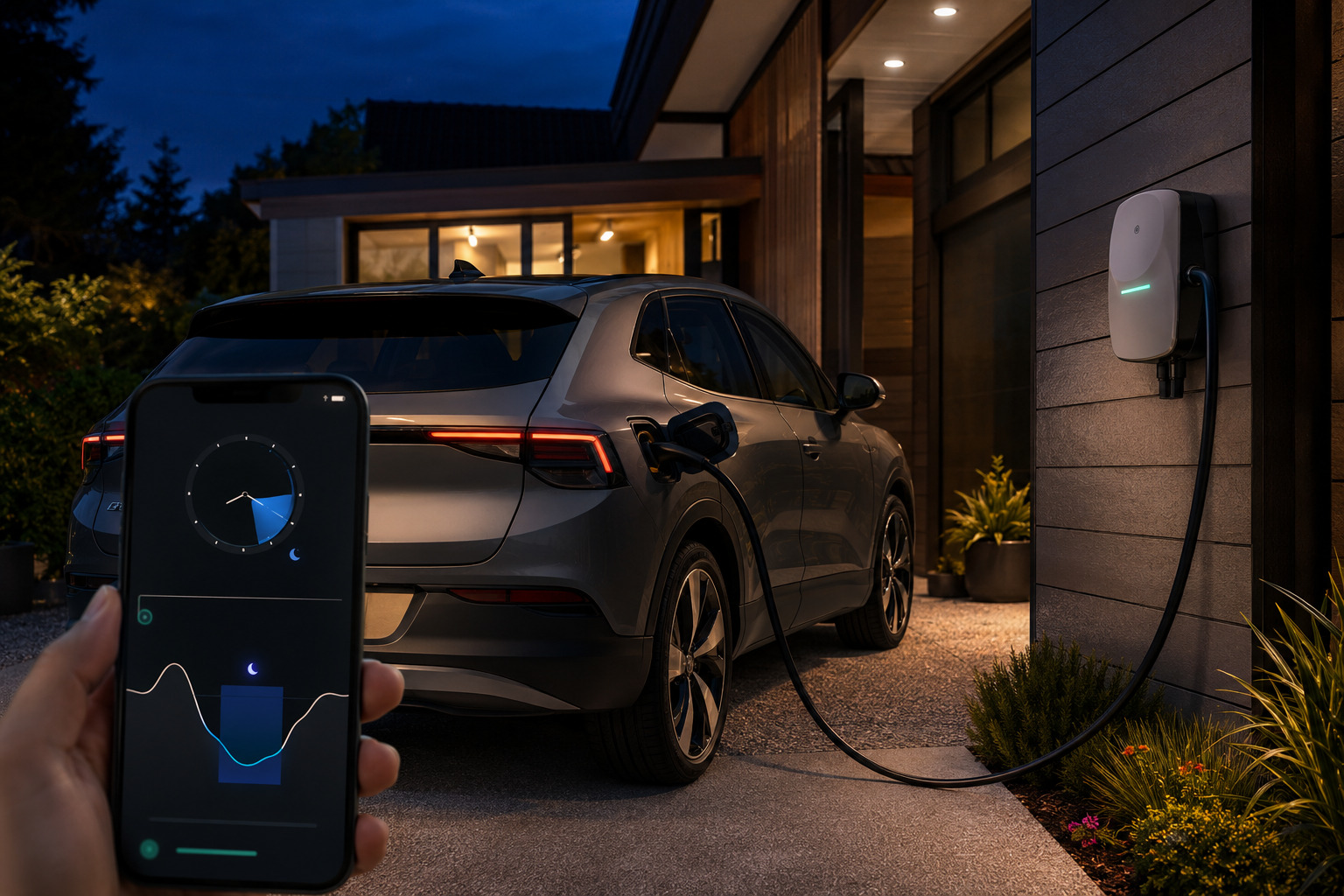
I have worked with drivers, workplace managers, and fleet operators for years as general manager at Parwatt New Energy. We supply chargers and power modules that support scheduled and managed charging. I regularly review energy bills where the majority of EV charging still occurs in the expensive evening peak. Our equipment, including solutions in the EV Charger Category, is designed to work with time-of-use schedules and load-management systems so users can avoid those high-cost hours. In this article I explain why peak-hour charging costs more and how smart solutions move the load to cheaper times in 2026.
Why Peak-Hour EV Charging Quietly Inflates Bills and Strains the Grid?
Most people plug in when they arrive home or return vehicles to a depot. That moment often coincides with the utility’s peak period—late afternoon and early evening—when household and commercial demand is already high. Electricity prices rise and, for commercial accounts, demand charges can spike. The grid also experiences extra stress exactly when it is least able to absorb it.
Peak-hour EV charging raises bills because it overlaps with the highest electricity rates and can create large demand spikes. Residential drivers pay more per kilowatt-hour. Commercial sites and fleets face elevated energy costs plus demand charges. The same timing increases pressure on the local grid.
The Timing Problem Behind Higher Costs
I have examined household and site energy data where EV charging began between 5 p.m. and 9 p.m. almost every day. That window is frequently the most expensive period on time-of-use plans. The vehicle still reached a full charge by morning, yet the owner paid a premium for energy that could have been delivered overnight at a much lower rate.
Commercial sites feel an additional effect. When multiple vehicles begin charging at full power during the peak window, the site’s maximum demand jumps. Utilities bill that peak for the entire month in many rate structures. A single evening spike can therefore raise costs for weeks.
Grid operators see the same pattern at larger scale. Neighborhoods with rising EV adoption show new demand peaks in the early evening. Without managed charging, those peaks require more expensive generation and infrastructure.
Here is a table that shows how peak-hour charging affects different users:
| User Type | What Happens in Peak Window | Cost Impact | Grid Impact |
|---|---|---|---|
| Residential driver | Charging starts on arrival home | Higher energy rate per kWh | Local evening peak grows |
| Workplace / multifamily | Many vehicles plug in after work | Elevated site energy cost | Building demand spike |
| Fleet depot | Vehicles return and charge simultaneously | High demand charges | Large, predictable peak |
| Public site | Evening utilization rises | Higher operating cost | Contributes to system peak |
This table reflects patterns I see across different charging environments. At Parwatt we design chargers that can accept scheduling and power-limit commands so operators and drivers can move load out of these expensive windows. Products such as the FES-D30 DC EV Charger support the control needed for managed operation.
In 2026 time-of-use rates and demand charges remain powerful cost drivers. The simplest way to protect the economics of EV charging is to stop treating “plug in on arrival” as the default behavior.
The Common Traps That Keep Drivers Paying Peak Rates
Many drivers and site operators continue to pay peak rates because of a few persistent habits. They plug in immediately upon arrival. They never examine their utility’s time-of-use schedule. They leave scheduling features disabled. They do not use solar or storage when available. Multiple vehicles charge at full power at the same time. These traps keep energy costs higher than necessary.
Common traps include plugging in immediately on arrival, ignoring time-of-use schedules, leaving smart-charging features off, overlooking solar or storage options, and allowing simultaneous full-power charging. These habits lock users into peak rates and unnecessary demand charges.
Habits That Prevent Savings
One frequent trap is the automatic routine of plugging in the moment the vehicle is parked. The charger begins delivering power at once, often during the highest-price hours. The vehicle is ready the next morning, yet the energy was purchased at the worst possible rate.
Another trap is simply not knowing the local peak and off-peak windows. Many utilities publish clear time-of-use schedules, but drivers never look them up. Without that basic information, no deliberate shift is possible.
Smart-charging and scheduling functions sit unused on many vehicles and chargers. The capability exists to delay charging until midnight or to finish by a chosen departure time, yet the feature remains off. Manual effort is required every day, so most people never bother.
Solar and storage opportunities are also missed. Sites with rooftop solar continue to draw grid power in the evening instead of using stored midday generation. Home batteries that could supply evening charging sit idle while the EV pulls from the grid at peak prices.
At multi-vehicle sites the lack of coordination creates large simultaneous draws. Several cars begin charging at full power the moment they are plugged in. The resulting demand spike is entirely avoidable with basic load management.
Here is a table of the main traps:
| Trap | Why It Continues | Cost Consequence | Simple Correction |
|---|---|---|---|
| Immediate plug-in | Habit and convenience | Peak-rate energy | Schedule or delay start |
| Unknown TOU hours | Information never checked | No deliberate shift | Review utility schedule once |
| Scheduling left off | Setup feels complicated | Continuous peak exposure | Set ready-by time once |
| Solar / storage unused | Systems not integrated | Grid power at peak prices | Prioritize on-site energy |
| Unmanaged multi-vehicle charging | No load control | High demand charges | Enable power sharing or staggering |
This table captures the behaviors I observe most often. At Parwatt we encourage users of our chargers and modules, including the 30kW Power Module and 40kW Power Module, to activate scheduling and load-management features from the first day of operation.
I have seen households cut their EV charging cost noticeably after a single change: setting a ready-by time of 7 a.m. and letting the system charge overnight. The same principle scales to workplaces and fleets. Most of the savings come from ending the automatic peak-hour start.
How Time-of-Use Rates and Smart Charging Actually Work
Time-of-use rates divide the day into periods with different prices. Peak periods cost more. Off-peak and super-off-peak periods cost less. Smart charging uses those price signals or a simple departure time to decide when to deliver power. The vehicle still reaches the desired state of charge by the time it is needed; the energy simply arrives during cheaper hours.
Time-of-use rates charge higher prices during peak periods and lower prices overnight or in other off-peak windows. Smart charging automatically delays or adjusts power so the vehicle finishes charging in the lowest-cost period. The driver sets a ready-by time once; the system handles the rest.
The Basic Mechanics
Utilities define peak, mid-peak, and off-peak windows according to system demand patterns. In many regions the peak falls between late afternoon and mid-evening. Overnight hours are commonly the cheapest. Some plans offer especially low “super off-peak” rates in the early morning.
A smart charger or vehicle scheduling function needs two pieces of information: the utility’s rate periods (or a simple start/stop preference) and the time the vehicle must be ready. With those inputs the system calculates when to begin charging and at what power level so the session completes on time at the lowest cost.
Load management adds another layer at multi-charger sites. Instead of allowing every vehicle to draw maximum power at once, the system distributes available capacity. Total site demand stays under a defined limit, protecting the customer from high demand charges while still delivering energy to every vehicle.
Demand-response programs take the idea further. The utility or a third party can send a signal asking connected chargers to reduce power temporarily during grid stress events. Participating sites receive bill credits or other compensation.
Here is a simplified view of the process:
| Element | What It Does | User Action Required | Result |
|---|---|---|---|
| TOU rate schedule | Defines expensive and cheap hours | Review once | Price signal available |
| Ready-by time | Tells system when vehicle must be full | Set preferred departure | Charging window calculated |
| Smart scheduling | Delays or shapes power delivery | Enable feature | Energy shifts to cheap hours |
| Load management | Shares capacity across vehicles | Configure site limit | Lower demand charges |
| Demand response | Temporarily reduces load on request | Enroll if available | Additional credits / grid support |
This structure shows why the approach is practical for everyday use. At Parwatt our chargers are built to accept scheduling commands and external load limits so these functions work reliably. You can explore compatible equipment in the EV Charger Category.
I recommend that every driver and site operator begin with the simplest version: set a ready-by time and enable the schedule. More advanced load management and storage integration can be added later. The majority of available savings appear with the basic step.
Smart Solutions Compared: Scheduling, Load Balancing, Storage & Solar Integration
Different tools deliver different levels of control and savings. Simple scheduling shifts charging to off-peak hours. Dynamic load balancing protects commercial sites from demand spikes. Battery storage can shave peaks or supply evening charging from stored energy. Solar prioritization uses on-site generation first. Each solution fits particular situations.
Simple scheduling moves charging into cheaper overnight windows. Load balancing prevents costly demand spikes at multi-charger sites. Battery storage and solar integration further reduce grid draw during expensive or high-stress periods. The right combination depends on site size, rate structure, and available equipment.
Comparing the Main Approaches
Basic scheduling is the most accessible tool. The driver or operator sets a departure time. The charger or vehicle waits until the optimal window and then completes the charge. No extra hardware is required beyond a charger or vehicle that supports the feature. Savings come directly from the difference between peak and off-peak energy rates.
Dynamic load balancing is essential once several vehicles charge at the same location. The system continuously adjusts power to each vehicle so the total never exceeds a safe or cost-effective limit. Demand charges fall and electrical infrastructure can often be kept smaller.
Battery energy storage adds peak-shaving capability. The battery charges during cheap or solar-rich hours and discharges to support EV charging during expensive periods. Grid draw during the peak window drops, and demand charges can be reduced further.
Solar prioritization directs on-site generation to the vehicles whenever it is available. Midday solar can pre-charge vehicles or fill storage that later supplies evening charging. Grid purchases decline and the effective cost of energy falls.
Here is a comparison of the solutions:
| Solution | Primary Benefit | Best Fit | Complexity |
|---|---|---|---|
| Simple scheduling | Shifts energy to cheap hours | Individual drivers, small sites | Low |
| Dynamic load balancing | Controls site peak demand | Workplaces, fleets, multi-family | Medium |
| Battery peak shaving | Reduces grid draw at peak | Sites with demand charges or solar | Higher |
| Solar prioritization | Uses free on-site energy first | Properties with solar generation | Medium to higher |
| Combined approach | Maximum cost and grid relief | Larger commercial / fleet sites | Highest |
This comparison helps users select the right level of sophistication. At Parwatt we supply chargers and modules that support scheduling and external control, and we offer battery-buffered options such as the Battery Buffered Ultra Rapid EV Charger for sites that need storage-assisted peak management.
I have seen residential users achieve solid savings with nothing more than a scheduled ready-by time. I have also seen fleet depots cut demand charges dramatically once load balancing and storage were added. Starting simple and adding layers only when the numbers justify them is usually the most practical path.
Practical Steps to Shift Charging Off-Peak and Maximize Savings
Moving charging out of peak hours does not require complex projects. Drivers and operators can begin with a few concrete actions: learn the local rate schedule, set a ready-by time, enable smart scheduling, monitor the results, and add load management or storage where the economics support it. Commercial and fleet sites have additional levers.
Shift charging off-peak by reviewing your utility’s time-of-use schedule, setting a ready-by time, enabling smart scheduling, tracking actual savings, and adding load management or storage when justified. These steps deliver lower bills while keeping vehicles ready for daily use.
Actionable Steps for Drivers and Sites
First, locate your utility’s current time-of-use periods. Note the start and end of peak, mid-peak, and off-peak windows. Many utilities publish this information online or on the bill itself. The review takes only a few minutes and provides the price signal needed for every later decision.
Second, set a ready-by or departure time on the vehicle or charger. Choose the time you normally leave and allow a modest buffer. Enable the scheduling function so charging occurs in the cheapest available window that still meets the deadline.
Third, confirm that the schedule is active and working. After a few nights, check the charging history or energy app to verify that power was delivered overnight rather than in the evening peak.
Fourth, measure the difference. Compare energy cost or total kWh charged during peak versus off-peak periods before and after the change. Most users see a clear reduction within the first billing cycle.
Fifth, for sites with multiple chargers, implement load management. Set a maximum site demand and allow the system to share power intelligently. This step protects against demand charges and often avoids electrical upgrades.
Sixth, evaluate solar and storage if they are already present or planned. Configure the system to use on-site energy first and to avoid grid draw during the most expensive hours.
Here is a practical checklist:
- Obtain the current TOU peak and off-peak schedule from your utility.
- Set a daily ready-by time on the vehicle or charger.
- Enable scheduled or smart charging and verify it is operating.
- Review charging history after one to two weeks to confirm the shift.
- At multi-vehicle sites, activate load balancing and set a demand limit.
- Integrate solar or battery storage when available to further reduce peak grid use.
- For fleets, align charging windows with shift patterns and electricity prices.
- Recheck savings after the first full billing period and adjust as needed.
At Parwatt we design our chargers and power modules to make these steps straightforward. Equipment such as the Battery Buffered Ultra Rapid EV Charger and our modular systems support scheduling and external control so users can implement off-peak strategies with confidence. Additional guidance on charging systems appears in our article on Electric Vehicle Charging and our comparison of AC vs DC EV Charging.
The majority of savings come from the first three or four actions. More advanced measures add further benefit for larger sites. Starting with the simple schedule change is enough to move most charging out of the expensive peak window.
Conclusion
Charging during peak hours is one of the easiest ways EV owners and site operators overpay for electricity. At Parwatt we build chargers and power modules that support the scheduling and load management needed to avoid those high-cost periods. Time-of-use rates, smart chargers, and simple scheduling can shift the bulk of charging into cheaper off-peak windows—often overnight—without changing daily routines. For commercial sites and fleets, adding load management, demand caps, or battery peak-shaving further reduces costly demand charges. Start by checking your utility’s TOU schedule, enabling scheduled or smart charging, and tracking the difference. Small timing changes deliver meaningful savings, lower grid stress, and keep vehicles ready when needed.

--- END ---
Related Posts
Industry News

Business Ideas

Business Ideas

Business Ideas


