

Consumer vs. Professional Workshop Battery Chargers: A Distributor’s Market Guide
Sep 28,2026
Consumer and workshop battery chargers should not be treated as one market. Home users and professional technicians differ in how often they charge, how much current they need, how stable the output must be, who operates the equipment, and how much they are willing to pay. Positioning the wrong product in the wrong channel creates either missing features or unnecessary cost. At Parwatt I see these mismatches produce slow stock and avoidable returns.
Consumer chargers emphasize simple operation and broad retail demand. Professional workshop chargers emphasize sustained output, stable support modes and service durability. In 2026 distributors who match the product to their real sales channel and test both segments carefully build stronger margins and fewer after-sales problems.
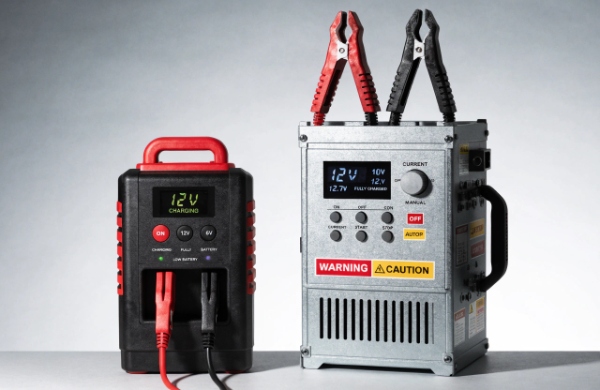
I have worked with automotive accessory distributors and importers for years as general manager at Parwatt New Energy. We supply car battery chargers for both consumer and professional use. I regularly review assortments where a high-current unit was sold to occasional home users or where a compact consumer charger was expected to support diagnostic work. Both mistakes create dissatisfaction. Our range in the car battery charger category is developed so partners can position each model clearly. In this article I explain how consumer and workshop chargers differ and how distributors can choose the right market focus in 2026.
Why Consumer and Workshop Chargers Should Not Be Treated as One Market?
The two customer groups use chargers differently. A home user may charge a battery a few times a year and wants simple controls and compact storage. A workshop may use a charger several times a day, keep vehicle systems powered during diagnostics, and need stable voltage under changing loads. When the same product is expected to satisfy both groups, either the consumer finds it complicated and expensive or the technician finds it under-powered and fragile.
Consumer and workshop chargers should not be treated as one market because frequency of use, required output stability, operator skill and budget differ sharply. Wrong positioning produces either insufficient capability or excess cost and complexity.
How the Two Markets Diverge in Practice
I have seen consumer buyers return feature-rich chargers because the interface was confusing and the price felt too high for occasional use. The extra modes that looked attractive on a specification sheet became support questions after purchase.
In workshops the opposite complaint appears. A compact charger that works well for a homeowner cannot maintain stable voltage while a vehicle’s control units stay awake during programming. The technician then looks for a dedicated support-capable unit.
Duty cycle separates the segments further. Consumer products are usually designed for intermittent use. Professional units must tolerate repeated long cycles without excessive temperature rise or early component wear.
Service expectations also differ. Home users rarely request spare clamps or firmware support. Workshops often need replaceable cables, clear fault information and long-term parts availability.
Here is a table that shows the core market differences:
| Aspect | Consumer Market | Workshop Market | Risk if Confused |
|---|---|---|---|
| Use frequency | Occasional | Daily / multiple cycles | Under- or over-specified product |
| Key priority | Simplicity and price | Sustained output and stability | Feature mismatch |
| Operator | Non-specialist | Trained technician | Interface complexity issues |
| Support need | Low | Higher (parts, training) | Service capability gap |
| Price sensitivity | High | Value based on uptime | Slow sales or lost accounts |
This table reflects the positioning problems I discuss with distributors. At Parwatt we design and document chargers for clear segment fit inside the car battery charger category.
In 2026 channel data and customer feedback make these differences easier to measure. Treating the two markets as one remains a common and costly error.
The Product Positioning Mistakes That Create Returns and Slow-Moving Stock
Several positioning mistakes appear repeatedly. Distributors sometimes treat high current as proof of professional grade. Others promote ordinary consumer chargers for ECU programming or diagnostic support. Still others offer complex, expensive workshop units to car owners who only need occasional maintenance charging. These errors create returns from home users and lost credibility with professional buyers.
Positioning mistakes include equating high current with professional capability, using consumer chargers for vehicle power support, and selling complex workshop equipment to occasional users. Each error produces either returns or slow-moving stock.
Mistakes That Damage Both Segments
High current alone does not make a charger professional. A unit may deliver a high peak number yet lack thermal capacity for repeated cycles, stable voltage under load, or heavy-duty cables. Workshops discover the limitation during real service work.
Consumer chargers are sometimes described as suitable for diagnostic or programming support. Without a validated battery-support or power-supply mode that holds a clean, stable voltage while vehicle systems remain active, the unit can drop out or introduce noise. Technicians who rely on it face interrupted procedures and look for alternative suppliers.
Complex professional features sold into retail channels often increase returns. Modes that require manual selection, unclear indicators, or specialist knowledge generate customer questions and incorrect operation. The same features are valued in a workshop where staff are trained.
Price and packaging further amplify the problem. A workshop-grade unit placed on a consumer shelf looks expensive and intimidating. A simple retail charger offered to a busy workshop looks inadequate.
Here is a table of common positioning errors:
| Mistake | Why It Happens | Result | Better Approach |
|---|---|---|---|
| High amps = professional | Easy specification claim | Overheating or unstable output in daily use | Test continuous duty and support mode |
| Consumer unit for ECU support | Feature list stretched | Voltage drop during programming | Offer only validated support-capable models |
| Complex unit for home users | Assortment overload | Confusion and returns | Keep consumer range simple |
| One model for both channels | Inventory simplification attempt | Compromise performance | Separate clear SKUs per segment |
| Price-led professional claims | Margin focus | Lost workshop trust | Prove duty cycle and service support |
This table helps distributors avoid mixed messages. At Parwatt we keep consumer and professional positioning distinct for products in our car battery charger category.
I advise buyers to write the intended user and channel on every product brief. The single sentence prevents many later assortment mistakes.
How Consumer and Workshop Charger Requirements Differ
The two segments differ across output current, continuous-duty ability, power-support modes, cable and clamp quality, user interface, durability, serviceability, data functions and price range. Comparing these dimensions shows why a single design rarely serves both markets well.
Consumer and workshop requirements differ in current delivery, continuous operation, battery-support capability, cable robustness, interface simplicity, durability, service parts and price. Each dimension should be evaluated against the real user.
Detailed Requirement Comparison
Output current for consumer units is typically sized for overnight or several-hour charges of common starting batteries. Workshop units often need higher sustained current to recover larger or deeply discharged batteries more quickly and to support vehicle systems.
Continuous-duty performance matters more in workshops. Thermal design, fan control and component ratings must allow repeated cycles without derating or shutdown.
Battery-support or power-supply mode is a professional requirement for diagnostics and ECU work. The charger must hold a stable voltage while the vehicle draws varying current. Consumer chargers without this validated mode should not be recommended for the task.
Cables and clamps on professional units are longer, thicker and more durable. Replaceable assemblies are often expected. Consumer units prioritize compact storage and lower cost.
Interfaces on consumer products should minimize decisions—ideally automatic operation with clear status lights. Workshop interfaces may offer more information, manual overrides and diagnostic readouts because the operator is trained.
Durability and serviceability expectations are higher in professional settings. Housings, connectors and internal parts must tolerate daily handling. Spare parts and service documentation become commercial factors.
Data logging or printable results appear in some professional systems to support workshop documentation and customer communication. These functions add little value for most home users.
Price bands reflect the above differences. Consumer products compete in accessible retail ranges. Professional units command higher prices when they demonstrably save workshop time and reduce come-backs.
Here is a side-by-side comparison:
| Requirement | Consumer Focus | Workshop Focus |
|---|---|---|
| Current | Moderate, task-based | Higher sustained output |
| Duty cycle | Intermittent | Repeated daily use |
| Support mode | Usually not required | Stable voltage under load |
| Cables / clamps | Compact, cost-effective | Heavy-duty, often replaceable |
| Interface | Simple / automatic | Informative, technician-oriented |
| Serviceability | Limited | Parts and documentation expected |
| Data functions | Rare | Valuable for diagnostics |
| Price band | Retail-accessible | Value based on uptime |
This comparison keeps specification discussions concrete. At Parwatt we use similar distinctions when developing models for the car battery charger category.
I recommend that distributors score each candidate product against the column that matches their main channel. The exercise quickly reveals misfits.
Which Market Better Matches Your Existing Sales Channel?
The better market depends on the route to market the distributor already owns. Automotive-accessory retailers and e-commerce sellers usually succeed with easy-to-use consumer products. Tool distributors, workshop-equipment suppliers and fleet channels are better positioned for higher-output and diagnostic-support equipment.
Match the charger segment to the existing channel. Retail and e-commerce favor simple consumer models. Tool and workshop channels favor professional units with sustained output and support capability. Channel fit determines service load and sell-through speed.
Channel-to-Segment Fit
E-commerce and automotive retail thrive on clear packaging, accessible pricing and low support burden. Consumer smart chargers and maintainers fit these constraints. Returns stay manageable when operation is largely automatic.
Workshop-tool distributors already visit or supply repair shops. They can explain continuous-duty ratings, support modes and spare-part options. Professional chargers become a natural extension of their existing basket and deepen account relationships.
Fleet and commercial accounts often need both recovery charging and stable power support. Distributors who already serve these customers can introduce professional chargers with less education cost than pure retail players.
Mixed distributors can serve both segments, yet they should keep the ranges visually and commercially separate. A consumer model and a professional model should not share ambiguous naming or packaging that confuses the buyer.
Service capability is a decisive filter. If the distributor cannot provide technical guidance or spare parts, the professional segment will generate more problems than profit. In that case a strong consumer range is the safer core.
Here is a channel-matching guide:
| Channel Type | Better Segment | Why It Fits | Caution |
|---|---|---|---|
| Auto retail / e-commerce | Consumer | Simple use, fast turn | Avoid complex pro features |
| Tool / equipment distributors | Professional | Existing workshop relationships | Need training and parts |
| Fleet / commercial supply | Professional or dual | Duty and support requirements | Confirm application clearly |
| Mixed wholesale | Tiered both | Broad coverage | Keep positioning distinct |
| Low-support online only | Consumer | Minimal after-sales load | Limit SKU complexity |
This guide helps distributors start from their strengths. At Parwatt we support both channel types with appropriately positioned products in the car battery charger category.
I advise each distributor to list their top customer types and the questions those customers already ask. The answers usually point to one primary segment and, at most, a limited secondary range.
How to Test Both Segments Without Overbuilding Inventory
Distributors can explore both markets without committing to large parallel inventories. A practical approach is to select one or two strong consumer core models, add a single clearly differentiated professional model, run limited trials, and expand only where inquiry volume, repeat purchase and service data justify further investment.
Test both segments with a focused consumer core and one professional model. Use sell-through, inquiries, warranty data and channel feedback to decide expansion. Avoid launching two full assortments before demand is proven.
A Low-Risk Trial Structure
Choose a compact maintainer and a mainstream smart charger as the consumer foundation. These two cover the majority of occasional-use needs and keep the retail offer simple.
Select one professional charger that has verified continuous-output capability and, if the channel requires it, a documented battery-support mode. Avoid loading the trial with multiple overlapping pro models.
Place limited quantities into the relevant channels. Track weekly sell-through, the type of buyer, and the questions raised by sales staff or end users.
Record warranty claims and return reasons separately for each model. Early patterns reveal whether the professional unit is being mis-sold into consumer hands or whether the consumer units are being asked to perform workshop tasks.
Collect application inquiries. Requests for “ECU support,” “diagnostic power,” or “fleet overnight charging” indicate genuine professional demand. Requests for “simple home use” or “seasonal maintenance” confirm consumer strength.
After a defined trial period, decide whether to deepen the consumer price ladder, add another professional variant, or remain focused. Data, not assumptions, should drive the next purchase order.
Keep packaging and sales materials explicit so the two segments do not blur during the trial.
Here is a trial-and-expansion checklist:
- Select 1–2 consumer core models
- Add one clearly differentiated professional model
- Define limited trial quantities per channel
- Track sell-through by customer type
- Log inquiries and application questions
- Separate warranty and return data by model
- Review service load and parts requests
- Decide expansion only after evidence
- Keep segment positioning visible in all materials
- Revisit the mix at fixed intervals
At Parwatt we encourage partners to follow this measured approach when building ranges from our car battery charger category. Complementary products on our main site and in categories such as car air pumps can follow similar staged logic.
Distributors who test narrowly and expand with evidence avoid both stockouts of proven models and warehouses full of unproven ones. The method protects cash while still allowing the business to learn which segment fits best.
Conclusion
Neither consumer nor workshop battery chargers are automatically the better market. At Parwatt we develop and position both types so distributors can choose according to their real channel strength. Consumer products usually offer broader demand, simpler operation and faster retail turnover, while professional workshop equipment can generate higher order values and stronger customer relationships—but also requires more technical support. Distributors should choose according to their channel, service capability and local customer base. For many businesses, the safest strategy is a focused consumer range supported by one clearly differentiated professional model, followed by data-led expansion rather than launching two large assortments at once.

--- END ---
Related Posts
Business Ideas

Business Ideas

Business Ideas

Business Ideas


