

Car Battery Charger Certifications: EU, UK, US, Japan and Korea Guide
Sep 22,2026
One charger certification cannot cover every target market. The European Union, United Kingdom, United States, Japan and Korea each apply different rules, responsible parties and market-access procedures. A single test report or mark rarely satisfies all of them. At Parwatt I see buyers discover these gaps only after production, when relabeling or retesting becomes expensive.
Car battery charger certifications must match the exact destination market and product configuration. CE, UK marking, US NRTL and FCC, Japan PSE and Korea KC follow separate systems. In 2026 B2B buyers who verify certificates against the production model, factory and critical components avoid costly compliance failures.
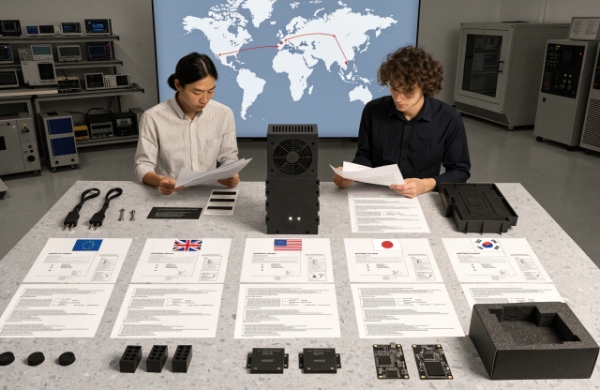
I have worked with automotive accessory wholesalers and importers for years as general manager at Parwatt New Energy. We supply mains-powered low-voltage car battery chargers—not EV charging stations or high-voltage on-board chargers. I regularly review cases where a CE claim or a UL mark was assumed to open every market, only for the shipment to face questions at customs or from local buyers. Our range in the car battery charger category is developed with clear market-specific compliance planning so partners can enter each region correctly. In this article I explain the main certification routes for car battery chargers in the EU, UK, US, Japan and Korea and how B2B buyers should verify them in 2026.
Why One Charger Certification Cannot Cover Every Target Market?
Each major market sets its own legal framework for electrical safety, electromagnetic compatibility and, where relevant, radio functions or hazardous substances. The responsible party, the required documents and the acceptable marks differ. A report written for one system does not automatically satisfy another. Treating any single mark as global permission creates delays, rejected shipments and unexpected retesting costs.
One certification cannot cover every market because the EU, UK, US, Japan and Korea use different regulations, conformity procedures and importer responsibilities. Certificates and reports must be matched to the specific destination and product configuration.
How Market Differences Create Real Barriers
I have seen shipments held because a CE Declaration of Conformity was presented for a US retail channel that expected NRTL evaluation. The documents answered the wrong regulatory question.
In other cases a PSE mark suitable for one Japanese product category was assumed to cover a different charger design. The classification did not match, and the importer faced additional steps.
Factory location and certificate holder also matter. A test report issued for one manufacturer or one factory may not support private-label sales or production at a second site without further action.
Critical parameters such as input voltage range, output rating, enclosure material and power-cord type are part of the approved configuration. Changing them after testing can invalidate the existing paperwork.
Here is a table that shows why a single mark is insufficient:
| Market | Typical Focus | Why a Foreign Mark Is Not Enough | Main Risk if Ignored |
|---|---|---|---|
| EU | Manufacturer declaration + technical file | CE is not a third-party “passport” | Missing DoC or incomplete file |
| UK | CE or UKCA routes (GB) | Northern Ireland follows different rules | Incorrect marking for the destination |
| US | NRTL safety + FCC for emissions/radio | No single federal “CE equivalent” | Channel or code rejection |
| Japan | PSE under METI classification | Category and procedure must match | Non-conforming mark or missing importer role |
| Korea | KC safety and/or EMC routes | Separate safety and radio/EMC systems | Incomplete conformity assessment |
This table reflects the clearance and customer-acceptance problems I discuss with partners. At Parwatt we plan compliance by destination for every charger in our car battery charger category.
In 2026 cross-border e-commerce and private-label programs make these differences more visible. Early market definition remains the cheapest way to avoid later barriers.
The Certification Claims That Commonly Mislead B2B Buyers
Suppliers often present marks and report numbers as complete proof of market access. Buyers sometimes accept a CE logo as a third-party certificate, treat FCC as electrical-safety approval, or check only for the presence of a UL, PSE or KC mark without confirming the certificate holder, exact model, factory and rated parameters. These shortcuts leave critical gaps.
Certification claims that mislead buyers include treating CE as a third-party certificate, assuming FCC covers electrical safety, and accepting marks without verifying holder, model, factory and ratings. Full document and database checks are required.
Claims That Need Careful Checking
CE marking is a manufacturer’s declaration that the product meets applicable EU legislation. It is not issued by a single “CE authority” as a universal certificate. The underlying technical documentation and Declaration of Conformity must exist and must match the product.
FCC authorization addresses radio-frequency emissions or intentional radiators. It does not replace electrical-safety evaluation required by many US channels, workplaces or local codes.
UL or other NRTL marks are specific to the tested configuration and the recognizing body. A mark on a similar model or an expired report does not automatically cover the new version.
PSE and KC marks are tied to Japanese and Korean regulatory classifications and procedures. A generic IEC report or a supplier statement is not a substitute for the required national process.
Certificate holder and factory location are frequently overlooked. A report issued to one company or one production site may not support a different brand owner or a second factory without additional work.
Here is a table of misleading claims:
| Claim Presented | Why It Misleads | What to Verify Instead |
|---|---|---|
| “CE certified” | CE is a declaration, not a single certificate | Applicable directives, DoC, technical file |
| “FCC approved” as safety proof | FCC is emissions/radio focused | Separate NRTL safety evaluation if required |
| UL / PSE / KC logo only | Mark may not match model or factory | Certificate scope, holder, ratings, factory |
| “IEC report covers all markets” | National implementations differ | Destination-specific conformity route |
| Old report for new version | Configuration may have changed | Exact model, BOM and critical parts |
This table helps buyers dig past surface claims. At Parwatt we keep compliance files matched to the exact configuration of each charger in our car battery charger category.
I advise every buyer to request the full document set and to cross-check key fields before placing a bulk order. Surface marks are only the starting point.
Certification Requirements in the EU, UK, US, Japan and Korea
Each market has its own core requirements and responsible parties. Understanding the basic framework prevents the wrong documents from being prepared or accepted.
EU CE, UK marking rules, US NRTL and FCC, Japan PSE and Korea KC each impose different obligations. Importers often carry local responsibilities that the overseas manufacturer cannot fully assume.
Market-by-Market Overview
In the European Union a mains-powered car battery charger typically falls under electrical-safety and electromagnetic-compatibility rules, and may also involve hazardous-substance restrictions. The manufacturer identifies the applicable legislation, compiles technical documentation, ensures conformity and issues an EU Declaration of Conformity. CE marking is applied accordingly. Documentation is generally kept for a defined period after the product is placed on the market.
In Great Britain many product sectors can currently use an applicable CE or UKCA route. Northern Ireland operates under a different arrangement, so “UK” should not be treated as a single uniform market. Buyers must confirm the exact destination within the United Kingdom.
In the United States there is no single federal mark equivalent to CE for all chargers. Electrical safety is often addressed through an OSHA-recognized Nationally Recognized Testing Laboratory (NRTL) such as UL or another recognized organization, depending on the sales channel, workplace use and local requirements. FCC rules cover electromagnetic emissions or radio functions when they apply; they do not replace safety evaluation.
In Japan the Electrical Appliances and Materials Safety Act establishes PSE requirements according to product classification. Buyers must confirm whether the exact charger falls into a regulated category, which conformity procedure applies, and who will act as the responsible importing business in Japan.
In Korea product safety and electromagnetic conformity may involve separate systems. Safety controls for regulated electrical appliances and EMC or radio conformity assessment are administered through designated routes. A dedicated battery-charger safety standard exists within the Korean framework, but the exact path depends on classification of the product.
Here is a summary comparison:
| Market | Core Mechanism | Typical Marks / Documents | Key Local Responsibility |
|---|---|---|---|
| EU | Manufacturer declaration + technical file | CE, EU DoC | Manufacturer / authorized representative |
| Great Britain | CE or UKCA routes (many sectors) | CE or UKCA | Manufacturer / responsible person rules |
| United States | NRTL safety + FCC if applicable | NRTL mark, FCC ID/DoC as needed | Importer / channel requirements |
| Japan | PSE under METI classification | PSE mark | Japanese importing business |
| Korea | KC safety and/or EMC routes | KC marks as applicable | Local conformity and importer duties |
This overview keeps the differences visible. At Parwatt we map each charger project to its intended markets early so the correct routes are chosen for products in our car battery charger category.
I recommend that buyers write the destination list into the project brief before any tooling or final PCB is released. The list drives the entire compliance plan.
How to Verify Certificates, Test Reports and Model Coverage
Verification turns documents into reliable evidence. Buyers should check the applicable standards and versions, the status of the test laboratory, certificate or database entries, exact model correspondence, input and output ratings, plug and cord details, and consistency between report photographs and the physical sample.
Verify certificates and reports by confirming standards, laboratory status, database entries, model and rating match, critical components and photographic consistency with the actual sample. Scope must cover the production configuration.
Practical Verification Steps
Confirm which directives, regulations or standards are claimed and whether the versions are current for the destination market.
Check that the testing laboratory is appropriately accredited or recognized for the scope of work performed.
For marks that appear in public databases, search the certificate or authorization number and confirm the holder, model and status.
Compare the model name, electrical ratings, plug type and power-cord specification in the report with the production drawings and the physical sample.
Review the list of critical components—transformer, fuse, capacitors, insulation system, enclosure material—and confirm they match the approved BOM.
Examine photographs or diagrams in the report. Enclosure shape, PCB layout and connector types should correspond to the sample in hand.
If the product includes wireless functions, confirm that radio documentation is present and matched to the module and antenna configuration.
If an internal lithium battery is used, confirm that battery safety and transport documents are available for the exact cell or pack.
Record any discrepancy and require written clarification or retesting before approval.
Here is a verification checklist:
- Applicable regulations and standard versions identified
- Laboratory accreditation or recognition confirmed
- Certificate or database entry matched to holder and model
- Input / output ratings identical to production specification
- Plug, cord and enclosure details consistent
- Critical component list aligned with BOM
- Report photographs match the physical sample
- Radio and battery documents present when applicable
- Factory location covered by the approval
- Written resolution of any gaps before order release
At Parwatt we perform these checks as part of compliance control for every charger we release. The same discipline protects partners who source from our car battery charger category.
I advise buyers to keep a simple verification record for each certificate file. The record becomes part of the product history and simplifies later audits or customer questions.
Build Compliance into Product Development Before Mass Production
Compliance is cheapest when it is designed in before molds, final PCBs and packaging are frozen. Target markets should be fixed early, the certified BOM and firmware locked, and any later change to critical parts, structure, wireless modules or factories assessed for regulatory impact before implementation.
Build compliance into development by fixing target markets before tooling, locking the certified BOM and firmware, and assessing every critical change for regulatory impact. Early planning is far less expensive than retesting or relabeling finished goods.
Development-Stage Controls
List the exact destination markets and the required conformity routes at the project-start meeting. Avoid adding major new markets after the design is frozen.
Select components and constructions that are already well documented or easily testable for those markets. Unusual materials or unproven wireless modules increase both cost and schedule risk.
Once testing is complete, freeze the certified configuration: PCB revision, firmware version, critical component manufacturers and part numbers, enclosure material, plug and cord.
Issue a formal change-control rule: any substitution of a critical part, any PCB or firmware change, any new wireless function, or any move to a new factory must trigger a compliance-impact assessment before production use.
Keep the Declaration of Conformity, test reports and supporting photographs under version control and linked to the exact product configuration.
Train purchasing and engineering teams to reject unapproved substitutions even when the alternative part is cheaper or more available.
Plan packaging and labeling only after the marking requirements for each market are confirmed. Incorrect marks are expensive to correct on finished stock.
Here is a development-compliance checklist:
- Target markets and conformity routes fixed early
- Design choices made with testability in mind
- Certified BOM, PCB, firmware and critical parts locked
- Change-control process with compliance assessment
- Full document set under version control
- No unapproved part or factory substitutions
- Labeling and packaging matched to approved marks
- Retesting budget reserved for necessary changes
- Importer responsibilities clarified for each market
- Final compliance sign-off before mass-production release
At Parwatt we embed these controls in every charger development project. Partners benefit from the same disciplined approach when they source products from our car battery charger category and complementary lines such as car air pumps. Further information is available on our main catalog.
When compliance is treated as a design input rather than a final shipping stamp, the risk of blocked shipments and forced rework drops sharply. That is the practical goal of building compliance in from the start.
Conclusion
There is no single global certificate that makes a car battery charger legal in every market. At Parwatt we plan and document compliance by destination so the products we supply meet the rules of each region. EU CE compliance, UK marking rules, US electrical-safety and FCC requirements, Japan’s PSE system and Korea’s KC-related controls follow different procedures and assign different responsibilities to manufacturers and importers. B2B buyers should define the exact product configuration and destination market before testing begins, then verify every certificate and report against the production model, factory, ratings and critical components. Compliance planning before tooling and mass production is far less expensive than relabeling, retesting or recalling an already finished order.

--- END ---
Related Posts
Business Ideas

Business Ideas

Business Ideas

Industry News


