

How to Future-Proof Your EV Charging Investment for Long-Term Growth
Sep 30,2026
Today’s EV charging site can become tomorrow’s stranded asset. Vehicle numbers, charging power and driver expectations keep changing. If the site’s power supply, communication and parking layout leave no room to grow, later upgrades can cost almost as much as building a new site. At Parwatt I see investors face these expensive surprises when early planning stops at the charger purchase.
Future-proofing an EV charging investment means designing a site that can grow without major reconstruction. Spare electrical capacity, expandable civil works, load management, modular hardware, open protocols and reliable connectivity protect long-term value. In 2026 phased expansion driven by real utilization data delivers better returns than installing maximum capacity on day one.
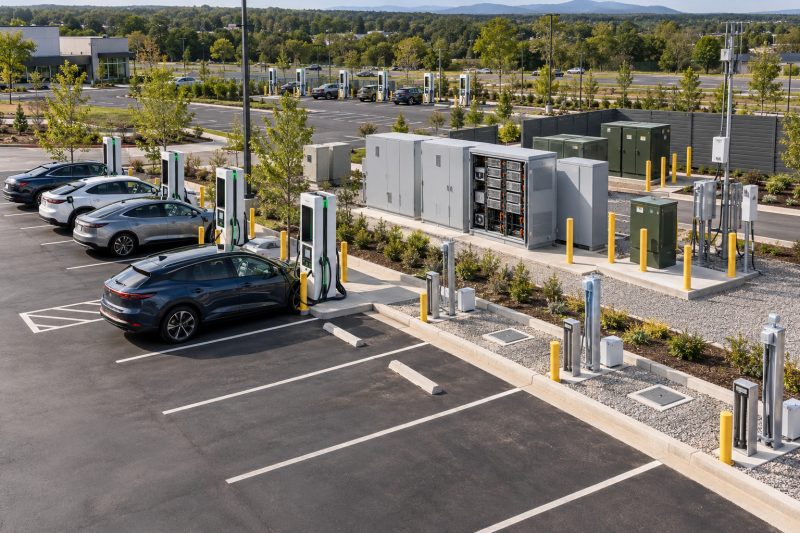
I have worked with charge point operators, site hosts and investors for years as general manager at Parwatt New Energy. We supply DC chargers and power modules used in public and commercial networks. I regularly review projects where the first installation looked complete yet later expansion required new trenches, larger transformers and long utility delays. Our equipment, including the FES-D30 DC EV Charger and modular systems, is designed so power and ports can grow with demand. In this article I explain how to future-proof an EV charging investment for long-term growth in 2026.
Why Today’s EV Charging Site Could Become Tomorrow’s Stranded Asset?
EV adoption, battery sizes and driver behavior continue to change. A site that meets today’s traffic can become congested, power-limited or commercially weak within a few years. When the electrical service, conduit routes, equipment pads and parking layout were sized only for the first installation, every later upgrade turns into a major construction project. The asset risks becoming stranded because further investment is no longer practical.
Today’s charging site can become a stranded asset when power, civil works and layout leave no room to grow. Later upgrades then approach the cost of a new build, and the original investment loses long-term value.
How Sites Become Constrained
I have visited locations where the first four chargers performed well. Within two years the queue length increased and drivers started avoiding the site. Adding two more ports required a new utility application, a larger transformer and fresh trenching through finished pavement. The cost and timeline surprised the owner.
Power is the most common constraint. A service that just covers the initial load leaves no headroom for higher-power modules or additional stalls. Demand charges also rise as utilization grows, squeezing margins if load management was never planned.
Civil and parking limits appear next. Without spare conduit, pull boxes or equipment pads, every new charger needs open-cut work. Without expandable parking geometry, new stalls interfere with traffic flow or land that has already been leased for other uses.
Communication and software lock-in create quieter problems. A site that depends on a single closed network or proprietary backend can face rising fees or limited feature updates. When the original supplier’s parts or software support end, the hardware becomes harder to keep online.
Here is a table that shows how early limits turn into stranded-asset risk:
| Early Decision | Short-Term Result | Later Constraint | Long-Term Risk |
|---|---|---|---|
| Minimum electrical service | Lower first cost | No headroom for more power | Costly utility upgrade |
| No spare conduit or pads | Fast initial build | Open-cut work for every addition | High civil cost |
| Fixed parking layout | Simple first design | No space for extra stalls | Capacity ceiling |
| Closed software / network | Quick go-live | Supplier lock-in | Rising fees or limited upgrades |
| No load management | Simple operation | High demand charges | Margin pressure |
This table reflects the expansion problems I discuss with site owners. At Parwatt we design chargers and modules, such as those in the EV Charger Category, so power can be added in steps when the site is ready.
In 2026 the cost of under-planning is higher because driver expectations for reliability and speed continue to rise. A site that cannot adapt loses both utilization and residual value.
The Future-Proofing Mistakes That Increase Long-Term Costs
Many future-proofing mistakes begin with a narrow comparison of charger purchase price and maximum power. Investors overlook utilization patterns, grid capacity, demand charges, software lock-in, communication reliability, maintenance response times and the risk that spare parts will become unavailable. These oversights raise the total cost of ownership far above the original equipment quote.
Future-proofing mistakes include judging projects only by charger price and peak power while ignoring utilization, grid limits, demand charges, software lock-in, connectivity, service response and parts availability. These gaps increase long-term cost.
Common Mistakes That Raise Lifetime Cost
One frequent mistake is buying the highest-power charger available without matching it to expected dwell time and arrival patterns. High power that sits unused still carries higher equipment and electrical cost.
Another mistake is assuming the utility service can be increased easily later. In many locations the lead time for a larger transformer or new primary service is measured in months or years. Sites that leave no spare capacity face long delays when demand grows.
Software and network choices are often treated as secondary. A closed protocol or single-vendor backend can limit the ability to switch management platforms, add new payment methods or adopt future smart-charging features. Switching later may require hardware changes.
Connectivity is sometimes left as a single cellular link with no failover. When authorization or payment traffic fails, the charger is effectively offline even though power is present. Revenue stops until the link returns.
Maintenance and parts planning receive too little attention. If power modules, cable assemblies or communication boards cannot be obtained quickly, downtime stretches and drivers lose confidence in the site.
Here is a table of costly mistakes:
| Mistake | Why It Happens | Long-Term Cost Impact | Better Practice |
|---|---|---|---|
| Max power focus only | Easy specification comparison | Unused capacity and higher CapEx | Match power to dwell and demand |
| No electrical headroom | Lowest first-cost design | Expensive late upgrades | Reserve capacity and conduit |
| Closed software / protocol | Fast initial integration | Lock-in and limited upgrades | Prefer open, versioned protocols |
| Single connectivity path | Simpler installation | Revenue loss during outages | Multi-network with failover |
| Weak parts / service plan | Deferred decision | Extended downtime | Confirm SLA and spare parts |
This table helps investors look past the initial quote. At Parwatt we emphasize modular power stages, such as the 30kW Power Module and 40kW Power Module, so capacity and serviceability can grow with the site.
I advise every project team to list the lifetime cost items before signing the equipment order. The list usually changes the ranking of the offers.
How to Design a Scalable EV Charging Site from Day One
Scalable design starts with demand analysis and then reserves the physical and electrical elements that are expensive to add later. Distribution capacity, conduit routes, equipment pads and parking geometry should be planned for growth. Load management allows more ports to share the available power while the site waits for larger utility service. Charger count and output power can then increase in phases.
Design a scalable site by forecasting demand, reserving electrical capacity and civil pathways, applying load management, and selecting hardware whose power and port count can grow in stages. Early reservation of hard-to-add elements keeps later expansion practical.
Core Elements of Scalable Design
Begin with a realistic demand forecast that includes current traffic, expected EV growth, dwell times and peak simultaneous sessions. The forecast does not need to be perfect; it needs to show the range of likely outcomes.
Size the electrical service and switchgear with headroom. Even if only part of the capacity is used at opening, the transformers, panels and feeders should allow additional load without a complete rebuild.
Install spare conduit, pull boxes and equipment pads during the first civil works. The incremental cost is far lower than cutting finished surfaces later.
Plan parking and traffic flow so additional stalls can be added without blocking circulation or violating accessibility rules. Land that may be needed for future chargers should not be permanently allocated to other uses without a clear plan.
Deploy dynamic load management from the start. The system can share limited power across active sessions, respect building loads and respond to tariff periods. This defers the date when a major utility upgrade becomes unavoidable.
Select charger hardware that can accept additional power modules or support higher output through software and module changes. Port count and power per port can then track measured demand.
Here is a scalable-design checklist:
- Demand forecast covering near- and medium-term scenarios
- Electrical service and switchgear sized with headroom
- Spare conduit, pull boxes and equipment pads installed
- Parking layout that allows extra stalls
- Load management active from day one
- Hardware that accepts additional power modules
- Clear pathway for future utility upgrade
- Documentation of reserved capacity for later phases
At Parwatt we support this approach with modular chargers and power stages that can be expanded as utilization grows. You can review options in the EV Charger Category.
I recommend that the civil and electrical drawings show the future state, not only the opening configuration. The drawings become the reference that keeps expansion feasible.
Which Hardware, Software and Connectivity Features Protect Your Investment
Hardware modularity, open communication protocols, remote diagnostics, over-the-air updates, multi-network connectivity, payment flexibility, cybersecurity and long-term parts availability all protect the value of a charging asset. Each feature reduces the chance that the site will become obsolete or unmaintainable before the investment is recovered.
Hardware modularity, open protocols, remote diagnostics, OTA updates, resilient connectivity, payment compatibility, cybersecurity and spare-parts support protect long-term investment value. These features keep the site adaptable and serviceable.
Features That Extend Asset Life
Modular power architecture allows individual power stages to be added or replaced without changing the whole cabinet. When a module fails, the charger can often continue at reduced power instead of going offline completely.
Open protocols such as OCPP, with clear version and profile support, reduce dependence on a single backend supplier. Sites can change or add management platforms as commercial needs evolve.
Remote diagnostics and over-the-air updates shorten repair times and allow new functions or security patches to be delivered without site visits. Uptime improves and operating cost falls.
Multi-network connectivity with automatic failover keeps authorization and payment traffic moving when one carrier or link fails. Local store-and-forward or offline modes can further protect revenue during short outages.
Payment compatibility across cards, apps and roaming networks widens the usable customer base and reduces the risk that a single payment partner’s problems will stop sessions.
Cybersecurity features—secure boot, encrypted communication, access control and regular patching—protect both the site and the wider network from incidents that could force prolonged shutdowns.
Spare-parts commitments and service-level agreements determine how quickly a failed cable, screen, payment terminal or power module can be replaced. A modular claim has little value if the parts are not available.
Here is a feature-protection summary:
| Feature Area | Protective Benefit | What to Verify |
|---|---|---|
| Modular power | Partial operation and staged growth | Module replaceability and availability |
| Open protocols | Backend and vendor flexibility | Exact OCPP version and profiles |
| Remote diagnostics / OTA | Faster repair and feature updates | Proven update process and security |
| Multi-network connectivity | Session continuity during outages | Failover behavior and coverage |
| Payment flexibility | Wider customer access | Supported methods and roaming |
| Cybersecurity | Reduced incident risk | Secure architecture and patch policy |
| Parts and service SLA | Controlled downtime | Contracted response and stock levels |
This set of features keeps the asset usable and upgradable. At Parwatt we design for modular serviceability and open communication in products such as the Battery Buffered Ultra Rapid EV Charger and our broader charger range.
I advise investors to score every hardware and software offer against this list. The score often reveals which low-priced option will become expensive to keep online.
A Practical Roadmap for Expanding Without Overbuilding
A practical expansion roadmap starts with a demand baseline, completes grid and site assessments, deploys a minimum viable scale, pre-builds critical infrastructure, monitors utilization and reliability, and expands only when measured triggers are reached. This sequence avoids both premature overbuilding and prolonged undercapacity.
Expand without overbuilding by setting a demand baseline, assessing grid and site limits, opening at minimum viable scale, pre-installing hard-to-add infrastructure, monitoring real performance, and adding capacity only when utilization and reliability data justify the step.
Step-by-Step Expansion Sequence
Establish a clear baseline of expected sessions, energy delivery, peak simultaneous use and revenue targets. The baseline becomes the reference for later decisions.
Complete a full electrical and civil assessment. Document existing capacity, utility upgrade lead times, conduit routes, pad locations and parking constraints. Identify which elements must be reserved in the first phase.
Deploy the minimum number of ports and power level that can deliver an acceptable customer experience and positive operating contribution. Avoid installing idle high-power capacity that raises demand charges without revenue.
During the first civil and electrical works, install the spare conduit, oversized ducts, extra pads and panel space that future phases will need. The incremental cost is small compared with later reconstruction.
Instrument the site for utilization by time of day, session completion rate, uptime, queue occurrence, energy cost per session, demand charges and revenue per port. These metrics replace optimistic forecasts as the expansion signal.
Define explicit triggers—for example sustained peak utilization above a set threshold, repeated queueing, or demand-charge levels that justify more load management or additional capacity. When triggers are met, move to the next phase.
Add ports or power modules in planned steps. Each step should reuse the reserved infrastructure and maintain the same open protocols and service standards.
Review the financial model after each phase. Confirm that the added capacity improves contribution margin and that maintenance and connectivity performance remain acceptable.
Here is a phased roadmap checklist:
- Demand and revenue baseline established
- Grid and site assessment completed
- Minimum viable port and power count deployed
- Spare conduit, pads and electrical headroom installed
- Utilization, uptime, queue and cost metrics active
- Clear numerical triggers for next phase defined
- Expansion executed in controlled steps
- Financial and operational review after each step
- Same open protocols and service standards maintained
- Parts and connectivity resilience confirmed at every phase
At Parwatt we support phased growth with modular chargers and power modules that can be added as triggers are reached. Partners can explore scalable options in the EV Charger Category and related systems on our main site. Further reading on charging technology appears in our articles on Electric Vehicle Charging and AC vs DC EV Charging.
Investors who follow this roadmap keep capital aligned with real demand. The site grows when the data say it should, and the original investment remains productive instead of becoming a constraint.
Conclusion
Future-proofing an EV charging investment does not mean installing the largest or most expensive chargers available. At Parwatt we design modular, open and serviceable systems so sites can adapt as demand grows. It means creating a site that can adapt without requiring major reconstruction. Investors should combine realistic demand forecasting with spare electrical capacity, expandable civil infrastructure, dynamic load management, modular hardware, open communication protocols, reliable connectivity, and clearly defined maintenance support. Software portability, cybersecurity, spare-parts availability, and operating costs should be evaluated alongside the initial equipment price. By deploying capacity in phases and using utilization, uptime, queueing, energy cost, and revenue data as expansion triggers, site owners can avoid both premature overbuilding and costly undercapacity while protecting the long-term value of their charging assets.

--- END ---
Related Posts
Business Ideas

Business Ideas

Business Ideas

Business Ideas


