

How to Use a Car Battery Charger Safely and Effectively in 2026
Apr 28,2026
Your car will not start one morning. You turn the key and hear only clicks. Many drivers feel stuck and frustrated in this situation. A good car battery charger can fix the problem fast and save you time and money.
Using a car battery charger is simple and safe when you follow basic steps. Connect positive first, then negative, set the right rate, and let it run. Most dead batteries recover enough to start in 2-4 hours with a smart charger. Modern units with auto shut-off make overnight charging safe.
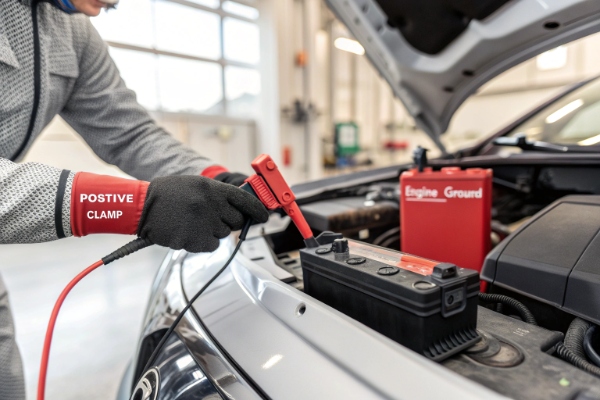 Person safely connecting a car battery charger
I work with automotive charging solutions every day at Parwatt. I have helped many customers bring dead batteries back to life without expensive towing or replacement. Let me show you the right way so you can handle this yourself with confidence.
What Is a Car Battery Charger?
You see different devices online and wonder which one actually works for your car. This question stops many people from buying the right tool.
A car battery charger is a device that sends electrical current back into a drained 12V lead-acid or AGM battery. It restores power so your vehicle starts again without jump starts or towing.
At Parwatt we supply reliable chargers for everyday drivers and fleet use. These units plug into a standard wall outlet and deliver controlled power to the battery. Smart models adjust the rate automatically to protect the battery.
Main Types of Car Battery Chargers
You will find trickle chargers, smart chargers, and fast chargers. Trickle units add power slowly and safely. Smart chargers detect the battery state and stop when full. Fast chargers work quicker but need careful monitoring.
Here is a simple table to compare them:
| Type | Charging Speed | Best Use Case | Safety Features |
|---|---|---|---|
| Trickle (2A) | Very slow | Maintenance and long-term | Low risk of overcharge |
| Smart (2-10A) | Medium | Dead batteries, daily use | Auto shut-off, detection |
| Fast (20A+) | Quick | Emergency quick boosts | Needs monitoring |
I recommend smart chargers for most people. They prevent damage and last longer.
Our DC10 Car Battery Charger offers smart features in an affordable package. Many customers use it for reliable results.
Safety Precautions Before You Start
You want to avoid sparks, acid burns, or damage to your car electronics. I always start here because safety comes first.
Take these precautions every time: work in a well-ventilated area, wear eye protection and gloves, turn off the charger before connecting cables, and never smoke near the battery.
Batteries release hydrogen gas during charging. Good airflow reduces explosion risk. Remove jewelry and loose clothing. Keep a bucket of water and baking soda nearby to neutralize acid spills.
Quick Safety Checklist
- Read your charger manual and your car owner’s manual.
- Turn off all vehicle accessories and the ignition.
- Clean battery terminals with a wire brush.
- Place the charger on a stable, non-flammable surface away from the battery if possible.
- Use only chargers rated for your battery type (12V lead-acid or AGM).
These steps take just a few minutes but prevent serious problems.
Check our blog on car battery charger guide for more detailed safety advice.
Step-by-Step: How to Use a Car Battery Charger
You need clear instructions that work in real life. Here is the exact process I share with every customer.
Follow these steps: 1. Make sure the charger is off and unplugged. 2. Connect the red positive clamp to the positive battery terminal. 3. Connect the black negative clamp to a grounded metal part on the engine block, not the negative terminal if possible. 4. Plug in the charger and set the correct rate. 5. Turn it on and monitor progress.
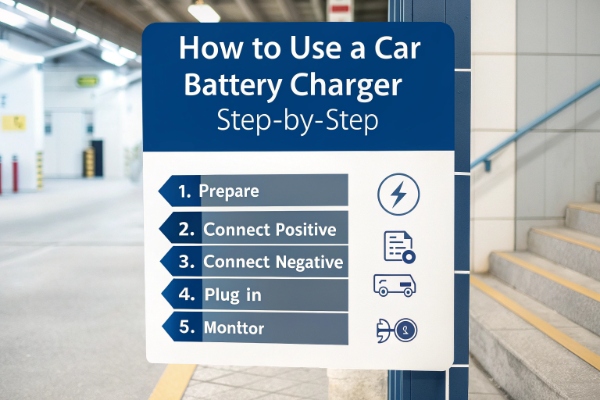 Step-by-step car battery charger use illustration
Always connect positive first and disconnect negative first when you finish. This order reduces spark risk.
Detailed Steps with Tips
- Park in a safe, ventilated spot and turn off the car completely.
- Clean the terminals so clamps make good contact.
- Attach red clamp to positive (+) terminal.
- Attach black clamp to a clean unpainted metal ground on the engine.
- Plug the charger into the wall outlet.
- Select the proper voltage and amperage (start low for safety).
- Turn on the charger and check for proper operation.
- When done, turn off the charger first, then remove clamps in reverse order.
I follow this sequence every time. It keeps everything safe and effective.
Our DC80 Car Battery Charger makes these steps even easier with clear indicators.
How Long Does It Take to Charge a Car Battery?
You want to know when you can drive again. The answer depends on a few simple factors.
A completely dead car battery usually takes 4-12 hours to reach enough charge to start the engine with a 6-10A charger. A full charge from empty can take 8-24 hours depending on battery size and charger rate.
Smart chargers slow down near the end to protect the battery. A 2A trickle charge is safest for overnight maintenance but takes longer.
Charging Time Guide
Use this table for planning:
| Charger Amps | Battery Condition | Time to Start Engine | Full Charge Time |
|---|---|---|---|
| 2A (Trickle) | Dead | 8-12 hours | 24-48 hours |
| 6-10A | Dead | 2-4 hours | 8-12 hours |
| 20A+ | Low | 1-2 hours | 4-6 hours |
Check the charger display or your battery voltage regularly. Stop when it reaches 12.6-12.8 volts for a full charge.
Read our car battery charger guide for more timing details.
Advanced Tips for Safe and Efficient Charging
Basic steps work well, but these extra tips make charging better and extend battery life.
Use smart chargers with automatic shut-off for overnight use. They switch to float mode and prevent overcharging. Always charge in a cool, dry place and test your battery health once a year.
Modern chargers in 2026 include temperature sensors and multi-stage charging. They deliver bulk charge first, then absorption, and finally float. This process keeps your battery healthy longer.
Smart Practices I Recommend
- Charge at lower amps for longer life instead of rushing with high amps.
- Drive your car for at least 20-30 minutes after charging to let the alternator finish the job.
- Maintain your battery by charging every few weeks if the car sits idle.
- Combine with a jump starter for emergencies — our KF03 Jump Starter Tire Inflator pairs perfectly with chargers.
Avoid extreme temperatures. Cold slows charging while heat increases gas production.
Our DC100 Car Battery Charger includes advanced multi-stage technology for better results.
When to Replace Instead of Recharge
Not every battery recovers fully. I help customers decide this important question often.
Replace the battery if it is more than 4-5 years old, holds less than 80% capacity after charging, or shows physical damage like bulging or leaks. Frequent recharging every week signals a failing battery or alternator problem.
Test the battery with a load tester at an auto parts store. If it fails the test after a full charge, replacement makes more sense than repeated charging.
Conclusion
A car battery charger is a practical tool that saves you time and money when used correctly. Follow safety rules, use the right steps, and choose a smart model for the best results.
Ready to keep your car reliable? Visit Parwatt Parts and explore our full range of car battery chargers.
CTA: Shop Reliable Car Battery Chargers Now – Get Expert Help from Parwatt
FAQ
Is it safe to leave a car battery charger on overnight?
Yes, with smart chargers that have automatic shut-off. Avoid manual chargers unattended.
How do I connect the charger safely?
Connect positive (red) first, then negative (black) to a ground. Reverse when disconnecting.
What amperage should I use?
Start with 2-10A for safety. Higher amps speed things up but need more monitoring.
Can I charge the battery while it is still in the car?
Yes, in most cases. Just ensure good ventilation and follow connection order.
How often should I charge my car battery?
Charge every few weeks if the car sits idle. Test yearly for best performance.
Which Parwatt charger is best for home use?
Our DC series smart chargers like the DC200 Plus work great for most drivers.

--- END ---
Related Posts
Business Ideas

Business Ideas

Business Ideas

Business Ideas


