

Over-the-Air (OTA) Updates for EV Charging Hardware: Why They Matter in 2026
Jul 30,2026
Traditional EV charger maintenance still depends on sending technicians to every site. Response times are slow. Costs rise with every visit. Security fixes and new features arrive late. At Parwatt I see these delays hurt both operators and drivers every month.
Over-the-air updates let manufacturers and operators improve EV charger firmware and software remotely. They deliver bug fixes, security patches, performance gains, and new features without site visits. In 2026 OTA capability reduces downtime, lowers operating costs, and keeps charging hardware current with evolving standards.
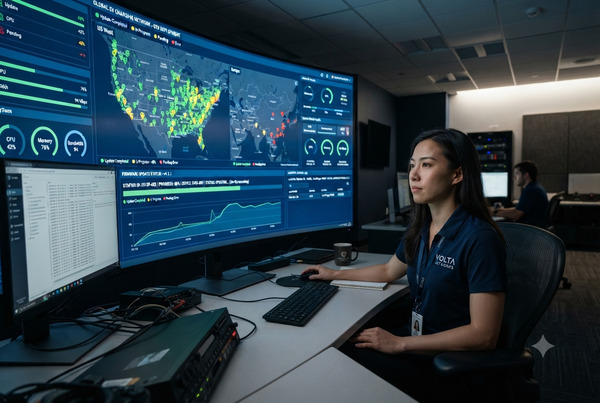
I have worked with charge point operators and fleet managers for years as general manager at Parwatt New Energy. We supply DC chargers and power modules that must stay reliable over long service lives. I regularly hear the same complaint. A small software issue requires a truck roll. A security patch waits weeks because technicians cannot reach every location quickly. Our chargers such as the FES-D30 DC EV Charger and our power modules are designed with remote management in mind because we know field visits are expensive and slow. In this article I explain why OTA updates matter in 2026 and how they change the way charging networks stay healthy.
Why Traditional EV Charger Maintenance Is Becoming Too Slow and Costly?
Sending a technician to every charger for routine fixes or upgrades creates high costs and long delays. Travel time, labor, and vehicle expenses add up quickly across a network. Faults stay active longer. New features arrive late. Security gaps remain open for weeks or months. These problems grow worse as networks expand.
Traditional on-site maintenance for EV chargers is slow and expensive. Each visit requires travel, labor, and coordination. Faults persist longer, security updates lag, and hardware falls behind current requirements. Remote updates solve many of these delays and reduce recurring field costs.
The Rising Cost of Physical Visits
I have reviewed maintenance logs from operators who manage dozens or hundreds of chargers. A single software-related issue can generate multiple site visits. Each visit costs hundreds of dollars when travel and labor are included. Across a large network the annual total becomes significant. Many of those visits could be avoided with remote capability.
Response time is another problem. When a charger develops a communication fault or a minor control issue, the operator must schedule a technician. In remote or high-traffic locations the delay can last days. During that time the charger may operate at reduced capability or stay offline. Drivers experience the problem as poor reliability.
Security creates additional pressure. New vulnerabilities appear regularly in connected devices. Without remote update ability the operator must wait for a physical visit to apply the fix. The exposure window stays open longer than necessary.
Feature and compatibility updates face the same barrier. Backend systems, roaming protocols, and smart-charging logic continue to evolve. Chargers that cannot receive remote updates slowly lose compatibility or miss performance improvements.
Here is a table that shows the main drawbacks of traditional maintenance:
| Problem | What Happens | Cost or Operational Impact | Who Feels It Most |
|---|---|---|---|
| High travel and labor cost | Technician must visit each site | Rising annual maintenance budget | Large commercial networks |
| Slow fault response | Issues remain active for days | Lost sessions and driver complaints | Public and fleet sites |
| Delayed security patches | Vulnerabilities stay open | Higher cyber risk | All connected chargers |
| Late feature updates | Hardware falls behind standards | Reduced competitiveness | Operators competing on reliability |
| Inconsistent fleet status | Different chargers run different versions | Harder network management | Multi-site operators |
This table reflects patterns I see across many projects. At Parwatt we design our equipment, including the 30kW Power Module and 40kW Power Module, to support remote management so operators can reduce these costs. Traditional maintenance will always be needed for physical repairs, yet many software and configuration tasks no longer require a truck roll.
As networks grow denser and labor costs rise, the old model becomes harder to sustain. Operators who continue to rely only on physical visits face higher operating expenses and slower improvement cycles. OTA capability changes the economics of long-term ownership.
Common Misconceptions About OTA Updates for Charging Hardware
Many operators still treat chargers as fixed hardware that should not change after installation. Others worry that remote updates create new security risks or will interrupt active charging sessions. These views lead some buyers to undervalue OTA capability when selecting equipment.
Common misconceptions include the belief that chargers are finished products after installation, that OTA updates are unsafe, and that remote changes will cause frequent downtime. In reality well-designed OTA systems improve security, add features, and reduce the need for site visits when proper controls are in place.
Clearing the Main Myths
One frequent myth is that hardware is complete once it leaves the factory. In practice charging standards, backend platforms, and cyber threats continue to change. A charger that cannot receive updates slowly becomes less capable and less secure.
Another myth is that remote updates are inherently risky. Any connected system carries some risk, yet modern OTA designs use cryptographic signing, encrypted delivery, and staged rollouts. These controls often make the update process safer than irregular manual interventions by different technicians.
Some operators fear that updates will interrupt charging sessions or take chargers offline for long periods. Good systems schedule updates during low-usage windows, allow sessions to finish, and support rollback if a problem appears. The actual interruption is usually short and planned.
A fourth misconception is that OTA only matters for large networks. Home chargers and small commercial sites also benefit. Residential users gain access to new features and security fixes without arranging a service visit. Small operators avoid the cost of sending staff to scattered locations.
Here is a table that addresses these misconceptions:
| Misconception | Reality in 2026 | Result of the Myth | Better View |
|---|---|---|---|
| Charger is finished at installation | Standards and threats continue to evolve | Hardware falls behind | Treat chargers as updatable assets |
| OTA is too risky | Signed and encrypted updates reduce exposure | Delayed security fixes | Proper controls make OTA safer |
| Updates cause frequent downtime | Updates can be scheduled and rolled back | Unnecessary fear of change | Plan updates for low-impact windows |
| Only large fleets need OTA | Home and small sites also benefit | Missed long-term value | OTA helps any connected charger |
| Manual updates are more reliable | Inconsistent field work creates version drift | Harder fleet management | Centralized OTA improves consistency |
This table helps operators evaluate OTA more accurately. At Parwatt we build remote management capability into our chargers and modules because we have seen the long-term cost of static hardware. You can explore current solutions in our EV Charger Category.
I have spoken with operators who initially resisted OTA because of security concerns. After reviewing signed update processes and staged deployment methods, most changed their view. The ability to close vulnerabilities quickly and keep the fleet consistent proved more valuable than the perceived risk.
How OTA Updates Actually Improve EV Charger Performance and Reliability
OTA updates deliver practical improvements that operators notice in daily operation. They fix bugs remotely, apply security patches, enhance charging algorithms, and maintain compatibility with backend systems. These changes increase uptime and reduce the number of field visits.
OTA updates improve EV charger performance by delivering remote bug fixes, security patches, feature enhancements, and compatibility improvements. They reduce site visits, shorten fault duration, and keep hardware aligned with current standards and backend platforms. The result is higher reliability and lower operating cost.
Practical Benefits Operators Experience
Bug fixes arrive faster. When a control logic issue or communication fault is identified, the manufacturer can prepare a patch and push it to affected units. Operators no longer wait for the next scheduled maintenance cycle. Chargers return to normal operation sooner.
Security patches close vulnerabilities more quickly. Connected chargers face ongoing cyber threats. OTA allows signed updates to reach the entire fleet within days instead of weeks or months. The window of exposure shrinks.
Performance and feature updates continue after installation. Charging algorithms can be refined. New smart-charging behaviors can be added. Support for updated OCPP versions or roaming requirements can be introduced without hardware replacement.
Compatibility with backend systems stays current. Charge point management platforms evolve. Payment systems change. Smart energy management rules are updated. OTA keeps the charger side aligned with these changes.
Here is a list of the main improvement areas:
- Faster resolution of software-related faults
- Quicker application of security patches
- Ongoing performance and feature enhancements
- Maintained compatibility with CPMS and roaming platforms
- Reduced number of physical maintenance trips
- More consistent software versions across the fleet
At Parwatt we see these benefits when operators use our remotely manageable equipment. The Battery Buffered Ultra Rapid EV Charger and similar models support the kind of remote control that makes these updates practical. You can also review broader charging system topics in our article on Electric Vehicle Charging.
I have reviewed network data before and after OTA programs were activated. The number of repeat software-related tickets dropped. Average time to resolve certain faults decreased. Operators gained the ability to test improvements on a small group of chargers before wider deployment. These operational gains compound over the life of the hardware.
Reliability improves because problems are corrected before they affect large numbers of drivers. Consistency improves because every charger can run the same validated software version. Both results support higher user satisfaction and lower long-term cost.
What Makes a Robust OTA System for Commercial and Home Chargers
Not every remote update system is equal. A robust OTA design includes strong security, staged deployment, rollback capability, clear monitoring, and the ability to manage many sites from one platform. These elements protect the network while still allowing continuous improvement.
A robust OTA system uses cryptographic signing, encrypted delivery, staged rollouts, automatic rollback, detailed logging, and centralized fleet management. These controls protect commercial networks and home chargers from failed updates while still enabling timely fixes and feature improvements.
Essential Design Elements
Security starts with signed firmware. Each update package is cryptographically signed by the manufacturer. The charger verifies the signature before installing anything. Encrypted transport protects the package while it travels to the device.
Staged deployment reduces risk. Updates first go to a laboratory or internal test group. Then a small pilot set of field chargers receives the update. Only after successful monitoring does the update expand to the full fleet. This approach catches problems early.
Rollback capability is critical. If an update causes unexpected behavior, the system can return the charger to the previous working version. Operators avoid prolonged outages caused by a bad release.
Monitoring and audit logs record what was installed, when it was installed, and whether it succeeded. These records support troubleshooting and compliance requirements.
Centralized management lets operators see the software status of every charger. They can target updates by model, location, or software version. Large networks gain consistency. Smaller operators gain simplicity.
Here is a comparison table of key OTA capabilities:
| Capability | Why It Matters | Risk Without It | Benefit With It |
|---|---|---|---|
| Cryptographic signing | Prevents unauthorized firmware | Malicious or corrupted updates | Only trusted code runs |
| Staged rollout | Limits impact of problems | Fleet-wide failures | Problems found early |
| Automatic rollback | Recovers from bad updates | Extended downtime | Quick return to service |
| Detailed logging | Supports diagnosis and compliance | Unclear update history | Traceable operations |
| Central fleet view | Enables consistent management | Version drift across sites | Uniform software state |
This table shows why the quality of the OTA system matters as much as the presence of the feature. At Parwatt we design our chargers and modules to support secure remote updates because operators need these controls. Our mobile and fixed solutions, including options such as the META Mobile EV Charger with Battery, are built with long-term manageability in mind.
Home chargers benefit from the same principles on a smaller scale. A well-designed residential OTA system can deliver security fixes and occasional feature improvements without requiring the owner to schedule a visit. The underlying requirements for signing, safe installation, and recovery remain the same.
Ready to Future-Proof Your Charging Hardware? Here’s the Next Step
Future-proofing begins with selecting chargers that support secure remote updates and with planning how those updates will be managed. Operators who treat OTA as a core requirement reduce long-term costs and keep their networks current.
Evaluate the OTA capability of your current and planned chargers. Prioritize systems that offer signed updates, staged deployment, rollback, and clear monitoring. Then establish a simple process for testing and rolling out updates across your sites. These steps keep hardware useful longer and lower lifetime operating costs.
Practical Actions to Take
Review the remote management features of every charger model in your network or purchasing plan. Confirm that firmware updates can be delivered securely and that rollback is supported.
Ask suppliers how they validate updates before release and how they support staged rollouts. Clear processes reduce risk for the operator.
Create a basic update policy. Decide who approves updates, how pilot groups are selected, and how success is measured before wider deployment.
Ensure monitoring tools can show software versions and update status across all sites. Visibility prevents version drift and simplifies troubleshooting.
For new projects, treat OTA capability as a standard requirement rather than an optional extra. The cost difference is usually small compared with the long-term savings in field visits and downtime.
Here is a short action list:
- Inventory current chargers and their remote update capabilities.
- Require signed firmware, rollback, and staged rollout support in new purchases.
- Define a simple pilot-and-expand update process.
- Set up monitoring for software versions across the fleet.
- Schedule periodic reviews of available updates and security patches.
- Train staff on the update approval and verification steps.
At Parwatt we help operators select equipment that remains manageable over many years. Our chargers and power modules are designed to support secure remote improvements so networks stay reliable as standards and threats evolve. You can explore available options in the EV Charger Category.
Taking these steps turns chargers from static devices into assets that can improve over time. The result is lower operating cost, faster response to problems, and a more consistent experience for drivers.
Conclusion
In 2026, EV charging hardware is no longer a static product. Over-the-air updates transform chargers from fixed devices into continuously improving assets. They reduce site visits, improve uptime, close security gaps faster, and keep equipment compatible with evolving standards and backend systems. At Parwatt we design our chargers and power modules with secure remote management as a core capability. Whether for home chargers or large commercial networks, OTA capability is becoming a practical requirement rather than a nice-to-have feature. Operators who adopt well-designed OTA systems lower long-term costs and deliver a more reliable charging experience. Don’t treat your chargers as finished products. Choose hardware that can be improved remotely and keep your charging network ready for the future.

--- END ---
Related Posts
Business Ideas

Business Ideas

Industry News

Business Ideas


