

Single-Phase vs Three-Phase EV Charging: Which is Best for Your Home in 2026?
May 11,2026
You want to charge your EV at home quickly and safely. But you are confused about single-phase and three-phase options. The wrong choice could mean slow charging, high costs, or even electrical problems.
Single-phase charging works for most homes and is cheaper to install. Three-phase offers faster speeds but may require upgrades. The best choice depends on your home’s power supply, daily driving distance, and future plans.
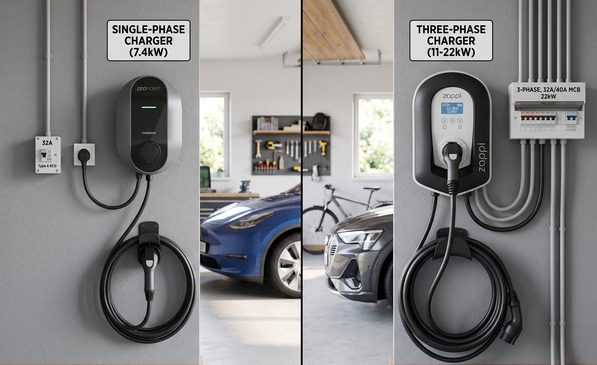
You now see why this decision matters. Let’s break down the confusion, explain the basics, give you a practical guide, highlight advanced options, and help you make the right choice for your home.
Why Most Homeowners Get Confused About Single-Phase vs Three-Phase EV Charging (And Why It Matters in 2026)?
I talk to homeowners every week. They see different charger options online and feel overwhelmed. Many end up choosing the wrong system and regret it later.
Most homeowners get confused because they do not know their home’s power supply type. This confusion leads to slow charging, unexpected installation costs, or even safety issues. In 2026, with larger EV batteries, making the right choice has never been more important.

Growing EV Battery Sizes
New EVs have bigger batteries. Single-phase may take all night to charge. Three-phase can cut charging time in half for some models.
Installation Cost Anxiety
Homeowners worry about expensive electrical upgrades. They are not sure if they need three-phase or if single-phase is enough.
Future-Proofing Concerns
People want solutions that work for their next EV. They fear choosing single-phase now will limit them later.
Safety and Reliability Fears
Wrong choice can cause circuit overloads or tripped breakers. This creates frustration and potential safety risks.
Budget Pressure
Installation and electricity costs add up. Homeowners want maximum value without wasting money on unnecessary upgrades.
| Common Confusion | Real Impact on Homeowners | Why It Matters in 2026 |
|---|---|---|
| Power supply type | Wrong charger choice | Slower or unsafe charging |
| Installation costs | Unexpected expenses | Budget overruns |
| Future needs | Outdated system soon | Need to upgrade again |
This table shows why confusion is common and costly. Many homeowners delay their decision because of it. The good news is that with clear information, the choice becomes much easier.
My Homeowner Conversation
A family in California wanted fast charging for their new EV. They thought they needed three-phase. After checking their panel, we found single-phase 7.4kW was perfect. They saved thousands on installation.
Fleet and Multi-EV Homes
Homes with multiple EVs face even more pressure. Understanding the difference helps plan charging without overloading the system.
Confusion is normal. Let’s start with the basics next.
Single-Phase vs Three-Phase Power: The Basics Explained Simply?
Many people hear “single-phase” and “three-phase” but do not know what they mean for home EV charging. Let me explain it clearly.
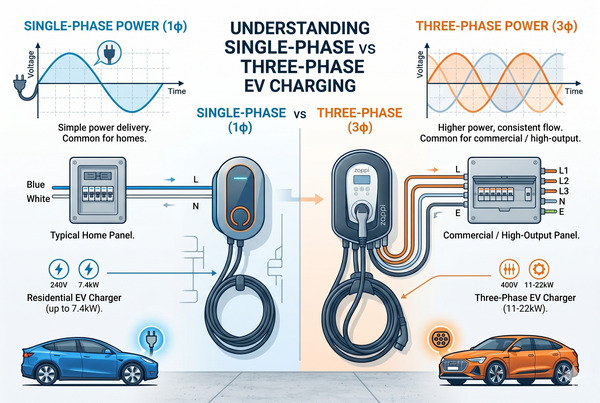
Single-phase power is the standard in most homes. It uses one live wire and delivers power in one flow. Three-phase uses three live wires and delivers power more efficiently. This makes three-phase faster for EV charging but harder to install.
What Single-Phase Means for You
Single-phase is what most American homes have. It typically supports up to 7.4kW charging. This is enough for overnight charging for most daily drivers.
What Three-Phase Means for You
Three-phase is more common in commercial buildings but available in some newer homes. It can deliver 11kW to 22kW. Charging is much faster.
Power Delivery Difference
Single-phase power comes in waves. Three-phase delivers smoother, more consistent power. This reduces heat and improves efficiency.
Home Impact
Single-phase is easier and cheaper to install. Three-phase may require panel upgrades and permits. The choice depends on your needs.
2026 Reality
With larger EV batteries, three-phase is becoming more attractive for high-mileage drivers. However, single-phase remains sufficient for most families.
| Power Type | Typical Home Power | Charging Speed (Level 2) | Installation Cost |
|---|---|---|---|
| Single-Phase | Most homes (240V) | Up to 7.4kW | Lower |
| Three-Phase | Some newer homes | 11kW to 22kW | Higher |
This table gives you a simple comparison. Most homes start with single-phase. Understanding this helps you plan better.
My Neighbor’s Story
My neighbor installed a single-phase charger. It fully charges his EV overnight. He saved money and avoided complicated upgrades. He is very happy with his choice.
Multi-EV Home Tip
If you have two EVs, single-phase can still work with smart load management. Three-phase gives more flexibility for simultaneous charging.
Basics explained. Let’s move to how you check your home next.
How to Check Your Home’s Power Supply and Choose the Right Charger for Your Needs?
You do not need to be an electrician to make the right choice. A few simple steps will guide you.
Check your electrical panel, review your utility bill, and assess your daily driving distance. These three steps help you decide between single-phase and three-phase charging for your home.
Step 1: Check Your Electrical Panel
Open your breaker box. Count the main breakers. Two large breakers usually mean single-phase. Three mean three-phase.
Step 2: Review Your Utility Bill
Look for voltage and service type. Most homes show 120/240V single-phase. Contact your utility if unsure.
Step 3: Calculate Your Charging Needs
Figure out your daily miles. A 7.4kW single-phase charger adds about 25-30 miles per hour. Three-phase adds much more.
Step 4: Consider Future Plans
Planning solar or a second EV? Three-phase may be worth it. Otherwise, single-phase is often enough.
Step 5: Consult a Professional
Call a licensed electrician for confirmation. They can also advise on permits and costs.
| Step | What to Do | What It Tells You |
|---|---|---|
| Check panel | Count main breakers | Single or three-phase |
| Review utility bill | Look for voltage and service | Confirm power supply |
| Calculate needs | Daily miles and charging time | Required power level |
| Future planning | Solar or second EV | Long-term recommendation |
This table gives you a clear checklist. Follow it and you will make an informed decision.
My Home Assessment Story
When I bought my EV, I checked my panel first. It was single-phase. I installed a 7.4kW charger. It meets all my needs without expensive upgrades.
Family Home Example
A family with two EVs used single-phase with smart scheduling. They charge one car at night and the other during off-peak hours. It works perfectly.
Practical steps done. Advanced tips next.
Advanced Tips: Smart Charging, Solar Integration, Load Management & Future-Proofing in 2026?
Basic charging is simple. Advanced features make your system smarter and more efficient.
Use smart chargers with load management, integrate solar when possible, and plan for future needs. These tips help you maximize efficiency and save money in 2026.
Smart Load Management
Smart chargers monitor your home’s power use. They adjust charging speed automatically to avoid tripping breakers.
Solar Integration
Pair your charger with solar panels. Charge during the day with free solar power. Many systems now support bidirectional flow.
Dynamic Power Sharing
For homes with multiple EVs, dynamic sharing distributes power intelligently between vehicles.
App Control and Scheduling
Control charging from your phone. Schedule sessions during off-peak electricity rates to save money.
Future-Proofing
Choose chargers that support higher power levels and new standards. This protects your investment for years.
| Advanced Feature | Benefit | 2026 Value |
|---|---|---|
| Load management | Prevents overloads | Safer and more reliable |
| Solar integration | Uses free energy | Lower electricity bills |
| App scheduling | Off-peak charging | Significant cost savings |
| Dynamic power sharing | Multiple EVs | Efficient home use |
This table shows advanced features worth considering. They make charging smarter and cheaper.
My Solar Setup
I installed solar and a smart charger. I charge mostly during the day with free power. My electricity bill dropped noticeably.
Multi-EV Home Tip
Use a charger with power sharing. It prevents overloads when both cars charge at the same time.
Advanced tips covered. Final recommendations next.
Which EV Charging Solution is Best for Your Home? Final Recommendations?
After helping many homeowners, I can give clear recommendations based on common situations.
For most homes, a quality single-phase 7.4kW smart charger is the best choice. If you drive high miles, have multiple EVs, or plan solar, consider three-phase. Parwatt offers reliable solutions for both.
Most Homes Recommendation
Single-phase 7.4kW charger. Easy installation. Sufficient for daily needs. Good value.
High-Mileage or Multi-EV Homes
Three-phase 11kW or higher. Faster charging. Better for busy households.
Solar-Ready Homes
Choose a charger with solar integration. Maximize free energy and reduce bills.
Budget-Conscious Homes
Start with single-phase. Upgrade later if needed. Smart features add value without high cost.
Final Advice
Assess your panel first. Choose based on real needs. Parwatt provides high-quality cables, chargers, and accessories for both single-phase and three-phase setups.
| Home Situation | Recommended Solution | Why It Fits |
|---|---|---|
| Average daily driver | Single-phase 7.4kW | Sufficient and affordable |
| High mileage / 2+ EVs | Three-phase 11-22kW | Faster charging |
| Solar integration | Smart charger with solar support | Maximize free energy |
| Budget first | Single-phase with smart features | Good value |
This table helps you decide quickly. Match your situation to the right solution.
My Recommendation Story
A neighbor with one EV chose single-phase. He charges overnight and saves money. Another with two EVs went three-phase. Both are happy with their choices.
Parwatt Support
We help homeowners choose the right system. Our products are reliable and backed by strong technical support.
Final recommendations clear. Let’s conclude.
Conclusion
In 2026, most ordinary homes still do not need three-phase power to meet daily EV charging needs. A high-quality single-phase 7.4kW smart charger combined with off-peak electricity can fully charge most home EVs overnight. However, if you have high-mileage needs, multiple EVs, or plan to add solar, three-phase charging can significantly improve efficiency and future-proof your setup.
The key is matching the solution to your home’s actual power supply, driving habits, and long-term budget. The right decision not only saves on installation and electricity costs but also makes charging safer, smarter, and more reliable. Parwatt, as a professional EV charging parts and solutions provider, offers high-quality, compatible products for both single-phase and three-phase setups to help you achieve your ideal home charging solution.
Get Expert Advice on Your Home Charging Setup
Browse Parwatt Single-Phase & Three-Phase EV Charging Solutions
Frequently Asked Questions About Single-Phase vs Three-Phase EV Charging
Is single-phase charging enough for most homes?
Yes. A 7.4kW single-phase charger adds about 25-30 miles per hour. This is sufficient for most families charging overnight.
How do I know if my home has single-phase or three-phase power?
Check your electrical panel or utility bill. Two large breakers usually mean single-phase. Three mean three-phase. An electrician can confirm quickly.
Do I need to upgrade my electrical panel for three-phase charging?
Not if you already have three-phase service. If not, an upgrade may be required. Costs vary by location and panel condition.
How much faster is three-phase charging compared to single-phase?
Three-phase can deliver 11-22kW versus single-phase 7.4kW. Charging time can be 2-3 times faster depending on your EV.
Does three-phase charging affect battery health?
No. Modern smart chargers control current and temperature safely. Both single-phase and three-phase are safe when used correctly.
Which Parwatt products should I consider for my home?
Parwatt offers reliable single-phase and three-phase charging cables, connectors, and complete solutions. Contact us for personalized recommendations.

--- END ---
Related Posts


Business Ideas

Business Ideas
