

Global EV Adoption Rates and Their Impact on Charging Infrastructure: Are You Asking the Wrong Question?
Jun 11,2026
Last month, a fleet operator called me asking which region had the highest EV adoption rate because they wanted to "invest where the growth is." I asked them a different question: "What’s your acceptable idle period before your charging equipment needs to hit 30% utilization?" They went silent. That’s when I realized most buyers are chasing adoption headlines when they should be reverse-engineering deployment timing from actual usage patterns.
Here’s what matters: High regional EV adoption rates don’t automatically justify immediate charging infrastructure investment. Utilization rate, fleet composition, and dwell time determine ROI far more than headline adoption percentages. I’ve seen buyers commit infrastructure 18 months ahead of real demand, only to watch equipment sit at 12% utilization while capital stays locked up. The real question isn’t "which market leads?" — it’s "when should I deploy, at what scale, and with which specs?"
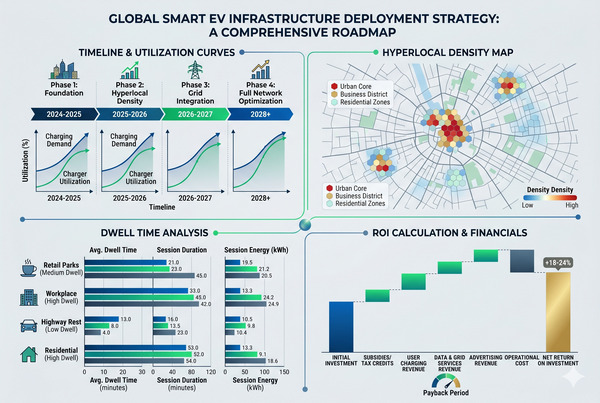
Before you translate adoption data into capex decisions, you need to understand why the "build it and they will come" assumption collapses in real procurement scenarios — and how to match deployment pace to observable usage curves instead of racing policy projections.
Why Do High Adoption Rates Fail to Predict Infrastructure Needs?
I get this question constantly: "Norway has 80%+ EV sales share — should I replicate their charging density in my market?" My answer always starts with: "What’s your vehicle mix and dwell time profile?" Because adoption rate alone hides three critical variables that determine whether your infrastructure investment makes sense or becomes a stranded asset.
Regional EV adoption rates measure sales velocity, not infrastructure demand. You need three additional data points: average daily mileage (determines charging frequency), vehicle type distribution (Level 2 vs. DC fast charging need), and typical parking duration (matches charger type to dwell time). Without these, you’re guessing.
Let me walk through the disconnect I see in procurement conversations. A buyer shows me a chart: "This region hit 25% EV penetration — we need to deploy now." I ask: "What percentage are fleet vehicles with depot charging vs. individual owners relying on public infrastructure?" Silence. That split changes everything. Fleet EVs with overnight depot access don’t create public charging demand — they reduce it. The adoption rate tells you nothing about public infrastructure utilization unless you segment by charging access type.
Here’s the pattern I’ve observed across customer missteps:
| Mistake Pattern | Root Cause | Observable Outcome |
|---|---|---|
| Deploying DC fast chargers in residential areas | Assumed "high adoption = need for fast charging" | <15% utilization after 12 months; equipment sits idle during off-peak |
| Over-investing ahead of density thresholds | Used national adoption rate instead of hyperlocal EV registration data | 18–24 month payback delay; opportunity cost of locked capital |
| Spec mismatch (Level 3 where Level 2 suffices) | Followed competitor deployments instead of usage pattern analysis | 3x higher capex and maintenance costs for same utilization outcome |
The second variable buyers miss: dwell time. I worked with a property developer who wanted DC fast chargers at a shopping mall because "fast charging is the future." I asked: "What’s your average visitor parking duration?" Four hours. That’s Level 2 territory — visitors don’t need 80% charge in 30 minutes when they’re shopping for half a day. They deployed Level 2, cut equipment costs by 60%, and hit 45% utilization within six months. The adoption rate in their region didn’t change — but matching charger specs to real behavior did.
How Should You Translate Adoption Data Into Deployment Timing?
The question I hear most often: "When is the right time to invest?" My response: "When your utilization model shows 25–30% average usage within 12 months of deployment." That’s the threshold where equipment isn’t sitting idle but you’re not scrambling to add capacity after demand spikes. But calculating that requires reversing the question buyers typically ask.
Instead of asking "what’s the regional EV adoption rate?", ask: "At what local EV density does my target location type generate enough charging events per day to justify my equipment capex?" You need three inputs: hyperlocal EV registration data (not regional averages), location-specific dwell time patterns, and your acceptable utilization threshold before ROI breaks even.
Here’s how I help buyers reframe the timing question. We start with observable constraints, not projections:
Step 1: Define your utilization breakeven threshold
I tell buyers: "What’s your minimum acceptable utilization rate at 12 months post-deployment?" Most say 20–30%. That number becomes your decision gate — if your usage model shows less than 20% within year one, you’re deploying too early and locking capital unnecessarily.
Step 2: Calculate hyperlocal EV density, not regional adoption rates
National or state-level adoption rates are useless for site-specific decisions. I ask: "How many registered EVs are within a 5km radius of your proposed site?" If the answer is below 500 vehicles and you’re targeting individual owners (not fleets), your charging events per day won’t justify equipment costs. You need density thresholds, not adoption percentages.
Step 3: Model usage frequency based on vehicle type and charging access
Here’s where buyers make the biggest mistake: assuming all EVs create equal infrastructure demand. They don’t. A Tesla Model 3 owner with home charging uses public infrastructure 2–3 times per month. A rideshare EV driver with no home charging uses it 10–15 times per month. Your infrastructure need scales with the second group, not the first. I’ve seen buyers over-deploy by 40% because they counted total EVs instead of segmenting by charging access type.
Step 4: Reverse-engineer charger specs from dwell time, not from "future-proofing"
I constantly hear: "We want DC fast chargers to be ready for the future." My question: "What’s your location’s typical parking duration?" If 80%+ of visits exceed 2 hours, Level 2 delivers the same outcome at one-third the capex and half the maintenance cost. Future-proofing sounds smart — but it locks you into unnecessary complexity if real usage patterns don’t justify it.
Let me show you a real mistake pattern. A retail chain deployed DC fast chargers across 15 locations because their regional EV adoption rate hit 18%. After 18 months, average utilization was 11%. Why? They didn’t model actual shopper dwell time (2.5 hours average) or check local EV density (most locations had <300 EVs within 5km). They chased adoption headlines instead of building a utilization model. When they recalculated using hyperlocal data, only 4 of those 15 locations justified immediate deployment — the rest should have waited another 12–18 months.
What Causes Spec Mismatches and How Do You Avoid Them?
The third question I field constantly: "Should we deploy Level 2 or DC fast charging?" Most buyers assume "faster is better" — but I’ve watched that assumption create stranded assets and unnecessary cost structures. The real answer depends on vehicle mix and usage patterns, not on what competitors are installing or what sounds more cutting-edge.
Spec mismatches occur when buyers select equipment based on aspirational projections or competitor mimicry instead of reverse-engineering from actual vehicle types and dwell time patterns. Deploying DC fast chargers in locations with 90%+ overnight parking locks in 3x higher capex, 2x maintenance complexity, and no utilization advantage over Level 2.
Here’s the decision framework I use with buyers:
Match charger type to dwell time first, not to adoption rate or brand positioning:
| Typical Dwell Time | Recommended Charger Type | Why | Common Mistake |
|---|---|---|---|
| <30 minutes | DC Fast (Level 3) | Drivers need rapid top-up; convenience locations (highway rest stops) | Deploying at shopping malls where visitors park 2+ hours |
| 30 min – 2 hours | Evaluate usage urgency | If drivers need full charge (rideshare, delivery), DC. If opportunistic (errands), Level 2 suffices | Assuming "fast" always wins without modeling actual urgency |
| 2+ hours | Level 2 | Full charge achieved during natural dwell; lower capex and maintenance | "Future-proofing" with DC when usage patterns don’t justify speed premium |
The pattern I see most often: buyers deploy DC fast chargers because they assume high regional adoption rates mean drivers need speed everywhere. But speed only matters when dwell time is short. I worked with a workplace charging buyer who wanted DC fast chargers "to attract EV-driving employees." I asked: "What’s your average employee parking duration?" Nine hours. They didn’t need DC — employees could fully charge on Level 2 during a normal workday. We switched specs, cut their equipment budget by 65%, and achieved the same employee satisfaction outcome.
The second spec trap: over-deploying capacity relative to actual vehicle mix. A buyer told me: "We’re installing 10 DC fast chargers because this region will have 5,000 EVs by next year." I asked: "What percentage of those EVs are long-range models with 60+ kWh batteries vs. plug-in hybrids with 12–15 kWh batteries?" They didn’t know. That split matters — PHEVs rarely need DC fast charging because their electric range is short and they have gas backup. If 40% of your "5,000 EVs" projection is actually PHEVs, your DC utilization model just collapsed by 40%.
Conclusion
Regional EV adoption rates are a starting point, not a deployment trigger. The real decision framework reverses the question: match infrastructure timing and specs to hyperlocal density, vehicle mix, and dwell time — not to headline adoption percentages or competitor actions.

--- END ---
Related Posts


Business Ideas

Business Ideas

Business Ideas
