

Key Challenges Facing EV Charging Network Operators in 2026 (and How to Overcome Them)
Jun 12,2026
EV charging networks expand quickly. Yet operators face idle stations, high costs, and unhappy users every day.
Smart strategies help overcome low utilization, grid limits, maintenance burdens, and other pressures. Leading operators use data, reliable equipment, and user focus to build profitable networks in 2026.
In my role as General Manager at XIAMEN PARWATT NEW ENERGY TECHNOLOGY CO.,LTD, I work closely with charge point operators and network partners. I remember one operator who struggled with low usage and frequent downtime. After implementing our smart solutions and better maintenance practices, utilization rose and costs dropped. These real experiences guide the practical advice in this article.
Why EV Charging Network Operators Are Facing More Pressure Than Ever in 2026
You invest in more charging stations. Revenue does not follow as expected.
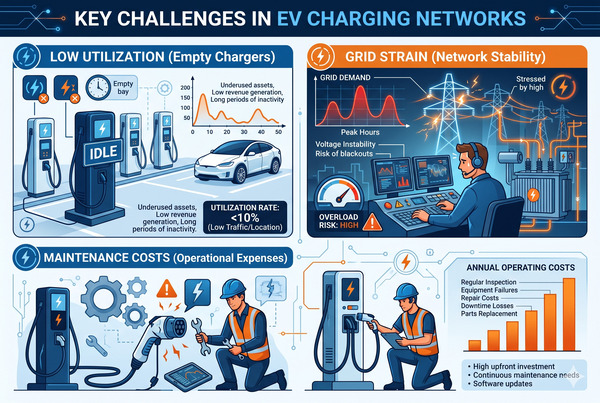
Low utilization, grid restrictions, high maintenance costs, rising user complaints, and delayed returns create intense pressure on operators. These issues threaten profitability and slow expansion.
I speak with CPOs, fleet operators, and energy utilities often. Many describe the same struggles. One real estate developer partner added stations but saw them sit idle during off-peak hours. This hurt their ROI significantly. At Parwatt, we develop tools that directly ease these operational pains.
Major pressures include:
- Chargers idle for long periods in many locations.
- Grid connection delays and capacity limits.
- Rising costs from repairs and vandalism.
- User complaints about reliability and ease of use.
- Cash flow challenges from slow payback.
| Pressure Point | Effect on Operations | 2026 Reality |
|---|---|---|
| Low utilization | Reduced revenue | Many stations under 20% usage |
| Grid constraints | Expansion delays | Utility approvals take months |
| Maintenance costs | Higher expenses | Downtime affects user trust |
| User complaints | Reputation damage | High abandonment rates |
| ROI delays | Cash flow strain | Longer payback periods |
Low utilization remains the top challenge. Stations sit idle while potential users go elsewhere. Grid capacity bottlenecks slow new deployments. Maintenance demands increase with weather and vandalism. These factors combine to create a tough environment.
Our battery-buffered ultra-rapid EV charger helps manage peak loads and improves uptime. Check our Level 2 vs Level 3 charging for insights on network efficiency.
Many operators underestimate ongoing costs after installation. Grid negotiations take time and money. User experience issues lead to negative reviews and lost business. Fleet and workplace clients expect high reliability. When stations fail, it affects their operations too.
I advised a municipal network where grid limits stalled growth. Smart load management solutions eased the pressure. This allowed better use of existing connections. Retail and hospitality operators face similar issues with variable demand.
Balancing rapid expansion with financial health is difficult. Investing too fast without utilization data leads to problems. These pressures are real but manageable with the right approach. Understanding them is the first step toward building stronger networks. Operators who adapt succeed in this competitive landscape.
The Most Common Mistakes Charging Network Operators Make That Amplify These Challenges
You try to grow your network fast. Small errors create bigger problems later.
Common mistakes include blind expansion, mismatched equipment, ignoring local patterns, and slow maintenance responses. These amplify challenges and reduce profits.
I work with EV resellers, integrators, and operators. One partner expanded too quickly without site analysis. Utilization stayed low and costs rose. We helped refine their strategy with data focus. Avoiding these errors saves time and money.
Frequent mistakes:
- Adding stations without studying local EV usage.
- Choosing equipment that does not match power availability.
- Neglecting regular maintenance schedules.
- Using complex apps that frustrate users.
- Ignoring data for decision making.
| Mistake | How It Amplifies Problems | Common Result |
|---|---|---|
| Blind expansion | Low utilization | Wasted capital |
| Mismatched specs | Grid issues and failures | Higher downtime |
| Poor maintenance | Equipment breakdowns | User complaints |
| Bad UX design | High abandonment | Lost revenue |
| No data use | Wrong decisions | Inefficient operations |
Ignoring local usage patterns leads to stations in wrong spots. Equipment without proper load management causes trips and failures. Slow responses to issues damage reputation. These mistakes compound grid and cost pressures.
Our EC01 wall charger offers reliable performance with smart features. Read our electric vehicle charging guide for operational best practices.
Data gaps make problems worse. Operators miss opportunities to adjust pricing or schedules. Payment and compatibility issues drive users away. Vandalism hits harder without monitoring.
I saw a CPO lose customers because of inconsistent sessions. Better equipment and response protocols fixed it. For automotive accessory wholesalers and resellers, advising clients on these mistakes builds trust.
These errors are common but avoidable. Awareness helps operators make smarter choices. Focus on data, matching solutions to needs, and user experience prevents amplification of challenges. Leading networks learn from these pitfalls and adjust quickly.
How to Effectively Address the Key Challenges in EV Charging Operations
You need clear ways to fix these issues. Targeted solutions improve operations.
Effective strategies include data analytics, smart load management, proactive maintenance, and user-focused improvements. These optimize performance and boost profitability.
I guide many network partners through these methods. One fleet-focused operator applied load balancing and saw utilization rise. Costs dropped while satisfaction improved. Practical steps make a big difference.
Key solutions:
- Use real-time data for site selection and pricing.
- Implement dynamic load management.
- Schedule predictive maintenance.
- Simplify user interfaces and payments.
- Partner for better grid solutions.
| Challenge | Solution Strategy | Expected Outcome |
|---|---|---|
| Low utilization | Data-driven site optimization | Higher usage rates |
| Grid limits | Load balancing and storage | Faster expansion |
| Maintenance costs | Predictive monitoring | Reduced downtime |
| User experience | Intuitive apps and plug-and-charge | Lower complaints |
| ROI pressure | Efficiency tools | Better cash flow |
Data-driven management becomes essential. Analytics predict demand and optimize operations. Dynamic load balancing prevents overloads and maximizes existing capacity.
Our FES-D30 DC EV charger supports advanced monitoring and reliability. Explore our charge EV faster home vs public for related strategies.
Proactive maintenance uses sensors to spot issues early. This cuts repair costs and improves uptime. User experience improves with simple payments and clear status info. Plug-and-charge reduces friction.
For real estate developers and workplace clients, bundled solutions with management software work well. Grid partnerships and battery storage ease capacity issues. Pricing strategies based on time of day boost off-peak use.
I recommend regular audits. Adjust based on actual data rather than assumptions. Training staff on quick responses builds reliability. These practices address root causes effectively.
Micromobility and fleet integrations benefit from fast, reliable stations. Scalable platforms help operators grow sustainably. The right tools turn challenges into strengths. Operators who implement these see stronger performance and happier users.
What Sets Leading Charging Network Operators Apart in 2026
You want to know what successful operators do differently. Key practices create advantages.
Leading operators use smart management, data decisions, UX optimization, and strong partnerships. They focus on efficiency and user needs.
I see these traits in top partners. One CPO integrated our systems and achieved high utilization. Their network became a model for others. These approaches deliver results.
Differentiating practices:
- Advanced load management and analytics.
- Predictive maintenance and monitoring.
- Seamless user experiences with reliable apps.
- Renewable integration and storage.
- Collaborative ecosystems with utilities and fleets.
| Practice | Leading Approach | Competitive Edge |
|---|---|---|
| Load management | Dynamic balancing | Higher capacity use |
| Data decisions | Real-time insights | Optimized operations |
| User experience | Simple interfaces | Loyalty and reviews |
| Renewables | Solar + battery | Lower costs |
| Partnerships | Utility and fleet ties | Faster growth |
Smart systems stand out. They adjust power dynamically and predict demand. This reduces costs and improves reliability. Data guides every decision from site selection to pricing.
Our 30kW power module enables scalable smart networks. Visit our EV charger category for complete solutions.
User focus builds loyalty. Clear apps, fast payments, and high uptime matter most. Leading operators respond quickly to issues. Renewable ties cut grid dependence and appeal to green clients.
I worked with an energy utility where partnerships accelerated deployment. Shared data improved outcomes for everyone. For government and municipal operators, compliance and scalability are key.
These leaders balance growth with sustainability. They avoid common mistakes through planning. Strong ecosystems provide support during challenges. The result is resilient, profitable networks that lead the market.
Ready to Build a More Resilient and Profitable Charging Network? Here’s Your Next Step
Challenges feel overwhelming. You can take control with targeted actions.
Assess your network, implement smart tools, optimize based on data, and seek expert support. Start now for better results.
I help operators with these steps regularly. One client reviewed their setup and upgraded strategically. Utilization and profits improved within months.
Next steps:
- Conduct a full network audit with data analysis.
- Upgrade to smart load management solutions.
- Improve maintenance and user experience features.
- Explore partnerships for grid and renewables.
- Monitor performance and adjust continuously.
| Step | Action for Operators | Benefit |
|---|---|---|
| Audit | Review utilization and costs | Identify quick wins |
| Upgrade | Add smart chargers | Better efficiency |
| Optimize | Use analytics | Data-driven growth |
| Partner | Work with utilities | Faster scaling |
| Monitor | Set KPIs | Ongoing improvement |
Our EP01 portable EV charger provides flexible testing options. Contact us for tailored network support.
Begin with an honest assessment. Look at real usage patterns. Prioritize high-impact sites. Implement monitoring for predictive insights. Train teams on new tools. These actions build resilience.
For CPOs and businesses, focus on user feedback. Adjust based on complaints. Explore incentives for upgrades. The operators who act decisively gain market share.
I encourage proactive planning. The industry rewards efficiency and innovation. These steps lead to sustainable success. You position your network for growth amid rising EV adoption.
Conclusion
Operating an EV charging network in 2026 is far more complex than simply installing stations. Utilization rates, grid constraints, maintenance demands, and user expectations create significant operational challenges that directly impact profitability and scalability.
The operators who succeed are those who move beyond “build more chargers” thinking to focus on smart management, data-driven decisions, and user-centric solutions. While the industry continues to grow rapidly, the real winners will be those who solve these core challenges effectively.
The future belongs to resilient, efficient networks. Start addressing these challenges today to stay ahead in the evolving EV charging landscape.
FAQ
- What are the biggest challenges for EV charging network operators in 2026?
Low utilization, grid capacity, maintenance costs, and user experience issues.
- How can operators improve low utilization rates?
Use data analytics for site optimization and dynamic pricing.
- What role does grid capacity play in charging network operations?
It limits expansion and requires smart load management.
- How do maintenance costs impact charging network profitability?
High downtime and repairs reduce revenue and increase expenses.
- What technologies help solve common EV charging network problems?
Smart load balancing, predictive maintenance, and advanced monitoring.
- How can operators prepare for increasing EV adoption?
Focus on scalable smart solutions and strategic partnerships.

--- END ---
Related Posts
Business Ideas

Industry News

Business Ideas

Business Ideas


