

How Retail Businesses Benefit from Installing EV Chargers in 2026 (Real ROI Breakdown)
Jun 17,2026
Retailers watch customer habits change with rising EV numbers. Many locations miss extra visitors and sales without charging options.
Retail businesses gain more foot traffic, longer visits, stronger brand appeal, and new revenue when they install EV chargers. Smart installations deliver clear returns through increased spending and competitive positioning in 2026.
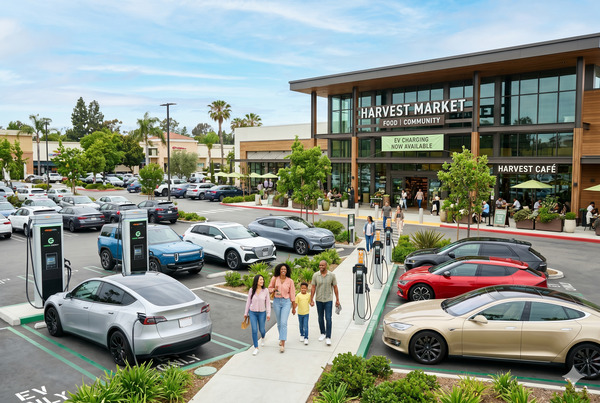
I work with businesses at XIAMEN PARWATT NEW ENERGY TECHNOLOGY CO.,LTD and see the positive impact daily. Retail properties that add charging create advantages over competitors. Let me explain what works in practice.
Why Retailers Who Ignore EV Charging Are Missing a Major Opportunity in 2026
Many retailers continue operations as usual while competitors add EV chargers. This choice leads to lost customers over time.
Retailers without EV charging miss growing customer segments, allow competitors to pull ahead, and lose potential extra income. Brand perception suffers as shoppers prefer modern locations with convenient services.
Our projects show clear differences between properties with and without charging. EV drivers actively seek convenient stops.
Customer segments shift toward younger and eco-conscious shoppers who own EVs. These groups spend more when they find charging while shopping. Properties without options send them to competitors.
Competitors who install chargers gain visibility and loyalty. Malls and shopping centers with charging spots appear in more navigation searches. This draws additional traffic.
Potential income streams disappear without chargers. Paid sessions or partnerships create revenue that offsets costs. Properties miss this without action.
Brand image falls behind. Modern retailers show environmental responsibility through charging infrastructure. Customers notice and remember these details.
| Issue | Impact on Retail | Competitor Advantage |
|---|---|---|
| Lost Traffic | Fewer EV drivers | Higher footfall |
| Brand Lag | Less modern image | Stronger appeal |
| Revenue Gap | Missed charging income | Extra streams |
| Customer Loss | Shorter visits | Longer dwell time |
- EV owners plan routes around charging availability.
- Family shoppers appreciate convenient amenities.
- Corporate groups prefer locations with fleet support.
- Weekend traffic benefits significantly from chargers.
- Local marketing highlights charging as a feature.
Our EC01 Wall Charger suits retail parking setups well. Read our Electric Vehicle Charging guide for practical insights.
Shopping centers attract new tenants with charging facilities. Standalone stores differentiate from nearby competitors. Hospitality venues near retail gain spillover benefits.
I advised one retail chain that saw noticeable traffic increases after installation. Their experience convinced neighboring businesses to follow. Cases like this demonstrate growing momentum.
These missed opportunities explain current gaps. Next we address wrong ideas that hold retailers back.
Common Misconceptions Retailers Have About Installing EV Chargers
Retail decision makers often hesitate due to incomplete information. This delays beneficial projects.
Retailers commonly believe EV chargers cost too much with uncertain returns or only suit large properties. These views overlook real 2026 economics and flexible solutions.
I hear these concerns regularly from store owners and property managers. Facts show different realities.
One misconception claims high upfront costs with slow payback. Modular options and partnerships lower barriers. Many installations pay back through combined sales lifts and charging fees.
Another wrong idea limits charging to big malls. Smaller retail sites benefit too, especially with targeted placement near entrances or high-traffic areas. Utilization depends more on location quality than size.
Maintenance worries stop some projects. Modern systems require minimal attention with remote monitoring. Reliable providers handle service efficiently.
Some think only luxury shoppers use chargers. Actually, broad customer segments own EVs and appreciate the convenience across price points.
| Misconception | Reality in 2026 |
|---|---|
| Too Expensive | Partnerships reduce costs |
| Only for Big Sites | Flexible for various sizes |
| High Maintenance | Low with good equipment |
| Limited Appeal | Broad customer interest |
- Chargers enhance rather than replace parking spaces.
- Software simplifies operations and billing.
- Incentives offset installation expenses.
- Utilization improves with good marketing.
- Integration with existing systems works smoothly.
Our EP01 Portable EV Charger offers easy entry points. Check The Ultimate Guide to Choosing the Best Portable Air Pump for Car Tires for related customer services.
Property managers balance tenant needs with overall site appeal. Independent retailers gain direct advantages. Chain stores coordinate across locations.
One retailer I spoke with initially hesitated but saw quick results after starting small. Their success removed doubts for expansion. Sharing these stories helps others decide confidently.
With misconceptions cleared, let us examine actual benefits.
How Retail Businesses Actually Benefit from EV Chargers – Key Advantages Explained
Retailers want measurable improvements from new amenities. EV chargers deliver several connected advantages.
EV chargers increase foot traffic, extend customer dwell time, strengthen brand image, and create extra revenue for retail businesses. These effects compound to improve overall performance.
Parwatt helps retail clients track these gains. Data from installations confirms positive outcomes.
Increased dwell time leads to more in-store browsing and purchases. EV drivers wait 30-60 minutes or longer while charging. This extra time translates into higher average transaction values.
Foot traffic grows as navigation apps and EV drivers recommend locations with charging. Properties become destinations rather than quick stops. Weekend and evening visits often rise noticeably.
Brand image improves through association with sustainability and customer care. Shoppers perceive the business as forward-thinking. This appeals especially to younger demographics and corporate clients.
New revenue streams emerge through charging fees, partnerships with networks, or bundled offers. Some sites use free charging to drive specific sales promotions.
| Benefit | How It Works | Measurable Impact |
|---|---|---|
| Dwell Time | Charging wait periods | Higher spending |
| Foot Traffic | App visibility | More visitors |
| Brand Image | Eco-friendly signal | Loyalty growth |
| Revenue | Charging fees | Additional income |
- Marketing campaigns highlight charging availability.
- Partnerships with charging providers share benefits.
- Data shows peak usage aligns with shopping hours.
- Customer feedback improves satisfaction scores.
- Properties with chargers command better lease rates.
Our EP02 Portable EV Charger with Display enhances user experience. Explore Charge EV Faster Home vs Public for related operational knowledge.
Malls integrate charging with loyalty programs. Grocery stores attract evening shoppers. Specialty retailers draw niche EV owners.
I reviewed data from several retail sites where charging increased sales in nearby stores. The combination of convenience and marketing created strong results.
Successful installations share certain characteristics. Let us review what makes them stand out.
What Sets Successful Retail EV Charging Installations Apart
Not all charging setups deliver equal results. Certain practices lead to better performance.
Successful retail EV charging focuses on smart technology, optimal placement, excellent user experience, and integration with core retail activities. These elements maximize utilization and returns.
Our experience shows clear patterns in high-performing sites. Attention to details makes the difference.
Smart charging allows remote monitoring and dynamic pricing. Operators adjust availability and rates based on demand. This optimizes revenue and prevents overuse.
Good placement puts chargers in visible, convenient spots near entrances or main parking flows. Lighting and signage help drivers find them easily. Safety and accessibility matter for all customers.
User experience includes clear instructions, reliable connections, and payment simplicity. Clean areas and integration with store apps improve satisfaction and repeat usage.
Integration with retail operations ties charging to shopping incentives. Discounts for chargers or bundled services encourage spending. This creates synergy between amenities and sales.
| Success Factor | Implementation | Result |
|---|---|---|
| Smart Tech | Monitoring software | Optimized operations |
| Placement | High visibility | Better utilization |
| User Experience | Simple interfaces | Higher satisfaction |
| Retail Integration | Promotions linkage | Increased sales |
- Regular maintenance keeps equipment attractive.
- Marketing materials promote the feature effectively.
- Feedback systems guide continuous improvements.
- Seasonal adjustments match shopping patterns.
- Partnerships expand network visibility.
Our Battery Buffered Ultra Rapid EV Charger supports high traffic locations. Visit our Solutions page for complete options.
Large chains standardize successful designs across properties. Independent stores customize to local customer preferences. Mixed-use developments combine retail with other services.
One shopping center I know achieved high utilization by combining good placement with targeted promotions. Their approach became a model for similar sites.
These practices lead to practical next steps. Consider your own property now.
Ready to Add EV Charging to Your Retail Property? Here’s Your Next Step
Retailers ready to move forward need clear actions. Structured planning ensures good results.
Begin with site assessment, ROI calculations, and partner selection to add EV charging successfully. Match solutions to your specific location and customer base.
I recommend starting with evaluation rather than rushing equipment choices.
Assess your property for suitable parking areas, power capacity, and customer flow. Professional surveys identify best locations and any needed upgrades.
Calculate potential ROI using local traffic data, EV adoption rates, and expected utilization. Factor in sales lifts and charging revenue. Conservative estimates still show strong potential.
Choose experienced partners who understand retail needs. Look for flexible equipment, good support, and partnership models that reduce risk. Compare options carefully.
Develop implementation and marketing plans together. Train staff and promote the new feature to maximize impact from day one.
Actionable checklist:
- Conduct site power and layout survey.
- Analyze local EV ownership data.
- Review different pricing and partnership models.
- Select scalable equipment solutions.
- Plan launch promotions with tenants.
Our K4 Rechargeable Handheld Vacuum Cleaner adds value to customer service areas. Check our full range on the Solutions page.
Property managers coordinate with tenants for unified offerings. Independent retailers control their own timelines. Developers plan charging in new constructions from the start.
My advice is to begin evaluation soon. Early movers gain advantages as EV numbers continue rising.
Installing EV chargers is no longer just a nice-to-have amenity for retail businesses — it has become a strategic advantage. From attracting new customers and increasing dwell time to enhancing brand image and generating additional revenue, the benefits are clear and measurable in 2026.
Retailers who act now position themselves ahead of the curve as EV adoption continues to grow. The key is choosing the right solution that matches your location, customer profile, and business goals.
The future of retail includes charging. Start exploring how EV chargers can benefit your business today.
FAQ
How do EV chargers benefit retail businesses?
They increase foot traffic, extend dwell time, improve brand image, and create new revenue opportunities.
Do EV chargers increase foot traffic to stores?
Yes, through better visibility in apps and appeal to EV-driving customers.
What is the ROI of installing EV chargers at retail locations?
Many sites see returns through combined sales increases and charging fees within a few years.
How much does it cost to install EV chargers for a retail property?
Costs vary by scale and type but partnerships and incentives help manage expenses.
Should retail businesses offer free or paid EV charging?
Hybrid models or promotional free charging often work best to drive sales.
What type of EV chargers are best for retail locations?
Level 2 chargers with smart features balance speed, cost, and user convenience effectively.

--- END ---
Related Posts


Business Ideas

Industry News

Business Ideas

Business Ideas
