

Energy Management Systems for Multi-Charger Sites: Why They Matter in 2026
Jul 17,2026
Multi-charger sites often trip breakers or face huge bills when many cars charge at once. This limits how many chargers you can install and drives up operating costs. Smart energy management changes everything for commercial and fleet operators. I see these issues clearly in my role at Parwatt New Energy.
Energy Management Systems for multi-charger sites intelligently balance power across all units in real time. They prevent overloads, cut peak demand charges, and let you install more chargers without expensive grid upgrades. In 2026 this is essential for safe and profitable commercial and fleet operations.
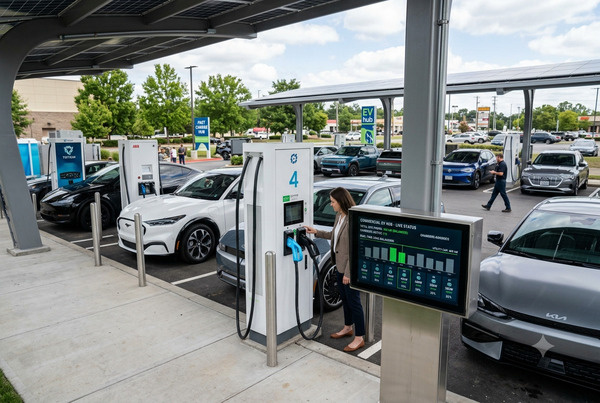
I have visited many multi-charger sites as general manager at Parwatt New Energy. I see the same problems repeatedly. Circuits overload during peak hours. Demand charges spike and eat into profits. Operators want to add more chargers but the grid capacity holds them back. Our power modules and DC chargers are built with precise control features that integrate well with modern energy management systems. In this article I explain why these systems matter in 2026. I also share practical insights from the sites we support and how Parwatt equipment helps operators stay ahead.
Why Multi-Charger Sites Often Face Overloaded Circuits and High Costs?
Multi-charger sites run into trouble when several vehicles charge at the same time. Circuits can overload and trip. Peak demand charges rise sharply. Grid capacity limits how many chargers you can install. Installation and upgrade costs become very high. These issues stop many commercial projects from growing.
Energy Management Systems solve the core problems at multi-charger sites. They monitor real-time power use and shift load to stay within available capacity. This prevents trips, lowers peak charges, and lets more chargers run without major grid upgrades. Operators gain both safety and lower costs.
The typical multi-charger site has several DC fast chargers or Level 2 units sharing one electrical service. When many cars plug in during morning or evening peaks the total draw exceeds the main breaker or transformer rating. The system trips or the utility imposes high demand charges based on the highest 15-minute interval.
Here is a table that shows the common pain points at these sites:
| Problem | What Happens | Typical Cost Impact | Who Feels It Most |
|---|---|---|---|
| Circuit overload | Breakers trip during busy periods | Downtime and lost revenue | Charge point operators |
| High demand charges | Peak kW sets the monthly rate | 20-40% higher bills | Commercial sites and fleets |
| Grid capacity limits | Cannot add more chargers | Expensive service upgrades | Real estate developers |
| Poor utilization | Some chargers sit idle while others max out | Wasted investment | All multi-site owners |
| Manual management | Staff must turn units on and off | Labor cost and errors | Fleet depots |
This table makes the daily struggles clear. A site with ten 50 kW chargers can easily draw over 500 kW if all run at full power. Most electrical services are not sized for that without upgrades. Utilities charge based on the highest demand peak, so one busy hour can set the bill for the whole month.
I remember visiting a workplace charging site last year. The operator had installed eight chargers but could only run four at full power during the day. Drivers complained about long waits. The site paid high demand charges every month. After they added basic load management the site ran six chargers safely and cut peak demand by almost 30 percent. The change paid for itself quickly.
At Parwatt we work with many charge point operators and fleet managers who face these exact limits. Our 30kW Power Module and 40kW Power Module give precise power control. They pair well with energy management systems because they respond quickly to commands. Without smart management these hardware advantages stay limited.
Fleet depots feel the pressure even more. Delivery trucks often return and plug in around the same time. The simultaneous load can trip breakers or force expensive infrastructure changes. Real estate developers adding chargers to apartments or offices run into the same wall. They want more units for tenant satisfaction but the electrical room cannot handle the load.
The root cause is simple. Traditional setups treat each charger as independent. They have no central brain to coordinate power use. When demand spikes the system has no way to share the available capacity intelligently. This is why energy management has become essential in 2026 as EV numbers and charger power levels keep rising.
Common Misconceptions About Energy Management for EV Charging
Many site owners and operators still believe they do not need smart energy management. They think adding more hardware power or using simple timers is enough. These ideas lead to problems and missed savings. I correct these misconceptions often when talking with clients at Parwatt.
Many people assume energy management is unnecessary or too complex for multi-charger sites. They focus only on charger power ratings and ignore real-time load. Modern systems use dynamic balancing and data to cut costs and increase capacity without major upgrades. The old static approach no longer works well.
One common myth is that you only need to look at the total power rating of the chargers. In reality the actual draw changes every minute as cars arrive and batteries fill. A site rated for 200 kW total can still trip if all units hit peak at once. Static limits waste capacity because they cannot adjust when some chargers slow down.
Another myth says simple scheduling or timers solve the problem. Timers help a little but they cannot react to real-time conditions. A sudden rush of cars or a vehicle that charges slower than expected throws off the schedule. Dynamic systems watch actual power and adjust every few seconds.
Some operators believe energy management only matters for very large sites. Smaller commercial locations with four to eight chargers also benefit. They avoid trips and lower demand charges. The savings add up even on modest installations.
A fourth myth is that these systems are hard to install and maintain. Modern solutions often work with existing chargers through open protocols. Many integrate with the power modules and chargers we supply at Parwatt. Setup usually takes days not weeks when planned well.
Here is a table that compares the old thinking with current reality:
| Misconception | Reality in 2026 | Result of the Myth |
|---|---|---|
| Only total power rating matters | Real-time draw varies constantly | Trips and wasted capacity |
| Static limits or timers are enough | Dynamic balancing reacts to actual use | Missed savings and lower utilization |
| Only huge sites need it | Even 4-8 charger sites save money | Higher bills and complaints |
| Systems are complex and expensive | Many integrate with existing hardware | Delayed projects and lost revenue |
| Manual control works fine | Automated systems prevent human error | Inconsistent performance |
This table shows why the old views create problems. At Parwatt we see operators who skipped smart management and later paid for expensive upgrades or faced angry users. Those who added energy management early report smoother operations and better returns.
The myths persist because early EV charging projects were small and simple. As sites grow and power levels rise the need for intelligent coordination becomes obvious. In 2026 with more high-power chargers and denser sites the gap between managed and unmanaged locations is very clear.
How Energy Management Systems Work for Multi-Charger Installations
Energy Management Systems coordinate power across many chargers in real time. They use sensors, software, and communication to balance load, shift usage to off-peak hours, and protect the electrical service. I have studied these systems closely because our power modules at Parwatt work best when paired with good management.
Energy Management Systems for multi-charger sites use load balancing, dynamic power allocation, peak shaving, and smart monitoring. They read real-time data from chargers and the grid connection then adjust output every few seconds. This keeps total draw within safe limits while maximizing the number of vehicles charging.
Core Functions Explained
Load balancing is the foundation. The system measures total power at the main service and at each charger. When total demand approaches the limit it reduces power to some units or delays new sessions. Drivers still get a charge but the site stays online.
Dynamic power allocation goes further. Instead of fixed limits the system looks at each vehicle’s needs. A car that is almost full can receive less power so another vehicle that needs a quick top-up gets more. This uses the available capacity more efficiently than static rules.
Peak shaving shifts load away from expensive high-demand periods. The system can reduce charging speed during utility peak hours or use on-site storage if available. Some advanced setups even participate in demand response programs for extra revenue.
Smart monitoring gives operators visibility. Dashboards show real-time power, historical trends, alerts for issues, and reports for billing and planning. Many systems send notifications when capacity is tight or a charger has a problem.
Here is a comparison table of static versus dynamic management:
| Aspect | Static Management | Dynamic Energy Management |
|---|---|---|
| Power allocation | Fixed limits per charger | Real-time adjustment based on need |
| Response to changes | Slow or manual | Automatic within seconds |
| Capacity use | Often under-utilized | Maximizes available power |
| Peak demand control | Limited | Actively reduces peaks |
| Scalability | Hard to add chargers | Easy to expand with software |
This table highlights the practical difference. At Parwatt our Battery Buffered Ultra Rapid EV Charger already includes local energy storage. It pairs naturally with energy management systems because the buffer helps smooth peaks. Our mobile chargers with battery also benefit from smart coordination when deployed in groups.
How the System Communicates
Most modern EMS solutions use open protocols like OCPP. They talk to chargers, power meters, and sometimes the utility. The central controller or cloud platform makes decisions and sends commands back. Drivers usually notice little change except more reliable service and sometimes lower wait times.
I have seen well-designed systems allow a site to run 50 percent more chargers than the electrical service would normally support. The key is intelligent sharing instead of rigid caps. Our FES-D30 DC EV Charger and other models respond quickly to these commands because of their advanced power electronics.
The technology continues to improve in 2026. Machine learning helps predict usage patterns and pre-adjust power. Integration with building management systems and solar or storage becomes smoother. For operators the result is higher uptime and lower costs with less manual work.
Key Benefits of Smart Energy Management for Commercial and Fleet Sites
Smart energy management delivers clear value at commercial and fleet sites. It lowers electricity bills, avoids costly infrastructure upgrades, improves charger utilization, and supports future growth. I see these benefits when we help clients upgrade their installations at Parwatt.
Energy Management Systems cut demand charges and prevent overloads at multi-charger sites. They allow more vehicles to charge at once without grid upgrades. Utilization rises, costs fall, and the site becomes ready for more chargers as demand grows. These gains matter most for workplaces, apartments, retail, and fleet depots.
Commercial sites save on the largest part of their bill. Demand charges based on peak kW can represent 30 to 50 percent of the total electricity cost. By shaving peaks the system often reduces the monthly bill by 20 to 40 percent. The savings appear quickly and continue every month.
Fleet operators gain reliability. Trucks or vans can charge when they return without risking tripped breakers that delay the next shift. The system can prioritize certain vehicles or spread load across the depot. This improves uptime and reduces stress on drivers and dispatch.
Higher utilization means more revenue or better service. A site that previously could only run half its chargers during busy times now runs most of them safely. Drivers spend less time waiting. For retail or hospitality locations this improves customer satisfaction.
Scalability is a major long-term benefit. When demand grows the site can add chargers without immediate electrical upgrades. The energy management system simply adjusts its algorithms. This protects the original investment and makes expansion easier and cheaper.
Here is a table that summarizes the main benefits by site type:
| Site Type | Primary Benefit | Secondary Benefit | Example Impact |
|---|---|---|---|
| Workplace | Lower demand charges | More employee chargers | 25-35% bill reduction |
| Fleet depot | Reliable simultaneous charging | Prioritization of key vehicles | Fewer delays in operations |
| Apartment or condo | Tenant satisfaction | Avoids expensive upgrades | Higher occupancy appeal |
| Retail or hospitality | Better customer experience | Higher charger uptime | Increased foot traffic |
| Public charging hub | Maximum revenue per connection | Future expansion ready | More sessions per day |
This table shows how the gains fit different operations. At Parwatt we help clients choose power modules and chargers that work smoothly with leading energy management platforms. Our META Mobile EV Charger with Battery gives extra flexibility for temporary or growing sites because it already manages its own stored energy.
In 2026 these benefits are becoming standard expectations rather than nice-to-have features. More utilities offer incentives or special rates for sites with active load management. Insurance and safety requirements also favor controlled installations. Operators who adopt early gain both immediate savings and a competitive edge.
Ready to Implement Energy Management for Your Multi-Charger Site?
You may wonder how to start with energy management at your site. The process begins with a clear assessment of current power capacity and usage patterns. From there you can choose the right system and plan the rollout. I give similar advice to the operators and developers we work with at Parwatt.
Assess your available electrical capacity and current charging patterns first. Choose an energy management system that integrates with your chargers and power modules. Then phase the implementation to minimize disruption. Good planning turns power constraints into reliable and scalable charging capacity.
Start with data. Measure the main service capacity in amps or kW. Review utility bills for demand charges and peak times. Log how many vehicles charge and when. This baseline shows exactly where the bottlenecks are.
Next evaluate energy management options. Look for systems that support open protocols and work with the chargers you have or plan to install. Many solutions offer cloud dashboards and mobile alerts. Some include predictive features that learn your site’s patterns.
Consider integration with on-site storage or solar if available. Battery buffered chargers like those we offer at Parwatt add another layer of flexibility. The energy management system can decide when to draw from the grid, the battery, or both.
Implementation usually happens in phases. Begin with monitoring and basic load balancing on existing chargers. Add dynamic allocation and peak shaving once the system proves stable. Train staff on the new dashboard and alerts. Most sites see results within the first month.
Practical steps most operators follow include:
- Conduct an electrical assessment with a qualified electrician or engineer.
- Review utility rate structures and any available incentives for load management.
- Select an EMS platform that matches your charger brands and future expansion plans.
- Install necessary meters and communication hardware if not already present.
- Test the system during low-traffic periods before full rollout.
- Monitor performance and adjust settings based on real data.
If you manage a fleet or commercial property now is a good time to act. EV adoption continues to rise and power demands at sites keep growing. Equipment from Parwatt such as our DC chargers and power modules is designed to work with advanced energy management from day one. You can explore options in our EV Charger Category.
Conclusion
Energy Management Systems are no longer optional for multi-charger sites — they are essential for safe, efficient, and cost-effective operation. By intelligently distributing power and avoiding peak demand charges, smart EMS solutions help maximize charging availability while minimizing electricity costs and infrastructure upgrades. At Parwatt we design our power modules and chargers to integrate cleanly with these systems. In 2026 advanced energy management delivers both immediate savings and long-term scalability. Don’t let power limitations hold back your charging project. A well-designed energy management system turns potential problems into opportunities for efficient, future-proof EV charging.

--- END ---
Related Posts


Industry News

Business Ideas
