

EV Battery Compatibility Explained: Different Models, Chemistries & What Actually Works in 2026
Jul 29,2026
EV batteries look similar from the outside yet they are rarely interchangeable. Different chemistries, pack designs, and control systems create real limits. Owners and fleet managers often face higher costs and confusion when they assume batteries work across models. At Parwatt I see these compatibility issues affect charging decisions every day.
EV batteries are highly model-specific. Differences in chemistry such as LFP, NMC, and NCA, pack design, voltage platforms, cooling systems, and battery management systems mean that batteries from one vehicle rarely work in another. Understanding these factors helps owners and operators make better choices about charging, range, and long-term costs in 2026.
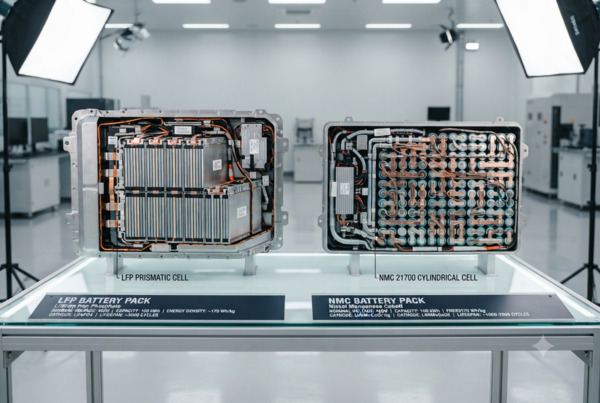
I have worked with charge point operators, fleet managers, and vehicle owners for years as general manager at Parwatt New Energy. We supply DC chargers and power modules that must work safely with many different battery systems. I regularly hear the same questions. Can I put a battery from one model into another? Why does my charger behave differently with certain vehicles? The answers almost always come down to engineering details that are not obvious from the outside. Our products such as the FES-D30 DC EV Charger and our power modules are designed to communicate properly with a wide range of battery systems, yet the battery itself remains tightly linked to its original vehicle. In this article I explain the real factors that determine compatibility and what they mean for owners and operators in 2026.
Why EV Battery Compatibility Is More Complicated Than Most Buyers Expect?
Many buyers assume EV batteries are like fuel tanks. They expect similar batteries to work across different models. In reality each battery pack is designed as part of a complete vehicle system. Voltage platforms, cooling methods, physical shape, and control software all differ. These differences make simple swaps difficult or impossible and raise costs when replacement is needed.
EV battery compatibility is complicated because packs are engineered for specific models. Differences in chemistry, voltage architecture, cooling design, physical dimensions, and battery management systems prevent most cross-model use. Owners face higher replacement costs and limited options when they need service or upgrades.
The Hidden Engineering Barriers
I have spoken with fleet managers who tried to reduce costs by looking for interchangeable battery packs. They quickly discovered that even packs with the same nominal capacity and chemistry often refuse to work in a different vehicle. The battery management system rejects the pack. Cooling connections do not match. The physical mounting points are different. The project becomes more expensive than simply buying the correct replacement.
Each manufacturer designs the battery pack to fit a specific chassis, weight distribution, and thermal strategy. The pack must also communicate with the vehicle’s main control unit using proprietary protocols. These choices improve performance and safety for that model but create barriers for interchangeability.
Charging behavior also varies. Some vehicles accept higher sustained power. Others limit charging rate based on temperature or state of charge. A charger that works well with one battery chemistry may need different settings for another. At Parwatt we see this when operators deploy mixed fleets. Our 30kW Power Module and 40kW Power Module support flexible communication, yet the vehicle still decides the final charging profile.
Here is a table that shows the main sources of complexity:
| Factor | Why It Limits Compatibility | Practical Result |
|---|---|---|
| Pack design and shape | Unique mounting and space constraints | Physical swap often impossible |
| Voltage platform | Different nominal and operating voltages | Electrical mismatch and safety risk |
| Cooling system | Liquid vs air, different connector designs | Thermal management fails |
| BMS communication | Proprietary protocols and safety rules | Vehicle rejects foreign pack |
| Chemistry characteristics | Different charge and temperature limits | Charging behavior changes |
This table reflects the reality operators face. Information available to buyers is often incomplete. Marketing materials focus on range and charging speed. They rarely explain the engineering details that determine whether a battery can be replaced or upgraded later. The result is surprise costs and limited options when the battery reaches the end of its useful life in the vehicle.
Second-life applications are growing, yet even there the original pack design and BMS still matter. A pack that worked well in a car may need significant re-engineering before it can serve as stationary storage. Compatibility remains a core challenge across the entire battery lifecycle.
Common Misconceptions About EV Battery Types and Cross-Model Compatibility
Many people believe all lithium-ion batteries are basically the same. They assume chemistry is the main difference and that packs with similar ratings can be swapped. Others overlook the role of the battery management system. These ideas lead to incorrect expectations about repairs, upgrades, and second-life use.
Common misconceptions include the belief that all lithium batteries are interchangeable, that chemistry alone determines compatibility, and that BMS differences are minor. In reality pack design, voltage architecture, cooling, and proprietary control systems create hard barriers. Cross-model battery swaps are rarely practical.
Clearing the Main Myths
One frequent myth is that any LFP pack can replace another LFP pack of similar capacity. Chemistry is only one part of the system. The physical layout, connector types, and communication protocols still differ between manufacturers and even between models from the same brand.
Another myth is that higher energy density always means better performance in every situation. NMC and NCA packs offer more range for a given size and weight. They also bring different thermal behavior and often stricter daily charging recommendations. LFP packs trade some energy density for greater tolerance of full charges and longer cycle life. Neither chemistry is universally superior.
Some owners believe that software updates can make foreign batteries compatible. In most cases the hardware differences remain. Cooling circuits, voltage limits, and safety sensors are physical. Software cannot create missing connectors or change the thermal mass of the pack.
A fourth misconception is that battery replacement will become simple and cheap soon. Modular designs are improving, yet most current vehicles still use highly integrated packs. Replacement usually requires the exact pack designed for that model.
Here is a table that addresses these misconceptions:
| Misconception | Reality in 2026 | Why It Matters |
|---|---|---|
| All lithium batteries are interchangeable | Pack design and BMS differ widely | Swaps usually fail or create safety risks |
| Chemistry is the only important factor | Voltage, cooling, and protocols also matter | Matching chemistry alone is not enough |
| Software can fix compatibility | Hardware differences remain | Physical and electrical limits stay |
| Replacement will soon be easy and cheap | Most packs remain model-specific | Owners should plan for higher costs |
| Higher density is always better | Trade-offs exist in safety and cycle life | Choice depends on use case |
This table helps set realistic expectations. At Parwatt we work with many different vehicle types when deploying chargers. Our equipment must respect the limits set by each vehicle’s battery system. You can see examples of our charging solutions in the EV Charger Category.
I have seen customers purchase aftermarket packs that looked compatible on paper. The vehicle refused to accept them. The project then required additional engineering that erased the expected savings. Understanding the full set of compatibility factors prevents these costly mistakes.
How Different Battery Chemistries Affect Compatibility and Performance
Three main lithium-ion chemistries dominate passenger and light commercial EVs in 2026. LFP, NMC, and NCA each offer a different balance of energy density, cost, safety, cycle life, and thermal behavior. These differences influence both vehicle design and charging recommendations.
LFP, NMC, and NCA batteries differ in energy density, cycle life, safety characteristics, and cost. LFP prioritizes longevity and tolerance of full charges. NMC and NCA deliver higher energy density for longer range. These chemical differences affect charging behavior and long-term ownership but do not by themselves enable cross-model compatibility.
Core Differences Between the Chemistries
LFP uses lithium iron phosphate as the cathode material. It offers strong thermal stability and can handle frequent charging to 100 percent with less degradation than nickel-based chemistries. Energy density is lower, so packs are often larger or heavier for the same range. Many mainstream and value-focused models now use LFP for these reasons.
NMC combines nickel, manganese, and cobalt. It provides higher energy density, which helps manufacturers achieve longer range in a smaller or lighter pack. Cycle life is good when managed carefully, yet manufacturers often recommend limiting daily charge to around 80 percent to preserve longevity. Thermal management requirements are stricter.
NCA uses nickel, cobalt, and aluminum. It offers very high energy density and is common in certain performance and long-range models. Like NMC it benefits from careful thermal control and moderated charging habits for maximum life.
Here is a comparison table of the three chemistries:
| Chemistry | Energy Density | Cycle Life & Full-Charge Tolerance | Thermal Behavior | Typical Use in 2026 |
|---|---|---|---|---|
| LFP | Lower | High cycle life, tolerates 100% charges | Very stable | Mainstream and value models |
| NMC | Higher | Good when charge limited | Requires careful cooling | Long-range and mid-to-high end |
| NCA | Highest among the three | Sensitive to high states of charge | Needs strong thermal management | Performance and long-range models |
This table shows the practical trade-offs. At Parwatt we see chargers interacting with all three chemistries. Our systems must respect the different voltage windows and temperature limits each chemistry prefers. The Battery Buffered Ultra Rapid EV Charger is designed to work across a wide range of vehicle battery systems while still following the limits set by each pack.
How Chemistry Influences Daily Use
Owners of LFP vehicles can often charge to full more regularly without the same concern for degradation. Owners of NMC or NCA vehicles usually receive guidance to keep daily charges lower and to avoid high temperatures during fast charging. These recommendations come from the chemistry and the specific BMS calibration, not from marketing alone.
Chemistry also affects second-life potential. LFP packs often retain usable capacity longer and may be more attractive for stationary storage. Nickel-based packs can still serve second-life roles but may require more careful evaluation of remaining capacity and thermal characteristics.
Understanding the chemistry in a specific vehicle helps set realistic expectations for range, charging speed, and long-term costs. It does not, however, make the pack interchangeable with packs from other models that use the same chemistry.
What Determines Real-World Compatibility Across EV Models
Chemistry is only one piece of the compatibility puzzle. Real-world compatibility depends on the complete engineering package. Pack structure, voltage platform, cooling design, and the battery management system all create hard limits. Even packs with identical chemistry usually cannot move from one model to another.
Real-world battery compatibility is determined by pack design, voltage architecture, cooling system, physical interfaces, and BMS communication protocols. These elements are model-specific. Matching chemistry alone is almost never enough for a successful cross-model installation.
The Key Engineering Layers
The physical pack must fit the vehicle structure. Mounting points, crash structures, and weight distribution are unique. A pack designed for one platform rarely bolts into another without major modification.
Voltage platforms differ. Some vehicles use 400 V architectures. Others use 800 V systems. Connecting a pack with the wrong voltage range creates immediate safety and performance problems.
Cooling systems vary. Some packs use liquid cooling with specific connector designs and flow rates. Others rely on air or refrigerant. Mismatched cooling leaves the pack unable to manage temperature during charging or high-load driving.
The battery management system is often the final barrier. The BMS monitors every cell group, enforces safety limits, and communicates with the vehicle. It expects specific message formats and security checks. A foreign pack usually fails these checks and remains inactive.
Here is a structured list of the main compatibility layers:
- Physical dimensions and mounting points
- Electrical connectors and voltage range
- Cooling circuit design and interfaces
- BMS hardware and communication protocol
- Vehicle software integration and safety certification
Each layer must match. Failure at any single layer stops the swap.
At Parwatt we design charging equipment that negotiates properly with the vehicle’s existing BMS. Our chargers do not try to override the vehicle’s battery limits. This approach keeps charging safe across many models. You can learn more about how charging systems interact with different vehicles in our article on Electric Vehicle Charging.
I have reviewed cases where teams attempted to adapt packs between related models. Even within the same manufacturer the differences in cooling plates or BMS firmware often made the project impractical. The engineering cost exceeded the value of the reused pack. These experiences reinforce that compatibility is engineered at the vehicle level, not at the chemistry level alone.
Ready to Choose or Maintain the Right Battery Setup? Here’s What Matters Most
Owners and fleet operators make better decisions when they start with accurate information about their specific battery system. Knowing the chemistry, understanding charging recommendations, and planning for eventual replacement all reduce long-term costs and surprises.
Confirm the exact battery chemistry and pack design for your vehicle. Follow manufacturer charging and thermal guidelines. Plan for model-specific replacement costs. Work with qualified service providers when maintenance or second-life options are considered. These steps protect performance and safety.
Practical Steps for Owners and Operators
Identify the chemistry used in each vehicle. This information appears in the owner’s manual, service documentation, or manufacturer specifications. LFP, NMC, and NCA each carry different daily charging recommendations.
Respect the charging limits set by the vehicle. Many NMC and NCA vehicles benefit from regular charging to 80 percent for daily use. LFP vehicles often tolerate full charges more readily. Following these guidelines supports longer pack life.
When replacement becomes necessary, use the pack specified for that exact model. Aftermarket or cross-model solutions rarely succeed without extensive re-engineering and may affect safety certification and residual value.
For fleets, track battery health data where available. Consistent monitoring helps predict replacement timing and supports decisions about second-life use or recycling.
Here is a short action checklist:
- Confirm chemistry and pack specifications for every vehicle.
- Follow the manufacturer’s recommended daily charge limits.
- Use only approved replacement packs for that model.
- Maintain proper thermal conditions during fast charging.
- Record battery health data for fleet planning.
- Consult qualified technicians for any pack-level work.
At Parwatt we support operators with charging equipment that respects the limits of each vehicle’s battery system. Our solutions are available through the EV Charger Category. You can also review additional charging guidance in our comparison of AC vs DC EV Charging.
Taking these steps reduces the risk of unexpected costs and keeps vehicles operating safely. Battery technology continues to improve, yet the model-specific nature of current packs remains a central reality for owners and operators in 2026.
Conclusion
EV batteries are highly model-specific. Differences in chemistry, pack design, voltage architecture, and battery management systems mean that batteries from one vehicle are rarely interchangeable with another. At Parwatt we design our chargers and power modules to work safely with the wide range of battery systems on the road today. Understanding these differences helps owners and fleet operators make better decisions about charging, range expectations, and long-term ownership costs. In 2026, LFP continues to grow in mainstream models for its safety and longevity, while NMC and NCA remain important for higher-range vehicles. Don’t assume batteries are universal. Always verify the specific chemistry, pack design, and manufacturer requirements for your vehicle before making decisions about charging, replacement, or upgrades.

--- END ---
Related Posts
Business Ideas

Business Ideas

Business Ideas

Business Ideas


