

How EV Chargers Increase Retail Sales and Customer Dwell Time
Aug 07,2026
Traditional retail locations without EV charging lose high-value customers every day. EV drivers actively look for places where they can charge while they shop or eat. When your site has no chargers, that spending goes to competitors who offer the convenience. At Parwatt I see this traffic shift happening across retail and destination sites.
EV chargers increase retail sales by creating structured dwell time that encourages shopping, dining, and impulse purchases. Level 2 sessions often last an hour or more and DC fast sessions typically take 20–40 minutes. In 2026 retailers who install reliable, well-placed chargers attract higher-income drivers and convert charging time into measurable incremental sales.
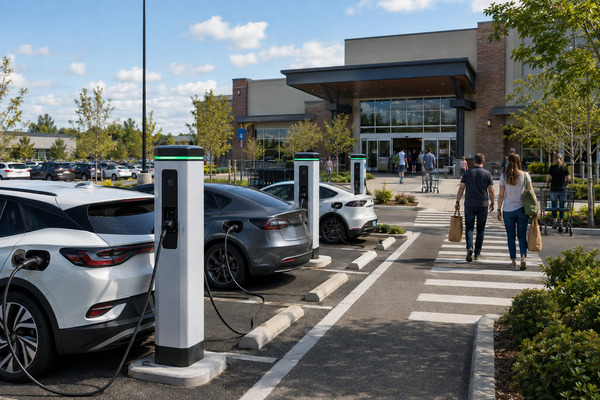
I have worked with retail developers, shopping center operators, and charge point partners for years as general manager at Parwatt New Energy. We supply DC chargers and power modules used at commercial and destination sites. I regularly hear from operators who first viewed charging as a pure cost and later discovered it brought new customers and longer stays. Our equipment, including the FES-D30 DC EV Charger and modular systems, is designed for reliable public use so the retail benefit can actually materialize. In this article I explain how EV chargers drive sales and dwell time and how retailers can capture that value in 2026.
Why Traditional Retail Is Losing High-Value Customers Without On-Site Charging?
EV drivers plan stops around charging needs. They prefer locations where the vehicle can charge while they complete other tasks. Retail sites without chargers become less convenient and lose visits to competitors who offer the service. Over time the missing amenity reduces both foot traffic and the spending power of the customer mix.
Retail locations without EV charging lose customers who prefer to combine charging with shopping or dining. EV drivers actively choose sites that offer on-site charging, and the absence of chargers shifts that spending to better-equipped competitors. The result is lost traffic and lower sales from a high-value demographic.
The Quiet Shift in Customer Behavior
I have spoken with retail managers who noticed a gradual change in parking lot patterns. EV drivers arrived, checked for chargers, and left when none were available. Those same drivers later appeared at nearby sites that had installed stations. The original location lost not only the potential charging revenue but the in-store purchases that would have occurred during the dwell time.
EV owners as a group tend to have higher average household incomes. When they choose a competing location for charging convenience, the retail site loses a disproportionately valuable customer. The effect compounds as EV adoption grows and more drivers form habits around preferred charging destinations.
Brand perception also suffers. Sites that lack charging begin to look outdated to environmentally conscious and technology-aware shoppers. Competitors who display visible, working chargers signal modernity and customer focus.
Here is a table that shows how the absence of charging affects retail performance:
| Impact Area | What Happens | Sales or Traffic Consequence | Who Is Affected |
|---|---|---|---|
| Customer choice | Drivers select sites with chargers | Lost visits to competitors | All retail formats |
| Demographic mix | Higher-income EV owners go elsewhere | Lower average basket potential | Grocery, mall, lifestyle centers |
| Dwell opportunity | No structured reason to stay | Fewer impulse and secondary purchases | Convenience and dining operators |
| Brand signal | Site appears less modern | Weaker appeal to target shoppers | Retailers competing on experience |
| Competitive gap | Nearby sites gain the traffic | Market share shift over time | Locations in EV-dense areas |
This table reflects patterns reported by retail partners. At Parwatt we see stronger utilization and clearer retail spillover when chargers are installed at high-amenity sites and kept reliably online. Our solutions in the EV Charger Category are built for the continuous operation these locations require.
In 2026 the cost of not offering charging continues to rise. As more drivers switch to electric vehicles, the preference for combined charging-and-shopping stops becomes stronger. Retailers who wait lose both current traffic and the habit formation that will shape future customer patterns.
The Common Traps Retailers Fall Into When Evaluating EV Charging
Many retailers still view charging purely as a cost center. They underestimate the extra time drivers spend on site and the spending that occurs during that time. They choose the wrong power level or hide the chargers in inconvenient corners. They also miss the brand and demographic advantages. These traps lead to weak results even after installation.
Common traps include treating chargers only as a cost, underestimating dwell-time sales, selecting inappropriate power levels or locations, and ignoring the attraction of higher-income EV drivers. These mistakes reduce the sales impact and make the investment look less attractive than it can be.
Mistakes That Limit the Retail Benefit
One frequent trap is focusing solely on the installation and energy cost while giving no value to incremental foot traffic or longer stays. When the business case ignores the sales lift, the project appears harder to justify and may be delayed or under-scoped.
Another trap is assuming any charger will produce the same result. Level 2 and DC fast charging create different dwell windows. A low-power charger in a distant parking area may generate little in-store activity, while a well-placed unit matched to typical shopping time performs much better.
Visibility and convenience are often neglected. Chargers installed at the far edge of a lot or behind the building see lower utilization. Drivers who do use them are less likely to walk into the store. The retail spillover stays small.
Some retailers overlook the demographic profile of EV drivers. Higher average incomes and greater willingness to make unplanned purchases increase the value of each extra minute spent on site. Ignoring this profile leads to under-estimation of potential basket-size gains.
Here is a table of the main evaluation traps:
| Trap | Why It Happens | Result | Better Approach |
|---|---|---|---|
| Cost-only view | Focus on capital and energy expense | Project looks unattractive | Include traffic and sales lift |
| Wrong power level | Default to cheapest option | Dwell time mismatches shopping patterns | Match power to expected stay |
| Poor location | Easiest electrical path chosen | Low utilization and low walk-in rate | Prioritize visibility and convenience |
| Ignoring demographics | Treat all customers the same | Miss higher-value spending potential | Recognize EV driver profile |
| No promotion | Assume drivers will find the chargers | Under-used assets | Actively promote the amenity |
This table captures issues I have discussed with retail operators. At Parwatt we help sites select equipment that supports the intended dwell-time strategy, including options such as the 30kW Power Module and 40kW Power Module for flexible power delivery.
I have seen installations that produced little retail benefit because the chargers were hard to find or unreliable. I have also seen well-executed projects where the sales lift became visible within months. The difference is usually design and intent rather than the simple presence of hardware.
How EV Chargers Actually Extend Dwell Time and Drive Incremental Sales
Charging creates a defined period during which the driver has a reason to remain at the location. Level 2 charging commonly requires an hour or longer for a meaningful top-up. DC fast charging typically needs 20–40 minutes. Drivers rarely sit idle for the entire time. Many enter the store, buy food, run errands, or make unplanned purchases.
EV chargers extend customer dwell time by creating a structured window while the vehicle charges. Level 2 sessions often last an hour or more and DC fast sessions usually take 20–40 minutes. That time converts into incremental retail sales through shopping, dining, and impulse purchases.
The Mechanism of Structured Dwell Time
When a driver plugs in, the charging session sets a natural clock. The driver knows the vehicle will need a certain amount of time. Instead of leaving and returning later, most people use the interval productively. They shop for groceries, browse retail stores, order a meal, or complete other tasks on site.
The length of the session influences the type of activity. Longer Level 2 sessions align well with supermarket or mall visits. Shorter DC fast sessions fit convenience purchases, coffee, or quick meals. In both cases the presence of the charger turns a pure parking event into a longer stay.
Higher-income demographics increase the effect. EV drivers as a group tend to have greater disposable income. When they stay longer, the probability of larger baskets and additional categories rises. Some operators report noticeable lifts in average spend per visit when charging is available.
Visibility and amenities multiply the impact. Chargers located near store entrances or food service areas make the walk into the retail space easy. Sites with multiple nearby services see higher utilization and stronger spillover because drivers can accomplish several tasks during the charge.
Here is a practical breakdown of how dwell time translates into sales:
| Charging Type | Typical Session Duration | Common Driver Activities | Retail Opportunity |
|---|---|---|---|
| Level 2 | 1 hour or longer | Grocery shopping, mall browsing, dining | Higher basket size, multiple categories |
| DC Fast | 20–40 minutes | Convenience purchases, coffee, quick meals | Impulse items, food service |
| Mixed or destination | Varies | Combined errands and leisure | Cross-shopping and longer overall stay |
This table illustrates the alignment between charging time and retail formats. At Parwatt we design chargers for reliable operation so the dwell-time window remains predictable for both the driver and the retailer. Products such as the Battery Buffered Ultra Rapid EV Charger help sites deliver consistent sessions that support this model.
I have reviewed utilization data from retail sites where chargers sit close to entrances and amenities. Session counts are higher and the correlation with in-store activity is clearer. The charger does not force the driver to spend money, yet it removes the reason to leave and creates the opportunity for spending that would not otherwise occur.
Real-World Evidence: Sales Lift, Utilization Patterns, and Which Retail Formats Benefit Most
Evidence from multiple markets shows that EV charging stations increase spending at nearby businesses. Utilization is much higher when stations sit near grocery stores, malls, and dense amenity clusters. Certain retail formats align especially well with charging dwell times and therefore capture more of the benefit.
Real-world data show measurable sales increases near EV charging stations, with stronger effects when chargers are close to points of interest. Grocery, mall, and convenience formats benefit most because their typical shopping times match common charging durations and they attract high utilization.
What the Data and Patterns Show
Studies of charging station impacts have found annual spending increases at nearby establishments on the order of 1.4 percent, with larger effects when the business is within a short walking distance. While the exact percentage varies by market and methodology, the direction is consistently positive.
Utilization numbers reinforce the retail connection. DC fast stations near grocery stores can average far more sessions per day than the broader network median. Stations surrounded by many amenities also show markedly higher use. The more reasons a driver has to stay, the more likely the charger is to be occupied and the more likely retail spending is to occur.
Grocery stores align especially well with Level 2 and moderate-power charging. A typical grocery trip can fill much of the charging window. Malls and lifestyle centers benefit from longer stays and cross-shopping. Convenience and quick-service locations capture shorter DC fast sessions effectively.
Some operators and retailers report per-visit spend increases and overall sales lifts when charging is present. While results depend on execution, the combination of higher-income demographics and longer dwell time creates a favorable environment for incremental revenue.
Here is a summary of format alignment:
- Grocery and supermarket: Strong match with Level 2 dwell time and high session counts
- Shopping malls and lifestyle centers: Benefit from longer stays and multiple store visits
- Convenience and quick-service: Capture short DC fast sessions and impulse purchases
- Mixed-use and destination retail: Gain from combined errands and leisure activity
- Isolated or low-amenity sites: Lower utilization and weaker spillover
At Parwatt we observe the highest retail impact when reliable chargers are placed at high-amenity locations. Our equipment is selected by operators who need consistent uptime so the sales benefit can accumulate. You can explore suitable hardware in the EV Charger Category.
I have compared sites with similar traffic but different charging provision. Locations that offer visible, working chargers tend to retain EV drivers longer and generate more secondary activity. The evidence supports treating charging as a traffic and sales tool rather than a pure cost.
How Retailers Can Design Charging to Maximize Sales Impact and ROI
The sales benefit is not automatic. Retailers must choose appropriate power levels, place chargers where drivers will use them and then walk into the store, promote the amenity, and measure the results. Thoughtful design turns charging from a passive feature into an active contributor to revenue.
Retailers maximize sales impact by matching charger power to expected dwell time, placing units in visible and convenient locations, promoting the service, integrating it with loyalty or on-site media, and tracking utilization and sales correlation. These steps convert charging sessions into measurable incremental revenue.
Design and Operating Practices That Work
Select power levels that fit the retail format. Level 2 or moderate power suits grocery and mall environments where longer stays are natural. Higher-power DC fast charging fits convenience and quick-turnover locations where drivers want shorter stops.
Place chargers in premium, visible parking spots near entrances or high-traffic amenities. The easier the walk into the store, the higher the conversion from charging session to in-store visit. Avoid remote or hidden locations that reduce both utilization and spillover.
Promote the chargers clearly. Signage, app visibility, and on-site messaging tell drivers the service exists and is welcome. Some retailers integrate charging status into loyalty apps or display promotional content on charger screens to encourage specific in-store actions.
Pricing can support both utilization and retail goals. Competitive or promotional charging rates attract drivers. Idle fees can improve turnover at busy sites so more customers gain access.
Measure what matters. Track session counts, average duration, and, where possible, correlation with sales data or foot traffic. Use the information to adjust the number of stalls, power levels, or promotional tactics.
Here is a practical implementation list:
- Match charger power to the typical shopping or dining duration of the site.
- Locate stalls in visible, convenient spaces near store entrances or amenities.
- Install reliable equipment that maintains high uptime.
- Promote the charging service through signage, digital channels, and staff awareness.
- Consider loyalty integration or on-charger messaging to drive in-store actions.
- Monitor utilization and look for sales or traffic correlations.
- Adjust capacity, pricing, or placement based on real performance data.
At Parwatt we help retailers and operators select hardware that supports these goals. Our power modules and complete chargers, including the Battery Buffered Ultra Rapid EV Charger, are built for the reliability that retail sites need. Further reading on system choices is available in our article on Electric Vehicle Charging and our comparison of AC vs DC EV Charging.
Retailers who design the charging experience with sales in mind consistently capture more of the available benefit. The combination of right power, right location, clear promotion, and ongoing measurement turns the parking lot into a contributor to store performance.
Conclusion
EV charging is no longer just an amenity—it is a proven retail traffic and sales driver. By giving drivers a reason to choose your location and a structured window of time while their vehicle charges, retailers create longer dwell times that translate into higher basket sizes, more impulse purchases, and stronger customer loyalty. At Parwatt we design chargers and power modules for the reliable operation that retail sites require so the sales benefit can be realized. Locations that pair reliable chargers with convenient amenities (especially grocery, mall, and convenience formats) consistently see elevated utilization and measurable spillover spending. Forward-looking retailers treat charging as a strategic customer-acquisition and dwell-time tool rather than a pure cost center, and they design the experience accordingly. Install thoughtfully, promote clearly, and measure the lift—your parking lot can become a high-value sales engine.

--- END ---
Related Posts
Industry News

Business Ideas

Business Ideas

Business Ideas


