

How to Maintain Proper Tire Pressure with a Portable Air Pump
Sep 21,2026
Tire pressure is one of those things drivers often forget about, especially since a tire can look fine even when it is underinflated. Still, the right pressure makes a real difference to how your car handles, how evenly the tires wear, and how efficiently it uses fuel. It also helps reduce the risk of tire damage or failure while driving.
Checking your tire pressure only takes a few minutes, and a portable tire inflator makes the job even easier. Instead of heading to a gas station every time a tire needs a little air, you can check and adjust the pressure at home, in the garage, or on the road.
Below, we’ll explain when to check your tire pressure, how to get an accurate reading, and what features are worth considering when choosing a portable air pump.
Why Tire Pressure Deserves Regular Attention
The tire pressure recommended by your vehicle manufacturer is there for a reason. It is part of how the tires, suspension, handling, and load capacity are designed to work together.
You can usually find the correct pressure on the label inside the driver’s door or in the owner’s manual. Keeping the tires near that recommended level helps preserve the ride, grip, and overall driving feel the vehicle was engineered to deliver.
If tire pressure drops too low, the sidewalls flex more with every rotation. That extra flex builds heat, speeds up shoulder wear, and places additional strain on the tire’s internal structure. The longer you drive on an underinflated tire, the more likely it is to suffer lasting damage.
Overinflation causes a different problem. With too much air, more of the load is concentrated toward the center of the tread. That can lead to uneven wear, a firmer ride, and less consistent contact with the road on rough or uneven surfaces.
The aim is not to put as much air into the tire as possible. It is simply to keep each tire at the pressure recommended for your vehicle.
The Real Cost of Low Tire Pressure
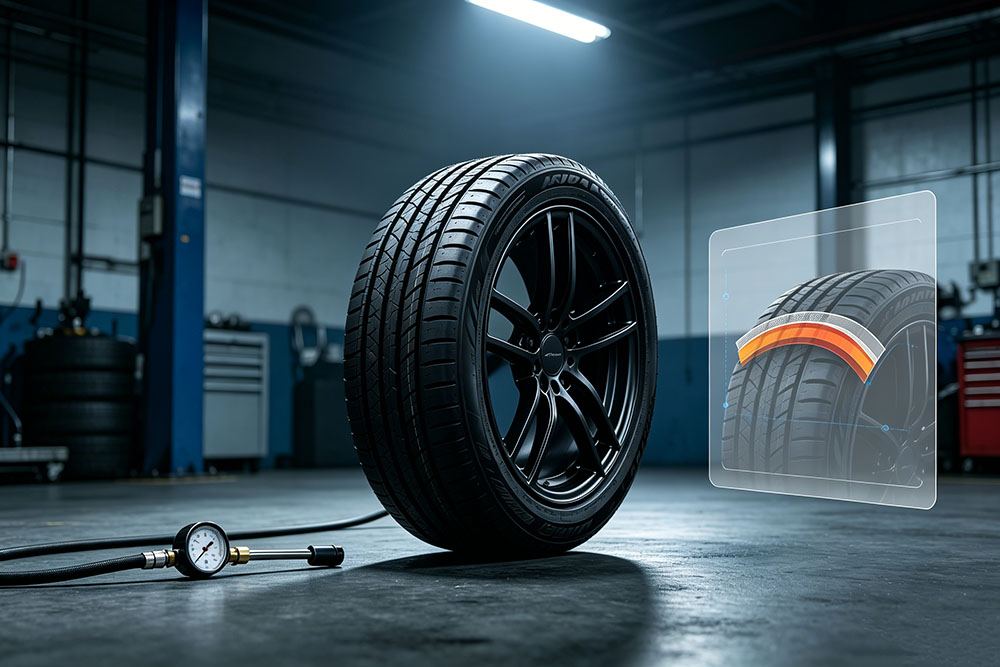
Driving on low tire pressure can affect safety, running costs, and tire life at the same time.
From a safety standpoint, an underinflated tire generates more heat and can respond less predictably during braking, cornering, or sudden steering inputs. If one tire is significantly lower than the others, the vehicle may also feel unbalanced or pull to one side.
Low pressure also increases rolling resistance. The engine has to work a little harder to keep the vehicle moving, so fuel consumption can rise. The difference may be small on a single trip, but it adds up over months of everyday driving.
Wear is another concern. Tires that stay near the recommended pressure generally wear more evenly, while underinflation tends to wear the outer shoulders and overinflation can accelerate wear through the center of the tread. Correct pressure helps you get more usable life from the tires you already paid for.
A simple pressure check can therefore improve day-to-day driving while helping avoid unnecessary fuel and replacement costs.
Always Check Tire Pressure When the Tires Are Cold
For a useful reading, timing matters.
As you drive, the tires warm up and the air inside them expands. That raises the measured pressure, so a reading taken after a long drive will usually be higher than the cold pressure specified by the manufacturer.
Check the tires before driving, after the vehicle has been parked for several hours, or after only a very short trip. This gives you a reading that is much closer to the manufacturer’s cold-pressure specification.
Outside temperature matters as well. Tire pressure naturally drops as the weather gets colder, which is why TPMS warnings often appear when temperatures fall. Having a portable inflator at home makes seasonal top-ups much easier to deal with.
How Often Should You Check Tire Pressure?
Checking your tire pressure once a month is a good habit, and it is also worth doing before any long drive.
Regular checks can catch small problems early, such as gradual air loss, a leaking valve, or a slow puncture. Tires naturally lose some pressure over time, so even if everything seems fine, it is still a good idea to keep an eye on them.
Before a road trip, check all four tires and the spare, if your vehicle has one. A fully loaded car, extra luggage, and long stretches of highway driving all put more stress on the tires, making the correct pressure even more important.
Keeping a portable tire inflatorator nearby makes the whole process more convenient. You can check and top up the tires at home or wherever the car is parked, rather than relying on a gas station pump.
How to Check and Adjust Tire Pressure
Checking tire pressure is straightforward. All you really need is the correct pressure for your vehicle and a reliable gauge.
Start with the car parked on level ground and the tires cold. Remove the valve cap, press the gauge or inflator connector firmly onto the valve stem, and check the reading.
Compare it with the recommended pressure listed on the driver’s door placard. If the tire is low, add air a little at a time. If the pressure is too high, release some air and check it again. It is better to rely on the gauge than on how long the inflator has been running.
This is also a good time to take a quick look at the tire itself. Watch for cuts, bulges, nails or other embedded objects, uneven wear, and worn tread. Any of these may point to a problem that adding air alone will not fix.
Repeat the same process for each tire. Keep in mind that front and rear tires do not always use the same pressure, especially on vehicles with different load requirements.
Portable Inflator vs. Gas Station Pump vs. Garage Compressor
All three can add air, but they suit different situations.
| Option | Convenience | Cost | Best for |
| Portable tire inflator | Very high — use it almost anywhere | One-time purchase | Routine checks, top-ups, roadside use |
| Gas station pump | Depends on location and availability | Usually low per use | Occasional inflation when a station is nearby |
| Home garage compressor | Convenient once installed | Higher upfront cost | Workshops, multiple vehicles, frequent use |
For most drivers, a portable tire inflator offers the best balance of convenience and accessibility. It can stay in the trunk or garage, and depending on the model, it may run from a 12V vehicle socket or a rechargeable battery. That makes it useful for routine maintenance as well as unexpected low-pressure warnings.
A gas station pump is fine when one is nearby and working, but it adds an extra stop and the condition of public equipment can vary. A full-size garage compressor is more capable, although it makes the most sense for workshops, multiple vehicles, or people who already own pneumatic tools.
If your main goal is monthly pressure checks, pre-trip top-ups, and occasional roadside use, a portable inflator is usually the easiest option to keep on hand.
What to Look for in a Portable Tire Inflator
Portable inflators are straightforward tools, but a few specifications make a real difference in everyday use.
Start with pressure capability. The inflator should comfortably reach the pressure required by your vehicle’s tires, with enough headroom for the types of vehicles you expect to service. Larger vehicles and higher-pressure applications may need a more powerful unit.
Inflation speed matters too. Airflow and motor performance determine how long a top-up takes, and faster inflation is especially useful when you are dealing with larger tires or more than one vehicle.
Next, choose the power setup that fits how you will use the pump. A 12V inflator is simple and dependable as long as the vehicle is nearby. A rechargeable model gives you more freedom to use the pump away from a power socket.
A clear digital or analog gauge is important, and auto-stop is a useful convenience feature. With auto-stop, you can set the target pressure and let the inflator shut off when it reaches that value, reducing the chance of accidental overinflation.
Parwatt portable car air pumps are designed around these practical features, giving drivers a compact way to check and adjust tire pressure at home, on a trip, or at the roadside.
Common Tire Pressure Mistakes to Avoid
Most tire-pressure problems come from a few simple habits that are easy to correct.
Checking warm tires is one of the most common errors. Because driving raises tire temperature and pressure, a post-drive reading can make a low tire appear closer to normal. Whenever possible, check pressure after the vehicle has been parked for several hours.
Do not judge pressure by appearance alone. Modern tires can lose a meaningful amount of pressure without looking obviously flat. A gauge gives you a much more reliable answer than a visual check.
Do not automatically set every tire to the same number either. Some vehicles call for different front and rear pressures, and the recommended values may change under heavy-load conditions. Follow the vehicle placard rather than a generic PSI figure.
Another common mistake is using the maximum pressure molded into the tire sidewall as the target. That number describes the tire’s maximum rated pressure under specified conditions; it is not the same as the vehicle manufacturer’s recommended operating pressure.
Finally, remember the spare. A spare that has slowly lost pressure may be of little help when you actually need it, so include it in the same regular inspection routine.
Conclusion
Keeping tire pressure within the vehicle manufacturer’s recommended range is one of the simplest ways to support safer handling, more even tire wear, and efficient everyday driving. A portable air pump makes that maintenance easier to handle at home and on the road. Explore Parwatt’s portable car air pumps to find a model that fits your vehicle, or contact our team if you need help with product selection. For brands and distributors, Parwatt also supports OEM and ODM inflator projects.

--- END ---
Related Posts
Business Ideas

Business Ideas

Business Ideas

Business Ideas


