

OEM Car Battery Charger Customization Guide: Plugs, Clamps, Cables, Firmware and Packaging
Sep 23,2026
Small charger customizations can create large after-sales problems. The wrong plug, an undersized cable, poor clamp contact or incorrect firmware may cause slow charging, cable heat, wrong modes and customer returns. These issues are not only cosmetic. At Parwatt I see them raise support costs for OEM and private-label buyers every season.
OEM car battery charger customization must cover the AC plug, clamps, cables, firmware and packaging as one complete configuration. In 2026 buyers who approve a full golden sample and lock the BOM, firmware and accessories reduce unauthorized changes and costly returns after launch.
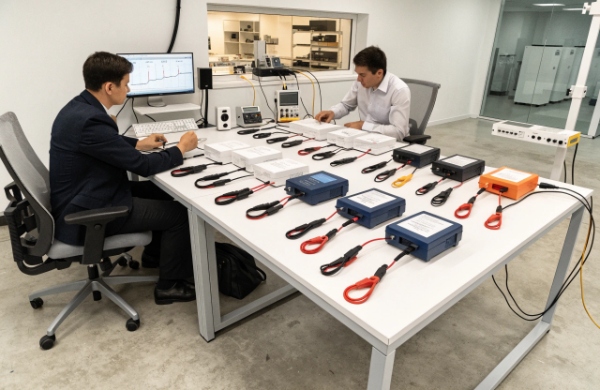
I have worked with automotive accessory brands, importers and wholesalers for years as general manager at Parwatt New Energy. We supply car battery chargers and support OEM customization projects. I regularly review cases where packaging and logos were finalized first while cable gauge, clamp rating or firmware remained undefined. The result was delayed launches or field complaints. Our work in the car battery charger category treats every customized element as part of one approved system. In this article I explain how B2B buyers should manage plugs, clamps, cables, firmware and packaging when customizing car battery chargers in 2026.
Why Small Charger Customizations Can Create Large After-Sales Problems?
Customization touches parts that carry current, control charging behavior and communicate limits to the user. A plug that does not match the market, a cable that drops too much voltage, clamps that lose contact, or firmware that applies the wrong profile can all produce slow charging, excess heat, mode errors and returns. The problems appear after the product is already in distribution.
Small customizations create large after-sales problems because plugs, cables, clamps and firmware directly affect electrical performance and user behavior. Poor choices lead to heat, incomplete charging, wrong modes and higher return rates.
How Minor Changes Escalate
I have examined returned chargers whose output cable was lengthened for marketing reasons without increasing conductor size. Voltage at the battery terminals fell under load, charge time increased, and customers reported that the unit was “weak.”
In other cases the clamps looked robust yet had high contact resistance. Local heating appeared at the battery posts, and users blamed the charger for poor performance.
Firmware changes made late in the project sometimes altered stage timing or chemistry limits. Batteries that charged correctly on the original sample behaved differently in production units. Reviews then described inconsistent results.
Packaging and labels that omitted capacity limits or chemistry restrictions led users to connect unsuitable batteries. The resulting faults were recorded as product failures even when the hardware followed its specification.
Here is a table that links small changes to field problems:
| Customization Area | Typical Weak Choice | Field Result | Business Impact |
|---|---|---|---|
| AC plug / cord | Wrong type or thin cord | Market rejection or heat | Delays and returns |
| Output cable | Excess length, small gauge | Voltage drop, slow charge | Poor reviews |
| Clamps | Low contact force or rating | Heating, intermittent charge | Support tickets |
| Firmware | Undocumented “custom” program | Wrong voltages or timeouts | Inconsistent performance |
| Packaging / labels | Missing limits or warnings | Misuse by end users | Avoidable returns |
This table reflects the issues I discuss with OEM partners. At Parwatt we treat every customized part as a performance item for chargers in our car battery charger category.
In 2026 private-label and OEM programs move quickly. Early technical definition of the full configuration remains the best way to keep after-sales costs under control.
The OEM Customization Mistakes Buyers Often Discover Too Late
Several common mistakes appear only after tooling or certification is complete. Buyers sometimes lock packaging and logos first, then discover that the technical specification is incomplete. Others choose clamps and cables by appearance alone. Still others change the plug, PCB, firmware or critical components after the product has already been tested for compliance.
OEM customization mistakes include finalizing packaging before technical specifications, selecting clamps and cables by appearance, and changing certified parts after approval. These errors cause delays, retesting and field failures.
Mistakes That Surface Late
Appearance-first projects often reach the packaging stage with cable length, wire gauge and clamp current rating still undecided. When electrical testing finally occurs, the chosen accessories cannot support the rated current without excessive drop or heat. Redesign at that point affects both schedule and cost.
Clamp selection by shape or color ignores contact resistance, spring force and insulation quality. Units that look premium in a photo may perform poorly on real battery posts.
Post-certification changes are especially costly. Replacing a plug, power cord, output cable, clamp set, or control firmware can void existing safety or EMC documentation. The project then faces retesting or restricted market access.
Suppliers may also substitute components for availability reasons without notifying the buyer. If the golden sample and BOM are not locked, these substitutions reach production unnoticed.
Here is a table of late-discovery mistakes:
| Mistake | Why It Happens | Consequence | Prevention |
|---|---|---|---|
| Packaging before specification | Focus on branding speed | Electrical redesign late | Fix technical spec first |
| Appearance-based clamp/cable choice | Visual samples only | Heat and voltage drop | Require load and temperature data |
| Post-certification part changes | Cost or availability pressure | Invalidated approvals | Formal change control |
| Unlocked BOM | No frozen reference | Unauthorized substitutions | Golden sample + locked BOM |
| Undocumented firmware | “Custom” promise without data | Unpredictable charging | Numbered firmware + curves |
This table helps buyers sequence decisions correctly. At Parwatt we require a complete configuration definition before packaging artwork is finalized for projects in our car battery charger category.
I advise every OEM buyer to treat the electrical and firmware specification as a gate that must close before cosmetic work proceeds. The order of decisions determines the size of later problems.
What to Specify for Plugs, Clamps, Cables, Firmware and Packaging
A clear specification turns customization from a conversation into a controllable project. Buyers should define the destination markets and plug types, cable length and conductor size, clamp current rating and insulation, charging curves and protection logic, and the full set of labels, manuals, barcodes and carton requirements.
Specify plugs by market, cables by length and gauge, clamps by current and contact performance, firmware by numbered curves and protections, and packaging by ratings, warnings and language. Complete specifications prevent incomplete samples.
Detailed Specification Items
Start with the destination markets. Each market drives the AC plug type, input-voltage range, cord construction and marking language. The plug is only one element of the input-side design; strain relief and grounding method must also be stated.
Define output cable length and conductor cross-section. Longer cables need larger conductors to keep voltage drop and temperature rise within limits. The specification should require measurement at the battery terminals under rated current, not only at the charger end.
Set clamp requirements by rated current, contact resistance, spring force, jaw opening, polarity marking and insulation. If multiple clamp or connector options will be offered, each must have a defined rating and wiring diagram.
Firmware must be identified by version number. The specification should list voltage and current limits for each chemistry mode, stage-transition rules, temperature compensation, timeouts, fault codes and maintenance behavior. Measured charging curves for each mode should be attached.
Packaging and labeling must show rated input and output, supported chemistries, capacity range, warnings, mode instructions, manufacturer or importer information and any required regional marks. Manuals and outer cartons should use the agreed languages and barcode formats.
Here is a specification checklist:
- Destination markets and corresponding AC plugs
- Input voltage/frequency range and cord construction
- Output cable length and conductor gauge
- Clamp current rating, contact and insulation requirements
- Firmware version and full parameter set per chemistry
- Measured charging curves for each mode
- Rating labels, warnings and mode instructions
- Manual languages and content
- Barcode and carton marking rules
- Accessory list and packaging method
At Parwatt we use a comparable checklist when managing OEM projects for chargers in our car battery charger category. Related accessory programs such as those in the car air pump category follow the same discipline.
I recommend that buyers circulate the written specification to both engineering and purchasing teams before any sample is ordered. Shared clarity reduces contradictory requests later.
How to Validate a Customized Charger Before Mass Production
Validation must cover the complete configuration, not isolated parts. Buyers should test voltage drop, temperature rise, cable and clamp pull strength, polarity, full charging curves and protection functions on the finished sample. Packaging drop tests, accessory completeness and destination-market compliance documents should be checked at the same time.
Validate the complete customized charger by testing voltage drop, temperature, mechanical strength, charging curves, protections, packaging integrity and compliance documents. Approve only one full configuration as the production reference.
Validation Tests That Matter
Measure voltage at the battery terminals while the charger delivers rated current through the production cable and clamps. Compare the reading with the charger’s internal set points to quantify drop.
Record temperature on the cable, connectors, clamps and charger enclosure under continuous rated load. Results must stay within the agreed limits.
Perform pull and flex tests on the cable entry points and clamp connections to confirm strain relief and mechanical durability.
Verify polarity marking and reverse-polarity protection with the final clamp set attached.
Run complete charging curves on representative batteries for every advertised chemistry mode. Confirm that voltages, currents, transitions and termination match the approved firmware version.
Inject controlled faults to confirm reverse-polarity, short-circuit, overtemperature and abnormal-battery responses still function with the customized accessories.
Conduct packaging drop and vibration checks if the shipping method requires them. Confirm that all accessories, manuals and labels are present and correctly printed.
Cross-check compliance documents against the exact plug, cable, clamps, enclosure and firmware on the sample. Any mismatch must be resolved before approval.
Here is a validation outline:
| Area | Key Checks | Pass Criteria |
|---|---|---|
| Electrical drop | Voltage at battery under load | Within agreed limit |
| Thermal | Cable, clamp, enclosure temperatures | Below specified maxima |
| Mechanical | Pull / flex at entries and clamps | No damage or exposure |
| Charging curves | Full profiles per chemistry | Match approved firmware data |
| Protections | Fault injection with final accessories | Correct response and indication |
| Packaging | Drop, content, print accuracy | Intact and complete |
| Compliance | Documents vs physical configuration | Exact match |
This outline keeps validation focused on the finished product. At Parwatt we apply the same complete-configuration testing to OEM samples before production release in our car battery charger category.
I advise buyers to reject partial samples that show only a new logo or a single accessory. Only the full build provides reliable evidence.
How to Lock the Golden Sample and Prevent Unapproved Changes
After validation the complete sample must be locked as the golden reference. The BOM, PCB revision, firmware version, cable, plug, clamps, labels and packaging artwork should all be frozen. Any later substitution of material or firmware must be submitted for re-approval before it can enter production.
Lock the golden sample with every accessory and document included. Freeze the BOM, PCB, firmware, cables, plugs, clamps and packaging. Require formal re-approval for any substitution to prevent silent changes.
Controls That Keep Production Aligned
Seal and label the golden sample, including its clamps, cable, plug and packaging. Store it so both buyer and supplier can refer to the same physical reference.
Issue a controlled BOM that lists manufacturer and part number for every critical item: power components, sensors, enclosure, cord set, output cable, clamps and labels.
Record the exact firmware version number and archive the measured charging curves that belong to it.
Freeze packaging artwork and the corresponding barcode data. Printing plates or digital files should carry revision numbers.
Write a change-control clause into the purchase agreement: no replacement of critical parts, no firmware update, and no change of plug, cable or clamp may occur without written buyer approval and, where needed, retesting.
Require the supplier to notify any proposed change with technical justification and a comparison to the golden sample. Implement the change only after formal acceptance.
At incoming inspection of the first bulk lots, compare units against the golden sample for visual, electrical and accessory identity. Discrepancies trigger quarantine until resolved.
Here is a lock-down checklist:
- Complete golden sample sealed with all accessories
- BOM frozen with critical part identification
- Firmware version and curves archived
- Packaging and label artwork under revision control
- Written change-control requirement in the contract
- Supplier notification duty for any proposed substitution
- First-lot comparison against the golden sample
- Quarantine rule for non-matching goods
- Re-validation requirement after approved changes
- Shared archive of the final approval package
At Parwatt we close every OEM charger project with this lock-down process. The same controls protect consistency across our car battery charger category and related products such as those on our main site. Complementary lines including car vacuum cleaners follow parallel discipline when customized.
Buyers who lock the full configuration and enforce change control experience far fewer unauthorized variations in mass production. The golden sample becomes the single source of truth for the life of the product.
Conclusion
Successful OEM charger customization is not simply adding a logo to an existing product. At Parwatt we manage plugs, clamps, cables, firmware and packaging as one integrated configuration so the final product performs safely and consistently. The AC plug must suit the destination market, while the clamps, cable and connector must safely carry the specified current with acceptable voltage drop and temperature rise. Firmware must match the battery chemistry and charging requirements, and the packaging must communicate the product’s limits clearly. Buyers should approve one complete, compliance-ready configuration—not separate samples of unrelated components—and lock it as the production golden sample. This approach reduces misunderstandings, unauthorized substitutions and costly charger returns after launch.

--- END ---
Related Posts
Industry News

Business Ideas

Business Ideas

Business Ideas


