Tired of slow home charging that wastes your time? Many EV owners face this daily issue.
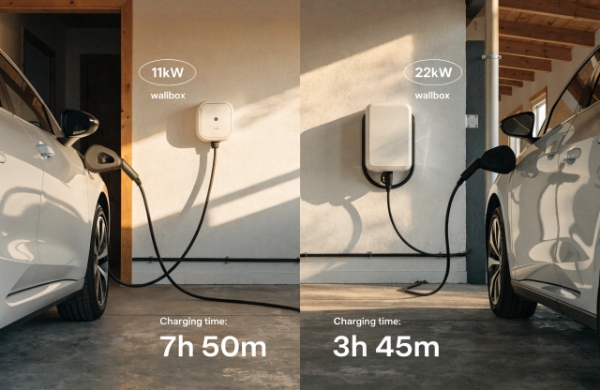
The right wallbox charger makes home EV charging fast and easy. An 11kW unit works great for most drivers with overnight sessions, while a 22kW option cuts times in half for compatible vehicles but needs stronger home power. Choose based on your EV, electricity setup, and daily miles to save money and time.
As the general manager at XIAMEN PARWATT NEW ENERGY TECHNOLOGY CO.,LTD, I help many customers pick the best home charger. In this guide, I share clear facts from real projects so you decide with confidence. Read on to see what fits your needs.
What Are 11kW Wallbox Chargers?
Do you want simple, reliable home charging without big changes to your house? Many single-EV owners ask this.
11kW wallbox chargers deliver steady AC power that turns into DC inside your EV. They suit overnight charging for typical 60-80 kWh batteries and add 30-50 miles of range per hour for most cars.
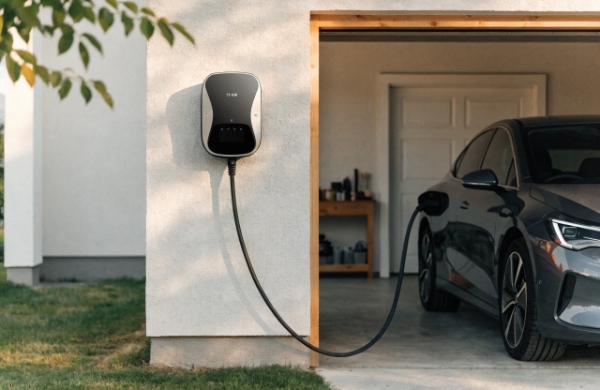
I remember when we installed our first batch of 11kW units for a small fleet in Europe. The customers loved how easy it was. These chargers work on single-phase or three-phase power in many homes. They fit well for daily commutes.
These chargers use your home’s AC supply and rely on the vehicle’s onboard converter. Most modern EVs accept up to 11kW on AC, so you get full speed without waste. For example, a 70 kWh battery goes from 20% to 80% in about 4-6 hours. That covers most people’s daily drive of 30-50 miles.
I always tell our B2B partners like charge point operators and real estate developers that 11kW units keep installation simple. You often need only a 32A circuit and basic wiring. Costs stay low, around $600-$1,000 for the unit plus $300-$800 for setup in many regions.
Parwatt’s EC01 wall charger offers 11kW options with smart app control, RFID, and scheduling. Check it out here: EC01 Wall Charger. It includes Type 2 connectors popular in Europe and works with Wi-Fi for easy monitoring.
Limitations exist too. In very cold climates, charging slows a bit because batteries protect themselves. Also, if you have two EVs at home, you may wait longer between charges.
We use tables in our factory to compare specs clearly:
| Feature | 11kW Benefit | Typical Use |
|---|---|---|
| Power Draw | 16-32A single or three phase | Standard home panels |
| Charge Time | 4-8 hours full | Overnight for daily drivers |
| Cost | Lower hardware + install | Budget-friendly for most |
| Compatibility | Works with 90%+ EVs | Tesla, VW, BMW, etc. |
- Easy to install in most garages.
- Gentler on battery health with steady power.
- Great for workplaces and retail spots that need reliable Level 2 charging.
From my experience supplying automotive OEMs and fleet operators, 11kW chargers deliver value without headaches. They meet daily needs for the majority of users in 2026.
What Are 22kW Wallbox Chargers?
Need faster charging to fit a busy schedule? High-mileage drivers often search for this solution.
22kW wallbox chargers provide double the power of 11kW models for quicker top-ups. They need three-phase power and shine with EVs that accept higher AC rates, cutting charge times significantly.
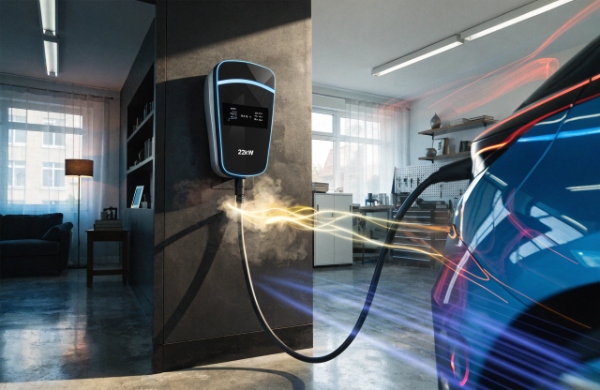
At Parwatt, we build 22kW versions of our EC01 series for customers who want speed. One real estate developer in the Middle East used them in new apartment blocks and saw happy tenants.
These units pull 32A on three-phase 400V systems. They deliver up to 22 kWh per hour, so a 70 kWh battery reaches 80% in roughly 2-3 hours when the car supports it.
High-end models like certain Porsche or premium Teslas make full use of this speed. For others, the car’s onboard charger limits output to 11kW anyway.
Installation demands more planning. You need thicker cables, possible panel upgrades, and sometimes utility approval. Total project costs rise by $500-$1,500 compared to 11kW.
Our team helps energy utilities and government projects with these. The EC01 supports 22kW with smart load balancing to avoid grid strain. Learn more on our solutions page: Parwatt EV Charger Solutions.
Pros include future-proofing for multi-EV homes and faster turnaround for fleet operators. Cons involve higher upfront spend and availability of three-phase power in older houses.
I share this table with wholesale partners:
| Feature | 22kW Advantage | Requirement |
|---|---|---|
| Charging Speed | Twice as fast | Three-phase power |
| Ideal For | Multi-EV or high daily miles | New builds or upgraded panels |
| Smart Features | Dynamic load management | App control standard |
- Perfect for hospitality chains with guest EVs.
- Supports OCPP for professional operators.
- Requires certified electricians for safety.
In 2026, more vehicles add stronger onboard chargers, making 22kW a smart long-term pick in the right setup. We see growing demand from automotive accessory wholesalers who bundle these with our portable options.
Key Differences: 11kW vs 22kW Wallbox Chargers
Confused about which power level actually matters for your EV? Side-by-side facts clear this up fast.
11kW and 22kW chargers differ mainly in speed, power needs, and cost. The 22kW version charges faster on compatible cars but demands more from your electrical system. Most drivers find 11kW enough.
I use comparison tables every day when I talk to charge point operators.
The biggest factor is the weakest link rule. Your EV’s onboard charger decides real speed. Many 2026 models still max at 11kW AC, so a 22kW wallbox gives no extra benefit.
Power supply forms another core difference. 11kW often runs on single-phase 230V or three-phase at lower amps. 22kW strictly needs three-phase 32A.
Cost spreads wide. Hardware differs by $200-$500, but installation for 22kW adds big expenses for wiring and permits.
Here is a detailed side-by-side table we share with customers:
| Aspect | 11kW Wallbox | 22kW Wallbox |
|---|---|---|
| Charging Speed | 30-50 miles/hour | 60-100 miles/hour (if supported) |
| Electrical Needs | Single or three-phase | Three-phase 32A required |
| Install Cost | $300-$800 typical | $800-$2,300 with upgrades |
| Unit Price | $600-$1,200 | $900-$1,800 |
| Vehicle Match | Nearly all EVs | High-end models only |
| Battery Impact | Gentler, less heat | More heat if used often |
| Best For | Single EV homes | Multi-EV or fleets |
- Speed doubles only when the car accepts it.
- Grid approval may delay 22kW projects.
- Both support smart apps for scheduling.
We link this knowledge to our blog for deeper reading: AC vs DC EV Charging and Level 2 vs Level 3 Charging.
From supplying EV resellers across the USA and Europe, I see 11kW win most home bids for simplicity. 22kW fits new constructions or businesses. Always check your EV manual first.
Pros and Cons: Real-World Performance and Costs
Worried about extra costs or battery wear from faster charging? Real user stories reveal the truth.
11kW chargers offer lower costs and easy daily use with minimal battery stress. 22kW units provide speed but raise installation bills and need stronger setups. Choose what matches your habits.
In my years at Parwatt, I have heard hundreds of feedback stories.
Pros of 11kW shine in daily life. Overnight charging finishes most batteries without rush. Installation stays affordable and quick. Battery stays cooler, which helps long-term health. Many fleet operators pick this for lower maintenance.
Cons appear when you need daytime top-ups. You wait longer if you drive a lot.
22kW pros include fast recovery for busy families or delivery fleets. It future-proofs your home as EVs improve. Smart features like load balancing help manage energy bills.
Cons hit harder on cost and setup. Higher power means bigger breakers, thicker wires, and possible utility sign-off. In some areas, you pay extra demand charges.
Cost breakdown from our projects:
- 11kW total project: $1,000-$2,000.
- 22kW total project: $1,800-$4,000.
Performance table we review with corporate clients:
| Scenario | 11kW Result | 22kW Result |
|---|---|---|
| Overnight Charge | Full battery by morning | Full in half time |
| Daily Miles 40 | Plenty of power | Overkill |
| Multi-EV Home | May need scheduling | Handles both faster |
| Battery Longevity | Better for regular use | Fine with good management |
Real experiences: One retail chain in Germany used our 11kW EC01 units across stores and saved on install while keeping customers happy. Another in the US went 22kW for their employee fleet and cut downtime.
Read our guide on choosing chargers: Car Battery Charger Guide for extra tips that apply here too.
I always advise checking climate. In hot Los Angeles summers, slower 11kW reduces heat stress.
How to Choose the Right Wallbox Charger for Your EV
Unsure how to pick a charger that fits your home and car? Smart steps prevent expensive mistakes.
Start with your EV’s max AC charge rate, check your electrical panel, set a budget, and think about future needs. 11kW works for most; 22kW suits heavy users. Consult an electrician first.
As Jacky Huang, I guide many buyers through this exact process.
- Step one: Read your EV specs. Most models cap at 11kW AC. Tesla and some premium brands go higher.
- Step two: Inspect your home power. Open the panel and note voltage and available amps. Three-phase is rare in older US homes.
- Step three: Calculate daily miles and charge time needs. 40 miles per day? 11kW covers it easily.
- Step four: Factor budget and location. Add smart features like app control and dynamic load management for savings.
- Step five: Plan for growth. Multi-EV or new car soon? Lean toward 22kW if power allows.
Climate tips matter. In California, watch for high summer loads. Smart chargers from Parwatt balance this well.
Future-proofing checklist:
- OCPP compliance for operators.
- IP65 rating for outdoor use.
- Custom cable lengths.
Our EC01 series lets you start at 11kW and scale. See the full range: Parwatt EV Chargers.
We also recommend portable backups like our EP01 for emergencies: EP01 Portable EV Charger.
- Single driver, standard home: Go 11kW.
- Two EVs, new build: Consider 22kW.
- Budget tight: Choose 11kW plus smart scheduling.
Talk to certified installers and review local incentives. At Parwatt we support CPOs, developers, and wholesalers with custom solutions.
Conclusion
The choice between an 11kW and 22kW wallbox charger comes down to your driving habits, EV model, home electrical setup, and budget. Pick what fits your lifestyle for easy home charging.
Contact us at Parwatt today for expert advice and quality solutions that power your EV journey.