

Is It Safe to Leave Your EV Plugged Into a Level 2 Charger Overnight?
Oct 23,2026
Many EV owners worry that overnight Level 2 charging will overcharge the battery, create excess heat, or start a fire. In normal conditions a compliant installation and the vehicle’s battery management system work together to control the session. At Parwatt I still see avoidable incidents when drivers use damaged cables, weak outlets, or uncertified equipment.
Leaving an EV plugged into a properly installed Level 2 charger overnight is generally safe. The vehicle and charger communicate, monitor temperature and state of charge, and stop or sharply reduce power when the selected limit is reached. Safety still depends on correct equipment, a suitable circuit, and regular inspection.
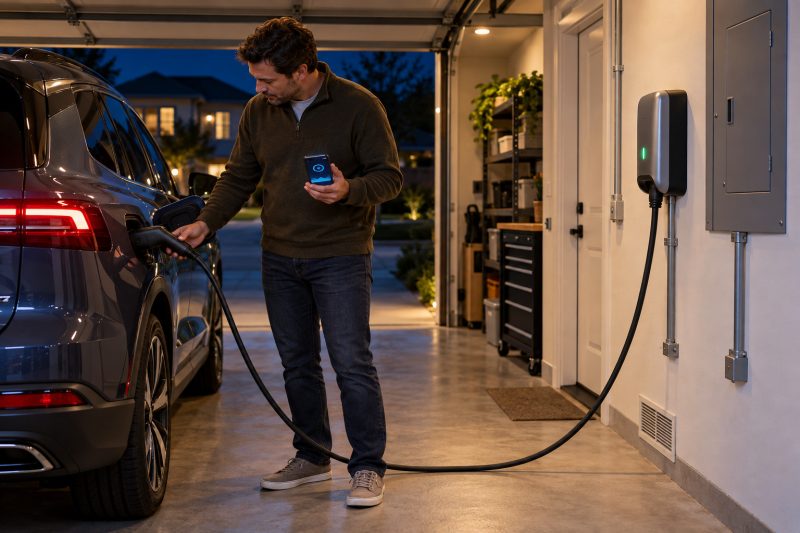
I have worked with charge point operators, fleet managers and home-charging users for years as general manager at Parwatt New Energy. We supply EV charging equipment and power modules used in residential and commercial projects. I regularly answer the same question: is it safe to leave the car connected all night? The short answer is yes when the system is installed and maintained correctly. Our guidance for products in the EV Charger Category always starts with professional installation and clear operating limits. In this article I explain why overnight Level 2 charging is normally safe, which risks still matter, and how drivers can check their setup in 2026.
Why Overnight Level 2 Charging Is Generally Safe?
Overnight Level 2 charging is one of the most common ways people charge at home. Modern vehicles and certified EV supply equipment exchange control signals throughout the session. The battery management system watches voltage, current, temperature and state of charge. When the selected target is reached, normal charging current stops or drops to a very low maintenance level. This design makes continuous connection a normal use case rather than a special risk.
Overnight Level 2 charging is generally safe because the vehicle and charger communicate continuously and the battery management system ends normal charging at the selected limit. Compliant equipment and a correct electrical installation support that control.
Why Continuous Connection Is Part of Normal Design
I have reviewed residential installations where drivers leave the car plugged in every night for years without battery or safety incidents. The common factors are a dedicated circuit, a certified Level 2 unit, and a vehicle that allows a charge limit and schedule.
The charger does not push uncontrolled power into the battery. It only supplies what the vehicle requests. If the vehicle reduces or stops the request, the session changes immediately.
Temperature monitoring adds another layer. If the battery or the charger detects conditions outside the allowed range, current is limited or the session ends. Overnight garage temperatures are usually within the range the system is designed to handle.
Scheduled charging and off-peak settings further reduce stress. Many drivers set the car to finish charging just before departure. The vehicle still remains connected, yet most of the energy transfer happens in a controlled window.
Here is a table that summarises why the practice is normally safe:
| Safety Factor | What It Does | Overnight Effect |
|---|---|---|
| Vehicle–charger communication | Controls current request | No uncontrolled power flow |
| Battery management system | Monitors SOC, voltage, temperature | Stops or reduces charge at target |
| Certified EVSE | Follows safety and control standards | Predictable session behaviour |
| Dedicated circuit | Supports continuous load | Lower risk of overheating wiring |
| Charge limit / schedule | Limits energy and timing | Less time at high current |
This table reflects the protection model I describe to home users and fleet operators. At Parwatt we design equipment such as systems related to the FES-D30 DC EV Charger and modular platforms with the same principle: the vehicle remains in control of the request.
In 2026 overnight connection remains the practical default for most Level 2 home users when the installation is sound.
The Overnight Charging Risks Drivers Should Not Ignore
Safety depends on the condition of the equipment and the electrical system. Uncertified chargers, aging wiring, loose receptacles, extension cords, adapters, and ignored warning signs create real risk. Built-in vehicle protections cannot repair a defective household circuit or a damaged cable.
Overnight charging risks that drivers should not ignore include uncertified equipment, overloaded or aging circuits, loose outlets, extension cords, adapters, and signs of heat, odor, or cable damage. These problems can turn a normal session into a hazard.
Practical Risks That Still Occur
I have inspected sites where a high-current plug-in Level 2 unit was used on a general-purpose receptacle. The outlet showed discoloration after repeated long sessions. The vehicle protections were working; the weak point was the building side.
Extension cords and improvised adapters are another frequent issue. Level 2 charging is a continuous high load. Cords not rated for that duty can heat, and loose adapters increase resistance at the contact points.
Damaged EV cables create local hot spots. Cuts, crushed sections, or bent connectors raise resistance. During a multi-hour overnight session that heat has time to build.
Repeated breaker trips are a clear warning. They may indicate an undersized circuit, a failing protective device, or a developing fault in the charger or vehicle inlet. Continuing to reset and charge overnight is not a safe response.
Unusual smells, melted plastic, or a plug that is too hot to touch after a session require immediate stop and professional inspection.
Here is a risk checklist:
| Risk Source | Why It Matters Overnight | Warning Sign |
|---|---|---|
| Uncertified charger | Unknown control and protection behaviour | Missing marks, unclear origin |
| Undersized / aging circuit | Continuous load overheats wiring | Warm panel, frequent trips |
| Loose receptacle | High resistance at contacts | Discoloration, heat at outlet |
| Extension cord / adapter | Extra joints and wrong rating | Soft plastic, odor, heat |
| Damaged EV cable | Local heating under long load | Cuts, stiffness, hot spots |
| Ignored error messages | Session continues under fault | Repeated faults or warnings |
This table helps drivers separate normal operation from avoidable danger. At Parwatt we stress correct installation and cable condition for every project that uses equipment from the EV Charger Category.
I advise owners to treat any heat, smell, or repeated trip as a stop signal. The overnight session itself is not the problem; the degraded connection is.
How the Vehicle and Charger Prevent Overcharging
Overcharging in the old sense of forcing energy into a full battery is prevented by electronic control. The vehicle and the EVSE exchange signals that define when current may flow and at what level. The battery management system sets the target, watches cell conditions, and ends or reduces the request when the limit is reached. After that point the car may still draw a small amount of power for thermal management or to hold the selected state of charge.
The vehicle and charger prevent overcharging through continuous communication, a selected charge limit, temperature monitoring, and automatic reduction or stop of current when the target is reached. Small maintenance draws may continue after the main charge ends.
Control Sequence During a Session
When the connector is locked, the vehicle and charger establish a control relationship. The vehicle requests current within the limits of the circuit and the EVSE. The charger supplies only what is requested.
As state of charge rises, the battery management system adjusts the request. Near the target, current typically tapers. At the limit, normal charging current stops.
If the driver has set an 80% or similar daily limit, the session ends at that point even though the battery is not at 100%. Many manufacturers recommend a reduced daily limit for certain chemistries; the exact number belongs to the vehicle manual.
Temperature sensors on the battery and, in many systems, on the charger influence the allowed current. High or low temperature can reduce power or pause the session.
After the main charge, the vehicle may periodically draw a small amount of energy to keep the battery in the requested window or to prepare the cabin and battery for a departure time. This is not continuous full-power charging.
Fault detection can open the session. Ground faults, communication loss, or internal errors cause the system to stop power transfer.
Here is a simplified control summary:
| Stage | What Happens | Driver Experience |
|---|---|---|
| Connection | Control signals established | Ready to charge |
| Bulk / main charge | Vehicle requests current | Energy delivered |
| Approach to limit | Current tapers | Charge rate falls |
| Target reached | Normal charge stops or drops sharply | Session complete |
| Hold / precondition | Small maintenance draws possible | Car stays ready |
| Fault | Power transfer ends | Error shown, stop use |
This sequence is why “plugged in all night” does not equal “charging at full power all night.” At Parwatt we design control behaviour in modular systems, including power stages such as the 30kW Power Module and 40kW Power Module, so the vehicle request remains the governing signal.
I tell drivers to set the charge limit in the vehicle and to rely on that setting rather than unplugging the moment the display shows 100%.
Leaving the Car Connected vs Leaving the Charger Powered
Leaving the vehicle connected overnight is a normal use of Level 2 charging. Leaving a permanently installed wall unit powered in standby is also normal. Plug-in Level 2 stations are different: they must use a suitable high-current receptacle and follow the manufacturer’s instructions for connection and disconnection. Frequent unnecessary plugging and unplugging can wear the outlet.
Leaving the car connected overnight is normal. Permanently installed wall chargers are designed to stay powered in standby. Plug-in Level 2 units need a proper receptacle and careful handling so the connection does not wear or overheat.
Two Separate Questions
A hard-wired wall charger is intended to remain energised. Standby power is low. The unit waits for a vehicle and then follows the control protocol. There is usually no need to switch the breaker off every morning.
A plug-in Level 2 unit depends on the quality of the receptacle and the cord. If the manufacturer allows continuous connection to a dedicated NEMA receptacle of the correct rating, the owner may leave it plugged in. If the instructions require disconnection after use, those instructions take priority.
The vehicle side is simpler. Once the charge target is met, keeping the connector locked is standard practice. Many drivers prefer this so the car is ready in the morning and so scheduled preconditioning can run.
Wear occurs mainly at mechanical and electrical contact points. Repeated insertion and removal of a high-current plug on a marginal outlet increases the chance of looseness and heat. A professionally installed hard-wired unit avoids that daily cycle.
Here is a comparison of the two situations:
| Situation | Normal Practice | Main Caution |
|---|---|---|
| Car connected overnight | Yes, after target is managed by BMS | Inspect cable and inlet |
| Hard-wired wall unit left powered | Yes, designed for standby | Follow install and maintenance rules |
| Plug-in Level 2 left in receptacle | Only if manufacturer allows | Correct receptacle, check for heat |
| Daily plug/unplug of high-current plug | Can increase wear | Prefer hard-wired if use is daily |
| Breaker switched every night | Usually unnecessary for wall units | Use only if instructions require |
This comparison prevents confusion between vehicle connection and charger standby power. At Parwatt we recommend hard-wired installations for daily home use where codes and site conditions allow, and we support both approaches within the EV Charger Category.
I advise owners to read the charger manual on continuous connection and to have an electrician confirm the receptacle rating if the unit is plug-in.
A Simple Safety Checklist Before Charging Overnight
A short checklist catches most avoidable problems. Confirm professional installation, a dedicated circuit, and certified equipment. Inspect the plug, cable and vehicle inlet. Set a sensible charge limit. Stop use if you see excess heat, repeated trips, discoloration, unusual odors or error messages.
Before overnight charging, confirm professional installation, dedicated circuit and certification; inspect cable and connections; set a charge limit; and stop immediately if heat, trips, discoloration, odors or errors appear.
Checklist Drivers Can Use Every Week
Verify that the Level 2 equipment is certified for your market and compatible with the vehicle. Avoid unknown or heavily modified units.
Confirm the circuit is dedicated and correctly protected. An electrician should have sized the breaker and wiring for continuous load.
Look at the wall connection. For plug-in units, the receptacle should be tight, clean and free of discoloration. For hard-wired units, the enclosure should be secure and dry.
Inspect the EV cable along its full length. Reject cuts, crush marks, exposed conductors or connectors that feel loose.
Check the vehicle inlet for debris or damage before mating the connector.
Set the charge limit and schedule in the vehicle according to the manufacturer’s guidance. Many drivers use a daily limit below 100% unless a long trip is planned.
After the first hours of a new installation, feel the plug and cable (carefully). Mild warmth can be normal; uncomfortable heat is not.
If the breaker trips, if the charger shows a persistent fault, or if there is a burning smell, stop charging and call a qualified professional.
Keep the area around the charger clear of stored items that could trap heat or suffer water exposure.
Here is a practical overnight checklist:
- Certified Level 2 equipment compatible with the vehicle
- Dedicated, correctly protected circuit
- Tight, undamaged wall connection or hard-wired termination
- Cable free of cuts, crush damage and loose ends
- Clean vehicle inlet
- Charge limit and schedule set in the car
- No repeated breaker trips
- No excessive heat, discoloration or unusual odor
- No active error messages on charger or vehicle
- Clear, dry space around the equipment
At Parwatt we give similar checklists to residential and fleet customers who use our charging systems, including solutions discussed in our articles on Electric Vehicle Charging and AC vs DC EV Charging. Further product options are available on our main site.
Drivers who run this checklist regularly keep overnight charging both convenient and controlled. The few minutes of inspection are the practical price of long-term safety.
Conclusion
Leaving an EV connected to a properly installed Level 2 charger overnight is generally safe and is one of the most convenient ways to charge at home. At Parwatt we design and support equipment so that vehicle control and electrical safety work together. Modern vehicles manage the charging process electronically and stop drawing normal charging power once the selected limit is reached. However, these protections cannot compensate for damaged cables, loose receptacles, overloaded circuits, uncertified equipment, or improper installation. Use a charger compatible with the vehicle, follow both manufacturers’ instructions, and have the electrical system assessed by a qualified professional. Inspect the equipment regularly and stop charging if you notice excessive heat, repeated breaker trips, discoloration, unusual odors, or error messages.

--- END ---
Related Posts


Business Ideas

Business Ideas
