

11kW vs. 22kW Home EV Chargers: Which One Should You Choose in 2026?
Oct 21,2026
Many drivers assume a higher wallbox rating always means faster charging. A 22kW unit looks twice as powerful as an 11kW unit on paper. In practice the vehicle’s onboard charger, the home electrical supply and the real daily energy need often decide the speed. At Parwatt I see households pay for unused capacity when these limits are ignored.
An 11kW home EV charger is the better balance for most three-phase households in 2026. A 22kW charger only delivers its full speed when the property, the circuit and the vehicle all support approximately 32A per phase. If the EV’s AC limit is 11kW or lower, the higher-rated wallbox will not charge that car any faster.
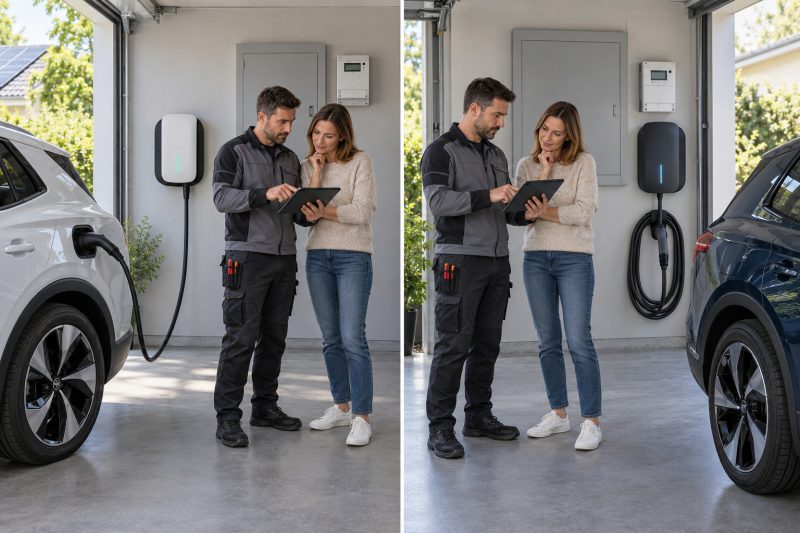
I have worked with residential installers, fleet managers and charge point operators for years as general manager at Parwatt New Energy. We supply EV charging equipment and power modules used in home and commercial projects. I regularly review cases where a buyer selected 22kW without checking the car’s maximum AC input or the available three-phase capacity. Our guidance for products in the EV Charger Category always starts with the vehicle limit and a professional load assessment. In this article I explain how to choose between 11kW and 22kW home EV chargers in 2026.
Why a 22kW Charger May Not Charge Your EV Any Faster?
A wallbox can only supply what the vehicle is prepared to accept. The onboard charger inside the EV converts AC from the wall into DC for the battery. If that onboard unit is limited to 11kW, a 22kW wallbox still charges at roughly 11kW. The extra rating sits unused for that car.
A 22kW charger may not charge your EV any faster because the vehicle’s onboard AC charger sets the real limit. When the car accepts only 11kW, both wallboxes deliver essentially the same speed.
How the Onboard Charger Controls the Session
I have measured sessions where a 22kW wallbox and an 11kW wallbox produced almost identical energy delivery rates on the same vehicle. The car’s maximum AC input was 11kW. The higher-rated unit never received a higher current request.
The wallbox advertises its maximum capability. The vehicle decides how much of that capability to use. Communication between the two keeps the current inside the lower of the two limits.
Many popular EVs still ship with 7.4kW or 11kW onboard chargers. Only a smaller group of models support 22kW AC as standard or as an option. Buying 22kW “for future speed” helps only if the next car will actually use it.
Single-phase homes face a different ceiling. In many 230V markets a single-phase circuit cannot reach 22kW at normal residential current ratings. Three-phase supply is normally required for both 11kW and 22kW operation at the usual 16A or 32A per phase.
Here is a table that shows why the wallbox rating alone does not decide speed:
| Factor | 11kW Wallbox | 22kW Wallbox | Real Speed Limit |
|---|---|---|---|
| Vehicle onboard 7.4kW | ~7.4kW | ~7.4kW | Vehicle |
| Vehicle onboard 11kW | ~11kW | ~11kW | Vehicle |
| Vehicle onboard 22kW | ~11kW | ~22kW | Wallbox or supply |
| Single-phase home | Often limited | Usually not reachable | Supply |
| Three-phase + matching car | Full 11kW | Full 22kW | Lowest link |
This table reflects the measurements and specifications I discuss with installers. At Parwatt we remind buyers that equipment such as systems related to the FES-D30 DC EV Charger or AC wall units must be matched to the vehicle, not only to the brochure number.
In 2026 the first question is still “what can my car accept?” rather than “what is the highest wallbox rating available?”
The Power, Phase and Charging-Speed Mistakes Buyers Often Make
Buyers often confuse the wallbox nameplate with the power the car will actually receive. They may assume any home can support 22kW, or they calculate charging time from battery size alone without allowing for losses and tapering. These mistakes lead to the wrong purchase and unexpected installation costs.
Power, phase and charging-speed mistakes include treating wallbox rating as vehicle speed, ignoring three-phase requirements, and calculating time from battery capacity without losses or charge-curve effects.
Mistakes That Distort the Decision
One common mistake is reading “22kW” and expecting every EV to charge twice as fast. The onboard charger, the cable rating and the available supply current all sit in the path. The lowest value wins.
Another mistake is assuming single-phase power is enough for 22kW. In typical 230/400V residential systems, 22kW requires three phases at approximately 32A each. An 11kW unit usually needs about 16A per phase. The electrical assessment must confirm which currents are available.
Some buyers divide battery kilowatt-hours by wallbox kilowatts and treat the result as exact charging time. Real sessions include conversion losses, reduced power near the top of charge, and possible current limits from the installation. The theoretical number is only a starting point.
Load management is sometimes forgotten. A 22kW continuous draw can stress a domestic service that already supplies heat pumps, cookers or other large loads. Dynamic load management or a lower fixed limit may be required even when the wallbox itself is capable of 22kW.
Future-proofing is used as a reason to buy the higher rating without checking whether the next vehicle or the property upgrade will ever use it. Unused capacity still carries cable, breaker and installation cost.
Here is a table of frequent mistakes:
| Mistake | Why It Happens | Practical Result |
|---|---|---|
| Wallbox rating = car speed | Brochure focus | No speed gain on limited cars |
| Ignoring three-phase need | Single-phase home assumption | Costly supply upgrade or lower power |
| Simple kWh ÷ kW time | Ignores losses and taper | Over-optimistic schedules |
| No load assessment | Focus on charger only | Trips or forced derating |
| 22kW “for the future” only | Unchecked assumption | Extra cost without near-term benefit |
This table keeps the purchase discussion grounded. At Parwatt we ask for the vehicle AC limit and a site survey before recommending any unit from the EV Charger Category.
I advise buyers to write the car’s maximum AC charging rate on the quotation request. That single number prevents many mismatched orders.
What to Check Before Choosing Between 11kW and 22kW
A clear decision sequence starts with the vehicle, then the property, then the daily energy need and the local rules. Confirm the onboard charger rating, single-phase or three-phase support, incoming supply capacity, consumer-unit headroom, typical overnight energy requirement and installation regulations before choosing the wallbox power.
Before choosing, check the vehicle’s maximum AC input, phase support, home supply capacity, distribution-board space, daily recharge need and local installation rules. These factors decide whether 11kW or 22kW is usable.
The Practical Check Sequence
Read the vehicle handbook or the manufacturer’s charging specification. Note the maximum AC charging power and whether the car supports three-phase charging. If the figure is 11kW or lower, a 22kW wallbox will not increase speed for that car.
Confirm the electrical service. Ask an electrician whether three-phase is present and how much current is available per phase after existing loads. An 11kW unit typically needs about 16A per phase; a 22kW unit needs about 32A per phase.
Inspect the consumer unit and cable routes. Higher current requires appropriately sized conductors and protective devices. Space for a larger breaker or for load-management hardware may be needed.
Estimate real daily energy use. Most drivers replace the energy used in one day rather than filling an empty battery every night. If 30–40kWh is a typical overnight need, an 11kW session of a few hours is often enough.
Review local regulations and utility requirements. Some networks ask for notification or load-management when continuous power exceeds a threshold. The installer should confirm the rules that apply to the address.
Decide whether future vehicles are likely to use 22kW AC. If the household expects to keep 11kW-limited cars for several years, the higher rating has limited near-term value.
Here is a pre-choice checklist:
- Vehicle maximum AC charging power recorded
- Three-phase support of the vehicle confirmed
- Available current per phase measured or calculated
- Consumer-unit and cable capacity checked
- Typical daily kWh requirement estimated
- Local notification or load-management rules reviewed
- Likelihood of a future 22kW-capable vehicle assessed
- Budget for any supply upgrade understood
At Parwatt we use this sequence when advising residential projects that may later connect to commercial equipment such as modular systems built around the 30kW Power Module or 40kW Power Module.
I recommend that the electrical assessment is completed before the wallbox is ordered. The assessment often changes the preferred rating.
11kW vs. 22kW: Charging Time, Installation Cost and Future Value
The theoretical time to deliver a large amount of energy is roughly halved when power doubles, but only when every link supports 22kW. Installation cost usually rises with current rating because of cable size, protection devices and possible supply upgrades. Future value exists only if a later vehicle or a property change can use the higher power.
11kW and 22kW differ in theoretical speed, current per phase, cable and protection requirements, load-management need and upgrade cost. The higher rating adds value only when the vehicle and the supply can use it.
Side-by-Side Practical Comparison
At 11kW, delivering about 60kWh takes on the order of five and a half hours before losses. At 22kW the same energy takes on the order of two and three-quarter hours under ideal conditions. For a car limited to 11kW both wallboxes take the longer time.
Current demand differs clearly. Approximately 16A per phase supports 11kW on a 400V three-phase system. Approximately 32A per phase is required for 22kW. Cable cross-section and breaker rating must follow the higher figure when 22kW is chosen.
Installation cost therefore tends to be higher for 22kW. Longer or thicker cable runs, larger protective devices and, in some properties, a service upgrade or load-management system add to the bill. The energy price per kilowatt-hour is not automatically higher; the fixed installation cost is.
Load management becomes more important at 22kW. The continuous draw can approach the limit of a domestic service that also supplies heating or cooking. Dynamic reduction protects the main fuse while still allowing high power when other loads are low.
Future value is real for households that will soon own a 22kW-capable vehicle and already have sufficient three-phase capacity. It is weaker when the next car remains limited to 11kW or when a major electrical upgrade would be required first.
Here is a comparison table:
| Aspect | 11kW | 22kW | Decision Note |
|---|---|---|---|
| Typical current | ~16A per phase | ~32A per phase | Supply must support it |
| Ideal time for ~60kWh | ~5.5 hours | ~2.7 hours | Only if car accepts 22kW |
| Cable / protection | Moderate | Heavier | Cost rises with current |
| Load management | Often useful | Frequently needed | Protects main supply |
| Future-proofing | Adequate for many EVs | Useful if next car is 22kW AC | Check real plans |
| Typical best fit | Most overnight home use | Short turnaround + capable car | Match to need |
This comparison keeps cost and benefit visible. At Parwatt we help installers and owners weigh the same factors when selecting equipment from the EV Charger Category and when planning later expansion toward faster commercial solutions such as the Battery Buffered Ultra Rapid EV Charger.
I tell households that the right rating is the one that matches today’s car and today’s supply, with a clear eye on the next three to five years rather than on an abstract maximum.
A Practical Decision Checklist for Your Home Charging Setup
A final checklist turns the analysis into an action plan. Have a qualified electrician perform a load assessment. Verify the vehicle specification. Calculate the energy that must be replaced on a normal night. Then choose between equipment cost, smart features and any required electrical upgrade.
Use a practical checklist: professional load assessment, vehicle AC limit confirmed, overnight energy need calculated, and a clear choice among charger rating, smart functions and installation scope.
Steps That Lead to a Sound Purchase
Engage an electrician early. Ask for available capacity per phase, existing load, cable routes and the feasibility of 16A or 32A three-phase circuits. Request a written summary.
Confirm the exact maximum AC charging rate of the current vehicle and of any vehicle the household expects to buy next. Use manufacturer data, not sales approximations.
Estimate daily driving distance and the corresponding kilowatt-hours. Compare that figure with the energy an 11kW session can deliver in the available overnight window. Many households find the lower rating already covers the need.
Decide whether smart features—app control, load balancing, solar integration or tariff-aware scheduling—matter more than raw power. These functions often improve daily convenience more than an unused extra 11kW.
If 22kW is still preferred, obtain a costed plan for any supply upgrade, larger cable and load-management hardware. Compare that total with the time saved on a compatible vehicle.
Select a certified wallbox that can be software-limited if the supply cannot yet support full power. Some units can be set to 11kW today and raised later when the installation is upgraded.
Document the final settings, the circuit identification and the maintenance contacts so the household can operate the system safely for years.
Here is a closing decision checklist:
- Written electrical load assessment completed
- Vehicle maximum AC power confirmed
- Typical overnight kWh need calculated
- Three-phase current availability known
- Smart functions versus raw power prioritised
- Upgrade cost for 22kW quantified if relevant
- Certified equipment selected with possible power limit
- Installation and inspection records retained
- User settings for limit and schedule configured
- Annual visual check of cable and connections planned
At Parwatt we support this decision process for residential customers and for partners who later scale to commercial sites. Further reading on charging technology is available in our articles on Electric Vehicle Charging and AC vs DC EV Charging. Product options and specifications can be reviewed on our main site.
Households that follow the checklist avoid paying for capacity they cannot use and still keep a clear path to higher power if a future vehicle and supply upgrade justify it.
Conclusion
For most households with three-phase power, an 11kW home EV charger offers the better balance of charging speed, installation requirements, and cost. At Parwatt we match wallbox ratings to real vehicle limits and site capacity so owners avoid unused hardware. A 22kW charger becomes worthwhile when the property can safely provide 32A on three phases, the vehicle can accept 22kW AC charging, and the driver regularly needs shorter turnaround times. If the EV’s onboard charger is limited to 11kW—or less—installing a 22kW wallbox will not make that vehicle charge faster. Before buying, confirm the vehicle’s maximum AC input, arrange a professional electrical assessment, and compare the cost of upgrading the supply with the real amount of time saved.

--- END ---
Related Posts


Business Ideas

Business Ideas
