

EV Charging Station Insurance and Liability: A Guide for Operators
Aug 28,2026
EV charging creates risks that go well beyond the charger itself. High-voltage equipment, public parking areas, payment systems, networked software, and customer data all introduce potential liability. Operators who overlook these exposures can face claims that their existing policies do not fully cover. At Parwatt I see insurance and liability gaps appear after incidents that could have been anticipated.
EV charging station insurance and liability planning must address bodily injury, property damage, electrical and fire hazards, equipment failure, cyber incidents, and business interruption. Contracts and policies need to assign responsibilities clearly among site hosts, operators, manufacturers, and service providers. In 2026 a structured risk review before launch protects both operations and long-term viability.
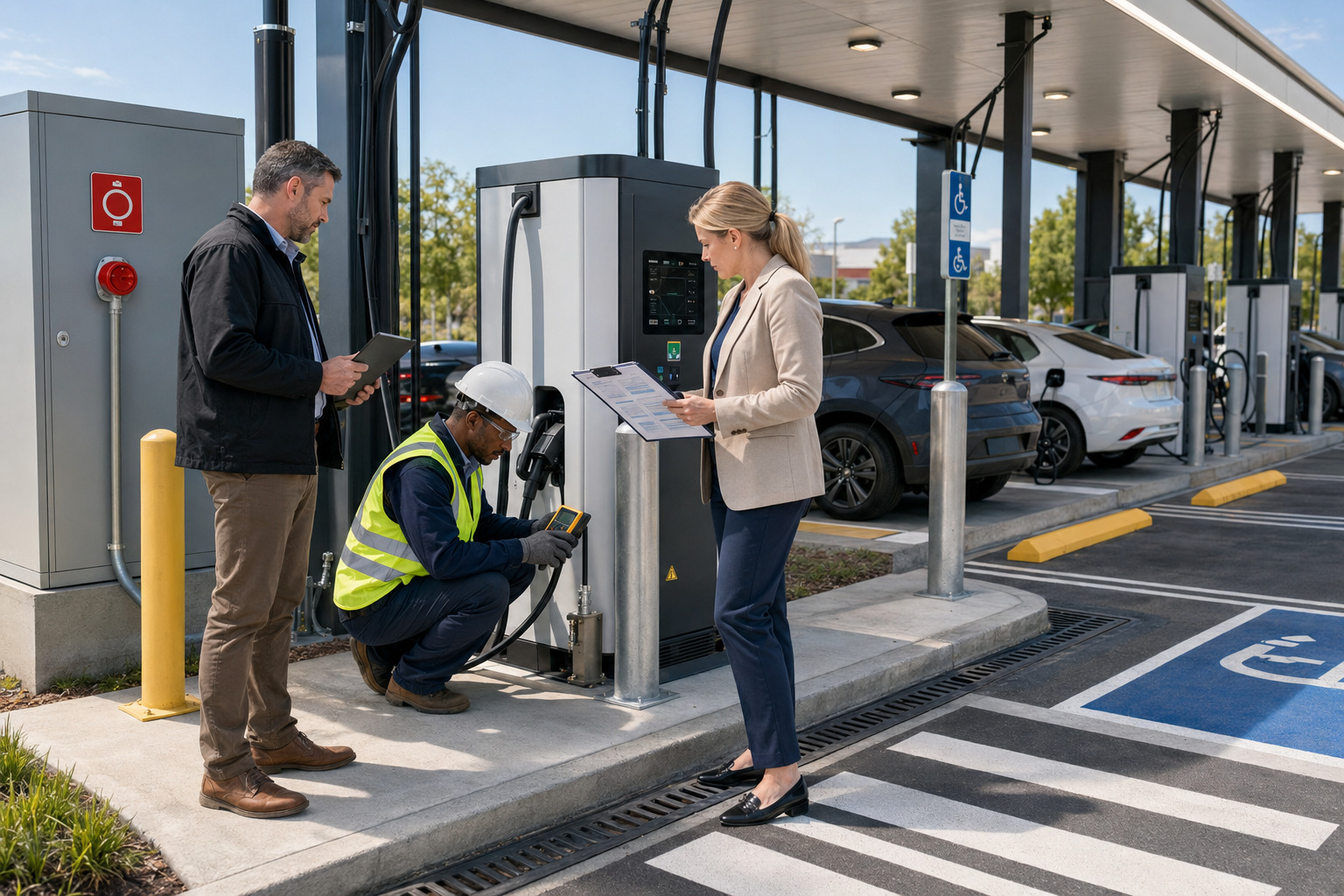
I have worked with charge point operators, site hosts, and facility managers for years as general manager at Parwatt New Energy. We supply DC chargers and power modules used in public and commercial locations. I regularly review projects where insurance questions arose only after installation or after a minor incident. Our equipment, including the FES-D30 DC EV Charger and modular systems, is designed and certified to meet relevant safety standards, yet insurance and contractual allocation remain essential. In this article I explain the key liability exposures and how operators can approach insurance and risk control in 2026.
Why EV Charging Creates Risks Beyond the Charger Itself?
A charging station sits at the intersection of electrical infrastructure, vehicle traffic, public access, and digital systems. Drivers walk around cables. Vehicles move close to equipment. Payment and network platforms handle personal and financial data. Any of these elements can generate a claim. The risk profile is broader than that of ordinary parking or simple electrical equipment.
EV charging creates risks beyond the charger because it combines high-voltage equipment, public parking movement, payment systems, networked software, and customer data. Potential claims include electrical injury, fire, trip-and-fall, vehicle collision, equipment damage, cyber incidents, and service interruption.
The Layered Risk Environment
I have walked sites where a single charging stall introduced multiple new exposures. A cable left across a walkway created a trip hazard. A vehicle backing into a unit caused property damage. A software glitch prevented sessions and generated customer complaints that escalated into contractual disputes.
Electrical and fire risks remain central. High-power equipment, especially DC fast chargers, operates at voltages and currents that demand proper installation, grounding, and ongoing inspection. Faults, improper maintenance, or physical damage can lead to injury or property loss.
Physical site risks are equally real. Bollards, lighting, drainage, and cable management influence the likelihood of collisions, slips, and falls. Public access means these conditions are encountered by people who may be unfamiliar with the layout.
Digital and data risks have grown with networked operation. Payment systems, remote management platforms, and customer accounts introduce possibilities of unauthorized access, fraud, or data exposure. A service outage can also interrupt revenue and trigger service-level claims.
Here is a table that summarizes the main risk categories:
| Risk Category | Typical Scenarios | Potential Claim Type | Primary Control Area |
|---|---|---|---|
| Electrical / fire | Fault, overheating, improper install | Bodily injury, property damage | Design, installation, maintenance |
| Physical site | Trip on cable, vehicle impact, poor lighting | Premises liability | Layout, barriers, inspection |
| Equipment damage | Collision, vandalism, weather | Property / equipment | Physical protection, placement |
| Cyber / data | Unauthorized access, payment fraud | Privacy, financial loss | Security, contracts, cyber cover |
| Service interruption | Extended downtime | Business interruption, SLA claims | Monitoring, maintenance, redundancy |
This table reflects the exposures I discuss with operators. At Parwatt we design hardware for durability and safety compliance so the physical and electrical baseline is strong. You can review our commercial solutions in the EV Charger Category.
In 2026 the combination of physical and digital risks continues to expand as networks grow and more customer data flows through charging systems. Treating the charger as an isolated piece of equipment understates the full liability picture.
The Liability Gaps Operators Often Discover Too Late
Many operators assume existing commercial policies or a third-party operating agreement will automatically cover charging activities. Others believe that outsourcing operations fully transfers risk. Policy exclusions for cyber events, pollution, equipment breakdown, or business interruption often surface only after a claim. Contracts sometimes create obligations broader than the insurance that supports them. These gaps become visible when an incident occurs.
Liability gaps commonly appear when operators assume site-host policies cover charging, rely on outsourcing to transfer all risk, overlook policy exclusions, or accept contractual duties that exceed available insurance. These discoveries often happen after an incident rather than during planning.
Assumptions That Leave Coverage Holes
One frequent assumption is that the property owner’s general liability policy automatically extends to the charging operation. In practice, the addition of high-power electrical equipment and public interaction with it may fall outside prior underwriting or require specific disclosure and endorsement.
Another assumption is that a third-party CPO or maintenance provider fully absorbs responsibility. Contracts may assign certain duties, yet premises liability can still reach the site host, and product or professional claims may reach other parties. Without careful coordination, responsibility can be disputed while the claim proceeds.
Exclusions create further gaps. Standard policies may limit or exclude coverage for cyber incidents, environmental cleanup, equipment breakdown, or income lost during a shutdown. Operators who never reviewed these sections discover the limits only when they need the coverage.
Contractual requirements sometimes exceed insurance reality. An agreement may demand broad indemnification or high limits that the actual policies do not provide. Additional-insured status may be promised but not correctly endorsed. The resulting gap leaves one party exposed.
Here is a table of common liability gaps:
| Gap | How It Arises | Consequence | Prevention |
|---|---|---|---|
| Assumed host policy coverage | No specific review of charging exposure | Claim denial or dispute | Disclose operations and confirm endorsements |
| Over-reliance on outsourcing | Belief that contracts transfer all risk | Shared or residual liability | Align contract duties with actual control |
| Unreviewed exclusions | Focus on policy titles only | Missing cyber, breakdown, or interruption cover | Read exclusions and endorsements |
| Contract broader than insurance | Aggressive indemnity language | Uninsured contractual liability | Match obligations to policy scope |
| Missing additional-insured status | Administrative oversight | Defense and indemnity gaps | Verify certificates and endorsements |
This table captures issues that surface in post-incident reviews. At Parwatt we encourage operators to treat insurance and contracts as part of project design, alongside the selection of reliable hardware such as our 30kW Power Module and 40kW Power Module.
I have seen claims delayed for months while parties argued over whose policy should respond. Early alignment of contracts and insurance prevents most of these disputes.
Which Insurance Coverages Charging Operators Should Review
No single policy covers every charging exposure. Operators should examine commercial general liability, property, product liability, professional liability, cyber, environmental, workers’ compensation, commercial auto, equipment breakdown, business interruption, and excess liability in light of their specific business model. The correct package depends on ownership, operating role, and contractual commitments.
Charging operators should review general liability, property, product, professional, cyber, environmental, workers’ compensation, auto, equipment breakdown, business interruption, and excess coverages. The necessary combination depends on whether the operator owns, hosts, or only services the equipment and on the risks assigned by contract.
Mapping Coverages to Exposures
Commercial general liability typically addresses third-party bodily injury and property damage arising from operations or premises. It is foundational yet may not cover every electrical, cyber, or professional claim without appropriate terms.
Property insurance protects the operator’s own equipment and improvements against covered causes of loss. Equipment breakdown coverage can address mechanical or electrical failure that standard property forms exclude.
Product liability becomes relevant for parties who manufacture, distribute, or significantly modify equipment. Professional or errors-and-omissions coverage may apply to design, software, or advisory services.
Cyber liability addresses data breaches, network security failures, and related business impacts. Given the payment and personal data handled by modern chargers, this coverage deserves explicit attention.
Environmental coverage may respond to certain release or cleanup scenarios. Workers’ compensation and employer’s liability protect employees. Commercial auto covers vehicles used in the business. Business interruption can replace income lost after a covered physical loss. Excess or umbrella policies provide additional limits above primary coverage.
Here is a coverage overview:
| Coverage Type | Primary Focus | Relevance to Charging |
|---|---|---|
| General liability | Third-party injury and property damage | Premises and operations claims |
| Property | Damage to owned equipment and improvements | Charger and infrastructure loss |
| Equipment breakdown | Mechanical / electrical failure | High-power equipment risk |
| Product liability | Injury or damage from product defects | Manufacturers and modifiers |
| Professional / E&O | Errors in design or services | Software and advisory roles |
| Cyber | Data breach and network security | Payment and customer data |
| Environmental | Pollution and cleanup | Certain release scenarios |
| Workers’ compensation | Employee injury | Installation and service staff |
| Business interruption | Lost income after covered loss | Revenue protection |
| Excess / umbrella | Additional limits | Catastrophic claims |
This framework helps operators and their advisors build a coherent program. At Parwatt we supply equipment designed and tested to relevant safety standards, which supports underwriting discussions, yet the insurance architecture remains the operator’s responsibility. Additional system background is available in our article on Electric Vehicle Charging.
I recommend a written coverage checklist for every project so that gaps are identified before the station goes live rather than after the first serious claim.
How Contracts Divide Risk Among Charging Project Partners
Contracts allocate responsibility among the site host, charge point operator, equipment manufacturer, installer, maintenance provider, software platform, and payment processor. Clear language on installation, inspection, maintenance, data protection, and incident response reduces later disputes. Indemnity, limitation of liability, additional-insured, and waiver-of-subrogation clauses must align with the insurance that each party actually carries.
Contracts divide risk by assigning installation, maintenance, software, data-security, and incident-response duties among hosts, operators, manufacturers, and service providers. Indemnity, additional-insured status, and insurance requirements should match the real allocation of control and the policies in force.
Aligning Duties, Indemnity, and Insurance
The site host typically controls the premises and may retain duties related to overall parking safety, lighting, and access. The CPO or operator often assumes responsibility for charger performance, network operation, and customer-facing support. The installer warrants workmanship and code compliance for the installation period. The manufacturer warrants the equipment itself. Maintenance providers take on ongoing inspection and repair obligations. Software and payment parties handle platform security and transaction integrity.
Indemnification clauses shift financial responsibility for certain claims. They should be mutual where appropriate and limited to matters within each party’s control. Broad form indemnity that exceeds available insurance creates uninsured exposure.
Additional-insured endorsements allow one party to benefit from another’s liability policy for claims arising from the named party’s work or operations. Certificates of insurance should be collected and verified, and endorsements should be confirmed rather than assumed.
Waivers of subrogation prevent an insurer from recovering against a contracting party after paying a claim. These waivers are common in construction and service agreements and should be coordinated with the relevant policies.
Limitation-of-liability clauses cap exposure for certain types of damages. They require careful drafting so they do not conflict with insurance or statutory obligations.
Here is a practical allocation view:
| Party | Typical Core Duties | Insurance Focus |
|---|---|---|
| Site host | Premises safety, access, some lighting | General liability, property |
| CPO / operator | Charger operation, uptime, customer support | GL, cyber, property, interruption |
| Installer | Code-compliant installation | GL, professional, workers’ comp |
| Manufacturer | Equipment design and product quality | Product liability, GL |
| Maintenance provider | Inspections and repairs | GL, workers’ comp |
| Software / payment | Platform security and transactions | Cyber, professional |
Clear contracts supported by matching insurance prevent the majority of post-incident allocation disputes. At Parwatt we work with operators who need hardware that meets certification and documentation standards so contractual warranties remain credible. Our solutions include systems such as the Battery Buffered Ultra Rapid EV Charger.
I have reviewed agreements where the indemnity language was far broader than the insurance certificates on file. Aligning the two documents before signature is far less costly than litigating the difference later.
A Practical Risk-Control Checklist Before and After Launch
Effective risk control begins before equipment is ordered and continues through daily operation. Operators should assess site and electrical risks, confirm permits and code compliance, verify equipment certification, align contracts and insurance, implement physical protections, establish inspection and maintenance routines, manage cybersecurity, and prepare incident-response procedures. Documentation of these steps becomes valuable evidence if a claim arises.
A practical risk-control checklist includes site and electrical assessment, permit and code verification, equipment certification review, contract and insurance alignment, physical protection measures, inspection and maintenance programs, cybersecurity controls, and incident-response planning. These steps reduce both claim frequency and severity.
Actions That Reduce Exposure
Conduct a site-specific risk assessment. Identify vehicle traffic patterns, pedestrian routes, drainage, lighting, and proximity to buildings or other assets. Address electrical capacity, grounding, and isolation points.
Confirm that all required permits and inspections are completed and documented. Retain records of approvals and any conditions imposed by authorities.
Verify that chargers and major components carry the certifications required in the target market. Keep certificates and manuals accessible.
Review every material contract against the insurance program. Ensure additional-insured status, limits, and waivers match the obligations each party has accepted.
Install physical protections appropriate to the location—bollards, wheel stops, adequate lighting, clear signage, and cable management that keeps cords out of walkways.
Create a documented inspection and maintenance schedule. Record findings, corrective actions, and parts replaced. Promptly address damaged connectors, exposed wiring, impact marks, or overheating signs.
Apply cybersecurity basics: access control, timely software updates, secure payment handling, and an incident plan for suspected breaches.
Prepare an incident-response procedure that covers equipment shutdown, emergency notification, scene protection, insurer and partner notification, log and video preservation, customer communication, and regulatory reporting if required.
Here is a concise pre- and post-launch checklist:
- Complete site and electrical risk assessment.
- Obtain and file all permits and inspection records.
- Confirm equipment certifications and keep documentation.
- Align contracts with actual insurance coverage and endorsements.
- Install bollards, lighting, signage, and cable management.
- Establish written inspection and preventive maintenance routines.
- Implement access control and software-update discipline.
- Write and practice an incident-response plan.
- Preserve installation, maintenance, and fault logs.
- Review insurance and contracts at each renewal or major change.
At Parwatt we support operators with hardware designed for safe, reliable public operation and with the documentation needed for compliance discussions. Further reading on system selection is available in our comparison of AC vs DC EV Charging.
Operators who treat this checklist as a living process rather than a one-time exercise experience fewer incidents and resolve claims more efficiently when they do occur. Risk control and insurance work best together.
Conclusion
Insurance and liability planning for an EV charging operation should begin before equipment is purchased or a site agreement is signed. At Parwatt we design chargers and power modules to meet relevant safety and performance standards, yet contractual and insurance allocation remains essential for every project. Ownership, leasing and third-party operating models may allocate responsibilities differently, but none automatically eliminates exposure for the site host or operator. A complete review should address bodily injury, property and vehicle damage, electrical and fire hazards, equipment failure, environmental cleanup, cyber incidents, regulatory compliance and lost income following a covered shutdown. Contracts should clearly assign installation, inspection, maintenance, software, customer-support and incident-response duties, while insurance policies should be checked against those obligations. Because coverage and legal requirements vary by policy and jurisdiction, operators should review each project with qualified insurance and legal professionals rather than relying on a generic checklist alone.

--- END ---
Related Posts


Business Ideas

Business Ideas
