

How to Build a Profitable Public EV Charging Pricing Strategy
Aug 27,2026
Setting the right price for public EV charging is harder than most operators expect. The rate must cover electricity, demand charges, network fees, maintenance, and equipment costs while remaining attractive to drivers. Price too low and the station loses money. Price too high and utilization falls. At Parwatt I see pricing decisions make or break station economics every year.
A profitable public EV charging pricing strategy balances full cost recovery with driver acceptance and site goals. Per-kWh, time-based, session, membership, and dynamic models each have strengths. In 2026 successful operators start with complete cost data, match the model to dwell time and competition, test carefully, and adjust on real performance.
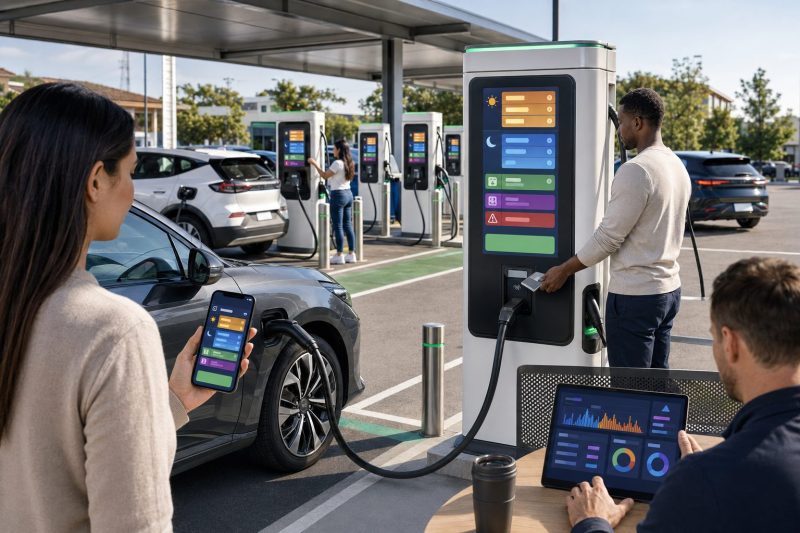
I have worked with charge point operators and site hosts for years as general manager at Parwatt New Energy. We supply DC chargers and power modules used in public and commercial networks. I regularly review pricing structures that looked competitive on paper yet failed to cover real operating costs or drove drivers away. Our equipment, including the FES-D30 DC EV Charger and modular systems, is built for reliable public operation so pricing strategies can focus on value rather than constant downtime. In this article I explain how to build a pricing approach that supports both profitability and driver trust in 2026.
Why Setting the Right EV Charging Price Is Harder Than It Looks?
Public charging prices must recover a long list of costs while staying competitive. Electricity is only the starting point. Demand charges, software and network fees, payment processing, maintenance, customer support, site rent or revenue share, and hardware depreciation all need coverage. At the same time, drivers compare prices across networks and will avoid stations that feel expensive or unclear. The tension between cost recovery and utilization makes pricing a continuous operational challenge.
Setting the right EV charging price is difficult because operators must cover energy, demand charges, platform, maintenance, and capital costs while remaining attractive to drivers. Prices that are too low fail to recover costs. Prices that are too high reduce utilization and damage loyalty.
The Full Cost Reality Behind Every Session
I have examined station financials where the advertised energy rate appeared healthy until every cost line was included. Demand charges often create the largest surprise. A few high-power sessions during the utility peak can set a monthly charge that erodes margin across all sessions.
Network and payment fees add a steady burden. Whether charged per port or per transaction, they reduce the contribution from every session. Maintenance and support costs rise when uptime is imperfect. Hardware depreciation and any ground lease or revenue-share agreement further raise the bar that pricing must clear.
Competition and driver psychology add external pressure. Drivers see prices in apps before they arrive. A rate that fully covers costs at a low-utilization site may look high compared with a busy competitor. Transparency also matters. Unexpected fees discovered only after the session starts generate complaints and lost repeat business.
Site purpose influences the acceptable margin. A highway fast-charging hub may need strong energy margins and rapid turnover. A retail host may accept a thinner charging margin to bring shoppers into the store. Hotels and workplaces often treat charging as an amenity and prioritize cost recovery or guest satisfaction over maximum profit per session.
Here is a table that shows the cost elements pricing must address:
| Cost Category | Examples | Impact on Pricing |
|---|---|---|
| Energy | Wholesale electricity | Variable cost per kWh |
| Demand charges | Peak kW fees | Can dominate at high-power sites |
| Platform and payments | Network fees, processing, roaming | Ongoing fixed or per-session cost |
| Maintenance and support | Repairs, monitoring, customer service | Protects uptime and reputation |
| Site and capital | Rent, revenue share, depreciation | Must be recovered over time |
| Competition and perception | Nearby rates, fee clarity | Limits how high prices can go |
This table reflects the complexity I see in real operator models. At Parwatt we design hardware for high reliability so maintenance and lost-session costs stay controlled, giving pricing more room to work. You can review our public-ready solutions in the EV Charger Category.
In 2026 the operators who treat pricing as a full-cost and full-experience decision consistently outperform those who simply mark up the electricity rate.
The Pricing Mistakes That Reduce Utilization and Driver Trust
Several recurring mistakes undermine both revenue and reputation. Operators copy prices from other locations without adjusting for local costs or competition. They apply a simple markup to energy and ignore demand charges and fixed costs. They overlook differences in charging power and real-world speed. They add complex or poorly disclosed fees. They apply aggressive idle fees in settings where long stays are expected. These errors lower utilization and erode driver confidence.
Pricing mistakes that hurt performance include copying rates without local analysis, using simple energy markups that ignore full costs, overlooking power and speed differences, applying complex or hidden fees, and using strict idle fees in long-dwell environments. These practices reduce utilization and damage trust.
Errors That Appear Across Networks
One common mistake is adopting a competitor’s price without examining differences in utility rates, demand charges, or site costs. A rate that works at a high-volume urban site may produce losses at a lower-volume location with higher demand charges.
Another frequent error is calculating price as electricity cost plus a fixed margin. This approach understates the true cost base and leaves the station exposed when utilization is moderate or when peak demand charges appear.
Power and speed differences are often ignored. Drivers at a lower-power station may pay the same per-minute rate as drivers at a high-power station yet receive far less energy. The effective price per kWh becomes unpredictable and feels unfair.
Fee complexity creates friction. Multiple add-ons, unclear idle rules, or prices that change without notice lead to complaints and negative reviews. Drivers prefer to know the full cost before they authorize the session.
Idle-fee misapplication is especially damaging at hotels, workplaces, and residential sites. Policies designed for high-turnover corridor stalls frustrate guests or employees who are expected to leave vehicles parked for hours.
Here is a table of the main pricing traps:
| Mistake | Why It Happens | Result | Better Practice |
|---|---|---|---|
| Copying other sites’ rates | Desire for a quick benchmark | Misaligned with local costs | Build from own cost base |
| Simple energy markup | Easy calculation | Under-recovery of fixed costs | Include demand, fees, and capital |
| Ignoring power differences | Focus on sticker price | Unfair effective rates | Align price with delivered value |
| Complex or hidden fees | Attempt to capture extra revenue | Driver distrust | Full disclosure before session |
| Aggressive idle fees in long-dwell sites | One policy for all locations | Guest or employee frustration | Match idle rules to dwell pattern |
This table captures issues I discuss with operators who see utilization fall after a pricing change. At Parwatt we support clear, reliable charging experiences with hardware such as our 30kW Power Module and 40kW Power Module, so pricing can focus on value rather than compensating for downtime.
I have seen networks lose regular drivers after introducing poorly explained fees. I have also seen stations improve both margin and session volume after simplifying the price and aligning it with local costs. Clarity and cost discipline prevent most of these mistakes.
How the Main Public EV Charging Pricing Models Compare
Public charging uses several common pricing structures. Per-kWh charges drivers for the energy received. Per-minute or time-based pricing charges for connection time. Flat session fees apply a single amount per use. Hybrid models combine elements. Time-of-use or peak/off-peak rates reflect energy cost changes. Memberships offer discounted rates for recurring fees. Free or promotional pricing is used selectively to drive traffic. Each model has different effects on fairness, cost recovery, turnover, and driver understanding.
Main pricing models include per-kWh, per-minute, session fees, hybrid structures, time-of-use rates, memberships, and promotional free charging. Per-kWh is generally easiest for drivers to understand. Time-based and idle fees help turnover. Memberships build loyalty when frequency justifies the discount.
Strengths and Trade-offs of Each Approach
Per-kWh pricing links the driver’s cost directly to the energy delivered. It feels fair and is easy to compare across stations. It recovers energy cost cleanly but does less to encourage vehicles to leave once charging is complete.
Time-based pricing charges by the minute or hour. It can improve turnover, especially when paired with an idle fee after charging ends. However, effective cost per kWh varies with the vehicle’s acceptance rate, battery state, and temperature. Two drivers at the same stall can pay different amounts for the same energy.
Flat session fees are simple. They work best when session lengths and energy amounts are relatively consistent. They can under- or over-charge when vehicle needs vary widely.
Hybrid models combine a per-kWh or per-minute rate with a session fee or idle component. They attempt to balance energy recovery and turnover but require clear communication so drivers understand the total.
Time-of-use or peak/off-peak pricing reflects underlying electricity costs. Lower overnight or midday rates can shift demand and protect margins during expensive periods. Drivers need advance visibility of the applicable rate.
Memberships exchange a recurring fee for lower per-session rates. They suit frequent users and improve revenue predictability. Occasional drivers should still have a transparent pay-as-you-go option.
Promotional or free charging can attract drivers to retail or new sites. It must be time-limited and measured against the intended commercial goal so it does not become an uncontrolled cost.
Here is a comparison of the core models:
| Model | Driver Clarity | Cost Recovery | Turnover Effect | Best Fit |
|---|---|---|---|---|
| Per-kWh | High | Strong on energy | Moderate | Most public sites |
| Per-minute | Medium | Variable by vehicle | Strong with idle fee | High-turnover locations |
| Session fee | High | Depends on consistency | Low to moderate | Predictable short sessions |
| Hybrid | Medium | Flexible | Adjustable | Sites needing both recovery and turnover |
| Time-of-use | Medium to high | Tracks energy cost | Can shift demand | Markets with strong TOU differentials |
| Membership | High for members | Improves predictability | Supports loyalty | Frequent local users |
| Promotional free | High | Low by design | Attracts traffic | Retail activation or launch periods |
This comparison helps operators match the model to site goals. At Parwatt we see the highest driver acceptance when the price is simple and fully visible before charging begins. Our reliable hardware, including options such as the Battery Buffered Ultra Rapid EV Charger, supports consistent sessions so pricing remains predictable for both sides.
I recommend that operators choose the primary model according to the dominant dwell pattern and then add idle or membership elements only where they solve a clear problem. Complexity without purpose usually reduces trust.
How Dynamic Pricing Balances Revenue, Demand and Grid Costs
Dynamic pricing adjusts rates according to electricity cost, site utilization, time of day, available power, or grid conditions. Lower prices during quiet or low-cost periods can attract demand. Higher prices during congested or expensive periods can protect margins and moderate load. When implemented with clear communication and reasonable limits, dynamic pricing improves both utilization and cost recovery.
Dynamic pricing balances revenue and demand by adjusting rates for energy cost, utilization, time, and grid conditions. Off-peak discounts can shift load. Peak rates can protect margins. Success requires advance price visibility, reasonable bounds, and no mid-session surprises.
Practical Application of Dynamic Rates
Dynamic pricing works best when drivers see the applicable rate before they authorize the session. Changes that occur after charging has started damage trust and generate complaints.
Common inputs include the utility’s time-of-use or real-time energy price, current site occupancy, and remaining electrical capacity. Some systems also consider local events or historical demand patterns.
Off-peak discounts encourage drivers who have flexibility to charge at lower-cost times. This can flatten the site’s demand curve and reduce exposure to peak energy or demand charges.
Peak or high-utilization rates help manage congestion and maintain margin when every stall is occupied. They work most effectively when drivers have nearby alternatives or can adjust their plans.
Price ceilings and floors keep rates within acceptable bounds. Extreme swings, even if cost-justified, can alienate drivers and harm the network’s reputation.
Membership or loyalty discounts can sit on top of dynamic base rates, preserving benefits for frequent users while still allowing the underlying price to respond to conditions.
Here is how dynamic pricing typically operates:
| Input Signal | Price Response | Intended Effect |
|---|---|---|
| High energy or demand cost | Higher rate | Margin protection |
| Low site utilization | Lower rate | Attract additional sessions |
| High occupancy | Higher rate or idle emphasis | Improve turnover |
| Off-peak utility window | Discounted rate | Shift flexible demand |
| Pre-set ceiling / floor | Bounded adjustment | Protect driver trust |
These mechanisms give operators flexibility without abandoning transparency. At Parwatt we support the reliable operation that makes dynamic pricing credible—drivers will only respond to price signals if the station itself works consistently. Additional system context is available in our article on Electric Vehicle Charging.
I have seen networks reduce peak-related costs and improve off-peak utilization after introducing modest, well-communicated dynamic rates. The key is predictability: drivers should understand the rules even when the exact number changes.
A Step-by-Step Process for Testing and Improving Charging Prices
Profitable pricing is built through a deliberate process rather than a single decision. Operators define the site’s commercial goal, calculate the full cost of delivering a session, study local competition and dwell patterns, select a base pricing unit, design membership and idle rules, run controlled tests, measure results, and refine. Pricing remains an ongoing operational activity.
Build and improve charging prices by setting clear commercial goals, calculating full session costs, analyzing the site and competition, choosing a base model, adding membership and idle rules where appropriate, testing changes, tracking utilization and margin, and optimizing continuously.
From Cost Baseline to Live Optimization
Start with the site objective. Decide whether the priority is energy margin, turnover, guest amenity, retail traffic, or a balanced combination. The objective guides how aggressive or promotional the price can be.
Calculate the complete cost of a typical session. Include energy, allocated demand charges, network and payment fees, maintenance allowance, and capital recovery. This number is the floor that pricing must respect over time.
Analyze the local environment. Review competitor prices, typical dwell times, traffic patterns, and driver expectations. A price that ignores these realities will under-perform regardless of cost accuracy.
Select the primary pricing unit—usually per kWh for clarity, or time-based where turnover is critical. Keep the structure as simple as the objective allows.
Design secondary rules. Add idle fees only where vehicles regularly block stalls after charging ends. Offer memberships where a meaningful share of drivers charge frequently. Ensure every fee is disclosed before authorization.
Test changes on a limited set of stalls or sites. Run the new price long enough to capture normal weekly patterns. Avoid changing multiple variables at once.
Measure the outcomes that matter: session volume, utilization, gross margin after energy and fees, idle-time reduction, and driver feedback or repeat use. Compare against the prior baseline.
Scale the changes that improve the target metrics. Adjust or abandon those that do not. Repeat the cycle as costs, competition, or demand patterns evolve.
Here is a practical process checklist:
- Define the primary commercial goal for the site.
- Build a full cost model per session or per kWh.
- Map competitor prices and local dwell behavior.
- Choose a clear base pricing unit.
- Add idle or membership rules only where they solve a real problem.
- Disclose the complete price before session start.
- Pilot changes and measure utilization, margin, and feedback.
- Keep or revise based on data.
- Review pricing on a fixed schedule as costs and markets change.
At Parwatt we help operators maintain the reliable hardware foundation that pricing strategies depend on. Our power modules and chargers are selected for consistent public performance. Further guidance on technology choices appears in our comparison of AC vs DC EV Charging.
Operators who treat pricing as a measured, iterative process consistently achieve better combinations of margin and utilization than those who set a rate once and leave it unchanged. The process itself becomes a competitive advantage.
Conclusion
There is no universal price that makes every public EV charging station profitable. At Parwatt we design chargers and power modules for the reliability that allows pricing strategies to focus on value rather than downtime. The right strategy depends on electricity tariffs, demand charges, charging speed, site utilization, driver dwell time, local competition, operating expenses, and the broader purpose of the location. Per-kWh pricing is generally easy for drivers to understand, while time-based and idle fees can improve turnover when applied carefully. Membership discounts and off-peak rates can build loyalty and redistribute demand, while dynamic pricing offers greater flexibility in markets with fluctuating energy costs. Whatever model an operator chooses, the complete price should be disclosed before the session begins. Pricing should then be treated as an ongoing operational process, measured against profitability, utilization, availability, and customer satisfaction.

--- END ---
Related Posts


Business Ideas

Business Ideas
