

Everything You Need to Know About Portable EV Chargers in 2026
Apr 29,2026
You worry about getting stuck with a low battery on the road or in a new apartment without a wall charger. Many EV owners face this exact frustration every week. I see it all the time at Parwatt.
Portable EV chargers give you flexible charging anywhere with a standard outlet. In 2026, good Level 2 portable units add 10-35 miles of range per hour and cost $250-$700. They solve range anxiety for renters, road trips, and backup needs without expensive home installation.
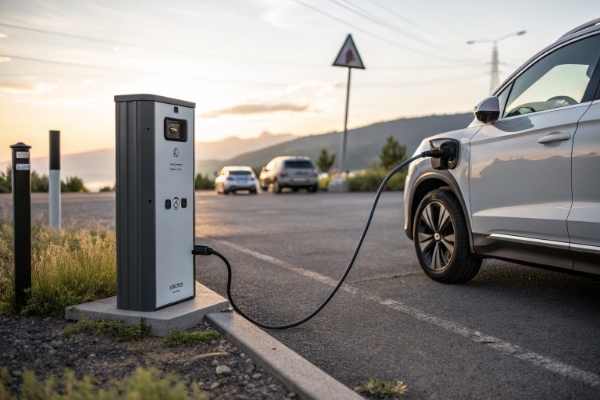 Portable EV charger plugged into outlet at roadside
I have worked with EV charging solutions for years at Parwatt. Portable chargers helped many of our customers keep moving when fixed stations were not an option. Let me walk you through what really matters so you can choose the right one.
What Is a Portable Electric Car Charger?
You hear the term and wonder if it is just a fancy cable or something more powerful. This basic question comes up in almost every conversation I have with new EV owners.
A portable EV charger is a compact, movable device that plugs into regular household or RV outlets to charge your electric vehicle. It turns any 120V or 240V socket into a charging point without permanent wiring.
At Parwatt we build and supply these units for real-world use. They come in simple cable form or with smart controls. You can pack them in your trunk and use them at home, hotels, or job sites.
Main Types You Will See
Portable chargers fall into a few clear groups. Level 1 uses standard 120V outlets and adds 3-7 miles per hour. Level 2 needs 240V outlets like NEMA 14-50 and delivers 10-35 miles per hour. Some include small battery packs for limited off-grid use.
Here is a quick comparison table:
| Type | Power Source | Miles Added Per Hour | Best For |
|---|---|---|---|
| Level 1 | 120V outlet | 3-7 | Emergency top-ups |
| Level 2 (16-32A) | 240V outlet | 10-30 | Daily driving needs |
| Level 2 (40A+) | 240V heavy outlet | 28-35+ | Faster overnight charge |
| Battery Power Station | Built-in battery | 2-5 per discharge | Remote or outage backup |
I always tell people to match the type to their daily miles. Most drivers need Level 2 for practical use.
Our EP01 Portable EV Charger offers solid Level 2 performance in a compact package.
Why Portability Matters in 2026
More people live in apartments or move often. Public chargers still have gaps. A portable unit gives you freedom and peace of mind. You avoid waiting for installation permits or landlord approval.
Are Portable EV Chargers Worth the Money?
You see the price tag and ask if it will actually save you time and stress. I get this question daily.
Yes, portable EV chargers are worth the money for renters, road trippers, and anyone without a dedicated home charger. A quality Level 2 unit pays for itself quickly by avoiding public charging fees and reducing range anxiety.
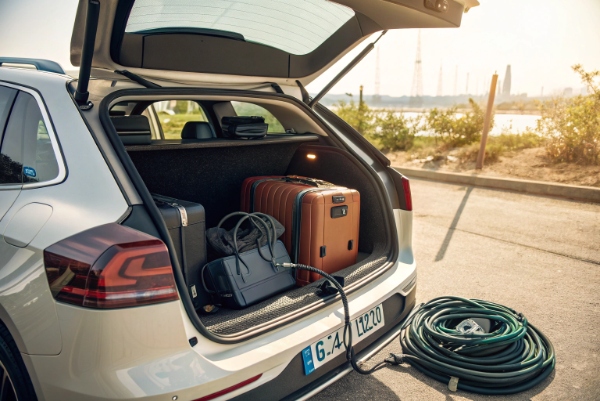 Portable EV charger in car trunk next to suitcase
In my experience at Parwatt, customers who bought good portable chargers used them regularly. They charged at hotels, family homes, and work sites. The flexibility beats the cost of towing or waiting at busy stations.
Real Pros and Cons
Portable chargers shine in certain situations. They cost less than fixed installations. You take them anywhere. Smart models let you schedule charging for cheaper electricity rates.
On the other side, they depend on outlet quality. Level 1 feels slow for high-mileage drivers. Heavy cables can be awkward to store. Still, the convenience wins for most users I talk to.
When They Deliver the Best Value
They work great for apartment dwellers who share parking. Road trip drivers use them at RV parks with 240V outlets. Used EV buyers keep one as backup while they learn their car’s habits.
Check our blog post on how to charge EV faster at home vs public for more tips on smart charging.
Types of Portable EV Chargers and Power Solutions
You face many options and need to know what fits your life. Let me break it down simply.
Portable EV chargers come in Level 1, Level 2, and battery-backed types. Level 2 portable units with 240V plugs give the best balance of speed and portability for most drivers in 2026.
Level 1 plugs into any wall socket. It works for light daily driving. Level 2 requires a dryer-style outlet but charges much faster. Battery power stations add emergency miles when no outlet is nearby.
Power Solutions Explained
Some units pull power directly from the grid. Others store energy in built-in batteries. Grid-tied Level 2 stays lighter and cheaper. Battery models give independence but weigh more and cost extra.
I recommend starting with a good Level 2 portable. It handles real daily needs without the bulk of battery packs.
Our EP02 Portable EV Charger with Display includes a clear screen so you see progress at a glance.
Matching Type to Your Needs
- Apartment or condo residents: Level 1 or adjustable Level 2.
- Frequent travelers: Level 2 with long cable and multiple plug adapters.
- High-mileage drivers: Higher-amp Level 2 on strong circuits.
How Fast Will a Portable Charger Really Charge Your EV?
You want honest numbers, not marketing claims. This is one of the most important questions.
A good portable Level 2 charger adds 10-35 miles of range per hour depending on amps and your car’s onboard limit. In real use, a 32A unit can restore 200-300 miles overnight while a 16A unit adds about 100-180 miles.
Actual speed depends on three things: outlet power, charger amps, and your EV’s maximum acceptance rate. Many cars cap at 7-11 kW, so extra amps do not always help.
Real-World Charging Examples
A typical 60 kWh battery at 20% charge needs smart planning. A 32A portable Level 2 can bring it to 80% in 6-8 hours on a proper 240V circuit. Level 1 might take 20+ hours for the same gain.
Here is a helpful table based on 2026 data:
| Charger Amps | Approx. kW | Miles Per Hour | Full Charge Time (60 kWh EV) |
|---|---|---|---|
| 16A Level 2 | 3.8 | 10-15 | 12-18 hours |
| 32A Level 2 | 7.7 | 22-30 | 6-9 hours |
| 40A Level 2 | 9.6 | 28-35 | 5-7 hours |
I always advise clients to check their car manual for the onboard charger rating first.
Read our detailed comparison in the blog Level 2 vs Level 3 Charging to understand speed differences.
Key Features to Look for in a Portable EV Charger
Cheap units break or feel unsafe. I want you to avoid those mistakes.
Look for adjustable amperage, UL/ETL safety certification, weather resistance, long flexible cables, and smart app control. These features make daily use safe and convenient.
Safety comes first. Certified units protect your car and home wiring. Adjustable current prevents tripping breakers. A 20-25 foot cable reaches most parking spots.
Must-Have Features in 2026
- Clear display or app for charging status and energy tracking.
- Temperature sensors and auto shut-off.
- Durable carrying case and handles.
- Multiple plug options for different outlets.
- Firmware updates for future compatibility.
Our EC01 Wall Charger shares many smart features and works well as a semi-portable option when mounted lightly.
Features That Add Real Value
Smart scheduling saves money on electricity. Locking mechanisms deter theft in public spots. Good cable management keeps things tidy in your trunk.
Choosing the Right Portable Charging Setup
You have the basics and now need to pick one that fits your budget and lifestyle.
Choose based on your daily driving distance, available outlets, and budget. Start with a 32A Level 2 portable if you drive more than 30 miles a day and have access to 240V power.
Step 1: Calculate your average daily miles.
Step 2: Check outlets at home and common stops.
Step 3: Match charger amps to your car’s limit.
Step 4: Compare warranty and support.
Step 5: Test in real conditions if possible.
I recommend buying from brands that offer good customer service. At Parwatt we stand behind our products and help with setup questions.
For versatile use, look at our Meta Mobile EV Charger without Motor Drive Chassis when you need something tougher.
Final Tips for Smart Buyers
Buy quality over the cheapest option. Read recent reviews for real-user feedback. Consider future EV upgrades when choosing amperage.
Conclusion
Portable EV chargers deliver practical flexibility for modern driving life. They solve real problems for renters, travelers, and backup situations when chosen correctly.
Ready to find the right portable charger for your EV? Visit Parwatt Parts today.
CTA: Shop Portable EV Chargers Now – Get Expert Advice from Parwatt
FAQ
How fast does a portable Level 2 EV charger work?
It adds 10-35 miles of range per hour depending on amps and your vehicle.
Can I use a portable charger in an apartment?
Yes, especially Level 1 on 120V or Level 2 if 240V outlets are available.
Are portable EV chargers safe to use daily?
Yes, when you choose UL-certified units and follow outlet limits.
What is the best portable EV charger for road trips?
A 32-40A Level 2 with long cable and multiple adapters.
Do portable chargers work with all EVs?
Most support J1772 or NACS with adapters. Check your car’s port.
How much does a good portable EV charger cost in 2026?
Quality Level 2 models range from $250 to $700.

--- END ---
Related Posts

Business Ideas

Business Ideas

Business Ideas

Business Ideas

Business Ideas
