

Do EV Chargers Automatically Turn Off When the Battery is Full?
May 20,2026
You plug in your EV at night and wonder if the charger keeps pushing power after the battery fills up. This common worry leads to range anxiety and unnecessary unplugging. Many drivers fear overcharging or wasted electricity.
Yes, modern EV chargers automatically stop or switch to minimal power once your battery reaches the set limit. The vehicle’s Battery Management System takes full control and prevents any overcharge. You can leave it plugged in safely overnight or even for days.
I am Jacky Huang, general manager of XIAMEN PARWATT NEW ENERGY TECHNOLOGY CO.,LTD. I work with charge point operators, fleet managers, and real estate developers every week. They ask me about automatic shutoff all the time. In 2026, smart communication between the car and charger makes this process reliable and safe. Keep reading to understand exactly how it works and how to use it for maximum battery health.
How EV Chargers and Battery Management Systems Work Together?
You trust your EV to handle charging safely. Yet you still want to know what happens behind the scenes when you plug in.
The vehicle’s onboard Battery Management System controls the entire process. It talks constantly with the charger through standard protocols. The charger supplies only the power the car requests. This setup stops charging automatically at your chosen limit.
Core Communication Process
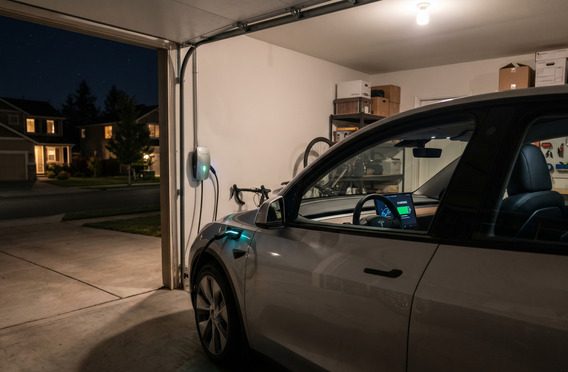
The car sends messages to the charger through CCS, CHAdeMO, or NACS protocols. It asks for exact current and voltage. As the battery fills, the car reduces demand step by step. Once it reaches 100% or your preset limit, the car tells the charger to stop or enter standby mode.
I remember helping a corporate client install 40 wall chargers last year. Their drivers left cars plugged in overnight. The system worked perfectly every time. No one ever reported overcharging issues.
Key Components Involved
- BMS: Monitors cell voltage, temperature, and state of charge in real time.
- EVSE (for AC): Acts as a smart outlet that follows car instructions.
- DC Charger: Delivers high power but still obeys the vehicle’s commands.
- Protocols: Ensure safe, two-way digital conversation.
Here is a simple table that shows the flow:
| Stage | What the Car Does | What the Charger Does | Result |
|---|---|---|---|
| Start | Requests full power | Supplies requested current | Fast initial charging |
| Near full | Reduces current gradually | Adjusts output | Slower, safer phase |
| Target reached | Sends stop command | Cuts power or trickle mode | Automatic shutoff |
| Plugged in after | Monitors self-discharge | Minimal standby power | No waste or damage |
This teamwork protects your battery every single time. Modern systems in 2026 include better predictive algorithms that anticipate heat buildup.
For daily use, our EC01 Wall Charger supports full OCPP communication. It lets the car stay in complete control. Fleet operators love the real-time data and automatic session end.
Dive deeper into the technical side. The constant current phase fills the battery quickly at the beginning. Then the system switches to constant voltage. This slows the rate and reduces heat stress on the cells. The BMS balances individual cells to prevent any single cell from overcharging. Temperature sensors pause or slow charging if things get too warm.
I have seen older systems from years ago cause minor issues. Today’s BMS technology makes overcharging almost impossible under normal conditions. Even if the charger malfunctions, the car simply stops accepting power. This layered safety approach gives you peace of mind.
Check our detailed guide on Electric Vehicle Charging to see how different setups affect this process. Understanding these basics helps you choose the right equipment for your home, office, or commercial site. You avoid common mistakes and keep your battery in top shape for years.
AC Level 1/2 vs. DC Fast Charging: Do They Both Stop Automatically?
You use different chargers depending on where you are. Does the automatic stop feature work the same for all of them?
Yes, both AC and DC chargers stop automatically. However, they behave differently because of how they deliver power and who stays in control.
AC Level 1 and Level 2 Behavior
With home AC chargers, the car has full control. The onboard charger converts AC to DC. The vehicle decides exactly when to stop. It reaches 100% cleanly if you set that limit. This makes overnight charging simple and reliable.
DC Fast Charging Differences
DC chargers deliver power directly to the battery. They are faster but the car still commands the process. Many vehicles limit DC sessions to 80-90% to manage heat. The charger stops or tapers early on purpose. This protects long-term battery health.
Use this comparison table:
| Charging Type | Control Location | Stops at 100%? | Typical Behavior Near Full | Best For |
|---|---|---|---|---|
| AC Level 1/2 | Vehicle (onboard) | Yes | Clean stop | Home, overnight |
| DC Fast | Vehicle commands | Often 80-95% | Tapers or stops early | Road trips, quick boosts |
I worked with a delivery fleet that used both types. Their AC home chargers always reached the exact limit. DC public stations stopped earlier as designed. Drivers learned to plan around it and never had problems.
Our FES-D30 DC EV Charger respects all vehicle limits and adds smart notifications. Charge point operators appreciate the seamless integration.
Dive deeper into real-world differences. AC charging stays gentle and steady. You can leave it plugged in for hours with no worry. DC sessions generate more heat, so the BMS becomes extra cautious near the top. It reduces power to keep temperatures safe. This is why you sometimes see charging speed drop sharply after 70-80%.
Public DC stations also use idle fees after full charge to keep spots open. The automatic stop still works perfectly. The car simply stops drawing power. Apps send you alerts so you can move the vehicle promptly.
For businesses, mixing both types makes sense. Install AC for daily employee use and DC for customer quick charges. Our 30kW Power Module helps commercial sites manage both efficiently without grid overload.
Read our article on AC vs DC EV Charging for more details on choosing the right mix. You save time, money, and battery life when you understand these behaviors.
Is It Safe to Leave Your EV Plugged In After Full Charge?
You finish charging but need to leave the car plugged in longer. Many people worry about this situation.
It is completely safe. Once the battery reaches the limit, the system enters standby or trickle mode. It only uses tiny amounts of power to offset self-discharge or run conditioning systems. No risk of overcharging exists in modern EVs.
Why Manufacturers Recommend It
Many brands actually suggest keeping the car plugged in. The BMS uses the grid power for thermal management and software updates. This keeps the battery at ideal temperature without draining itself.
One hospitality client left guest vehicles plugged in for days. Their batteries stayed healthy and ready. Guests loved the convenience.
Trickle Charging Explained
After full charge, the system sends only what the car needs. This might be 100-200 watts occasionally. It costs almost nothing and protects battery health.
Our EP02 Portable EV Charger with Display shows real-time power draw. You can see the minimal usage after full charge.
Dive deeper into long-term plugged-in scenarios. For several days or even weeks, the BMS manages everything intelligently. It prevents deep discharge and keeps cells balanced. In hot or cold weather, preconditioning draws from the grid instead of the battery. This saves range for when you drive.
Public stations may apply idle fees, but the safety remains the same. Always check apps for notifications. At home or work, leave it plugged in without worry. Modern systems include multiple safety layers including physical relays that cut power completely when not needed.
I installed battery-buffered solutions for a municipality project. Vehicles stayed connected for days during testing. Capacity stayed above 98% after months of use. These habits become second nature once you trust the technology.
Why Charging Slows Down Near 100% and Other Smart Behaviors?
You notice the charging speed drops a lot when the battery gets close to full. This feels frustrating at first.
The slowdown is intentional and good for your battery. The system switches from constant current to constant voltage mode. This reduces stress and heat while finishing the charge safely.
Constant Current vs Constant Voltage
Early in the session, high current fills the battery fast. Near the end, voltage stays steady while current drops. This protects cell chemistry and extends life.
Public chargers also stop early to free spots for other drivers. Apps help you avoid idle fees.
Smart behaviors include setting departure times so charging finishes just before you leave. This avoids long time at high state of charge.
Our Meta Mobile EV Charger with Battery offers flexible scheduling for fleet use.
Dive deeper into optimization. Schedule charging during off-peak hours for lower rates. Use preconditioning while still plugged in. This warms or cools the cabin using grid power. For NMC batteries, set daily limits to 80%. LFP packs handle 100% more often. Monitor via your vehicle app and adjust seasonally.
In 2026, smarter algorithms predict your needs better than ever. Combine these habits with quality hardware and you see noticeably better longevity.
Check our blog on Level 2 vs Level 3 Charging to match speed with battery care.
Best Practices for Battery Health While Using Automatic Stop Features?
You want to use the automatic features wisely. Small changes create big differences over time.
Set daily limits to 80% for most NMC vehicles. Charge to 100% only before trips. Keep the car plugged in when possible. Use smart scheduling and monitor temperatures.
Daily Habits That Work
- Plug in every time you park at home or work.
- Let the car control the session completely.
- Review charging history monthly.
- Precondition while connected.
Here is a practical checklist:
- Morning: Unplug and drive
- Evening: Plug in with scheduled limit
- Weekly: One full charge if needed for calibration
- Monthly: Check battery health report
Our Battery Buffered Ultra-Rapid EV Charger supports all these smart features for commercial use.
Dive deeper into 2026 best practices. Modern BMS handles more automatically, but your habits still matter. Avoid frequent 100% on NMC packs. Use Level 2 for daily needs because it is gentler. Reserve DC for long drives and stop at 80% when possible. Park in shade or garages to manage heat. Software updates improve these systems every few months.
Fleet data I review shows operators who follow these rules keep over 90% capacity after 100,000 miles. Your battery outlasts other vehicle parts and holds strong resale value.
For accessory needs, our LP8 Multi-Functional Car Air Pump keeps tires ready while you focus on charging strategy. Small consistent actions deliver excellent results.
Conclusion
Modern EV chargers in 2026 are intelligently designed to stop automatically when your battery reaches the set limit, thanks to advanced Battery Management Systems that put the car firmly in control. Whether you’re charging at home overnight or using a public station, you can plug in with complete confidence. Combine this smart technology with good habits like scheduling and 80% daily limits. You will maximize range and preserve battery health for many miles ahead. Your EV is smarter than you think. Just plug in, relax, and let the system handle the rest.
FAQs
- Will my EV charger keep sending power after the battery is full? No, the car stops accepting power.
- Is it safe to leave my EV plugged in overnight or for several days? Yes, it is recommended for thermal management.
- Why does DC fast charging often stop before reaching 100%? To protect battery health and reduce heat.
- Does leaving the car plugged in after full charge waste electricity? No, it uses only minimal standby power.
- How does the Battery Management System prevent overcharging? It constantly monitors and commands the charger.
- Should I set my daily charge limit to 80% or 100% for best battery health? 80% for most NMC vehicles, 100% is fine for LFP.
Contact Parwatt today for chargers that support these intelligent features perfectly. We help businesses and drivers build reliable, worry-free EV experiences.

--- END ---
Related Posts


Business Ideas

Industry News
