

Do You Need an Electrical Panel Upgrade for Your EV Charger? (2026 Complete Guide)
Jun 02,2026
You want to charge your EV at home conveniently. But then you hear about panel upgrades that could cost thousands and delay everything.
Many homeowners face surprise costs when they install an EV charger. A proper panel check and smart choices can help you avoid upgrades and save money while getting reliable charging.
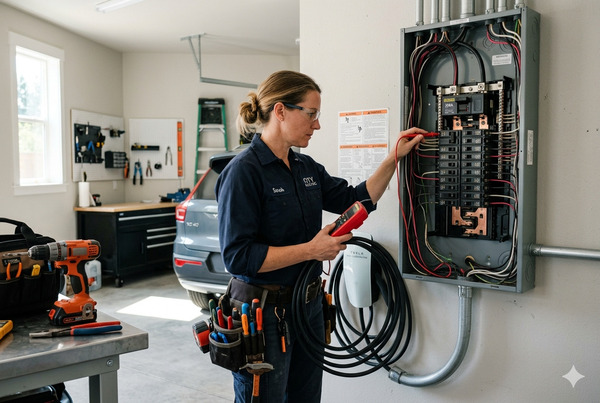
In my years as General Manager at XIAMEN PARWATT NEW ENERGY TECHNOLOGY CO.,LTD, I have helped many partners and customers navigate these exact situations. I remember one client in California who worried about a full panel upgrade. After we reviewed his setup and recommended our smart load management solutions, he installed a Level 2 charger without major changes. This experience taught me the value of planning ahead.
Why Many Homeowners Face Unexpected Costs When Installing an EV Charger
You plan a simple home EV charger install. Then extra bills hit you hard.
Unexpected costs often come from panel upgrades, permits, or wiring work that people overlook at first. These surprises can add $1,500 to $4,000 or more to your project. They also cause delays and frustration.
I talk with charge point operators, real estate developers, and fleet managers every week. Many share similar stories. One fleet operator added chargers for employee vehicles at home. He faced panel issues across several properties. This slowed his rollout and raised costs. At Parwatt, we focus on solutions that fit real needs.
Here are common sources of unexpected costs:
- Older homes with 100-amp or smaller panels often need upgrades.
- High-power chargers draw more current than the panel supports safely.
- Local permits and inspections add fees and time.
- Extra wiring runs from the panel to the charger location.
- Utility company requirements for new loads.
| Cost Factor | Typical Range (USD) | Why It Adds Up |
|---|---|---|
| Panel Upgrade | 1,500 – 4,000+ | Depends on location and complexity |
| Wiring and Labor | 300 – 1,200 | Distance and access issues |
| Permits | 100 – 500 | Varies by city rules |
| Charger Unit | 400 – 1,200 | Smart features increase value |
| Total without planning | 3,000 – 7,000+ | Quick decisions lead to extras |
These numbers come from 2026 market data and our customer projects. Proper planning reduces them significantly.
Many single-family homes with 200-amp panels handle a 40-50 amp EV charger fine. The key is understanding your total home load. I always recommend a licensed electrician for a load calculation. This step prevents most surprises.
Our EC01 wall charger works well in many standard setups. It offers smart features that help manage power draw. Check our home EV charger installation guide for more details on costs.
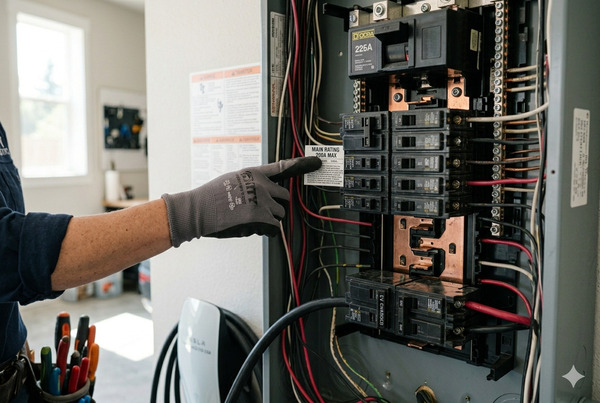
Dive deeper into why these costs happen. Many older homes built before the 1980s use 100-amp or 150-amp panels. These worked for past appliances but struggle with modern EV chargers. A 40-amp charger needs a dedicated 50-amp circuit in many cases. If your panel lacks space or capacity, the upgrade becomes necessary.
Load calculation matters a lot. Electricians review all major appliances like air conditioners, ovens, and dryers. They use the National Electrical Code or local rules to determine available capacity. Without this, you risk tripped breakers or safety issues.
I once advised a real estate developer adding chargers to several properties. Initial quotes assumed upgrades everywhere. After detailed assessments, over half the sites needed only minor work. This saved the project thousands. Smart chargers with dynamic load balancing played a big role.
Parwatt products like the EP01 portable EV charger offer flexibility. You can test charging needs before committing to a hardwired setup. This approach helps avoid overbuying power capacity.
Common misconceptions make things worse. People assume any old house needs an upgrade. In reality, many 200-amp panels support Level 2 charging if managed well. Others focus only on the charger amp rating and ignore the whole home load. This leads to bad decisions.
Utility demand charges or time-of-use rates also affect costs. Smart scheduling reduces bills. Our chargers support app control and scheduled charging to optimize this.
For fleet operators or workplace clients, scaling across locations requires consistent planning. We provide OCPP-compliant solutions that integrate with management systems. This helps monitor usage and prevent overloads.
The pain points are real: scalable infrastructure, real-time monitoring, and minimizing downtime. Our solutions address them directly. For example, the battery-buffered ultra-rapid EV charger uses stored energy to ease grid stress.
In 2026, technology helps more than ever. Load management devices and smart chargers adjust power automatically. They prioritize essential home loads and limit the charger when needed. This often avoids upgrades entirely.
I encourage every homeowner to start with a professional assessment. It costs little compared to surprises later. At Parwatt, we share resources like our Level 2 vs Level 3 charging article to inform better choices.
Understanding these factors empowers you. You make decisions based on facts, not fear. This leads to safer, more efficient home charging setups.
Common Misconceptions About EV Charger Panel Upgrades That Lead to Bad Decisions
You hear conflicting advice about panel upgrades. It confuses your planning.
Many people believe old homes always need upgrades or that charger power alone decides everything. These ideas cause unnecessary spending or unsafe installs.
I have seen this across automotive OEMs, retail chains, and individual users. One wholesaler partner stocked chargers without advising on panels. Customers returned products due to compatibility issues. We adjusted our support materials to fix this.
Key misconceptions include:
- All houses over 20 years old require full upgrades.
- You must match the charger amps exactly to panel size.
- Professional installers always recommend upgrades for safety.
- Smart features cannot reduce upgrade needs.
- Upgrades are the only way to future-proof your setup.
| Misconception | Reality | Better Approach |
|---|---|---|
| Old house = upgrade needed | Depends on current capacity | Perform load calculation |
| Charger amps = total draw | Considers whole home | Use dynamic load management |
| Always upgrade for safety | Proper assessment first | Choose certified electricians |
| No alternatives exist | Smart chargers help | Explore load balancing options |
| One-size-fits-all | Site-specific | Professional site visit |
These myths hurt decision making. For example, many 200-amp panels support 40-amp chargers without changes. The EV charger uses only part of the available capacity most of the time.
I recall helping energy utilities integrate chargers. Teams assumed massive upgrades for every site. After testing with our power modules, they found smart management sufficient in many cases. This saved budgets for more installations.
Our EP02 portable EV charger with display lets users adjust current levels. This flexibility reduces risks on limited panels. It shows real-time info so you monitor usage easily.
Another myth is ignoring permits. Many skip this step and face problems later. Local rules often require inspections for new circuits. Compliance protects your insurance and home value.
Critics say upgrades always increase resale value. They do in some markets, but smart installations without major work can add value too. Buyers want functional, safe charging options.
For government and municipal projects, compliance with regulations matters most. We design products to meet international standards like CE and ROHS. This eases approvals.
Dive deeper here. Let’s break down the decision process with critical thinking. First, assess your panel age and brand. Older panels may have limited breaker slots or outdated safety features. A visual inspection reveals available spaces.
Next, list your home’s major loads. Calculate continuous and non-continuous demands. NEC guidelines help electricians do this accurately. For a typical 200-amp service, you might have 160-180 amps available after derating.
EV chargers often run at 80% of rated capacity for continuous use. A 50-amp breaker supports a 40-amp charger safely. If your calculated spare capacity covers this, no upgrade is needed.
Alternatives shine when capacity is tight. Dynamic load management monitors total draw and reduces charger power during peaks. This prevents overloads without hardware changes.
Parwatt’s smart chargers integrate these features. They work with apps for monitoring and control. This benefits workplace clients offering employee charging. It also helps retail and hospitality chains manage multiple units.
Consider a table of scenarios:
| Home Type | Panel Size | Likely Need | Recommended Solution |
|---|---|---|---|
| Modern new build | 200-amp | Low | Standard Level 2 install |
| 1980s home | 150-amp | Medium | Load management |
| Pre-1970s | 100-amp | High | Upgrade or portable options |
| Apartment/shared | Varies | Site-specific | Consult property manager |
I use these insights when talking to EV resellers and integrators. They appreciate white-label options that include smart tech. It differentiates their offerings.
Misconceptions also affect battery health and efficiency. People think faster chargers always stress batteries more. Level 2 home charging is gentle when managed well. Our guides on AC vs DC EV charging explain differences clearly.
Avoid bad decisions by gathering facts first. Talk to qualified professionals. Review your utility bills for peak usage patterns. This data informs choices.
At Parwatt, we support B2B partners with technical resources. Our car battery charger guide complements EV discussions. It shows our broad expertise in vehicle power solutions.
These points help you think critically. You weigh options based on your specific situation. This leads to better outcomes and fewer regrets. The goal is safe, cost-effective charging that fits your lifestyle.
How to Determine If You Actually Need a Panel Upgrade for Your EV Charger
You want clear answers about your electrical setup. Uncertainty stops progress.
A step-by-step process helps you determine upgrade needs accurately. This includes calculations, inspections, and professional input.
I guide many customers through this. One real estate developer used our checklist for multiple properties. It streamlined decisions and reduced costs.
Key steps include:
- Review your electrical panel label for amperage rating.
- List all major appliances and their power draws.
- Hire a licensed electrician for a formal load calculation.
- Check available breaker spaces and wiring condition.
- Consider future EV additions or home expansions.
| Step | Action | Tools/Help Needed |
|---|---|---|
| 1. Panel Check | Note amps and age | Visual inspection |
| 2. Load Audit | List appliances | Utility bills, specs |
| 3. Professional Assessment | Electrician visit | Certified expert |
| 4. Charger Selection | Match to capacity | Smart options |
| 5. Test Plan | Monitor after install | App features |
Most homes with 200-amp panels support Level 2 chargers. The decision rests on actual usage, not assumptions.
Our charge EV faster home vs public blog compares options. It helps plan home setups effectively.
Dive deeper with practical methods. Start by locating your main panel. Look for the main breaker size. Common ratings are 100, 150, 200, or 400 amps. Note the manufacturer and any visible wear.
Next, gather appliance data. Refrigerators, AC units, water heaters, and ovens use significant power. EVs add another continuous load. Electricians apply demand factors because not everything runs at once.
The calculation follows standards like Article 220 of the NEC. It determines if spare capacity exists for a new branch circuit. For a 40-amp charger, you typically need about 50 amps of dedicated support.
If spare capacity falls short, explore mitigations. Energy management systems divert power intelligently. Some utilities offer programs for EV-specific load control.
I recommend getting multiple quotes. Compare assessments from different electricians. Ask about experience with EV chargers specifically.
For older homes, panel age matters. Breakers can weaken over time. Replacing the panel ensures safety and adds breaker spaces.
Parwatt products support various scenarios. The EC01 wall charger offers adjustable power levels. This adapts to different home capacities. Portable models like the EP01 provide temporary solutions during planning.
Consider these factors in detail:
- Local climate affects AC use and thus available capacity.
- Solar installations or battery storage change the equation.
- Time-of-use rates encourage off-peak charging, reducing strain.
- Multiple EVs require scaled planning from the start.
For CPOs or fleet operators, this assessment scales across locations. We provide documentation and support for tenders and compliance.
Tables help visualize:
| Capacity Check | Sufficient? | Next Action |
|---|---|---|
| 200A panel, good spare | Yes | Proceed with install |
| 150A, tight load | Maybe | Add load management |
| 100A, limited space | Often No | Plan upgrade |
Professional assessment remains the best step. It covers panel health, grounding, and code compliance. This investment pays off in peace of mind.
Our team at Parwatt emphasizes education. We share insights from real projects. This helps automotive accessory wholesalers and resellers advise their customers accurately.
By following these steps, you gain clarity. You avoid guesswork and make informed choices. This process ensures safe, efficient charging for years ahead.
When a Panel Upgrade Is Worth It — And Smart Alternatives That Save Money
You wonder if spending on an upgrade makes sense. Or if cheaper paths exist.
Upgrades are worth it for very old panels or high-demand homes. Smart alternatives often save money while delivering great performance.
In discussions with energy utilities and government clients, we explore both paths. One municipality avoided widespread upgrades by using battery-buffered solutions. This approach scaled efficiently.
When upgrades make sense:
- Panel is 100-amp or smaller with no spare capacity.
- Multiple high-power appliances run simultaneously.
- You plan two or more EV chargers.
- Local codes require modern safety features.
- Home value increase justifies the investment.
Smart alternatives include:
- Dynamic load balancing chargers.
- Energy management systems.
- Portable or lower-amp options initially.
- Scheduled charging during off-peak hours.
- Battery storage integration.
| Scenario | Upgrade Worth It? | Alternative Savings |
|---|---|---|
| Single EV, 200A panel | No | Load management |
| Multiple EVs, old panel | Yes | Phased approach |
| Budget tight | No | Portable starter |
| Future expansion | Maybe | Oversize circuit now |
These choices depend on your goals. I always stress long-term thinking. A small upfront investment in smart tech prevents larger expenses later.
Our 30kW power module supports advanced setups. It helps integrate with existing infrastructure smoothly.
Dive deeper into value analysis. Upgrades cost money but improve overall electrical safety. They add capacity for future appliances or home additions. In hot markets like California, they can boost resale value.
Calculate return on investment. Factor in charging cost savings versus public stations. Add convenience and time value. Many users recoup costs within a few years through lower electricity rates at home.
Alternatives shine with technology. Smart chargers communicate with the home system. They throttle power when needed. This maintains safety without hardware changes.
For example, our wall chargers include app control and scheduling. You align charging with solar production or cheap rate periods. This reduces effective load.
Portable chargers offer testing grounds. The LP series air pumps and other accessories complement full EV ecosystems, but focus on chargers here.
Critically, not all upgrades are equal. Some involve simple subpanel additions. Others require service entrance work. Get detailed bids that break down options.
Fleet operators benefit from mixed strategies. Use fixed chargers with management at depots and portables for flexibility. This minimizes infrastructure costs.
Real estate developers prefer aesthetic, reliable solutions. Bundled offerings with load management appeal to tenants.
I share a personal note from project experience. Early in our work, we saw clients overspend on upgrades. We developed more flexible product lines. Today, features like OCPP compliance and metering help optimize usage.
Consider this comparison table:
| Option | Cost Range | Benefits | Drawbacks |
|---|---|---|---|
| Full Panel Upgrade | High | Maximum capacity | Time and disruption |
| Load Management | Medium | Avoids upgrade | Requires compatible charger |
| Portable Charger | Low | Quick start | Less permanent |
| Hybrid Approach | Variable | Balanced | Planning needed |
Parwatt supports all paths. Our FES-D30 DC EV charger and home solutions adapt accordingly. We help partners choose based on target audiences like CPOs or workplace clients.
Smart planning turns potential expenses into investments. You achieve reliable charging without breaking the bank. This approach aligns with sustainability goals too.
Ready to Install Your EV Charger the Right Way? Here’s Your Next Step
You have the knowledge now. It is time to act confidently.
Contact a licensed electrician for an assessment. Get quotes from reputable installers. Choose quality chargers that match your needs.
At Parwatt, we stand ready to help. Our products and expertise support successful installations worldwide.
Take the smart step today. Schedule your electrical evaluation. Explore our EV charger category for suitable options. Reach out for personalized advice.
Conclusion
Installing a home EV charger is exciting, but overlooking your electrical panel can turn a simple upgrade into an expensive surprise. Understanding your home’s power capacity and the charger’s requirements helps you avoid unnecessary costs while ensuring safe and efficient charging.
Most modern homes can support Level 2 chargers without a full panel upgrade, especially with smart load management solutions. The key is proper planning and professional assessment.
Make the smart choice — get your electrical system evaluated before buying or installing an EV charger. It will save you time, money, and headaches in the long run.

--- END ---
Related Posts

Industry News

Business Ideas

Business Ideas

Business Ideas

Business Ideas
