

Fleet Electrification Trends and Charging Requirements in 2026: What Fleet Operators Need to Know
Jun 18,2026
Fleet operators face growing pressure to electrify operations. Many discover charging infrastructure falls short of actual needs.
Successful fleet electrification in 2026 depends on accurate charging planning, smart energy management, and phased implementation. Depot charging dominates while duty cycles shape specific requirements for different fleet types.
I lead efforts at XIAMEN PARWATT NEW ENERGY TECHNOLOGY CO.,LTD where we support fleet customers worldwide. Real projects show what works and what creates problems. Let me share practical knowledge for 2026.
Why Fleet Electrification Is Moving Faster Than Most Operators Are Prepared For
Many fleets start electrification programs only to hit infrastructure limits quickly. Operational disruptions follow.
Fleet electrification advances rapidly yet leaves many operators unprepared for charging demands. Insufficient infrastructure raises costs, reduces vehicle availability, and increases transition stress.
Our work with logistics and delivery companies reveals common gaps. Operators often underestimate total power needs.
Vehicle adoption grows fast across delivery, service, and long-haul segments. Companies set aggressive targets to meet sustainability goals and cut fuel expenses. Reality hits when depots cannot support the new electric vehicles.
Charging infrastructure shortages cause downtime. Vehicles wait for available chargers or operate with partial charges. This lowers overall fleet utilization and raises per-mile costs.
Operating costs shift in unexpected ways. Electricity bills spike without proper management. Peak demand charges surprise many managers during initial phases.
Transformation pressure comes from customers, regulators, and competitors. Fleets without clear plans risk losing contracts or facing penalties.
| Challenge | Effect on Operations | Common Response |
|---|---|---|
| Infrastructure Gap | Reduced availability | Delayed rollout |
| Cost Increases | Higher electricity bills | Budget overruns |
| Utilization Drop | Idle vehicles | Service issues |
| Planning Pressure | Rushed decisions | Costly mistakes |
- Delivery fleets need quick turnaround charging.
- Service vehicles require flexible scheduling.
- Long-haul operations face different route challenges.
- Maintenance teams need training on new systems.
- Driver acceptance affects daily performance.
Our E-Station 120 Mobile Battery Buffered EV Charging Power Station helps solve depot power issues. See our Level 2 vs Level 3 Charging article for detailed comparisons.
Real estate developers with fleet clients add charging requirements to new facilities. Logistics companies redesign depot layouts. Energy utilities work with large fleets on dedicated connections.
I worked with one delivery fleet that expanded too quickly. Initial enthusiasm turned to frustration until they added proper load management. Lessons from cases like this help others avoid similar pitfalls.
These pressures explain current urgency. Next we look at mistakes that make situations worse.
Common Mistakes Fleet Managers Make When Planning Electrification and Charging
Fleet managers often rush decisions based on incomplete information. This creates expensive problems later.
Common mistakes include underestimating charging needs, ignoring duty cycles, and overlooking grid limits. These errors lead to poor performance and higher total costs.
I review many plans in my role at Parwatt. Certain patterns appear repeatedly across projects.
One frequent mistake is assuming one charger type fits all vehicles. Different duty cycles need tailored solutions. Delivery vans require different power levels than long-haul trucks.
Another error involves ignoring actual usage patterns. Theoretical calculations differ from real daily operations. Weather, traffic, and route variations affect charging needs significantly.
Managers sometimes choose equipment based on price alone. Quality, reliability, and service support matter more for fleet operations where downtime costs accumulate fast.
Grid capacity assessments often come too late. Many depots need upgrades or storage solutions. Discovering limits after vehicle delivery creates major delays.
| Mistake | Consequence | Better Approach |
|---|---|---|
| Underestimate Demand | Overloaded systems | Detailed modeling |
| Ignore Duty Cycles | Poor performance | Usage-based planning |
| Price-focused Buying | Reliability issues | Total value assessment |
| Late Grid Check | Costly upgrades | Early evaluation |
- Failing to plan for future expansion.
- Neglecting software integration for management.
- Underestimating training and change management.
- Choosing non-scalable solutions.
- Skipping pilot programs before full rollout.
Our Meta Mobile EV Charger with Battery provides flexible testing options. Read Charge EV Faster Home vs Public for insights that apply to depots.
Corporate fleet managers balance employee and commercial needs. Government fleets follow specific procurement rules. Private operators focus on rapid return on investment.
One manager I advised learned the hard way about grid limits. Early consultation prevented much larger expenses later. Sharing experiences helps the industry improve.
With these mistakes in mind, let us examine key trends and requirements.
Key Fleet Electrification Trends and Charging Requirements You Must Understand
Understanding current trends helps operators make better decisions. Specific requirements vary by fleet type.
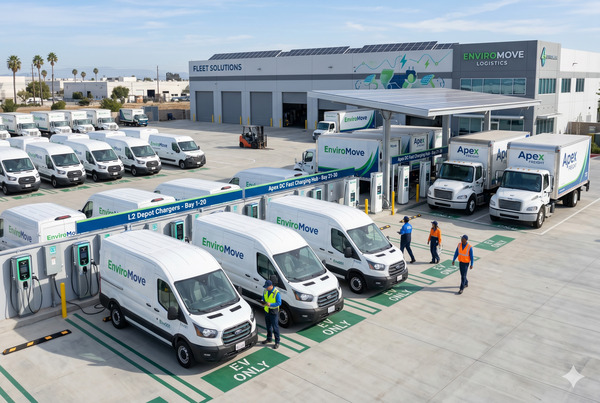
Depot charging leads fleet electrification in 2026 with smart management and storage becoming standard. Different vehicle types create unique charging profiles that guide infrastructure choices.
Parwatt supports fleets of various sizes. We see practical applications of these trends daily.
Depot charging dominates because it aligns with overnight schedules. Fleets prefer controlled environments where vehicles return regularly. This approach maximizes uptime and minimizes public charging costs.
Vehicle duty cycles determine power needs. Light delivery fleets use Level 2 chargers effectively while heavier operations need DC fast charging. Route length and payload affect daily energy consumption.
Infrastructure planning focuses on scalability. Modular systems allow growth without full replacement. Load management prevents peak issues and controls costs.
Energy storage helps sites with grid constraints. Batteries shift charging to off-peak times and provide backup. This combination improves reliability significantly.
| Fleet Type | Charging Preference | Key Requirement |
|---|---|---|
| Delivery Vans | Depot Level 2/3 | Quick turnaround |
| Service Fleet | Flexible AC/DC | Schedule adaptability |
| Long-Haul | Fast DC + Depot | Route planning |
| Mixed Fleet | Hybrid solutions | Centralized management |
- Software platforms monitor and optimize charging.
- Temperature management affects battery performance.
- Safety protocols become more important at scale.
- Data collection guides continuous improvement.
- Integration with fleet management systems adds value.
Our 40kW Power Module scales well for larger operations. Our Car Battery Charger Guide contains useful related information.
Logistics companies optimize depot layouts for efficient charging. Service fleets need portable options for field operations. Corporate fleets balance multiple locations.
I have seen well-planned depots achieve excellent utilization rates. Data from these sites informs better designs for new projects.
Successful fleets share certain approaches. Let us explore what separates them.
What Sets Successful Fleet Electrification Strategies Apart
Leading fleets achieve better results through deliberate practices. These strategies address real operational needs.
Successful strategies integrate smart charging, energy storage, data optimization, and strong partnerships. This creates lower costs, higher reliability, and smoother transitions.
Our projects at Parwatt demonstrate clear advantages for fleets using these methods.
Smart charging management schedules sessions to avoid peak rates. Software balances load across chargers and other depot systems. This reduces electricity expenses substantially.
Energy storage integration solves grid limitations. Batteries store power during low demand periods and release it when needed. This enables larger fleets without major utility upgrades.
Data-driven optimization uses real usage information for decisions. Fleet managers adjust plans based on actual performance rather than estimates. Continuous monitoring identifies improvement opportunities.
Partnership approaches bring external expertise. Collaboration with charger manufacturers, utilities, and consultants speeds implementation and reduces risks.
| Strategy | Implementation | Advantage |
|---|---|---|
| Smart Charging | Software controls | Cost savings |
| Energy Storage | Battery systems | Grid independence |
| Data Optimization | Analytics platforms | Better decisions |
| Partnerships | External support | Faster scaling |
- Phased rollout starting with pilot groups.
- Driver training programs improve acceptance.
- Maintenance planning for new equipment.
- Sustainability reporting for stakeholder value.
- Future-proof designs for technology changes.
Our 30kW Power Module integrates well with smart systems. Check How to Choose a Vacuum Cleaner for a Car for depot accessory ideas.
Large logistics providers use centralized control rooms. Smaller operators benefit from turnkey solutions. Government fleets emphasize compliance and reporting.
One successful fleet started small, measured results, and scaled confidently. Their approach minimized risks while capturing benefits quickly.
These strategies lead naturally to action steps. Consider your situation next.
Ready to Electrify Your Fleet Successfully? Here’s Your Next Step
Taking action on fleet electrification requires structured planning. Good preparation leads to better outcomes.
Start with current fleet assessment, charging requirement calculations, and professional infrastructure planning. Choose scalable solutions and implement in phases.
I encourage operators to move forward thoughtfully.
Assess your current fleet composition and usage patterns. Gather data on daily mileage, routes, and schedules. This information forms the foundation for accurate planning.
Calculate charging requirements based on real numbers. Factor in vehicle efficiency, duty cycles, and growth projections. Professional tools and consultants help refine estimates.
Develop a comprehensive charging strategy. Consider depot layout, power availability, and future needs. Include energy management and storage where appropriate.
Seek expert guidance for complex projects. Manufacturers like Parwatt provide support from planning through installation and ongoing service.
Actionable checklist:
- Audit current vehicles and operations.
- Map depot electrical capacity.
- Model different charging scenarios.
- Engage stakeholders early.
- Plan pilot implementation first.
Our EP02 Portable EV Charger with Display works well for initial testing. Visit our Solutions page for full fleet support options.
Corporate clients align electrification with sustainability targets. Logistics firms focus on cost and reliability gains. Service providers emphasize flexibility.
My experience shows that prepared fleets gain clear advantages. They control costs better and deliver more reliable service.
Fleet electrification is no longer a future trend — it is an operational reality in 2026. Success depends on understanding current trends, accurately assessing charging requirements, and building infrastructure that matches real-world fleet usage rather than optimistic projections.
Companies that plan charging strategy around vehicle mix, duty cycles, depot operations, and energy management will gain competitive advantages in cost, reliability, and sustainability. Those that rush without proper planning often face higher costs and lower utilization.
The fleets that win are those that electrify intelligently. Take the time to align your charging infrastructure with your actual operational needs.
FAQ
What are the biggest trends in fleet electrification for 2026?
Depot-focused charging, smart energy management, and phased implementation based on duty cycles.
How do I calculate charging requirements for my fleet?
Analyze daily mileage, vehicle efficiency, schedules, and growth projections with professional tools.
What type of chargers are best for fleet operations?
Depot Level 2 and Level 3 solutions tailored to specific vehicle types and usage patterns.
How does fleet electrification affect operating costs?
Higher upfront investment but significant savings in fuel, maintenance, and potential incentives.
Do I need energy storage for fleet EV charging?
Yes in many cases to manage peak loads, reduce costs, and handle grid limitations.
What should I consider when planning depot charging infrastructure?
Power capacity, layout efficiency, scalability, smart controls, and future expansion needs.

--- END ---
Related Posts


Business Ideas

Business Ideas

Industry News
