A weak or dead car battery can happen when you least expect it. Maybe your vehicle has been sitting in the garage for weeks. Maybe you only take short trips around town. Or maybe cold weather has made your battery struggle to hold a charge.
That is why many drivers use car battery conditioners, trickle chargers, and smart battery chargers to keep their batteries healthy and ready to start.
In this guide, we will explain what these devices do, how they work, when to use them, and how to choose the right battery charger for your vehicle.
What are Battery Conditioners and Trickle Chargers?
Battery conditioners restore the capacity of lead-acid batteries by breaking down lead-sulfur buildup, which otherwise limits the battery’s ability to hold a charge. These deposits typically accumulate when a vehicle is frequently driven on short trips or left sitting idle for extended periods.
Trickle chargers, on the other hand, provide a low-voltage charge that prevents car batteries from draining to the point of failure. This continuous, low-level power delivery is designed to improve long-term battery health while minimizing the risk of overcharging.
Both devices are highly beneficial for secondary vehicles, classic cars, or any infrequently driven automobiles that you need to keep road-ready. It is important to remember that while a vehicle’s alternator can maintain a battery that is already near a full charge, it is not engineered to restore a heavily discharged battery.
Additionally, keep in mind that there are three primary types of car batteries:
- AGM – Absorbent Glass Mat
- EFB – Enhanced Flooded Batteries
- SLI – Starting, Lighting, Ignition (the standard flooded lead-acid battery)
Because not every charger is compatible with all three battery designs, always read the manufacturer’s instructions to verify compatibility before hooking up your device.
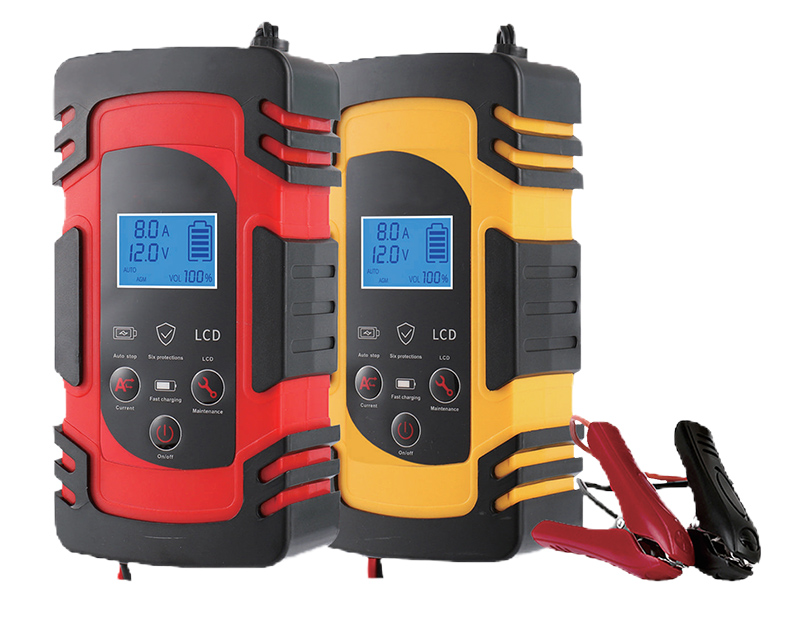
How do Battery Conditioners and Trickle Chargers Work?
Battery conditioners restore performance by dissolving the sulfur deposits that create electrical resistance on a battery’s internal plates. This resistance restricts the battery from holding a full charge, often making it seem as though it is completely dying.
To fix this, the conditioner sends high-frequency pulses through the battery to bypass its diminished current flow. Once a baseline charge is established, the device applies a higher voltage to regenerate the battery’s full capacity. Additionally, many conditioners can trickle-charge the battery to further optimize its overall performance.
Trickle chargers work by topping off batteries at the exact same rate at which they naturally self-discharge. Because this slow process utilizes a very low voltage, these devices can safely be left connected for an extended period of time. However, you should always check your specific charger’s guidelines to confirm whether it is rated to remain connected to a battery indefinitely.
How Long Does It Take to Charge a Car Battery or trickle charger?
The total time required to use a battery conditioner or a trickle charger depends largely on the initial health of the battery and the specific performance capabilities of your device.
For instance, a battery conditioner can take up to four weeks to completely break down lead-sulfate deposits and restore the battery’s ability to accept a full charge. However, this timeframe heavily depends on how low the battery voltage has dropped and how long the battery has been left in that degraded state.
In contrast, a trickle charger typically takes up to 48 hours to bring a battery to full capacity, given that most units only deliver a modest one to two amps of current. While certain smart trickle chargers are designed to be safely left connected for days or even weeks at a time, it is always best to consult the manufacturer’s guidelines to ensure your specific model is rated for long-term connection.
How to Keep Your Car Battery Healthy?
In addition to using a battery charger or maintainer, you can extend battery life by following a few simple habits:
- Drive your vehicle regularly
- Avoid frequent short trips
- Keep battery terminals clean
- Store vehicles in a dry, protected area
- Turn off lights and accessories before parking
- Check battery voltage before long-term storage
- Use a maintainer for seasonal vehicles
Good battery care can reduce the risk of unexpected breakdowns and help you avoid premature battery replacement.
The Benefits of Using Battery Conditioners and Trickle Chargers
Using a battery conditioner or trickle charger is one of the easiest ways to keep your vehicle’s battery healthy, especially if the vehicle is not driven every day. These devices help prevent power loss, support reliable starts, and reduce the risk of premature battery replacement.
Restores Lost Battery Performance
When a vehicle sits for long periods or is only used for short trips, lead-sulfate buildup can form on the battery plates. A battery conditioner helps break down this buildup and may improve the battery’s ability to hold a charge.
Helps Prevent Dead Batteries
A trickle charger supplies a slow, steady charge to offset the battery’s natural power loss over time. This helps keep the battery from draining completely, so your vehicle is more likely to start when you need it.
Extends Battery Life
Because trickle chargers use a low charging current, they are designed for long-term battery care. When used correctly, they help maintain a healthy charge level without putting unnecessary stress on the battery.
Great for Vehicles That Sit Unused
Battery conditioners and trickle chargers are especially useful for classic cars, motorcycles, RVs, boats, seasonal vehicles, and backup vehicles that may sit for weeks or months between uses.
Supports What Your Alternator Can’t Do
Your alternator is designed to maintain a battery while the engine is running, not fully recover a deeply discharged battery. A battery conditioner or smart trickle charger can safely help recharge and maintain the battery without overloading the vehicle’s electrical system.
Are Battery Chargers and Trickle Chargers Safe?
Yes, quality smart battery chargers and maintainers are generally safe when used correctly. Look for important safety features such as:
- Overcharge protection
- Short-circuit protection
- Reverse polarity protection
- Temperature protection
- Automatic shutoff
- Spark protection
- Battery type detection
These features help protect both your battery and your vehicle’s electrical system.
Why Choose Parwatt Car Battery Chargers?
Parwatt offers a range of intelligent car battery chargers designed for modern vehicle owners, distributors, and automotive businesses.
The Parwatt lineup includes models such as DC10, DC80, DC100, DC200 PLUS, and DC250, covering different charging needs from compact maintenance charging to higher-capacity 12V/24V battery charging.
Key advantages include:
- Smart multi-stage charging
- 12V and 24V battery compatibility
- Pulse repair technology
- Support for AGM, GEL, and lead-acid batteries
- Protection against overcharging and short circuits
- Options for custom plugs, packaging, and branding
- OEM and ODM support for business customers
Whether you need a compact charger for daily use or a customized battery charging solution for your brand, Parwatt provides reliable products built for performance, safety, and convenience.