

Bidirectional Charging and V2G Explained: Benefits, How It Works & 2026 Outlook
Jul 20,2026
EV owners charge their cars and then watch the battery sit unused while bills rise or the grid faces stress. This wastes a valuable energy resource parked in driveways and lots. Bidirectional charging turns that around by letting power flow both ways. I see huge potential here in my work at Parwatt New Energy.
Bidirectional charging and V2G let your EV send electricity back to your home, other devices, or the grid. You can lower bills through smart timing, earn money from utility programs, and keep power during outages. The car shifts from pure cost to an active energy asset. Modern controls protect battery health so daily use stays practical.
I have worked with charge point operators and fleet managers for years as general manager at Parwatt. We supply DC chargers, power modules, and mobile solutions. I watch how cars sit full after charging while electricity prices spike or storms knock out power. Bidirectional technology fixes that waste. It lets the vehicle give energy back when it makes sense. This creates new value for drivers and helps balance the grid. In this article I share what I have learned about bidirectional charging and V2G. I also explain why it matters in 2026 and how Parwatt is preparing our equipment for this shift.
Why Traditional EV Charging Still Leaves Money and Energy on the Table?
Traditional charging only pushes power into the car. After that the battery often sits idle for hours or days. Owners still pay high electricity rates at peak times. The grid feels extra pressure during evenings when everyone plugs in. This one-way approach wastes both money and the energy already stored in vehicles.
Traditional EV charging moves power only into the car. The vehicle then sits unused while prices rise or outages occur. Bidirectional charging lets the car send power back to your home or the grid. This turns the battery into a tool for savings and backup instead of leaving value on the table.
The problem starts with how most chargers and cars are built. They handle incoming power well. They lack the hardware and software to push power out safely. Utilities also have limited programs that reward drivers for discharging. Without those pieces the car stays a pure consumer.
Here is a table that shows the main issues with traditional one-way charging:
| Issue | What Happens | Money or Energy Lost | Who Feels It Most |
|---|---|---|---|
| Idle battery after charge | Car sits full for 12+ hours | Wasted storage capacity | Homeowners and fleets |
| Peak pricing | Charge or use power at high rates | Higher monthly bills | All EV owners |
| Grid strain | Everyone charges at once in evening | Higher infrastructure costs passed to users | Charge point operators |
| No backup use | Battery cannot power home during outage | Lost resilience | Families in storm areas |
| Missed revenue | No payment for grid services | Zero earnings from car | Early adopters |
This table makes the waste clear. A typical EV battery holds 60 to 100 kWh. Much of that energy sits unused. At the same time the grid needs flexible resources to handle solar dips or sudden demand spikes. The car could help but current systems block it.
At Parwatt we see this in feedback from clients who run charging networks. They want hardware that can support two-way flow in the future. Our Battery Buffered Ultra Rapid EV Charger already stores energy on site. It gives us a strong base to add bidirectional features later. Fleets especially notice the gap. Their vehicles often return to base with plenty of charge left. That energy could run tools, lights, or even feed the grid during peak hours for extra income.
Renewable energy adds another layer. Solar and wind produce power at certain times. When supply exceeds demand the excess sometimes gets curtailed. Bidirectional cars could absorb that surplus and release it later. Without two-way capability we lose clean energy that cars could store and return.
The financial side hurts too. Some drivers pay time-of-use rates. They charge cheaply at night but have no way to sell that cheap energy back during expensive afternoon hours. A bidirectional system with the right utility program could close that loop. The car becomes a small power plant on wheels.
I believe this one-way limitation is why some people still hesitate on EVs. They see the car as another appliance that only costs money. Bidirectional charging changes the story. The vehicle can pay for itself over time through savings and earnings. That shift matters for wider adoption.
The energy is there. The technology to unlock it has been missing until recently. Parwatt works with many of these groups. We design mobile and fixed chargers that deliver reliable power. Our team knows the next step is two-way capability. We are studying how our power modules can support reverse flow while keeping systems stable and safe.
Common Misconceptions About Bidirectional Charging and V2G
People have many wrong ideas about bidirectional charging. These myths slow down interest even though the technology is advancing quickly. I clear up these points often when clients ask about future features for their sites.
Many believe bidirectional charging harms the battery badly or only works on expensive cars. Others think it is unsafe or still too new for real use. These ideas are outdated. Modern systems include strong safeguards and more vehicles support it each year.
One big myth is that sending power out of the battery will destroy it fast. In reality modern battery management systems limit how much energy leaves and keep the state of charge in a healthy range. Studies and real programs show degradation stays small when cycles are managed well. The car still drives normally for its full life.
Another myth says the technology is unsafe. People picture power flowing backward and causing fires or grid problems. Certified systems use strict controls and communication standards. The car and charger talk constantly. They stop discharge if anything looks wrong. Safety standards have improved a lot since early tests.
Some drivers think only luxury or new trucks support it. It is true that models like the Ford F-150 Lightning offer strong V2L and V2H functions today. GM vehicles with Ultium batteries are adding bidirectional features. Nissan Leaf had early V2G capability in some markets. More mainstream cars will include it in 2026 and 2027. The feature is moving down to more affordable models.
A fourth myth is that you need a complete new home setup that costs thousands. Many homes can start with a compatible bidirectional wallbox. Existing solar inverters sometimes work with the right controls. Utility pilot programs often provide the charger or incentives to lower the cost.
Here is a table that lines up common myths against current reality:
| Myth | Current Reality in 2026 | Why the Myth Persists |
|---|---|---|
| Destroys battery quickly | Managed discharge keeps degradation low | Early tests had fewer controls |
| Only for luxury cars | Ford, GM, and others now offer it on trucks and SUVs | First demos used premium models |
| Unsafe for home or grid | Certified systems include multiple safety layers | People fear reverse power flow |
| Still experimental | Real utility programs and vehicles exist now | Marketing has been quiet until recently |
| Needs huge expensive install | Many start with wallbox upgrade or utility support | Confused with full off-grid systems |
This table helps show the true state. The technology has moved past the early stage. At Parwatt we talk with clients who worry about battery warranties. We explain that most manufacturers now support bidirectional use within limits. The safeguards protect both the car and the grid.
Fear of battery wear stops some fleet managers from trying pilot programs. They do not want to risk their expensive vehicles. Lack of clear information also hurts. Drivers see headlines about V2G but do not know which cars actually work or how to sign up for a program.
I have seen this hesitation in conversations with charge point operators. They want to offer advanced services but worry customers will not understand or trust the feature. Clear education removes these barriers. Once people see a working example the doubts fade fast.
The myths are fading as more real-world projects launch. Drivers who join utility programs report good results. Battery health stays strong. Savings appear on bills. These stories spread and replace the old worries.
How Bidirectional Charging and Vehicle-to-Grid (V2G) Technology Work
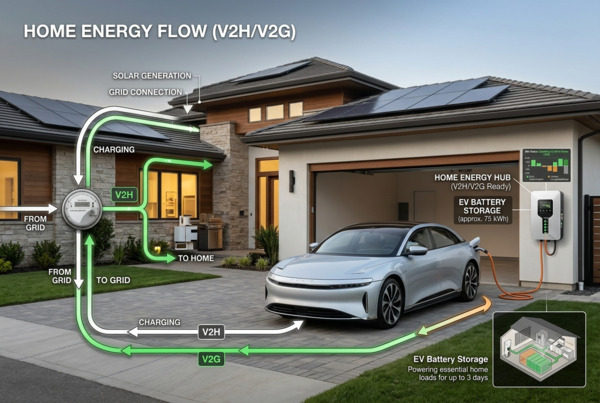
Bidirectional charging lets power move both into and out of the vehicle. V2G is one part of that picture. It focuses on sending energy to the grid. Other modes serve the home or local loads. I have studied these systems with our team at Parwatt because they affect future charger design.
Bidirectional charging uses smart inverters and communication standards so the car can discharge safely. V2G sends power to the grid. V2H powers a home. V2L runs tools or appliances. ISO 15118 helps the car and charger coordinate. The battery stays protected by software limits.
The car needs a bidirectional onboard charger or inverter. Not every EV has this yet. The external charger or wallbox must also support reverse power flow. Communication usually follows ISO 15118 or similar protocols. The car and energy system agree on when to charge or discharge based on price signals, grid needs, or user settings.
A typical flow looks like this. The car plugs in. It shares its battery status and contract details. The home energy system or grid aggregator checks conditions. If discharge makes sense the car pushes power out through the charger. Software keeps the battery above a safe minimum level, often 20 or 30 percent. The session ends when the car unplugs or the need passes.
Here is a comparison table of the three modes:
| Mode | Where Power Goes | Typical User Benefit | Hardware Needed |
|---|---|---|---|
| V2G | Utility grid | Earn money or bill credits | Bidirectional charger + utility program |
| V2H | House circuits | Backup power during outages | Bidirectional wallbox + home integration |
| V2L | Tools or appliances | Portable power anywhere | Outlets on car or external box |
This table shows how one technology serves different situations. At Parwatt our 30kW Power Module and 40kW Power Module already handle precise power control. We see clear paths to add bidirectional support in future versions. Our mobile chargers with built-in batteries also fit well with V2H style uses because they already manage stored energy.
Modern systems add several protections. The battery management system watches temperature, voltage, and cycle count. It refuses discharge if conditions are not right. The charger monitors current in both directions and stops flow if a fault appears. Communication is encrypted. Grid operators set rules so too many cars do not discharge at once and cause new problems.
I have reviewed early pilot data. Battery degradation from V2G stays manageable when daily discharge stays within limits. Most owners still get the full expected life from their pack. The controls make the difference.
Parwatt stays active in these developments. We want our chargers and power modules to work smoothly with bidirectional vehicles. You can learn more about current EV charging approaches in our guide on Electric Vehicle Charging.
Key Benefits of Bidirectional Charging for Drivers, Fleets, and the Grid in 2026
Bidirectional charging creates value in several directions at once. Drivers gain savings and backup power. Fleets cut operating costs and sometimes earn extra. The grid gets flexible resources that help integrate more renewables. I see these benefits growing in 2026 as more vehicles and programs appear.
Drivers can lower bills and keep power during outages. Fleets gain cheaper operations and potential revenue. The grid receives support for peak shaving and renewable balancing. Battery safeguards keep long-term use practical for everyone involved.
Drivers see direct personal gains. They can charge when power is cheap at night and discharge during expensive peak hours. Some utility programs pay for this service. During storms the car can run the house for several hours or days. This resilience matters in areas with frequent outages.
Fleets notice bigger scale effects. A delivery company can use truck batteries to power a warehouse at night or during peak demand. Some programs let fleets sell grid services and receive payments. The same battery that moves goods also reduces electricity costs at the depot. Mobile chargers from Parwatt already help fleets stay flexible. Adding bidirectional features would let those units support sites even more.
The grid benefits from thousands of small distributed batteries. Cars can absorb excess solar in the afternoon and release it in the evening. This reduces the need for expensive peaker plants. It also helps frequency regulation because cars respond fast. Utilities run fewer fossil fuel plants on some days.
Here is a table that summarizes the main benefits by group:
| Group | Main Benefit | Extra Advantage | 2026 Example |
|---|---|---|---|
| Drivers | Bill savings via smart charging | Backup power at home | Utility V2G pilot pays credits |
| Fleets | Lower total energy cost | Revenue from grid services | Trucks power depot during peaks |
| Grid Operators | Peak demand reduction | Better renewable integration | Virtual power plant from many cars |
| Charge Point Operators | New service offerings | Higher utilization | Bidirectional stations attract users |
| Homeowners with Solar | Store and use own power | Less grid dependence | Car + solar runs house off-grid for hours |
This table shows the spread of value. Everyone gains when cars become active participants.
At Parwatt we help clients prepare for these changes. Our META Mobile EV Charger with Battery already stores and manages energy on site. It pairs naturally with bidirectional vehicles for temporary or mobile V2H style setups. You can explore our full range in the EV Charger Category.
Modern systems limit discharge to protect the battery. They often keep the state of charge between 30 and 80 percent for daily cycling. This keeps degradation low. Real programs show owners still achieve expected battery life. The car remains a reliable daily driver.
In 2026 more vehicles will arrive with factory bidirectional support. Utility programs are expanding in several regions. Incentives help cover charger costs. These trends make the benefits easier to reach for average drivers and smaller fleets.
I have spoken with early users who now see their EV as part of the home energy system. They charge with solar, use the car for backup, and sometimes earn small credits. The shift feels practical once the hardware and programs are in place.
Ready to Explore Bidirectional Charging? Here’s Your Next Step
You may wonder if bidirectional charging fits your car or operation today. The answer depends on the vehicle model and available programs in your area. I give the same guidance to clients who ask about future-proof equipment at Parwatt.
Check whether your EV supports bidirectional discharge and find local utility programs or compatible chargers. Start with home backup or a pilot if available. More vehicles and incentives appear each year. Planning now puts you ahead as the technology spreads.
First look at your vehicle. Read the manual or contact the dealer about V2G, V2H, or V2L support. Current examples include the Ford F-150 Lightning with strong V2L and V2H functions. Some GM models are adding bidirectional capability. Newer vehicles from other brands will follow in 2026 and beyond. Older Nissan Leaf models had early V2G in certain markets.
Next check your utility or local programs. Many run pilots that provide a bidirectional charger or bill credits for participation. These programs often handle the technical setup and payments.
For home use you typically need a bidirectional wallbox. Some solar inverters can work with the right controls. Start small with V2H backup if full V2G is not yet available in your area.
For fleets the steps are similar but larger. Choose vehicles with the feature. Work with utilities on pilot projects. Use the trucks or vans to support depot power or earn grid revenue. Our mobile solutions at Parwatt give fleets flexibility while they test these ideas.
Practical first steps most people follow include:
- Confirm your car model supports bidirectional modes through the manual or dealer.
- Contact your utility about V2G or V2H programs and incentives.
- Install a compatible bidirectional charger if doing home backup.
- Set preferences for minimum battery level and discharge times.
- Monitor results on bills and backup performance for a few months.
If you operate charging infrastructure or manage a fleet, now is the time to ask suppliers about bidirectional readiness. Equipment that supports open standards will protect your investment as rules and vehicles evolve.
Adoption is accelerating. More cars leave factories with the needed hardware. Utilities launch more programs with clear payments. Standards continue to improve safety and interoperability. The combination of vehicle capability, charger support, and financial incentives will drive growth.
At Parwatt we are preparing our power modules and chargers for this future. We want our clients to have equipment that works today and stays relevant as bidirectional use expands. The shift turns EVs into true energy assets. Understanding it now helps you make better choices for your next vehicle or charging project.
Conclusion
Bidirectional charging and Vehicle-to-Grid (V2G) technology transform EVs from simple consumers into valuable energy assets. By allowing power to flow both ways, they enable emergency backup, cost savings, and even earning potential while supporting grid stability. At Parwatt we are ready to support this shift with our power solutions and mobile chargers. The future of EVs is not just about driving — it’s about powering.

--- END ---
Related Posts


Industry News

Business Ideas
