

How to Keep Your Car Battery Charged When It’s Sitting Idle?
Apr 06,2026
Your car sits in the garage for weeks and suddenly the engine will not start. I hear this story often from fleet managers and weekend drivers.
You can keep your car battery charged when it sits idle by using a smart trickle charger or maintainer, disconnecting the negative terminal for long storage, and driving the vehicle every 1-2 weeks. These steps stop parasitic drain and prevent a dead battery.
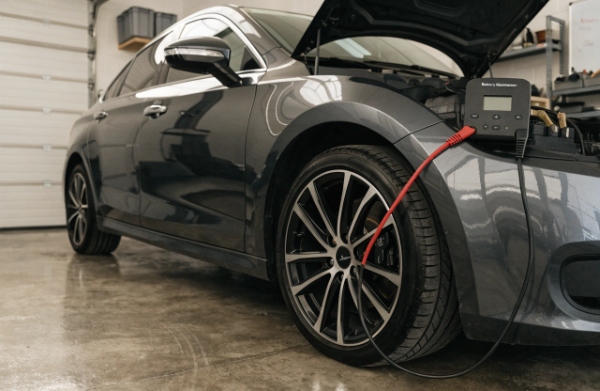
Idle Car Battery Maintenance
As General Manager at XIAMEN PARWATT NEW ENERGY TECHNOLOGY CO.,LTD, I work with many Automotive Accessory Wholesalers and Fleet Operators who face this exact issue. One client in California left a delivery van idle for three weeks and came back to a dead battery. After we recommended our smart maintainers, the problem never returned. That experience showed me how simple habits make a big difference.
Why Your Car Battery Dies When Sitting Idle (And How Fast It Happens)
Do you wonder why your battery loses power even when you do not drive the car?
Parasitic drain from the clock, alarm system, ECU, and other electronics slowly drains the battery. A healthy battery usually lasts 2 to 4 weeks before it becomes too weak to start the engine. Cold weather speeds up this process.
Modern cars never truly turn off. Small systems keep drawing power even with the key out. This parasitic drain adds up over days. In my tests at Parwatt, we measure this draw on different vehicle types. Newer cars with more electronics drain faster than older models.
Temperature plays a big role too. Cold weather below freezing cuts battery capacity and makes the chemical reactions slower. Heat can also speed up self-discharge. A battery that lasts four weeks in mild weather may fail in just two weeks during winter.
Here is what typically happens:
- First week: Battery stays strong with only minor voltage drop.
- Second to third week: Voltage falls and the engine may crank slowly.
- After four weeks: Battery often drops below 12 volts and will not start the car.
I always tell our partners in the Real Estate Developers segment who manage company fleets to check idle vehicles regularly. One simple test is to measure battery voltage with a multimeter after two weeks of no use.
For more details on general battery care, see our Car Battery Charger Guide.
How Long Can a Car Battery Stay Charged When Not Driven? Real-World Timelines
How long is it safe to leave your car without driving before the battery dies?
A healthy car battery can stay charged for 2 to 4 weeks without driving in normal conditions. Older batteries or vehicles with high parasitic drain may last only 1 to 2 weeks. Extreme cold or heat shortens this time even more.
I share real-world data with our clients because every vehicle is different. A classic car with minimal electronics can sit longer than a modern SUV packed with computers and cameras.
Factors that affect the timeline include:
- Battery age and condition – newer batteries hold charge better.
- Vehicle type – luxury cars with many always-on systems drain faster.
- Temperature – cold reduces available power quickly.
- Parasitic draw rate – some cars pull 50-100 milliamps even when off.
Here is a simple timeline table based on our experience and client feedback:
| Time Idle | Expected Battery Status | Recommended Action |
|---|---|---|
| Up to 1 week | Still strong, easy start | No action needed |
| 1 to 2 weeks | Minor voltage drop, normal start | Check voltage, consider short drive |
| 2 to 4 weeks | Slow crank possible, risk of failure | Connect a maintainer |
| Over 4 weeks | Likely dead or very weak | Use smart charger and test battery |
Fleet Operators in North America tell me they use this table to schedule maintenance for vehicles that sit between jobs. It helps them avoid surprise downtime.
Cold weather is especially tough. I remember helping an Energy Utilities client in a northern state where batteries failed after just 10 days in winter. Adding temperature-compensated chargers solved the issue.
7 Practical Ways to Keep Your Car Battery Charged During Long Periods of Inactivity
What can you do right now to stop your battery from dying while the car sits?
Here are seven practical ways: drive the car every 1-2 weeks, use a smart trickle charger, disconnect the negative terminal, keep terminals clean, park in a garage, avoid leaving accessories on, and test the battery regularly.
I give this list to every EV Resellers and Corporate Client we work with. These steps are easy and they work.
- Take a 20-30 minute drive every week or two. This lets the alternator recharge the battery fully.
- Connect a smart maintainer before you leave the car idle. It keeps the battery at 100% without overcharging.
- Disconnect the negative battery terminal for storage longer than three weeks. This stops all parasitic drain.
- Clean the terminals and make sure connections are tight. Corrosion increases resistance and drains power faster.
- Park in a garage or covered area to protect from extreme temperatures.
- Turn off all interior lights and accessories before you park the car.
- Test battery voltage monthly with a simple multimeter.
Our DC10 Car Battery Charger is perfect for the second step. It offers 7-stage smart charging with a dedicated maintenance mode and 8-layer safety protection. Customers love its compact size for garage use.
You can learn more on the DC10 Car Battery Charger page.
Smart Chargers, Trickle Chargers & Maintenance Tips for Long-Term Storage
Are you storing your car for months and need the best way to protect the battery?
Smart trickle chargers with multi-stage charging and automatic float mode are the safest choice for long-term storage. They provide a low steady charge, prevent overcharging, and include temperature compensation for year-round protection.
At Parwatt, we design these tools specifically for vehicles that sit idle. The DC80 model gives 8-stage charging with maintenance and storage modes. It revives mildly discharged batteries and keeps them healthy for weeks or months. The LCD screen shows real-time status so you always know what is happening.
The DC200 Plus adds automatic temperature compensation. This feature adjusts voltage in hot summers or cold winters, which adds extra life to the battery. It works great for seasonal vehicles like RVs or classic cars.
Here are key maintenance tips I share with Wholesale partners:
- Choose a charger rated at 1-4 amps for pure maintenance.
- Match the charger to your battery type (lead-acid, AGM, GEL, or lithium).
- Place the charger in a well-ventilated area.
- Check connections monthly even with a smart unit.
- Use desulfation mode if the battery has sat for a long time.
Bullet list of smart features that make the difference:
- Automatic shut-off when the battery is full.
- Float or trickle mode to maintain without overcharge.
- Over-temperature and reverse polarity protection.
- Spark-proof clamps for safe connection.
- IP54 rating for dust and splash resistance.
These features give peace of mind to Retail & Hospitality Chains that keep service vehicles ready at all times.
See full details on the DC80 Car Battery Charger or the DC200 Plus Car Battery Charger.
When to Replace Your Battery vs When to Just Maintain It – Signs You Should Watch For
How do you know if your battery just needs maintenance or if it is time for a new one?
Replace the battery if it is over 3-5 years old, shows swelling, or fails to hold a charge after a full recharge. Maintain it with a smart charger if it still reaches full voltage and cranks the engine normally after charging.
I help many clients make this decision every month. Here are the clear signs:
- Slow cranking even after a full charge.
- Battery age older than four years in hot climates.
- Swollen case or leaking fluid.
- Voltage below 12.4 volts after 24 hours on a maintainer.
- Frequent jump starts needed.
If none of these signs appear, a good smart charger is usually enough. Our units extend battery life by 2-3 years when used for maintenance.
Here is a decision table that works well for Government & Municipalities and Workplace clients:
| Sign | Action | Recommendation |
|---|---|---|
| Slow crank after recharge | Test and possibly replace | Check with load tester |
| Age 4+ years | Plan replacement soon | Maintain in meantime |
| Voltage holds above 12.6V | Continue maintenance | Use DC series charger |
| Swelling or smell | Replace immediately | Dispose safely |
| Holds charge with maintainer | Keep maintaining | Monitor monthly |
This framework saves money by avoiding unnecessary replacements.
For extra protection during storage, explore our full car battery charger category.
Conclusion
Leaving your car sitting idle doesn’t have to mean a dead battery. With the right maintenance habits and tools — especially a good smart trickle charger — you can keep your battery healthy for weeks or even months without driving. The key is understanding how fast your battery discharges and taking simple preventive steps before it’s too late. A few minutes of preparation can save you time, money, and frustration down the road. Don’t wait until your battery is completely dead. Start protecting it today with the right charging strategy.
Find the Right Battery Maintainer or Charger – Get Recommendation in 24 Hours
Keep your battery healthy even when your car sits idle — get expert advice today.
Request Free Battery Maintenance Checklist
Chat with Our Automotive Expert on WhatsApp
FAQ
How long can a car battery stay charged when the car is not driven?
Usually 2 to 4 weeks, but it varies with temperature and parasitic drain.
Is it safe to leave a trickle charger connected for weeks?
Yes, with a modern smart charger that has automatic float mode and overcharge protection.
What is the best way to maintain a car battery during long-term storage?
Use a smart trickle maintainer and keep the vehicle in a moderate temperature area.
Can a regular charger be used for maintenance charging?
No, regular chargers can overcharge. Smart maintainers are much safer.
What are the signs that my car battery is dying from sitting idle?
Slow cranking, low voltage readings, or the need for frequent jump starts.
Should I disconnect the battery if the car will sit for more than a month?
Yes, disconnecting the negative terminal stops parasitic drain effectively.

--- END ---
Related Posts


Business Ideas

Business Ideas
