

Portable vs. Wall-Mounted EV Chargers: Which Is Best for Home Charging?
Oct 27,2026
Choosing the wrong home EV charger can limit daily convenience. A unit that charges too slowly may not restore the miles you need by morning. An oversized fixed installation can add circuit work and upfront cost you do not yet need. At Parwatt I see both problems when homeowners compare only portability or only maximum power.
Neither portable nor wall-mounted chargers are automatically best for every home. Portable units offer flexibility and easier relocation. Wallboxes usually provide a cleaner daily setup and stronger access to higher power and smart features. Real speed depends on the outlet, circuit, charger rating and the vehicle’s onboard AC limit.
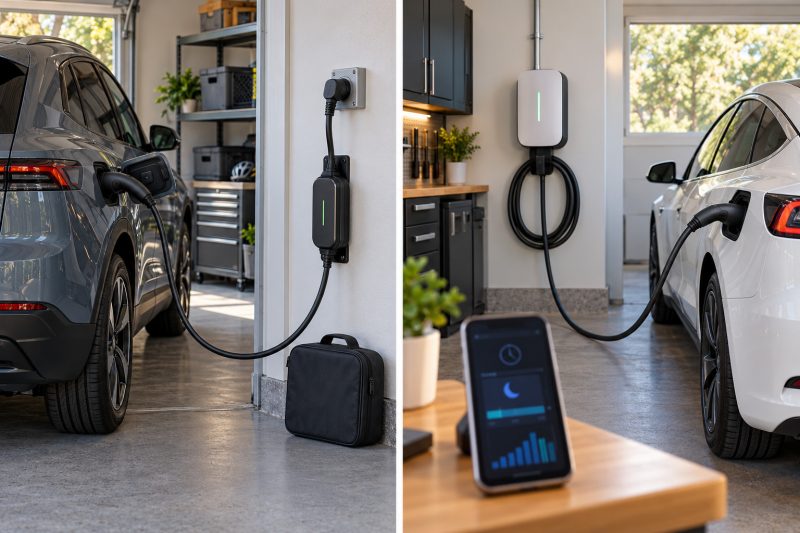
I have worked with residential installers, fleet managers and home EV users for years as general manager at Parwatt New Energy. We supply EV charging equipment and power modules used in home and commercial projects. I regularly help owners decide whether a portable unit is enough or whether a wall-mounted charger is the better long-term choice. Our guidance for products in the EV Charger Category always starts with daily energy need, parking arrangement and electrical capacity. In this article I explain how portable and wall-mounted EV chargers compare and which option fits different homes in 2026.
Why Choosing the Wrong Home EV Charger Can Limit Daily Convenience?
Home charging only works when the car recovers enough energy before the next trip. A portable charger on a weak outlet can leave the battery short. A high-power wallbox on an undersized circuit can trip breakers or force expensive upgrades. Either mismatch reduces the convenience that home charging is supposed to deliver.
The wrong home EV charger limits daily convenience when it cannot restore the energy used each day, or when installation cost and circuit limits outweigh the benefit of higher rated power.
How Mismatches Affect Morning Readiness
I have spoken with drivers who relied on a portable Level 1 cable after their daily mileage increased. The overnight session no longer replaced what they used. They began stopping at public chargers during the week and lost the simplicity of plugging in at home.
Other owners ordered a high-amperage wallbox before checking the panel. The electrical work delayed the project and raised the total cost. In some cases the vehicle’s onboard charger limited AC power so the extra amperage never appeared in real sessions.
Renters face a different constraint. A hardwired wallbox may be difficult to remove when the lease ends. A portable unit that works on a proper outlet can move with the household, yet it still needs a safe, correctly rated receptacle at every location.
Multi-car homes add another layer. One slow portable charger shared between two vehicles rarely finishes both overnight. A single well-placed wallbox with scheduling or load management often solves the conflict more cleanly.
Here is a table that links wrong choice to daily impact:
| Situation | Wrong Choice | Daily Result |
|---|---|---|
| Rising daily mileage | Portable on low-power outlet | Incomplete overnight recovery |
| Limited panel capacity | High-power wallbox without upgrade | Trips or costly rework |
| Rental property | Hardwired unit only | Hard to remove or transfer |
| Two EVs, one point | Shared low-power portable | Both cars under-charged |
| Occasional travel need | No portable backup | Stranded without home outlet |
This table reflects the patterns I discuss with residential customers of equipment from the EV Charger Category.
In 2026 the goal remains the same: the car should be ready when you leave. The format of the charger is only a tool to reach that goal.
The Mistakes Homeowners Make When Comparing Portable Chargers and Wallboxes
Homeowners often treat “portable” as “slow” and “wall-mounted” as “fast.” They overlook supply voltage, circuit capacity, the vehicle’s onboard charger, outlet condition and the real installation path. These mistakes produce both under-powered daily setups and over-specified fixed installations.
Common mistakes include judging speed only by whether the unit is portable, ignoring voltage and circuit limits, skipping the vehicle AC rating, and assuming any existing outlet is safe for continuous EV load.
Mistakes That Distort the Comparison
One frequent mistake is assuming every portable charger is Level 1. Some portable units support Level 2 power when connected to a suitable 240V receptacle. Speed follows the electrical supply and the vehicle limit, not the carrying handle.
Another mistake is assuming every wallbox automatically delivers high power. A wall-mounted unit on a low-amperage circuit or limited by the car’s onboard charger will not charge faster than a well-supplied portable Level 2 unit.
Outlet quality is often ignored. EV charging is a continuous high load. A worn or under-rated receptacle can overheat during a long overnight session. Portability does not remove the need for a sound electrical connection.
Installation cost is sometimes compared only on the sticker price of the hardware. Adding a new high-current outlet for a portable Level 2 unit can close the gap with a hardwired wallbox. Conversely, a wallbox may need panel work that a portable unit on an existing suitable outlet avoids.
Smart features are bought without a clear use case. Scheduling and load management help when tariffs or panel limits matter. They do not replace a basic match between energy need and available power.
Here is a table of frequent comparison mistakes:
| Mistake | Why It Misleads | Better Question |
|---|---|---|
| Portable = slow | Ignores Level 2 portable options | What voltage and amperage can I use? |
| Wallbox = always faster | Ignores circuit and vehicle limits | What is the car’s maximum AC rate? |
| Any outlet is fine | Continuous load needs proper rating | Is the receptacle suitable and safe? |
| Hardware price only | Misses electrical work | What is the total installed cost? |
| Features first | Marketing focus | Do I need scheduling or load management? |
This table keeps the discussion practical. At Parwatt we ask for daily energy use, vehicle AC limits and site conditions before recommending any unit related to the FES-D30 DC EV Charger or residential AC products.
I advise writing down the available outlet type and the car’s maximum AC charging rate before reading product pages. Those two facts prevent many mismatched purchases.
How to Compare Charging Speed, Installation, Safety and Smart Features
A fair comparison looks at rated power, plug or hardwire method, dedicated circuit needs, connector type, cable length, environmental rating, safety certification, load management, scheduling and energy monitoring. Format alone does not decide any of these points.
Compare portable and wall-mounted chargers by power rating, supply method, circuit requirements, connector and cable, protection rating, certification, and smart functions such as scheduling and load management.
Factors That Belong in the Same Table
Charging speed depends on the lowest limit in the chain: supply voltage and amperage, EVSE output, cable rating and the vehicle’s onboard AC charger. A portable Level 2 unit on a correct 240V circuit can match a wallbox of the same rating. A wallbox on a weak circuit cannot.
Installation differs by design. Portable units need a suitable receptacle and safe cord routing. Wallboxes need mounting space, a dedicated circuit in most higher-power cases, and often professional installation. Plug-in wall units sit between the two approaches.
Safety rests on certification, correct wiring, residual-current protection, over-temperature behaviour and the physical condition of plugs and cables. Continuous overnight load makes outlet and cable quality especially important for portable use.
Smart features include app control, tariff-aware scheduling, energy reporting and dynamic load management. These functions appear more often on wallboxes but are not exclusive to them. Buy them when they solve a real tariff or capacity problem.
Cable length and connector type affect daily handling. A wallbox with a well-placed holster reduces trip hazards. A portable unit must be stored and deployed without straining the inlet or the outlet.
Here is a comparison framework:
| Factor | Portable Charger | Wall-Mounted Charger | What to Verify |
|---|---|---|---|
| Typical power | Level 1 or Level 2 | Usually Level 2 | Matching circuit and vehicle limit |
| Supply method | Existing or new receptacle | Plug-in or hardwired | Outlet rating or breaker size |
| Installation | Lower if outlet exists | Professional mount and circuit | Total project cost |
| Daily convenience | Must deploy each time | Connector ready on the wall | Parking layout |
| Smart functions | Model-dependent | Often richer | Real need for schedule or load control |
| Relocation | Easy to move | Fixed to the property | Rental or future move plans |
This framework keeps speed, cost and convenience visible together. At Parwatt we use the same factors when advising customers who may later expand toward commercial systems built around the 30kW Power Module or 40kW Power Module.
I recommend scoring each factor for your own garage or driveway rather than relying on a generic “portable versus wall” ranking.
Portable Charger or Wallbox: Which One Fits Your Driving and Housing Situation?
Portable chargers fit renters, low-mileage drivers, households that move often, and owners who need a travel or emergency option. Wall-mounted chargers fit homes with a fixed parking spot and daily charging needs, especially when higher power or smart control will be used regularly.
Portable chargers suit flexible living and modest daily energy needs. Wallboxes suit fixed parking and regular overnight recovery. Many households benefit from a wallbox for daily use and a portable unit as backup.
Matching Format to Real Life
A renter who may move within a year often prefers a portable unit that does not require permanent alteration of the property. The unit must still connect to a correct, well-maintained receptacle at each address.
A driver with a short commute and long parking time can succeed with a portable Level 1 or modest Level 2 setup. The same driver with a long commute and a pure battery-electric vehicle usually needs the consistent power and cable management of a wallbox.
Frequent travellers value a portable charger in the boot for destination charging at hotels or second homes that provide a suitable outlet. That use case does not replace a reliable home wallbox for weekday nights.
Homeowners with a dedicated garage or driveway space gain daily convenience from a wall-mounted unit. The connector is always in the same place, the cable is managed, and scheduling can align with off-peak tariffs.
Multi-EV households lean toward wall-mounted solutions with load sharing. One portable charger shared between two cars rarely finishes both before morning.
Future plans matter. If a second EV or higher daily mileage is likely, installing a proper Level 2 circuit and wallbox once is usually cheaper than repeating temporary arrangements.
Here is a situation-based guide:
| Situation | Preferred Format | Reason |
|---|---|---|
| Renter / frequent mover | Portable | Easy to take to the next home |
| Low daily mileage, long parking | Portable often enough | Time compensates for lower power |
| Daily BEV use, fixed parking | Wallbox | Consistent overnight recovery |
| Travel and destination charging | Portable backup | Flexibility away from home |
| Two or more EVs | Wallbox with load management | Avoid shared slow sessions |
| Uncertain long-term parking | Start portable, plan wallbox | Keep options open |
This guide keeps the choice tied to housing and driving patterns. At Parwatt we help households map the same profiles before they select equipment from the EV Charger Category.
I advise reviewing how many nights the car actually sleeps in the same place. Fixed parking strongly favours a wallbox; changing locations favour portability.
A Practical Checklist for Choosing Your Home EV Charging Setup
A short checklist prevents most regrets. Confirm the vehicle connector and maximum AC charging power. Inspect the home electrical supply and outlet or panel capacity. Estimate the energy you must replace each night. Compare total equipment and installation cost. Select certified products and qualified installers.
Before choosing, confirm vehicle AC limits, check home electrical conditions, calculate daily energy need, compare full project cost, and select certified equipment with professional installation where required.
Steps That Lead to a Sound Decision
Read the vehicle manual for the inlet type and the maximum AC charging rate. Write those values down. They set the upper bound on useful charger power.
Identify the power source you will use. For portable charging, confirm the receptacle voltage, amperage, grounding and physical condition. For a wallbox, ask an electrician for a load calculation and a route for a dedicated circuit.
Estimate daily energy use from the car’s display or from average miles multiplied by efficiency. That figure shows whether Level 1 rates are enough or whether Level 2 is required.
List the full cost of each option: hardware, any new receptacle or circuit, permits, labour and accessories. A portable unit is not always cheaper once a proper high-current outlet is included.
Decide whether you need scheduling, load management or energy monitoring. Buy those functions when they solve a tariff or panel limit.
Choose outdoor-rated equipment if the installation is exposed. Confirm the certification marks required in your market.
Consider keeping both formats if the budget allows. A wallbox for daily home use and a portable unit for travel covers the two most common needs without compromise.
Plan a simple operating routine: charge limit, schedule and a periodic visual check of cables and connections.
Here is a pre-purchase checklist:
- Vehicle inlet type and maximum AC power confirmed
- Available outlet or panel capacity assessed
- Typical daily kWh need calculated
- Portable versus wallbox total cost compared
- Smart features matched to real tariff or load needs
- Outdoor rating and certification verified
- Qualified installer selected for fixed work
- Cable length and parking layout checked
- Optional portable backup considered
- Charge limit and inspection routine planned
At Parwatt we encourage this sequence for every residential project. Further reading on charging technology is available in our articles on Electric Vehicle Charging and AC vs DC EV Charging. Product options and specifications can be reviewed on our main site and within the EV Charger Category, including higher-power platforms such as the Battery Buffered Ultra Rapid EV Charger.
Homeowners who complete the checklist select a setup that restores daily energy without surprise electrical costs or repeated public-charging stops.
Conclusion
Neither charger type is automatically better for every home. At Parwatt we match portable and wall-mounted options to real driving routines and site conditions so households avoid both under-powered and over-specified systems. A portable EV charger offers flexibility, easier removal and potentially lower initial cost, making it attractive for renters, frequent travelers and drivers with modest daily mileage. A wall-mounted charger generally provides a cleaner permanent setup, better cable management and broader access to high-power or smart-charging functions. However, the product format alone does not determine charging speed: the outlet, dedicated circuit, charger rating and vehicle’s onboard AC limit all matter. Before buying, homeowners should evaluate their driving routine, parking arrangement, electrical capacity and future plans. For many households, the most practical combination is a professionally installed wallbox for everyday use and a certified portable charger kept as a travel or emergency backup.

--- END ---
Related Posts
Business Ideas

Level 1 vs Level 2 EV Charging: What Buyers Should Check Before Ordering
November 20, 2026
Business Ideas

Company News

Company News


