

What It Costs to Install a Commercial EV Charging Station?
Mar 25,2026
You run a business with parking spaces or manage a fleet. High installation costs scare you away from EV chargers. You worry about hidden fees and long payback times. This stops many companies from going electric.
Commercial EV charging station installation costs range from $5,000 to $200,000+ per unit. Level 2 chargers typically cost $5,000-$25,000 installed. DC fast chargers run $50,000-$200,000 or more. Costs depend on charger type, site prep, electrical upgrades, and permits.
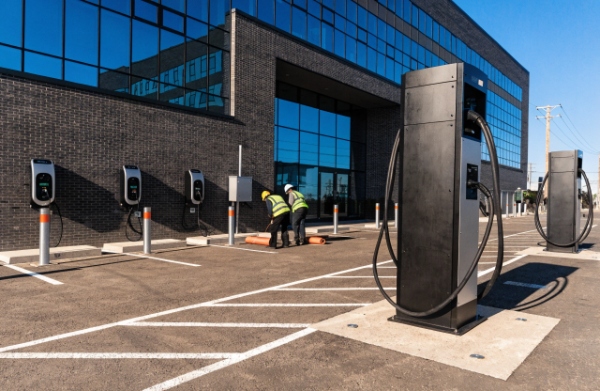
I hear this concern every week from fleet operators, real estate developers, and CPOs. They want reliable numbers before they commit. The good news is smart planning cuts costs a lot. Read on to see real breakdowns and how they apply to your projects.
Commercial EV Charging Station Cost by Charger Type
You choose chargers for your site. You need to know which type fits your budget and needs.
Costs vary greatly by charger type. Level 2 stations cost the least to install. DC fast chargers demand much higher investment due to power needs and complexity.
Level 2 AC Chargers
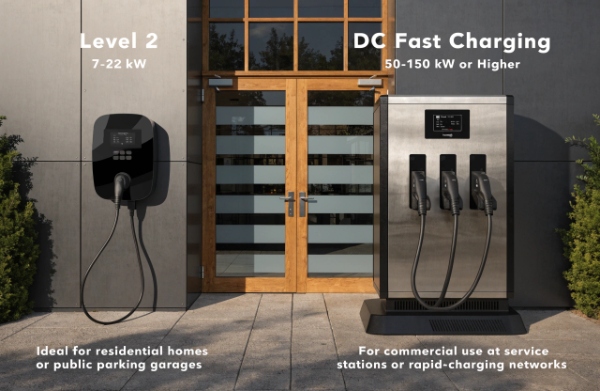
Level 2 chargers use 208-240V power. They deliver 7-22 kW. Installation costs range from $5,000 to $15,000 per unit. This includes the charger hardware ($1,000-$4,000), basic electrical work, and permits. Multi-port stations share some costs. They suit workplaces, retail lots, and apartment complexes. Many clients start here because payback comes quick from tenant fees or employee perks.
DC Fast Chargers
DC fast chargers supply 50-350 kW or higher. They need three-phase high-voltage service. Installation costs hit $50,000-$200,000+ per unit. Hardware alone runs $30,000-$100,000. Electrical upgrades often add the most expense. Transformers, switchgear, and trenching push totals up. These suit highways, fleet depots, and high-traffic public sites. CPOs choose them for revenue potential.
Hybrid or Multi-Standard Setups
Some sites mix Level 2 and DC fast. This spreads costs. One DC unit attracts drivers. Several Level 2 units serve daily users. We see this in malls and travel centers. Total cost per site ranges from $100,000 to $500,000 depending on scale.
Here is a cost breakdown table by type:
| Charger Type | Typical Power | Hardware Cost | Installation Cost (per unit) | Total Installed Range | Best Suited For |
|---|---|---|---|---|---|
| Level 2 Single | 7-22 kW | $1,000-$4,000 | $3,000-$10,000 | $5,000-$15,000 | Workplaces, retail, apartments |
| Level 2 Multi-port | 7-22 kW | $5,000-$15,000 | $10,000-$30,000 | $15,000-$50,000 | Large lots, fleets |
| DC Fast (50-150 kW) | 50-150 kW | $30,000-$80,000 | $20,000-$100,000+ | $50,000-$150,000 | Highways, commercial hubs |
| Ultra-Fast (150kW+) | 150-350+ kW | $80,000-$150,000 | $50,000-$150,000+ | $100,000-$300,000+ | High-traffic, fleet rapid needs |
These ranges help CPOs, fleet operators, and developers set realistic budgets.
Equipment and Installation Costs
You get quotes from suppliers. You see big differences in prices. You want to know what drives the numbers.
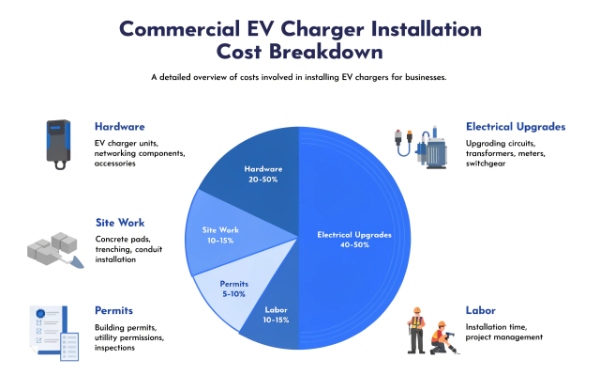
Equipment and installation make up the biggest part of commercial EV charger costs. Hardware prices vary by brand and features. Installation depends on site conditions, power upgrades, and local rules.
Hardware Expenses
Basic Level 2 chargers cost $1,000-$3,000 each. Smart models with OCPP, load balancing, and apps run $2,000-$5,000. DC fast hardware starts at $30,000 for 50 kW single-port. High-power multi-port units exceed $100,000. Features like liquid cooling, touchscreens, and payment systems raise prices.
Electrical Infrastructure
This often becomes the largest expense. Level 2 needs circuit upgrades and wiring. Costs run $2,000-$8,000 per unit. DC fast requires medium-voltage service, transformers, and panels. Upgrades cost $20,000-$150,000+. Distance from main panel adds trenching fees.
Permitting and Site Preparation
Permits cost $500-$5,000 per site. Inspections add more. Concrete pads, bollards, signage, and ADA compliance increase totals. Urban sites face stricter rules. Rural sites need longer utility runs.
Labor and Project Management
Electricians charge $50-$150 per hour. Complex installs take weeks. Project managers coordinate vendors. This adds 10-20% to totals.
Cost-Saving Strategies
Buy in bulk for discounts. Use modular designs for easy upgrades. Apply for grants and rebates. Many utilities offer incentives. At Parwatt we provide turnkey solutions. We handle audits and compliance. Check our EV charger category for reliable options.
Here is a detailed cost table:
| Cost Category | Level 2 Range | DC Fast Range | Main Drivers |
|---|---|---|---|
| Charger Hardware | $1,000-$5,000 | $30,000-$150,000 | Power output, ports, smart features |
| Electrical Upgrades | $2,000-$10,000 | $20,000-$150,000+ | Voltage needs, distance, transformers |
| Site Work & Foundations | $1,000-$5,000 | $5,000-$20,000 | Concrete, bollards, signage |
| Permits & Inspections | $500-$3,000 | $2,000-$10,000 | Local codes, utility approvals |
| Labor & Installation | $2,000-$8,000 | $10,000-$50,000 | Complexity, hours required |
These details guide utilities, governments, and corporate clients.
Ongoing Maintenance Costs
You install chargers. You worry about repair bills later. You need predictable expenses.
Ongoing maintenance for commercial EV chargers costs $500-$5,000 per unit per year. Level 2 units stay cheaper. DC fast chargers need more attention due to higher usage and complexity.

Routine Maintenance Tasks
Clean connectors and screens monthly. Check cables for wear. Update software quarterly. Inspect electrical connections yearly. Level 2 needs basic checks. DC fast requires cooling system service and power module tests.
Repair and Replacement Parts
Cables wear out first. Replacements cost $200-$1,000. Screens and boards fail occasionally. Parts run $500-$5,000. High-use DC units see more issues. Warranty covers early years.
Monitoring and Software Fees
OCPP systems charge $200-$1,000 yearly per site. Remote monitoring prevents failures. It flags problems early. Many CPOs see this as essential.
Insurance and Vandalism
Commercial sites need coverage. Premiums add $300-$2,000 yearly. Bollards and cameras reduce risks.
Ways to Minimize Costs
Choose durable brands. Train staff on basic care. Use warranty extensions. Schedule preventive visits. At Parwatt our units include strong monitoring. This keeps costs low. See our DC fast EV chargers for long-lasting performance.
Here is a maintenance cost table:
| Maintenance Type | Annual Cost per Unit (Level 2) | Annual Cost per Unit (DC Fast) | Frequency | Notes |
|---|---|---|---|---|
| Routine Inspections | $300-$800 | $800-$2,000 | Quarterly/Annual | Cleaning, visual checks |
| Software & Monitoring | $200-$600 | $500-$1,500 | Ongoing subscription | OCPP, remote diagnostics |
| Parts Replacement | $100-$500 | $500-$3,000 | As needed | Cables, screens, modules |
| Repairs & Labor | $200-$1,000 | $1,000-$5,000 | Occasional | Downtime impact higher on DC |
| Insurance | $200-$800 | $500-$2,000 | Annual | Vandalism, liability coverage |
These figures help fleet operators and retail chains forecast expenses.
Mobile EV Charging Solutions
You face sites without fixed power or need temporary charging. You look for flexible options.
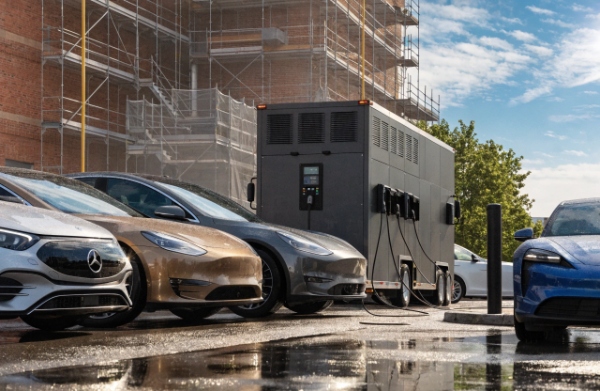
Mobile EV charging solutions cost $20,000-$100,000 per unit. They use battery packs or generators. They avoid major grid upgrades. They suit events, construction, or overflow needs.
Types of Mobile Chargers
Battery-based trailers store 100-500 kWh. They charge multiple EVs. Generator-powered units run on diesel or hybrid. They suit remote areas.
Cost Breakdown
Hardware costs $15,000-$80,000. Trailers add transport expenses. Operation uses electricity or fuel. Maintenance stays similar to fixed but includes battery care.
Advantages Over Fixed
No trenching or permits needed. Deploy fast. Relocate easily. Test demand before permanent install. Fleet operators use them for overflow.
Limitations
Slower than grid-tied DC fast. Higher per-kWh cost when using generators. Battery units need recharging time.
When to Choose Mobile
Use for pilots, events, or sites with grid limits. Many utilities test with mobile first.
Here is a mobile vs fixed comparison:
| Aspect | Mobile Solutions | Fixed Installations | Best Use Case |
|---|---|---|---|
| Upfront Cost | $20,000-$100,000 | $5,000-$200,000+ | Temporary vs permanent |
| Deployment Time | Days | Weeks to months | Events, pilots |
| Grid Dependency | Low (battery/generator) | High | Remote or constrained sites |
| Scalability | Easy to move/add | Fixed location | Flexible needs |
| Operating Cost | Higher (fuel/recharge) | Lower (grid rates) | Short-term vs long-term |
Mobile fits resellers, integrators, and event-focused clients.
Ready to get accurate quotes for your commercial EV charging project?
Conclusion
Commercial EV charger costs depend on type, site, and features. Level 2 stays affordable. DC fast brings higher investment but revenue potential. Plan carefully for best returns.
FAQs
What is the cheapest commercial charger to install?
Level 2 single-port units. They cost $5,000-$15,000 installed in most cases.
Do incentives lower commercial installation costs?
Yes. Rebates, tax credits, and utility grants cut 20-50% in many regions.
How long does payback take on commercial chargers?
2-7 years. Depends on usage, fees, and incentives.
Are mobile chargers a good permanent solution?
No. They work best for temporary or testing needs.
What factors increase costs the most?
Electrical upgrades and site preparation often double totals.

--- END ---
Related Posts


Business Ideas

Business Ideas

Business Ideas
