

AC vs DC Charging: Which Is Right for Your EV in 2026? Complete Comparison Guide
Jun 16,2026
You want convenient EV charging. Then you face confusing choices between AC and DC options that affect speed, cost, and battery life.
AC charging works best for daily home and work use while DC delivers fast top-ups for travel and fleets. Understanding the real differences helps you pick the right solution without wasting money.
In my years as General Manager at XIAMEN PARWATT NEW ENERGY TECHNOLOGY CO.,LTD, I have helped many customers choose the best charging methods. One fleet operator mixed AC for depots and DC for quick stops. Efficiency improved and costs stayed under control. This guide shares practical insights from real projects.
Why Most EV Owners Get Confused and Make Costly Mistakes When Choosing Between AC and DC Charging
You try to decide on a charger. Confusion leads to slow charging or high bills.
Many owners end up with slow home charging or overspend on unnecessary fast options. Battery worries and wrong installations add extra costs and frustration.
I talk with homeowners, fleet operators, and real estate developers often. They share similar stories. One workplace client installed DC chargers everywhere and faced high electricity bills. Switching to a smart mix saved money. At Parwatt, we focus on solutions that match actual needs.
Common sources of confusion and mistakes:
- Overestimating daily speed needs.
- Ignoring total installation and operating costs.
- Worrying too much about battery impact.
- Choosing based on hype instead of usage patterns.
- Skipping proper electrical assessment.
| Mistake | Common Result | Extra Cost Impact |
|---|---|---|
| Always choose DC | High install fees | Thousands extra |
| Ignore home limits | Frequent breaker trips | Repair bills |
| Focus only on speed | Poor daily convenience | Time loss |
| No usage analysis | Wrong location | Low utilization |
| Skip professional help | Safety issues | Warranty problems |
These errors hurt daily driving. AC Level 2 charging handles most overnight needs well. DC fast charging shines for long trips. Many owners pay more for speed they rarely use.
Our EC01 wall charger offers reliable AC performance for homes. Read our Level 2 vs Level 3 charging for clear guidance.
Fleet operators often mix types for efficiency. Home users benefit from simple AC setups. Real estate projects need to consider tenant habits. I remember a retail chain that installed only fast chargers. Customers complained about complexity and costs. A balanced approach worked better.
Grid capacity affects choices too. DC requires stronger connections. Many homes suit AC perfectly. Understanding your routine prevents costly mistakes. Proper planning leads to convenient, affordable charging that fits your life. These insights help you avoid frustration and make confident decisions for 2026 and beyond.
Common Misconceptions About AC and DC Charging That Lead to Wrong Decisions
You hear strong opinions about charging types. Some ideas mislead you.
Common misconceptions include thinking DC is always superior, fearing battery damage from fast charging, or ignoring real usage scenarios. These views cause bad choices.
I work with automotive OEMs and EV resellers. They see customers influenced by myths. One partner sold many DC units based on speed hype. Later feedback showed overkill for most users. Facts help correct this.
Key misconceptions:
- DC charging is always better for every situation.
- Fast charging damages batteries badly.
- AC is too slow for all needs.
- Cost differences are not significant.
- One type fits all vehicles and locations.
| Misconception | Reality | Wrong Decision Result |
|---|---|---|
| DC always better | Depends on use case | Overspending |
| DC harms battery | Modern tech manages it | Avoid useful speed |
| AC too slow | Fine for overnight | Misses convenience |
| Costs similar | DC much higher | Budget issues |
| Universal fit | Location matters | Poor performance |
Modern battery systems handle DC well with thermal management. AC provides gentle daily charging. Speed matters for travel but not for parked vehicles.
Our EP01 portable EV charger gives flexibility to test both approaches. Explore our AC vs DC EV charging for detailed explanations.
I advised a corporate client who feared DC damage. Real data from our projects showed minimal impact with proper use. They adopted a hybrid setup successfully. For public and fleet use, DC adds value at key spots.
Misconceptions slow adoption and raise costs. Clear facts show AC for routine needs and DC for quick boosts. Hybrid sites serve everyone efficiently. Avoid hype and match technology to your actual driving habits. This leads to better satisfaction and lower total ownership costs.
AC vs DC Charging: Technical Differences, Speed, Cost, and Use Cases Explained
You need clear facts to compare options. Technical details matter.
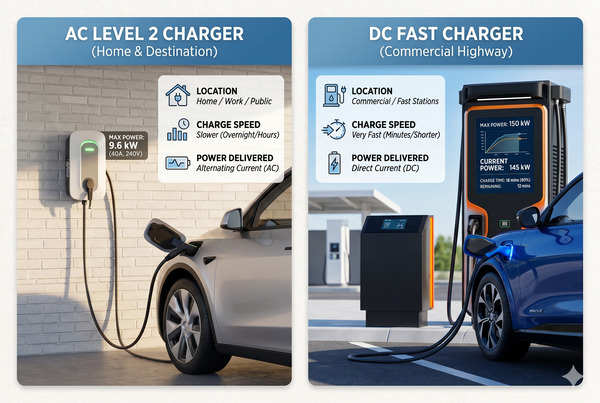
AC charging converts power inside the vehicle while DC delivers it directly. This creates big differences in speed, cost, and applications.
I guide partners through these comparisons regularly. One energy utility used our insights for station planning. Results included better user satisfaction. Here is a straightforward breakdown.
Technical differences:
- AC uses onboard converter for slower but simpler setup.
- DC bypasses the converter for high power.
- Voltage and current levels vary significantly.
- Infrastructure requirements differ greatly.
- Safety and control systems adapt to each type.
| Aspect | AC Charging | DC Charging |
|---|---|---|
| Power Level | 7-22 kW typical | 50-350+ kW |
| Speed | 20-40 miles per hour | 100-300+ miles per hour |
| Install Cost | Lower | Much higher |
| Battery Impact | Very gentle | Manageable with tech |
| Best For | Home, work | Travel, fleets |
AC Level 2 suits overnight charging perfectly. It adds full range while you sleep. DC provides fast top-ups in 15-30 minutes. Costs for DC stations run much higher due to electrical upgrades.
Our FES-D30 DC EV charger delivers efficient fast charging. Check our electric vehicle charging for more comparisons.
Use cases differ by location. Homes and workplaces favor AC for cost and simplicity. Highways and urban hubs need DC for quick service. Fleets combine both for depot slow charging and route fast boosts.
Battery management in 2026 models protects during DC sessions. Thermal systems keep temperatures safe. Cost savings with AC come from cheaper hardware and easier installation. DC justifies expense where time savings matter most.
Hybrid approaches grow popular. Sites offer both types to meet varied needs. This maximizes utilization and user convenience. Data from projects shows smart mixes deliver the best returns. Understanding these elements empowers you to choose wisely for your specific situation.
Which Charging Type Is Right for Your Needs – Home, Fleet, or Public Use?
You wonder what fits your situation best. Different users need different solutions.
Home users benefit from AC convenience. Fleets require balanced mixes. Public networks focus on speed and reliability.
I help various clients select optimal setups. A real estate developer chose AC for tenant parking and added DC hubs. Satisfaction increased. Recommendations follow real patterns.
For home use:
- AC Level 2 provides reliable overnight charging.
- Lower costs and simpler installation.
- Gentle on battery for daily routines.
- Smart features optimize with home energy.
For fleets:
- AC at depots for cost-effective full charges.
- DC for quick turnaround on routes.
- Data monitoring for efficiency.
- Scalable solutions for growth.
For public use:
- DC fast chargers at high-traffic spots.
- Mix with AC for longer stays.
- User-friendly payment and apps.
- High uptime for reputation.
| User Type | Recommended Primary | Why It Fits |
|---|---|---|
| Homeowner | AC Level 2 | Overnight, low cost |
| Fleet | AC + DC mix | Efficiency and speed |
| Public | DC focused | Quick service |
| Workplace | AC dominant | Employee convenience |
| Highway | DC fast | Long trips |
Our EP02 portable EV charger with display works well for testing different scenarios. Visit our EV charger category for suitable options.
Home setups with AC avoid unnecessary expense. Fleets save with strategic placement. Public operators maximize revenue through fast turnover. Hybrid sites serve all users effectively.
I recall a logistics company that optimized with AC at bases and DC at hubs. Fuel savings and time gains were significant. Retail locations benefit from mixed offerings for customers. Proper matching to needs prevents regret and maximizes value.
Consider future expansion too. Scalable AC systems grow easily. DC adds capacity where demand rises. These choices align technology with lifestyle and business goals for optimal results.
Ready to Choose the Best Charging Solution for Your EV? Here’s Your Next Step
You have the comparison now. Action brings results.
Assess your driving habits, review electrical capacity, and consult professionals. Choose equipment that matches your needs for long-term satisfaction.
I encourage partners to follow these steps. One homeowner started with AC and added portable options later. Convenience improved without overspending.
Next steps:
- Calculate your daily mileage and parking times.
- Check home or site electrical panel capacity.
- Compare quotes for AC and DC options.
- Consider future needs and hybrid possibilities.
- Contact experts for personalized advice.
| Next Step | Benefit | Who Should Prioritize |
|---|---|---|
| Usage audit | Matches real needs | All users |
| Electrical check | Avoids surprises | Homeowners |
| Professional consult | Expert guidance | Fleets and developers |
| Smart feature review | Future proofing | Tech-savvy users |
| Trial with portable | Test before commit | Beginners |
Our 30kW power module supports larger projects effectively. Reach out for tailored recommendations.
Begin with honest self-assessment. Match charger to your routine. Professional installation ensures safety and performance. These actions prevent mistakes and deliver convenient charging.
For businesses, align with operational goals. Incentives may support certain choices. The right decision enhances your EV experience significantly. Take the step today toward reliable, cost-effective charging.
Conclusion
AC and DC charging each serve different purposes in the EV ecosystem. AC Level 2 is ideal for overnight home and workplace charging — affordable, reliable, and gentle on the battery. DC fast charging excels when you need speed for long trips or high-turnover fleet operations.
The best choice depends on your driving habits, parking duration, and budget rather than following the “faster is always better” trend. Understanding these differences helps you avoid overspending on unnecessary fast chargers or suffering from slow charging at home.
Make the smart choice for your lifestyle — evaluate your real needs and select the charging solution that delivers the best balance of speed, cost, and convenience.
FAQ
- What is the main difference between AC and DC charging?
AC converts power in the vehicle while DC delivers it directly for faster rates.
- Is DC fast charging bad for my EV battery?
Modern thermal management minimizes degradation when used appropriately.
- Should I install AC or DC charger at home?
AC Level 2 is usually sufficient and more cost-effective for home use.
- How much faster is DC charging compared to AC?
DC can be 5-10 times faster, adding hundreds of miles in minutes.
- Which is more cost-effective for daily charging?
AC charging wins for routine daily and overnight needs.
- Can I use both AC and DC chargers for the same EV?
Yes, most EVs support both types for maximum flexibility.

--- END ---
Related Posts


Business Ideas

Business Ideas

Business Ideas

Business Ideas
