

Can I Charge My EV from a Regular Household Outlet? Complete Safety Guide
May 08,2026
Why new EV owners are confused and worried about charging from a regular household outlet.
When you bring home your first electric vehicle, one of the most common questions is: “Can I just plug it into my normal wall outlet?” The answer is technically yes — but it comes with important limitations, safety considerations, and long-term practicality issues that many new owners don’t fully understand.
In 2026, with more people switching to EVs, using a standard 120V household outlet (Level 1 charging) is still the most convenient starting point for many. However, it is also the slowest and, if not done correctly, can carry hidden risks. This complete safety guide explains everything you need to know to charge safely, efficiently, and confidently from a regular outlet.
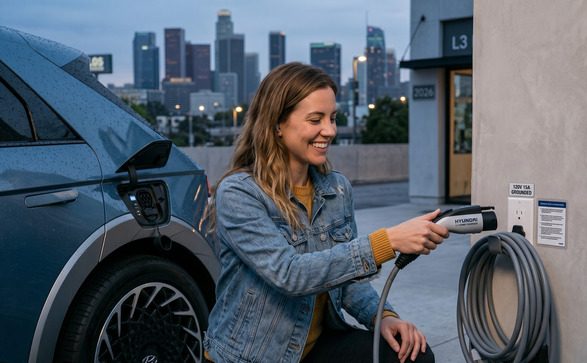
Understanding the Different Types of EV Charging and Why Level 1 Matters
There are three main levels of EV charging:
| Charging Level | Voltage | Speed (Miles of Range per Hour) | Typical Use Case |
|---|---|---|---|
| Level 1 | 120V | 3–5 miles/hour | Overnight home charging from regular outlet |
| Level 2 | 240V | 10–60 miles/hour | Dedicated home or public charger |
| DC Fast Charging | 400–800V | 100–300+ miles/30 min | Highway quick charging |
Level 1 charging uses the same standard 120V outlet you use for lamps or phone chargers. It is the slowest method but requires no special installation — making it the easiest starting point for most new EV owners.
The Real Risks and Limitations of Charging from a Regular Household Outlet
While it is safe when done correctly, Level 1 charging has several important drawbacks:
- Very Slow Charging Speed — You typically gain only 30–50 miles of range overnight, which may not be enough for longer daily commutes.
- Higher Electricity Costs per Mile — Level 1 is less efficient than Level 2, especially if your home electricity rates are high during the day.
- Potential Circuit Overload — Using the same circuit for long periods can trip breakers or cause overheating if the outlet or wiring is old.
- Limited Battery Preconditioning — Some EVs cannot fully precondition the battery while on a standard outlet, affecting cold-weather performance.
Understanding these limitations helps you decide when a regular outlet is sufficient and when it’s time to upgrade.
Step-by-Step: How to Safely Charge Your EV from a Regular Household Outlet
Follow these steps for safe and effective Level 1 charging:
- Check Your Outlet Condition — Ensure it is a grounded 120V outlet in good condition. Avoid extension cords.
- Use the Original EV Charger — Always use the manufacturer-provided Level 1 cable that came with your vehicle.
- Plug In Correctly — Insert the plug firmly and check that the connection is secure.
- Monitor the First Few Charges — Watch for any unusual heat, smells, or tripped breakers.
- Set Charging Limits — Use your vehicle’s app to limit charge to 70–80% for daily use.
- Unplug Safely — Stop the session through the vehicle or charger before removing the plug.
Following these steps significantly reduces safety risks and improves charging efficiency.
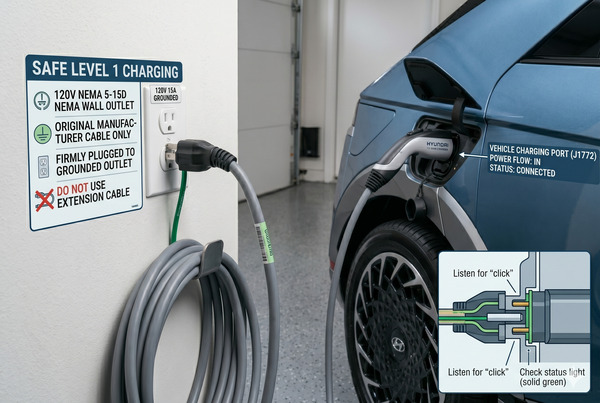
Smart Tips to Charge Faster, Safer, and Cheaper in 2026
Here are advanced tips used by experienced EV owners:
| Goal | Practical Tip | Benefit |
|---|---|---|
| Charge Faster | Precondition battery while plugged in | Faster actual charging speed |
| Save Money | Charge during off-peak nighttime hours | Lower electricity rates |
| Improve Safety | Install a dedicated 120V outlet if possible | Reduced risk of circuit overload |
| Extend Battery Life | Keep daily charge between 20%–80% | Longer overall battery lifespan |
| Monitor Performance | Use your vehicle’s charging app regularly | Early detection of any issues |
These habits help you get the most out of Level 1 charging while preparing for a future Level 2 upgrade.
Ready to Upgrade Your EV Charging Setup? Get Personalized Advice in 24 Hours
Charging your EV from a regular household outlet is possible and safe when done correctly, but it has clear limitations in speed and convenience. For most drivers with longer commutes or colder climates, installing a dedicated Level 2 charger quickly becomes the better long-term solution.
The key is understanding your daily driving distance, local electricity rates, and safety best practices. Whether you start with a standard outlet or plan to upgrade, making informed choices protects your battery, saves money, and ensures safe, reliable charging.
In 24 hours you’ll receive a personalized charging recommendation based on your vehicle, driving habits, and home setup, plus expert advice on safe Level 1 use or Level 2 installation options.
No commitment. Just clear, practical guidance for stress-free EV charging.
Chat with our EV expert on WhatsApp. Need help choosing the right home charger? We’re here to help.
FAQ
Can I safely charge my EV from a regular household outlet?
Yes, but only using the manufacturer-provided cable and a grounded outlet in good condition. It is the slowest charging method.
How fast does Level 1 charging add range?
Typically 3–5 miles of range per hour, or about 30–50 miles overnight.
Is it safe to charge in the rain or extreme weather?
Modern EV chargers are weatherproof, but always use the cable handle properly and avoid standing in puddles.
What should I do if my outlet gets warm during charging?
Stop charging immediately and have a qualified electrician inspect the outlet and wiring.
When should I upgrade from a regular outlet to Level 2 charging?
When your daily driving exceeds 40–50 miles or you want faster, more convenient charging.
Can I use an extension cord for EV charging?
It is not recommended. Extension cords can overheat and create fire hazards. Use a dedicated outlet instead.
More resources: EV Chargers | EV Charging Solutions | EV Charging Guide

--- END ---
Related Posts
Business Ideas

Business Ideas

Business Ideas


Business Ideas

Business Ideas
