

What Is Decentralized Distributed Architecture (DDA) in EV Charging? 2026 Guide
Jul 15,2026
Traditional centralized charging systems rely on one main controller for everything. When that controller fails or demand grows the whole network struggles. Scaling becomes expensive and slow. Operators face reliability issues and high upgrade costs. At Parwatt we see these limits clearly on many sites we support.
Decentralized Distributed Architecture (DDA) moves decision-making and control to individual chargers or small local groups instead of one central server. This approach improves scalability, reliability, and cost efficiency while supporting dynamic load management and easier expansion. In 2026 DDA is becoming the preferred choice for growing commercial and fleet charging networks.
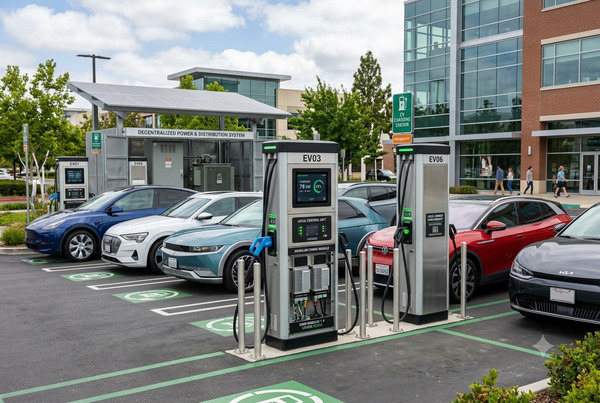
I have worked with charge point operators, fleet managers, and real estate developers for years as general manager at Parwatt New Energy. We supply DC chargers, power modules, and mobile solutions that must perform reliably as networks expand. I have visited many sites that started with traditional centralized setups and later faced bottlenecks when adding more chargers or handling peak demand. Our power modules are designed with features that support distributed control because we believe this is the direction the industry is heading. In this article I explain what Decentralized Distributed Architecture means in 2026, why it matters, and how operators can evaluate it for their projects.
Why Traditional Centralized Charging Systems Are Reaching Their Limits?
Centralized systems depend on a single main controller or server to manage all chargers. When that central point has problems the entire site or network can slow down or stop. Adding new chargers often requires expensive upgrades to the central system and cabling. Load management becomes complex as demand grows. These limitations make expansion costly and risky for many operators.
Traditional centralized charging systems create single points of failure and make scaling difficult and expensive. They struggle with complex load management and require heavy investment in central infrastructure. As EV adoption rises in 2026 these limits slow down projects and increase long-term costs for charge point operators and fleet sites.
The Daily Challenges of Centralized Setups
I remember visiting a large workplace charging site two years ago. The operator had installed twenty chargers managed by one central controller. During busy morning hours the system slowed down and some chargers could not start sessions promptly. When the central server needed maintenance the whole site went offline for hours. Drivers complained and the operator lost revenue. Adding ten more chargers would have required a bigger controller and major rewiring.
The core issue is reliance on one brain for everything. All decisions about power allocation, session start, and billing flow through the central system. If the connection to that system drops or the hardware fails the chargers cannot operate independently. This creates downtime that centralized designs were supposed to avoid.
Here is a table that shows the main limitations of traditional centralized systems:
| Limitation | What Happens in Practice | Cost or Operational Impact | Who Feels It Most |
|---|---|---|---|
| Single point of failure | Central controller outage stops many chargers | Lost revenue and user complaints | All multi-charger sites |
| Difficult scaling | Adding chargers needs central upgrades | High hardware and installation costs | Growing commercial sites |
| Complex load management | Central system struggles with real-time changes | Inefficient power use and trips | Fleet depots and busy hubs |
| High infrastructure cost | Heavy cabling and large central hardware | Expensive upfront and upgrade costs | Real estate developers |
| Limited flexibility | Hard to integrate local renewables or storage | Missed opportunities for savings | Sites with solar or batteries |
This table makes the problems clear. Many operators reach a point where further growth becomes too expensive or risky. Fleet operators especially notice the issue because their vehicles often return and charge around the same time. The central system cannot always keep up without expensive additions.
At Parwatt we design our 30kW Power Module and 40kW Power Module with modular control features. These modules can support local decision-making so sites do not depend entirely on one distant controller. Clients who have moved toward distributed approaches report smoother operations and easier expansion.
Centralized systems also create bottlenecks during peak periods. The central server must process every request from every charger. As the number of vehicles and charger power levels rise the load on that single point grows. Network delays or server issues then affect the whole site. In 2026 with higher adoption these problems appear more often and push operators to look for better architectures.
Why the Limits Matter Now
EV numbers continue to grow and more sites want higher power chargers. Centralized designs that worked for small installations struggle when demand doubles or triples. The cost of upgrading central infrastructure plus the risk of downtime makes many projects hesitate. This is why distributed approaches are gaining attention. They move some intelligence closer to the chargers so the system can keep working even if parts of the network have issues.
Common Misconceptions About Decentralized Distributed Architecture (DDA)
Many people have incorrect ideas about Decentralized Distributed Architecture. Some think it is too complex or only suitable for very large projects. Others confuse it with simple distributed systems that still rely heavily on a central point. These misconceptions slow down adoption even though DDA offers clear advantages for many sites in 2026.
Common misconceptions about DDA include the belief that it is overly complex, only for big installations, or the same as basic distributed setups. In reality modern DDA uses local intelligence at the charger or small group level while keeping overall coordination simple. It works well for both medium and large sites and often reduces complexity compared to traditional centralized systems.
Clearing Up the Main Myths
One frequent myth is that DDA requires completely new and complicated hardware. In practice many existing chargers and power modules can support distributed control with the right software. The shift often involves adding local controllers or enabling edge features already present in modern equipment. Our power modules at Parwatt already include capabilities that fit distributed architectures.
Another myth says DDA is only worth considering for very large networks with hundreds of chargers. Medium-sized commercial sites and fleet depots also benefit. A site with ten to thirty chargers can gain reliability and easier expansion without needing massive central infrastructure. The benefits appear at smaller scales than many people expect.
Some operators confuse DDA with simple distributed systems that still send most decisions back to a central server. True DDA gives meaningful local decision-making power to individual chargers or small clusters. This allows chargers to continue operating even if the central link is slow or down temporarily.
A fourth misconception is that DDA makes management harder because there are more independent parts. In reality good DDA designs include coordination layers that give operators a clear overall view while allowing local autonomy. Management can actually become simpler once the system is set up correctly.
Here is a table that addresses these misconceptions directly:
| Misconception | Reality in 2026 | Why the Myth Exists | Better Understanding |
|---|---|---|---|
| Too complex for most sites | Many existing chargers support it with software updates | Early versions were more complicated | Modern implementations are practical |
| Only for huge projects | Benefits appear at medium scale too | First examples were large hubs | Works for 10+ charger sites |
| Same as basic distributed systems | DDA gives real local decision power | Terminology overlap in the industry | Local intelligence is the key difference |
| Harder to manage overall | Good designs include clear oversight tools | Fear of losing central visibility | Coordination layers keep control simple |
| Requires all new hardware | Often works with current equipment | Assumption that everything must change | Edge-capable power modules help |
This table helps separate fact from assumption. At Parwatt we talk with clients who initially thought DDA was too advanced for their sites. After seeing how our Battery Buffered Ultra Rapid EV Charger and mobile solutions can operate with local control they often change their view.
The myths persist partly because the term “decentralized” sounds advanced. In practice the goal is practical improvement in reliability and scalability rather than unnecessary complexity. Operators who understand the difference can make better decisions about when and how to adopt DDA.
How Decentralized Distributed Architecture (DDA) Works in EV Charging
Decentralized Distributed Architecture moves intelligence and control closer to the chargers themselves. Instead of every decision passing through one central server each charger or small group makes many decisions locally. A higher-level system still provides coordination and oversight but does not need to handle every detail in real time. This design improves speed, reliability, and flexibility.
DDA in EV charging gives local control and decision-making to individual chargers or small clusters while maintaining overall network coordination. Chargers can manage power allocation, session handling, and basic safety locally. This reduces dependence on a single central point and makes the system more resilient and easier to expand compared with traditional centralized architectures.
Core Principles and Components
The main idea is edge intelligence. Each charger or a small local controller has processing power to handle immediate tasks. For example a charger can decide how much power to deliver based on the vehicle’s needs and local grid conditions without waiting for approval from a distant server every second. This local capability keeps charging sessions running smoothly even during brief network issues.
Key components usually include chargers or power modules with embedded controllers, local communication between nearby units, and a higher-level management platform that sets overall policies. The local units handle real-time operations while the central platform manages billing, user accounts, reporting, and long-term optimization.
Here is a comparison table of traditional centralized architecture versus DDA:
| Aspect | Traditional Centralized | Decentralized Distributed Architecture (DDA) |
|---|---|---|
| Decision making | All decisions at central server | Many decisions at charger or local level |
| Failure impact | Central outage affects many chargers | Local issues affect only nearby units |
| Scaling new chargers | Often requires central upgrades | Simpler addition with local control |
| Load management | Central system handles everything | Local balancing plus central coordination |
| Communication needs | Constant high-volume data to center | Less constant traffic, more local autonomy |
| Cost for expansion | Higher central hardware and cabling | Lower incremental cost per charger |
This table shows the practical differences. In DDA a charger can continue operating and even balance load with nearby units if the link to the main platform is slow. This local resilience is one of the biggest advantages.
How It Works in Practice
When a vehicle plugs in the local charger or controller first checks basic safety and vehicle needs. It can start charging at an appropriate power level using local rules. If the site has dynamic load management the local units coordinate with nearby chargers to stay within available capacity. The central system receives updates and can adjust overall policies such as pricing or priority rules but does not need to approve every power change.
Our META Mobile EV Charger with Battery fits naturally into DDA setups because it already manages its own stored energy locally. When several mobile units work together they can share load information without constant central oversight. This flexibility helps temporary sites or growing installations.
The architecture also supports easier integration with renewables and storage. Local controllers can respond quickly to changes in solar output or battery availability. A central system would take longer to react to every fluctuation.
I have seen DDA implementations at fleet depots where trucks return in groups. Local controllers balance power across the available chargers so no single breaker trips even when many vehicles start charging at once. The central platform still tracks usage for billing and maintenance planning but the real-time work happens closer to the vehicles.
In 2026 more manufacturers are building chargers and power modules with the processing power needed for meaningful local control. This makes DDA practical for a wider range of sites than before. The combination of local speed and central oversight gives operators both reliability and visibility.
Key Benefits of DDA for Charging Networks in 2026
Decentralized Distributed Architecture delivers several important benefits for charging networks. It improves scalability so operators can add chargers more easily. Reliability increases because local control reduces the impact of any single failure. Costs often drop for both initial installation and future expansion. Flexibility grows for dynamic load management and integration with renewables. These advantages make DDA attractive as networks grow in 2026.
DDA offers better scalability, higher reliability, lower expansion costs, and greater flexibility for load management and renewable integration. Chargers or local groups make decisions quickly while overall coordination remains simple. In 2026 these benefits help operators build resilient networks that grow efficiently without the bottlenecks of traditional centralized systems.
Benefits Across Different Site Types
Charge point operators gain easier expansion. Adding a new charger or small cluster often requires less central hardware and cabling than in centralized designs. The incremental cost per charger drops and installation time shortens. This helps commercial sites and public hubs grow in step with demand.
Fleet operators see improved uptime. Local control means a problem with the central platform or network link does not stop charging entirely. Vehicles can continue sessions while issues are resolved. This reliability matters when delivery schedules or passenger service depend on quick turnaround.
Real estate developers and workplace sites benefit from simpler infrastructure. They can install chargers in phases without major central upgrades each time. The system stays manageable as tenant or employee demand increases.
Here is a table summarizing the main benefits by area:
| Benefit Area | How DDA Delivers It | Practical Result | Who Gains Most |
|---|---|---|---|
| Scalability | Local control reduces central bottlenecks | Easier and cheaper to add chargers | Growing commercial and public sites |
| Reliability | Local decision-making continues during issues | Less downtime from single failures | Fleet depots and busy hubs |
| Cost efficiency | Less heavy central hardware and cabling | Lower upfront and expansion costs | Real estate developers |
| Flexibility | Local response to conditions | Better dynamic load and renewable use | Sites with solar or variable demand |
| Future readiness | Modular design supports upgrades | Easier integration of new features | All operators planning long term |
This table shows how the advantages fit different operations. At Parwatt we see clients using our modular power modules and battery-buffered chargers to build systems that align with DDA principles. The FES-D30 DC EV Charger and similar models can operate effectively in distributed setups because of their control capabilities.
Additional Advantages Emerging in 2026
DDA also supports better integration with on-site renewables and storage. Local controllers can prioritize solar power or draw from batteries when grid prices are high. This reduces operating costs and improves sustainability. Many operators now view this flexibility as a competitive advantage.
Reliability improvements come from reduced dependence on constant central connectivity. Even if the main platform experiences issues or the internet connection drops temporarily many charging sessions continue without interruption. This resilience builds user trust and protects revenue.
In 2026 adoption is increasing because the hardware and software needed for effective DDA have matured. More manufacturers offer edge-capable chargers and controllers. Operators who started with centralized systems are exploring hybrid approaches that add local intelligence to existing infrastructure. The shift is practical and delivers measurable improvements in cost and performance.
Is DDA Right for Your Charging Project? How to Get Started
Decentralized Distributed Architecture suits many charging projects but works best when matched to site needs and growth plans. Operators should assess current pain points, future expansion goals, and available hardware. Starting with a clear evaluation helps determine whether DDA or a hybrid approach makes sense. In 2026 the technology is accessible enough for a wide range of sites.
Evaluate your site size, growth plans, reliability needs, and current infrastructure first. Many medium to large sites benefit from DDA through easier scaling and better uptime. Start by reviewing charger capabilities, planning local control where it adds value, and choosing equipment that supports distributed operation. Parwatt power modules and chargers can help build these systems effectively.
Practical Steps to Evaluate and Begin
Begin with an honest review of current limitations. Does the site experience downtime from central issues? Is adding new chargers becoming expensive or slow? Are load management problems appearing during peaks? Answers to these questions point toward whether DDA would help.
Next assess hardware. Look for chargers or power modules that support local control and communication with nearby units. Our modular designs at Parwatt already include features that work well in distributed setups. Sites using our 30kW Power Module or battery-buffered solutions often find the transition smoother.
Consider a phased approach. Start with local control on a portion of the site or new additions while keeping the existing central system for oversight. This reduces risk and lets the team learn how distributed operation works in practice.
Work with vendors who understand both centralized and distributed designs. They can help map the right architecture for your specific mix of chargers, power levels, and integration needs such as solar or storage.
Here is a simple action list in bullet form:
- Review current downtime causes and expansion challenges.
- Inventory charger and controller capabilities for local control support.
- Identify areas where local decision-making would improve reliability or speed.
- Plan a pilot with new or upgraded chargers using distributed features.
- Choose equipment like Parwatt power modules that align with DDA principles.
- Train the team on monitoring both local and overall system performance.
- Set clear goals for scalability and cost reduction over the next two to three years.
Many operators find that starting small with one cluster or new expansion phase builds confidence quickly. The benefits in reliability and easier growth become visible within months. In 2026 the growing number of compatible products makes it easier than ever to adopt DDA without a complete overhaul.
Future trends point toward even more intelligence at the edge. Chargers and power modules will handle more optimization locally while still feeding data to central platforms for billing and analytics. Operators who understand DDA now will be better positioned as these capabilities expand.
Conclusion
Decentralized Distributed Architecture (DDA) represents a major evolution in EV charging by moving intelligence and control closer to the chargers themselves. This approach solves many limitations of traditional centralized systems, offering better scalability, reliability, and cost efficiency. At Parwatt we design our power modules and chargers to support this shift because we see it delivering real advantages for the sites we serve. In 2026, as charging networks grow rapidly, DDA is becoming the preferred solution for both new installations and expansions. It enables smarter, more resilient charging infrastructure that can adapt to increasing demand. Understanding DDA is key for anyone planning or managing modern EV charging projects. The shift toward decentralized systems is well underway and offers significant long-term advantages.

--- END ---
Related Posts


Business Ideas

Business Ideas
