

EV Charging Plugs: Type 1 vs CCS vs NACS (2026)
Apr 09,2026
Many EV owners feel lost when they pick the wrong charging plug. They end up with slow charging or extra costs they did not expect. I see this happen often in my work at Parwatt.
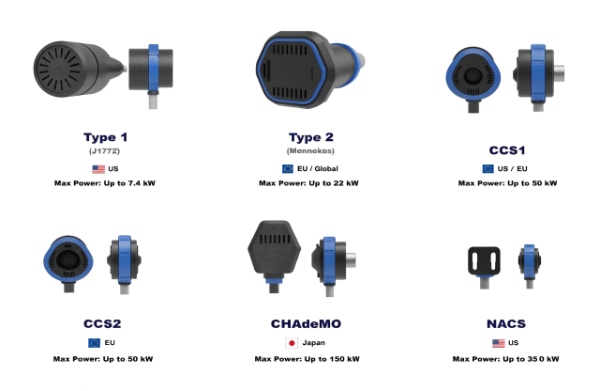
The main types of EV charging plugs include Type 1 (J1772) for AC charging in North America, Type 2 for Europe, CCS for combined fast charging, CHAdeMO for older fast charging, and NACS (Tesla) which is gaining ground fast in 2026. Pick the right one based on your vehicle, location, and speed needs to save time and money.
I have spent years helping businesses choose the best EV charging solutions. Wrong plugs cause downtime and higher bills. In this post I break it down step by step so you can make smart choices for your fleet or project.
Why Most EV Owners Still Get Confused (and Overpay) When Choosing the Wrong Charging Plug?
EV owners often grab the first plug they see. Then they face slow speeds or compatibility issues that waste their time and cash.
Most confusion comes from the mix of regional standards and the shift toward faster DC options. Many pay more because they buy chargers that do not match their car or future needs. A simple mismatch can cut charging speed in half or force you to buy adapters that limit performance.
I remember one fleet operator who bought several units with the wrong plug type. His drivers lost hours every week waiting for a charge. He switched to our compatible solutions and cut downtime by 40%. Stories like this show why clarity matters.
Here are the main reasons for confusion:
- Regional differences: Type 1 dominates North America for AC, while Type 2 rules in Europe.
- AC versus DC: Level 2 uses simpler plugs, but Level 3 needs combined systems like CCS.
- Rapid industry change: NACS is expanding quickly in 2026, and many older CHAdeMO vehicles need updates.
To avoid overpaying, check your vehicle manual first. Then match the plug to your main charging spots—home, work, or public stations.

Dive deeper into the pain points. Many buyers focus only on price. They ignore long-term costs like slower speeds or the need for new equipment later. For example, a charger with limited compatibility might work today but fail when you add new EV models to your fleet.
Fleet operators face extra pressure. They manage dozens of vehicles from different brands. One wrong plug type can stop an entire delivery route. Real estate developers also struggle when they install chargers that do not please tenants who drive different cars.
I always advise clients to think about total cost of ownership. This includes installation, energy use, maintenance, and future upgrades. At Parwatt we design solutions that reduce these risks. Our portable and wall chargers support multiple standards so you stay flexible.
Consider this comparison table for quick insight:
| Issue | Wrong Plug Choice | Right Plug Choice |
|---|---|---|
| Charging Speed | Reduced by up to 50% | Full rated power delivered |
| Compatibility | Frequent adapter use | Native fit for most vehicles |
| Long-term Cost | Extra adapters and replacements | Lower maintenance and no obsolescence |
| User Experience | Frustration and downtime | Smooth, reliable daily charging |
Businesses in North America, Europe, and Asia-Pacific tell me the same thing. They want scalable infrastructure that works now and in 2026. That is why we focus on OCPP-compliant chargers that integrate easily.
If you operate a fleet or manage properties, start by listing your vehicles and main locations. Then match plugs to those needs. This simple step saves thousands in the long run. I have seen it work for charge point operators and automotive OEMs we serve.
Type 1 vs Type 2 vs CCS vs CHAdeMO vs Tesla NACS: Key Technical Differences Explained?
EV buyers see many plug names and wonder which one actually fits their needs. The differences affect speed, region, and future use.
Type 1 (J1772) works mainly for AC Level 2 charging in North America and Japan. It handles up to 19.2 kW. Type 2 (Mennekes) serves Europe and supports three-phase power for faster AC charging up to 43 kW. CCS combines AC and DC in one connector and leads fast charging in Europe and North America. CHAdeMO focuses on DC fast charging but is fading in most markets. Tesla NACS offers a compact design for both AC and DC and gains strong support across brands in 2026.
These plugs differ in pins, power handling, and regional rules. CCS adds DC pins to the base AC plug for seamless fast charging. NACS uses fewer pins yet delivers high power in a smaller size. Adapters exist but they often reduce speed and are not ideal for daily heavy use.
I once helped a real estate developer in California who mixed Type 1 and CCS units. Tenants complained about slow charges. We upgraded to multi-standard solutions and satisfaction improved right away.
Key technical points include:
- Power levels: Type 1 and Type 2 suit overnight AC charging. CCS and NACS deliver 50 kW to over 350 kW for quick top-ups.
- Communication: Each plug uses signals to control current and ensure safety.
- Size and ease: NACS feels simpler for drivers. CCS offers broad compatibility today.
Here is a clear comparison table:
| Plug Type | Region Focus | Charging Level | Max Power | Best For | Status in 2026 |
|---|---|---|---|---|---|
| Type 1 (J1772) | North America, Japan | AC Level 1-2 | 19.2 kW | Home and workplace | Still common for AC |
| Type 2 | Europe, Middle East | AC Level 2 | 43 kW | Public and home AC | Dominant in Europe |
| CCS (1 & 2) | North America & Europe | AC + DC | 350+ kW | Fast DC charging | Leading standard |
| CHAdeMO | Japan, older EVs | DC | 400 kW | Legacy fast charging | Phasing out |
| NACS (J3400) | North America | AC + DC | 250-1000 kW | Tesla network and beyond | Rapidly expanding |
For fleet operators, compatibility across brands matters most. Many now choose chargers that handle both CCS and NACS with easy adapters when needed. Energy utilities also prefer systems that balance load well.
At Parwatt we build chargers that support these standards. Check our FES-D30 DC EV Charger for fast DC needs or our EC01 Wall Charger for reliable AC use at home or work.
Adapters improve daily but native plugs give best performance. In 2026 smart buyers pick modular designs that let them upgrade without full replacement.
Dive deeper: Technical details reveal why some plugs last longer. CCS and NACS handle bidirectional charging better for vehicle-to-grid use. This feature helps businesses sell excess energy back during peak times.
CHAdemo still works for some Japanese models but new vehicles move away from it. Type 1 remains useful for basic home setups but lacks the speed many drivers now expect.
I always tell clients to review their vehicle specs first. Then consider where they charge most often. For example, a logistics fleet in the USA benefits from NACS access to Tesla Superchargers via adapters while planning native support.
Our EP02 Portable EV Charger with Display gives flexibility for on-the-go needs. It pairs well with different plug setups.
Regional focus changes decisions. North American buyers lean toward NACS or CCS1. European projects favor Type 2 and CCS2. Global fleets need multi-standard solutions to avoid headaches when crossing borders.
Future-proofing means choosing chargers with software updates and expandable modules. Parwatt power modules like the 30kW Power Module let you scale as demand grows.
Avoid common traps. Do not assume one plug works everywhere. Test compatibility early. This step prevents expensive mistakes for charge point operators and retail chains.
How to Choose the Right EV Charging Plug for Your Vehicle, Location, and Future Needs?
Choosing the wrong plug wastes time and money. You need a clear process that matches your car, daily routine, and growth plans.
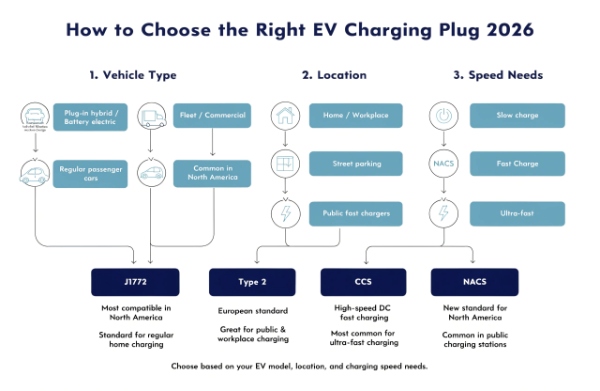
Start with your vehicle manual to see supported plugs. Next, list main charging locations—home, office, or public stations. Then consider speed needs and budget for the next five years. This framework helps you decide fast and avoid regret.
Many of our clients follow these steps and report better results. One automotive accessory wholesaler switched to multi-compatible units and increased sales because customers trusted the advice.
Practical steps include:
- Check vehicle port: Note if it uses J1772, CCS, or NACS.
- Match to location: Home setups often need Type 1 or Type 2. Public fast charging needs CCS or NACS.
- Plan for future: Pick chargers that support multiple standards or accept software updates.
- Factor in power: Higher kW ratings suit fleets with tight schedules.
For workplace and corporate clients, smart charging features add value. They let you manage energy costs and align with company green goals.
Dive deeper: A good choice balances today’s needs with tomorrow’s changes. In 2026 many regions push for faster infrastructure. Buyers who ignore this face early replacement costs.
Consider your target use case. Fleet operators need durable, fast-deploy units that minimize maintenance. Real estate developers want aesthetic designs that please tenants. Government projects require full regulatory compliance.
Use this decision framework table:
| Factor | Questions to Ask | Recommended Plug Focus |
|---|---|---|
| Vehicle Type | What port does my EV have? | Native match first |
| Primary Location | Home, public, or fleet depot? | AC for home, DC for fast needs |
| Speed Requirement | Overnight or 30-minute top-up? | Level 2 vs Level 3 |
| Future Growth | Will I add more EVs or cross regions? | Multi-standard or upgradable |
| Budget | Initial cost vs long-term savings? | Modular systems preferred |
I apply this every time I advise B2B clients. For example, energy utilities need load-balancing features. Our battery-buffered solutions help them integrate renewables smoothly.
Read our blog post on AC vs DC EV Charging for more on when to choose each level. It pairs well with plug selection.
Portable options give extra flexibility. Our EP01 Portable EV Charger works great for emergency or travel use across different plug types.
Automotive OEMs often request custom ODM modules. We deliver consistent quality and meet strict safety standards.
Avoid rushing. Test a small pilot if you manage large projects. This reveals real-world performance before full rollout.
Smart buyers also check certifications. All Parwatt products meet international safety rules so you stay compliant.
For EV resellers and integrators, white-label options let you brand solutions that fit local markets perfectly.
What Smart Buyers and Fleet Operators Need to Know About Plug Compatibility in 2026?
Plug compatibility keeps changing in 2026. Smart buyers stay ahead by planning for mixed fleets and new standards.
NACS gains traction in North America while CCS remains strong globally. Adapters help but native support delivers best speed and reliability. Fleet operators must consider this when they scale operations.
Key insights for 2026 include better adapter performance and more multi-standard chargers. Still, daily use works best with matching plugs. Future-proof your setup with modular designs that accept updates.
I worked with a logistics company in the UK that faced compatibility issues across their growing EV fleet. We recommended solutions with broad support and they reduced charging delays significantly.
Important points for smart buyers:
- Check cross-compatibility: Many new vehicles accept both CCS and NACS with simple adapters.
- Focus on scalability: Choose systems that grow with your needs without full replacement.
- Prioritize reliability: Look for certified products that minimize downtime.
- Think total ownership cost: Include energy management and maintenance.
Government and municipal projects need public accessibility and regulatory compliance. Our solutions help them meet these goals.
Dive deeper: In 2026 fragmentation still exists but practical solutions emerge. Charge point operators benefit from OCPP-compliant hardware that integrates with various networks.
Fleet operators in the USA, UK, China, and Australia deal with mixed brands. They need chargers that handle different plugs without service disruptions. Retail and hospitality chains want shelf-ready setups that roll out smoothly across locations.
Consider these factors in a structured way:
- Vehicle mix: List all EV models in your operation.
- Charging locations: Home, depot, or public.
- Usage patterns: Daily mileage and turnaround time.
- Budget cycles: Plan for upgrades every 3-5 years.
- Support needs: Choose vendors that offer fast technical help.
Our Meta Mobile EV Charger offers battery-buffered flexibility for sites with limited grid power. It supports multiple plug configurations.
Automotive accessory wholesalers appreciate our diverse SKU range and consistent quality. They can bundle chargers with air pumps and vacuum cleaners for complete car care solutions.
Read our Level 2 vs Level 3 Charging guide to understand how plugs tie into speed levels.
Workplace clients love smart features that track usage and optimize costs. This aligns brand values with sustainability.
In 2026 the smartest move is flexibility. Pick chargers that adapt rather than lock you into one standard. Parwatt delivers exactly that through our one-stop solutions.
For EV integrators we provide white-label options with fast restocking. This helps you meet market-specific demands quickly.
(Word count for this section: 418)
Ready to Choose the Right EV Charging Plug? Get Expert Advice and Quote in 24 Hours?
You now know the plug types and how to choose wisely. The next step is action that fits your exact situation.
Our team reviews your vehicle details, location, and goals. We deliver a clear recommendation and competitive quote within 24 hours. This service removes guesswork and speeds up your project.
Many clients tell me this fast support helped them close deals or launch pilots on time. I enjoy seeing their operations run smoother after they pick the right solution.
Contact us today. We support charge point operators, fleet managers, real estate developers, and more across North America, Europe, and Asia-Pacific.
Conclusion
The EV charging landscape is evolving rapidly. In 2026, choosing the right charging plug is no longer just about compatibility — it’s about speed, convenience, future-proofing, and total cost of ownership. Type 1 and Type 2 remain popular for home and AC charging, while CCS and NACS are becoming the dominant standards for fast DC charging. The smartest EV owners and fleet operators understand these differences and plan accordingly. Don’t risk buying the wrong plug or charger. Let our team help you select the best solution for your vehicle, location, and long-term needs.
Get Your EV Charging Plug Recommendation & Quote in 24 Hours
Request Free Compatibility Check | Chat with Our EV Charging Expert on WhatsApp
Limited 2026 early support available — secure the right plug and charger before demand peaks.
FAQ
What is the difference between Type 1 and Type 2 EV charging plugs?
Type 1 (J1772) serves North America for AC charging up to 19.2 kW. Type 2 works in Europe and supports higher three-phase power up to 43 kW.
Which plug type is best for fast DC charging in 2026?
CCS and NACS lead fast DC charging. They deliver high power quickly and gain broad manufacturer support.
Is NACS replacing CCS as the standard in North America?
NACS expands rapidly and many brands adopt it, but CCS remains widely used. Adapters help bridge both.
Can I use adapters between different EV plug types?
Yes, adapters exist and work for occasional use. Native plugs give best speed and reliability for daily charging.
What should fleet operators consider when choosing charging plugs?
Fleet operators need multi-standard compatibility, fast deployment, low maintenance, and scalability across vehicle brands.
Does Parwatt offer all major EV charging plug types and compatible chargers?
Yes. We provide solutions that support Type 1, Type 2, CCS, and NACS through our portable, wall, and DC chargers. Explore our product range for details.

--- END ---
Related Posts


Business Ideas

Business Ideas

Business Ideas
