

What Is The 80% Rule For EV Charging?
Apr 06,2026
New EV owners often hear the advice: “Don’t charge to 100% every day — stick to 80%.” But what exactly is the 80% rule, and does it still apply in 2026?
The short answer: Yes. Charging your EV to around 80% for daily use is one of the smartest habits you can adopt. It helps extend battery lifespan, improves safety, and can even save you money on electricity.
This guide explains the 80% rule in simple terms, the science behind it, when you should charge to 100%, and how to apply it in real life for maximum battery health and efficiency.
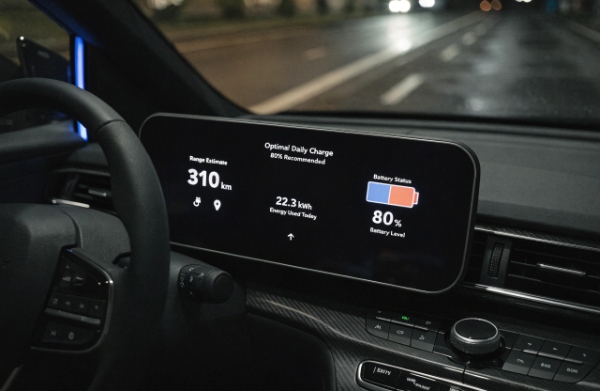
Keeping your EV at 80% for daily driving is often the sweet spot for battery health
What is the "80% Rule" for charging electric vehicles?
The 80% rule is a widely recommended guideline that suggests charging your EV battery to approximately 80% for everyday use, rather than filling it to 100% every time.
Modern lithium-ion batteries (used in nearly all EVs in 2026) experience less stress and heat when kept away from full capacity. By limiting daily charges to 80%, you reduce chemical wear inside the battery cells and help maintain long-term capacity.
This rule is especially useful for people with predictable daily driving distances who don’t need the full range every day.
Why is charging to 80% important?
Charging to 80% regularly offers several key benefits:
| Benefit | Explanation |
|---|---|
| Extended Battery Lifespan | Reduces stress on battery cells |
| Better Thermal Management | Less heat buildup during charging |
| Improved Safety | Lower risk of thermal runaway |
| Cost Savings | Takes advantage of off-peak electricity rates |
In 2026, with larger battery packs and smarter battery management systems, following the 80% rule can help preserve 90%+ of original capacity even after several years of use.
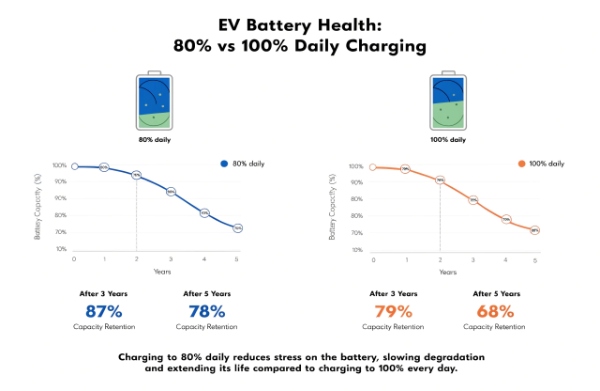
Regular 80% charging helps maintain better long-term battery health
The science behind the 80% rule
Lithium-ion batteries work through the movement of lithium ions between the anode and cathode. When the battery approaches 100% charge, the voltage increases significantly. This high voltage state accelerates side reactions that cause permanent capacity loss.
By stopping at 80%, you keep the battery in a lower-stress voltage range. Modern EVs have sophisticated Battery Management Systems (BMS) that further optimize this process, but the basic principle remains the same.
Real-world data from 2026 shows that drivers who consistently follow the 80% rule experience noticeably slower battery degradation compared to those who frequently charge to 100%.
When should you charge to 100%?
There are specific situations when charging to 100% is perfectly fine and even recommended:
- Before a long road trip where you need maximum range.
- When the vehicle’s software recommends a full charge for calibration.
- Occasionally (once every few weeks) to help the BMS recalibrate its state-of-charge estimation.
For daily commuting and normal use, however, sticking to 80% is the better practice.
How to apply the 80% charging principle in real life
Here’s a practical daily routine:
- Use your car’s scheduled charging feature to stop at 80% during off-peak hours.
- Set a charging limit in the vehicle’s settings (most 2026 models allow this).
- For longer trips, temporarily raise the limit to 100% the night before.
- Monitor battery health through the vehicle app and adjust habits as needed.
Many owners find that charging 2–3 times per week to 80% is more than enough for daily driving.
Best Charging Practices for Long Battery Life and Lower Electricity Bills in 2026
Follow these proven practices to get the most from your EV:
| Practice | Benefit |
|---|---|
| Charge during off-peak hours | Lower electricity rates |
| Precondition battery while plugged | Faster charging speed |
| Avoid leaving car at 100% long | Reduced battery stress |
| Use Level 2 chargers | More efficient than slow Level 1 |
| Keep daily range 20%–80% | Optimal long-term battery health |
These habits can extend battery life by 20–30% and significantly reduce your monthly electricity bill. For reliable home options, check our EC01 Wall Charger or browse the full EV Charger Category.
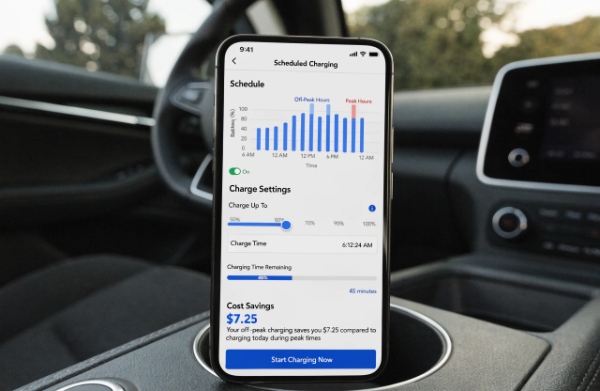
Smart scheduling helps you charge at the right time and right level
Ready to Optimize Your EV Charging Routine? Get Personalized Advice in 24 Hours
Charging your EV every day is not necessary — and in many cases, it’s not even the best habit for your battery’s long-term health. Modern lithium-ion batteries are designed for partial charging and work best when kept between 20% and 80% for daily use.
By following the right practices — avoiding frequent 100% charges, using scheduled charging, and monitoring temperature — you can maximize range, extend battery lifespan, and save on electricity costs.
The EV revolution is here — make charging part of your daily routine with confidence.
In 24 hours you’ll receive a personalized EV charging plan based on your driving habits, vehicle model, and local electricity rates.
No commitment. Just smarter, more efficient charging.
FAQ
Should I charge my EV battery to 100% every day?
No. Frequent 100% charges can accelerate battery degradation. 80% is usually sufficient for daily use.
What is the ideal battery charge level for daily use?
Keeping your battery between 20% and 80% for daily driving is generally best for longevity in 2026.
Does charging every day damage my EV battery?
Not if you avoid frequent full charges to 100%. Smart partial charging is better for modern batteries.
What is the best time of day to charge my electric vehicle?
Off-peak nighttime hours are ideal — cheaper electricity rates and gentler charging for the battery.
How does temperature affect EV battery charging?
Extreme heat or cold slows charging and can stress the battery. Preconditioning while plugged in helps.
Can I leave my EV plugged in overnight?
Yes. Modern EVs have smart battery management systems that stop charging automatically when needed.
More resources: EV Chargers | EV Charging Solutions | EV Charging Guide
External: EV Battery Best Practices 2026

--- END ---
Related Posts


Industry News

Business Ideas
