

Do You Need a Permit for Home EV Charger Installation in 2026? Rules, Costs & Step-by-Step Guide
Jul 06,2026
You plan to install a home EV charger for convenience but wonder about the paperwork involved. Many homeowners face unexpected issues when they ignore local rules.
Yes, most areas in 2026 require a permit for Level 2 home EV charger installation to ensure safety and code compliance. Permit costs range from $50 to $500 while skipping them risks fines, insurance problems, and forced removal.
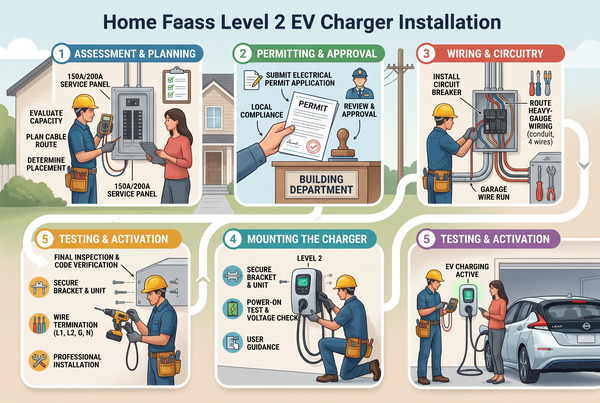
As the general manager at XIAMEN PARWATT NEW ENERGY TECHNOLOGY CO.,LTD, I have helped numerous customers navigate permit requirements across different regions. I know how important compliance is for a smooth experience. This guide explains the rules, costs, and steps so you can install legally and safely.
Why Skipping the Permit for Your Home EV Charger Can Become an Expensive Mistake
You think installing quietly in your garage saves time and money. Later you discover major problems from authorities or insurance companies.
Skipping the permit often leads to fines, forced removal of the charger, insurance claim denials, safety hazards, and expensive rework. These consequences turn a simple project into a costly headache.
I have seen customers learn this lesson the hard way. One homeowner installed without approval and faced a $1,200 fine plus removal costs after a neighbor complaint. Let me explain the risks clearly.
Safety stands as the primary concern. Permits ensure your installation follows the National Electrical Code. Proper grounding and circuit protection prevent fires and shocks. Without inspection, hidden issues remain.
Insurance companies frequently deny claims for damage from unpermitted work. If an electrical fault occurs, you bear the full repair costs yourself.
Local authorities can issue stop-work orders or require complete removal. This wastes your initial investment and adds labor expenses.
Fines vary by location but add up quickly. Some areas charge daily penalties until compliance.
Here is a table of common consequences:
| Risk | Potential Cost | Real Example Impact |
|---|---|---|
| Fines | $100 – $2,000+ | Immediate penalties |
| Removal & Rework | $500 – $3,000 | Full project redo |
| Insurance Denial | Thousands in repairs | No coverage for damage |
| Safety Issues | Unknown medical costs | Fire or shock hazards |
Bullet points on why compliance matters:
- Protect your family from electrical dangers.
- Maintain full home insurance coverage.
- Avoid legal disputes with local officials.
- Ensure long-term warranty validity from manufacturers.
Our EC01 Wall Charger performs best when installed according to code. Proper permitting supports reliable operation.
I recall a fleet operator client who learned from an initial unpermitted attempt. Switching to full compliance saved them major issues on larger projects. Homeowners face similar stakes.
Inspection requirements protect everyone. The final check confirms correct wiring and breaker sizing. This step catches problems before you use the charger daily.
Future home sales become complicated with unpermitted work. Buyers or inspectors may demand corrections at your expense.
These risks make permitting a smart investment rather than an obstacle. You gain peace of mind and protect your property value.
Our blog on Level 2 vs Level 3 Charging helps understand why proper setup matters for home use.
Planning ahead avoids all these expensive mistakes.
Common Misconceptions About EV Charger Permits That Lead to Problems
You hear stories of easy installs and assume rules do not apply to you. These assumptions create unnecessary complications.
Many believe home installations need no approval, that the charger itself is simple, or that rules stay the same everywhere. These ideas ignore local differences and lead to compliance failures.
I address these points regularly with customers. Let me clear up the most frequent misunderstandings.
Misconception one claims "It is my house so no permit needed." Electrical work affects the grid and safety standards. Most jurisdictions require permits regardless of ownership.
Another idea suggests the charger plugs in like any appliance. Level 2 units involve hardwiring and dedicated circuits. This work falls under electrical codes.
People also think rules are uniform nationwide. In reality, city and county requirements differ significantly. What works in one state may fail in another.
Assuming DIY always works without oversight creates risks. Many areas mandate licensed professionals for permitted work.
Here is a table of misconceptions versus facts:
| Misconception | Reality | Common Problem |
|---|---|---|
| No permit for home | Most areas require it | Fines and removal |
| Simple plug-in | Needs dedicated circuit | Code violations |
| Rules are the same | Varies by location | Approval delays |
| DIY is fine | Often needs pro oversight | Safety issues |
Bullet points to correct your thinking:
- Research your specific city or county rules early.
- Assume a permit is needed until confirmed otherwise.
- Factor professional help into your budget.
- Check updates for 2026 code changes.
Our EP01 Portable EV Charger offers a flexible starting point while you handle permitting for permanent setups.
Local variations include different forms and review times. Always verify current requirements.
I helped a real estate developer who assumed uniform rules across properties. Learning local differences prevented multiple compliance issues.
Professional involvement simplifies the process. Electricians familiar with EV installs know exact requirements.
These clarifications help you approach the project with accurate expectations. You avoid surprises during the process.
Do You Need a Permit for Home EV Charger Installation? 2026 Rules by Region
You want straightforward answers about your location. Rules differ across the country.
Yes, the majority of US areas require permits for Level 2 home EV charger installations in 2026. Requirements focus on electrical safety with variations in fees, processes, and professional mandates by state and locality.
At Parwatt we track these regulations to support our customers. Here is an overview of key 2026 rules.
California maintains strict standards through local building departments. Many cities require detailed plans and licensed electrician involvement. Incentives often tie to permitted work.
Texas rules vary by city. Major metro areas enforce permits while some rural counties stay more flexible. Always check locally.
New York and Northeast states emphasize inspections. Cold weather considerations influence wiring and mounting requirements.
Florida focuses on hurricane and flood protections in coastal zones. Permits include weather-related standards.
Federal guidelines encourage installations but defer to local codes. The National Electrical Code provides the baseline.
Here is a regional overview table:
| Region | Permit Usually Required | Typical Fee Range | Key Notes |
|---|---|---|---|
| California | Yes | $100 – $500 | Licensed electrician common |
| Texas | Varies by city | $50 – $300 | Check local ordinances |
| Northeast | Yes | $75 – $400 | Inspection focus |
| Florida | Yes | $100 – $450 | Weather protections |
| Midwest | Yes in most cities | $50 – $350 | Varies widely |
Bullet points for regional awareness:
- Search your city building department website first.
- Contact them directly for EV specific forms.
- Note any ties to utility incentives.
- Prepare for possible plan review time.
Our charge EV faster home vs public guide discusses installation considerations that relate to code requirements.
Inspection follows installation in nearly all cases. The electrician or inspector verifies connections and safety.
Professional requirements protect homeowners. Licensed pros understand local nuances.
These rules exist to support safe EV adoption. Following them ensures your setup lasts.
I have seen projects succeed across regions when customers research ahead. The effort pays off.
How to Get Your Home EV Charger Permit Smoothly and Avoid Delays
You want the approval process to move quickly without frustration.
Prepare complete documents, work with a qualified electrician, submit accurate applications, and follow up promptly. These practices help you secure approval faster and avoid common delays.
We guide customers through this at Parwatt. Here are proven strategies.
Start with document preparation. Gather electrical plans, charger specifications, and site diagrams. Complete applications accurately.
Choose an experienced electrician. Professionals familiar with EV installs handle forms efficiently and reduce revision requests.
Submit early in your project timeline. Permit review takes time so build in buffer days.
Follow up politely but regularly. Check status and provide additional information quickly when requested.
Here is a smooth process table:
| Step | Action | Tip for Success |
|---|---|---|
| Preparation | Gather docs | Use electrician templates |
| Application | Submit forms | Double-check details |
| Review | Respond promptly | Provide extras fast |
| Inspection | Schedule after install | Prepare site cleanly |
| Approval | Final sign-off | Keep records |
Bullet points for efficiency:
- Use online portals where available for faster submission.
- Include photos of existing panel and location.
- Ask about digital options to speed reviews.
- Bundle with other home improvements if possible.
Our EP02 Portable EV Charger with Display lets you maintain mobility while finalizing permanent permitted installation.
Experienced electricians know inspector preferences. This knowledge reduces callbacks.
Utility coordination sometimes helps. Some programs streamline permitting for incentive participants.
I advised clients who prepared thoroughly. Their approvals came faster than average.
Digital submissions gain popularity in 2026. They cut processing time in many areas.
These methods help you move through the system effectively. You reach installation day sooner.
Ready to Install Your Home EV Charger Legally and Safely? Here’s Your Next Step
You have the information and want to take action.
Check your local requirements today, contact a licensed electrician, gather necessary documents, and create a project timeline. These steps put you on the path to a compliant installation.
From my experience at Parwatt, starting strong leads to success.
Visit your city or county building department website first. Note specific EV charger forms and contacts.
Reach out to 2-3 licensed electricians. Ask about their experience with permitted EV projects.
Prepare your documentation folder. Include property details and charger information.
Set a realistic schedule with milestones. Share it with your team.
Here is a next step action table:
| Action | Timeline | Expected Outcome |
|---|---|---|
| Research Rules | Day 1-2 | Clear local requirements |
| Contact Electrician | Week 1 | Quotes and availability |
| Document Prep | Week 1 | Ready application |
| Submit Permit | Week 2 | Start review process |
| Plan Installation | Week 3+ | Safe compliant setup |
Bullet points to begin immediately:
- Bookmark your local permitting portal.
- List questions for the electrician.
- Review product options that meet code.
- Set calendar reminders for follow-ups.
Our FAQ page answers additional common questions about installations.
I have supported many successful projects by emphasizing early action. You can achieve the same results.
Coordinate with your utility company. They sometimes offer guidance or incentives tied to permits.
This plan gives you control over the process. You install with confidence.
Conclusion
Getting the proper permit for your home EV charger installation in 2026 is not just a bureaucratic step — it’s essential for safety, legality, insurance coverage, and long-term peace of mind. While rules vary by location, the process is manageable when you plan ahead and work with qualified professionals. Skipping permits may seem like a shortcut, but it often leads to bigger headaches and higher costs later. Doing it right the first time ensures your charging setup is safe, compliant, and ready for the future. Protect your investment and your home. Check your local permit requirements before buying or installing any EV charger.
FAQ
Do I need a permit to install a Level 2 EV charger at home?
Yes, most areas require permits for safety and code compliance.
How much does an EV charger permit typically cost?
Fees range from $50 to $500+ depending on location and complexity.
How long does it take to get an EV charger permit approved?
Approval times vary from days to several weeks based on local processes.
What documents are required for a home EV charger permit?
Electrical plans, charger specs, site diagrams, and application forms.
Can I install an EV charger myself without a permit?
Most jurisdictions prohibit this and require professional oversight.
What happens if I install an EV charger without a permit?
You risk fines, removal orders, insurance issues, and safety problems.
Explore our solutions and product pages for compliant charging options that work well with permitted installations.

--- END ---
Related Posts


Business Ideas

Business Ideas

Business Ideas
