

Are All Electric Car Chargers The Same?
Mar 25,2026
You face a common frustration when you plan EV charging setups. You see different plugs and speeds. You wonder if one charger works for every car. This confusion slows down decisions for fleets, properties, and networks.
No, not all electric car chargers are the same. They differ in charging speed, plug types, and vehicle compatibility. Level 1 and Level 2 chargers share similar plugs in many markets and work with most EVs. DC fast chargers use different connectors like CCS, CHAdeMO, or NACS. Adapters help in some cases, but true universality remains limited today.
Charge point operators and fleet managers often seek simple, reliable solutions — but the reality is more layered. Read on to understand the key differences and how they influence your next purchase or installation.
Types of Electric Vehicle Chargers and Plugs
You install chargers or manage fleets. You notice speed and plug variations cause real headaches.
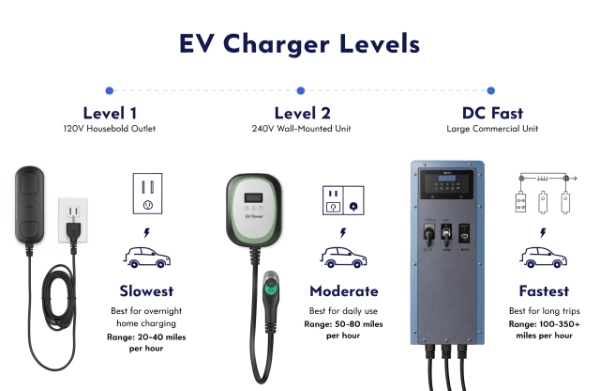
Electric vehicle chargers fall into three main categories with different speeds and plug standards. Level 1 uses basic household power for slow charging. Level 2 delivers faster results at homes and public spots. DC fast charging provides rapid boosts on highways and commercial sites.
What types of chargers are available?
You pick chargers based on daily needs. Slow overnight options suit parking lots. Fast units fit urgent routes.
Three charger levels exist today. Level 1 adds about 2-5 miles of range per hour through standard 120V outlets. Level 2 supplies 10-60 miles per hour on 240V circuits. DC fast charging delivers 60-300 miles in 20-60 minutes at high-power stations.
Level 1 Charging in Practice
Level 1 relies on regular 120V household sockets. Every EV comes with a portable Level 1 cable. It works well for overnight home use or employee parking. A full charge often takes 20-50 hours on larger batteries. Plug-in hybrids finish much quicker. Installation stays simple and cheap. No electrician required in most cases. Many workplace clients begin with Level 1. It controls initial costs. However, slow speed limits use in high-turnover fleets.
Level 2 Charging Benefits
Level 2 needs 240V power like clothes dryers use. It charges three to ten times faster than Level 1. You see it in home garages, office lots, and retail parking. Fleet managers like it for quick daily top-ups. Professional installation costs $500-$2000 per unit plus wiring. Smart Level 2 chargers offer load balancing. They prevent peak demand spikes. Energy costs drop. Charge point operators favor scalable Level 2 networks in malls and hotels. They support high usage without major grid upgrades.
DC Fast Charging Realities
DC fast chargers send power straight to the battery. They skip the car’s onboard converter. Output ranges from 50 kW to over 350 kW. Many EVs reach 80% charge in 20-40 minutes. Highway stops and urgent fleet needs rely on this level. Frequent fast charging generates heat. Battery life shortens over years. Not every vehicle accepts the highest rates. Some cap at 50-150 kW. Public stations charge more per kWh than home rates. CPOs and utilities build these for revenue and accessibility.
Here is a comparison table:
| Charger Level | Voltage | Range Added per Hour | Typical Locations | Installation Cost | Best For |
|---|---|---|---|---|---|
| Level 1 | 120V AC | 2-5 miles | Home, workplace | Very low | Overnight, low urgency |
| Level 2 | 240V AC | 10-60 miles | Home, offices, retail | Medium | Daily use, fleets |
| DC Fast | 400-1000V DC | 60-300+ miles (20-60 min) | Highways, commercial hubs | High | Road trips, quick stops |
These levels shape decisions for every audience we serve at Parwatt. Fleet operators need fast Level 2 at depots. Real estate developers want clean Level 2 designs. Government projects mix all three for public access.
Are electric car chargers universal?
You expand your network or buy new vehicles. Plug mismatches create immediate problems.
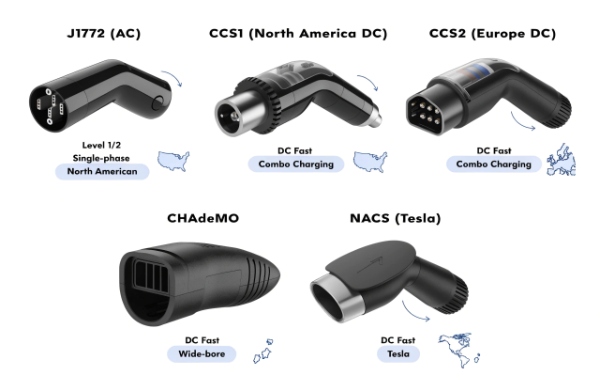
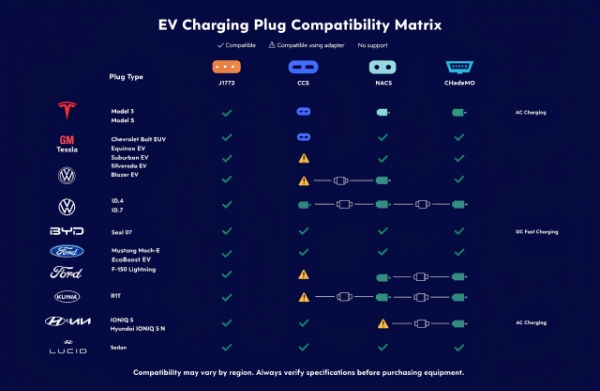
Electric car chargers are not fully universal. Level 1 and Level 2 share common plugs like J1772 in North America or Type 2 in Europe. DC fast charging uses separate standards such as CCS, CHAdeMO, and NACS. Adapters exist but add complexity and sometimes reduce speed.
Current Plug Standards by Region
North America uses J1772 for Level 1 and most Level 2. CCS1 combines J1772 with extra DC pins for fast charging. Tesla vehicles use NACS but supply adapters for others. Europe relies on Type 2 for AC and CCS2 for DC. China enforces GB/T standards for both AC and DC. These regional differences force suppliers to produce multiple versions. Global fleets or resellers must plan carefully.
Role of Adapters Today
Adapters let vehicles use different stations. A J1772 car can charge at some Tesla Superchargers with the right adapter. Tesla cars access CCS stations with another. Adapters work well for occasional use. They sometimes limit charging speed or add cost. Heavy adapter reliance feels temporary. The industry pushes toward fewer standards.
Future Standardization Trends
NACS becomes SAE J3400, the official North American standard. Major brands adopt it on new models from 2025 onward. By 2027 most new EVs will share one plug type in the US. Europe keeps CCS2 as the main fast standard. China stays with GB/T. Global universality remains partial. Smart chargers with multiple cables or software updates help bridge gaps now.
Practical Advice for Buyers
Choose chargers with broad compatibility. Look for OCPP support for future upgrades. At Parwatt we design units that accept common plugs and offer monitoring. This reduces downtime for CPOs. It simplifies integration for OEMs. It meets tenant needs for real estate clients. Check our Level 2 wall chargers or portable EV chargers for flexible options.
Here is a plug standards table:
| Plug Type | Primary Region | Supported Levels | Compatible Vehicles | Future Outlook |
|---|---|---|---|---|
| J1772 | North America | Level 1 & 2 | Most non-Tesla EVs | Still dominant for AC |
| Type 2 | Europe | Level 2 | European market EVs | Standard AC plug |
| CCS1 | North America | DC Fast + AC | GM, Ford, VW, many others | Strong but shifting |
| CCS2 | Europe | DC Fast + AC | European brands | Main fast standard |
| CHAdeMO | Japan (declining) | DC Fast | Older Nissan, Mitsubishi | Phasing out |
| NACS | North America | All levels | Tesla, adopting brands (2025+) | Becoming primary standard |
These details guide bulk orders and custom projects at Parwatt.
Shop Parwatt Electric Vehicles
We build durable, smart EV chargers at Parwatt. Our Level 2 units support OCPP for easy network management. Our DC fast options handle high power reliably. We serve charge point operators, fleet managers, real estate developers, and more. We offer bulk pricing, white-label solutions, and custom ODM. Reach out for quotes or samples that fit your market. Explore our full EV charger category or DC fast EV chargers today.
Conclusion
Electric car chargers differ by speed, plug, and region. Level 1 and 2 offer wide compatibility. DC fast needs careful matching. Standardization improves fast. Pick the right solution for your business now.
FAQs
Do all electric cars use the same charger plug?
No. Most non-Tesla vehicles share J1772 or Type 2 for AC. Fast charging uses CCS, NACS, or others.
Can any EV charge at a Tesla Supercharger?
Yes, with an adapter on many networks now. Compatibility grows each year.
Is Level 2 charging universal for non-Tesla cars?
Yes in North America with J1772. Europe uses Type 2. Almost all non-Tesla EVs accept these.
Should I avoid DC fast charging to protect my battery?
Use it when needed. Limit frequent sessions to preserve long-term battery health.
Will all chargers work the same in the future?
NACS adoption in North America points to better unity by 2026-2027. Other regions progress slower.
Ready to find compatible EV chargers for your project?

--- END ---
Related Posts


Business Ideas

Business Ideas
