

Best Home EV Chargers for 2026
Apr 27,2026
Tired of waiting at public stations or dealing with range anxiety every day? Many EV owners lose hours and pay more for slow or unreliable charging.
Yes, the best home EV chargers in 2026 deliver fast, safe Level 2 charging overnight. They cut costs, add convenience, and fit most garages with smart scheduling and app control. Top picks like Parwatt EC01 wall models offer up to 22kW and reliable safety features for daily use.
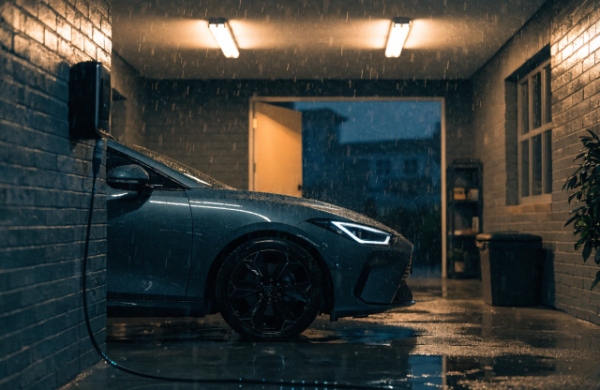
I remember when I first switched my own daily driver to EV. Public chargers felt like a hassle with long lines and high fees. Installing a reliable home unit changed everything for me at Parwatt. Now I wake up to a full battery every morning.
Why You Need a Home EV Charger?
Public charging stations often stay busy and expensive during peak hours. You sit and wait while your schedule suffers.
A home EV charger solves this problem. It lets you charge overnight at lower electricity rates, adds 20-40 miles of range per hour on Level 2, and saves hundreds of dollars yearly compared to public options. Most owners recover the cost in under two years through convenience and savings.
Home charging fits real life better than public stops. I see this every day with our clients who manage fleets or residential projects. They report less downtime and happier drivers.
The pain points and benefits
Many drivers face range anxiety because public stations sit far away or break down often. Weather, crowds, and high per-kWh prices add stress. A good home charger removes these issues.
Here is a quick comparison table:
| Challenge | Public Charging | Home Charging with Parwatt |
|---|---|---|
| Availability | Busy during evenings | Always ready in your garage |
| Cost per session | Higher peak rates | Off-peak home electricity |
| Charging speed | Variable, often slow | Consistent 7-22kW Level 2 |
| Convenience | Extra trips needed | Plug in and forget |
| Safety & reliability | Exposed to elements | Indoor protection, IP65 rated |
Level 1 charging from a standard outlet adds only 3-5 miles per hour. That works for plug-in hybrids but feels too slow for full EVs. Level 2 home units change the game.
Parwatt’s EC01 wall charger stands out here. It supports Wi-Fi, Bluetooth, and app scheduling. You set it to charge when rates drop at night. Check it out: EC01 Wall Charger
Our portable options like EP01 and EP02 give flexibility too. They plug into regular outlets for apartments or travel. Both models offer 3.5kW or 7kW output with multiple safety layers.
I once helped a real estate developer install units in tenant garages. Tenants loved the smart app that tracks usage and costs. No more surprise bills.
Key benefits include:
- Overnight full charges for most commutes
- Integration with home solar if you have panels
- Reduced battery wear from gentle, steady rates
- Potential rebates that lower upfront cost
In 2026, electricity prices fluctuate more. Smart chargers like ours adjust automatically. This saves money and supports the grid.
Installation usually takes one day with a qualified electrician. Costs run from $800 to $3,000 depending on your panel and wiring distance. Many areas offer incentives up to $1,000 or more.
For fleet operators or workplace setups, our solutions scale easily. But even single-home users gain big.
Explore our full home range here: EV Charger Category
Types of Home EV Chargers?
Confused about Level 1, Level 2, and portable options? Many buyers pick the wrong type and regret the slow speed later.
Home EV chargers mainly come as Level 2 wall-mounted or portable units. Level 2 delivers 240V power for 20-40 miles per hour. Portable versions plug into existing outlets while wall units offer higher power and permanent setup. Parwatt provides both for flexibility.
AC charging works best at home because it uses your vehicle’s onboard converter. DC fast charging stays for public stations only.
Charger types with comparisons
Level 1 uses a standard 120V outlet. It charges slowly at 3-5 miles per hour. Good for emergencies but not daily driving.
Level 2 requires 240V. It adds much more range quickly. Most modern EVs accept up to 7-11kW or higher.
Here is a clear table:
| Type | Power Output | Range Added/Hour | Best For | Installation Needed |
|---|---|---|---|---|
| Level 1 | 1.2-1.9 kW | 3-5 miles | Light use, plug-in hybrids | None (standard outlet) |
| Level 2 Wall | 7-22 kW | 20-60 miles | Daily full charges | Hardwired or plug-in |
| Portable Level 2 | 3.5-7 kW | 10-30 miles | Apartments, travel | Standard or 240V outlet |
Parwatt EC01 wall charger comes in single-phase 7kW or three-phase up to 22kW models. It includes smart app control and high-precision metering. Safety features cover leakage, overvoltage, and overheating.
Our EP01 portable charger weighs just 2.4-3.7 kg. It offers 3.5kW or 7kW with a 5-meter cable. You adjust current via buttons and schedule via app. Perfect for renters or multi-car homes.
EP02 adds a 3.5-inch LCD display for real-time info. Both models meet CE, RoHS, and IP65 standards. They work from -30°C to 55°C.
Read our blog on AC vs DC to understand why AC suits home use: AC vs DC EV Charging
I installed an EP01 in my own garage last year. It handles my daily commute perfectly and travels with me on weekends.
For real estate developers or workplace clients, wall units provide clean, professional looks with color customization options.
Portable units shine for fleet operators who need quick swaps. Check our portable models: EP01 Portable EV Charger
Other popular 2026 options include ChargePoint Home Flex and Emporia models, but Parwatt focuses on reliable, certified performance with excellent value for B2B and residential buyers.
Smart features now standard include load balancing and solar integration. These help manage home energy better.
Key Factors to Consider Before Buying
Overwhelmed by specs and worried about compatibility? Many buyers overlook power needs and end up with slow or unsafe setups.
Focus on your EV’s onboard charger limit, home electrical capacity, and smart features. Choose units with at least 7kW output, IP65 rating, and app control. Budget for installation and check local rebates. Parwatt chargers match most 2026 EVs and offer strong safety.
Power requirements vary. Most homes handle 40-50A circuits fine after basic checks.
Decision factors
First, check your vehicle’s max AC charging rate. Many accept 7-11kW. A higher charger does not speed things up beyond that limit.
Next, inspect your electrical panel. Older panels may need upgrades. Costs range from $800 to $3,000 total for typical installs.
Safety certifications matter. Look for CE, RoHS, UL94V-0 flame rating, and Type A + 6mA DC leakage protection. Parwatt models include all these plus surge and over-temperature safeguards.
Smart connectivity helps a lot. Wi-Fi and Bluetooth let you monitor from your phone. Schedule charging for cheap night rates.
Here is a helpful checklist table:
| Factor | Why It Matters | Parwatt Recommendation |
|---|---|---|
| Power Level | Matches your driving needs | 7kW or 22kW EC01 models |
| Connector Type | Fits your EV port | Type 2 or GB/T options |
| Cable Length | Reach from wall to vehicle | 5m standard, customizable |
| Weather Protection | Outdoor or garage use | IP65, IK08 rating |
| App & Scheduling | Cost savings and convenience | Full smart app support |
| Warranty & Support | Long-term peace of mind | 24-hour after-sales from Parwatt |
Installation type affects choice too. Hardwired units look cleaner but need an electrician. Plug-in versions offer easier moves.
Cost plays a role. Expect $300-$800 for the unit plus installation. Incentives in many states cut this significantly.
Compatibility with future vehicles counts. Parwatt supports major standards and works with NACS adapters where needed.
For automotive OEMs or resellers, we offer white-label and custom options. Contact us to discuss: Contact Parwatt
I always advise clients to calculate daily mileage first. Then size the charger accordingly. This avoids overspending.
Our blog on charging faster at home vs public explains real savings: Charge EV Faster Home vs Public
Durability matters in varied climates. Parwatt units operate quietly under 50dB and resist dust and water.
Best Home EV Chargers in 2026
Not sure which model delivers the best mix of speed, features, and value? Many reviews highlight similar top performers but miss practical home use.
In 2026, standout home EV chargers include Parwatt EC01 wall unit for permanent setups, EP02 portable with display for flexibility, plus popular names like ChargePoint Home Flex and Emporia. Parwatt models excel in safety, smart controls, and B2B-grade reliability adapted for homes.
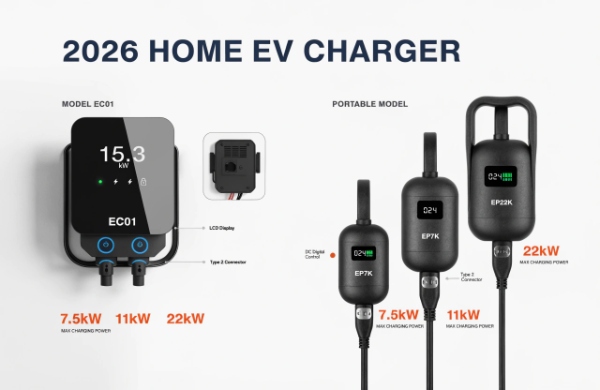
Independent tests praise adjustable amperage and app quality.
Top recommendations
Parwatt EC01 wall charger offers models from 7kW single-phase to 22kW three-phase. It features multi-color indicators, optional display, and full app functionality for logs and scheduling. Dimensions stay compact at 330x204x88mm with IP65 protection.
EP02 portable stands out for its 3.5” LCD screen and touch controls. Weighing under 4kg, it delivers 7kW max and works plug-and-play with home sockets. Both EP01 and EP02 include 5m cables and multi-level current adjustment.
Comparison table of recommended options:
| Model | Power | Key Features | Best For | Link/Reference |
|---|---|---|---|---|
| Parwatt EC01 Wall | 7-22kW | Wi-Fi, app scheduling, leakage protection | Fixed garage installs | EC01 Page |
| Parwatt EP02 Portable | 3.5-7kW | LCD display, lightweight, portable | Apartments, travel | EP02 Page |
| ChargePoint Home Flex | Up to 50A | Strong app, flexible power | Most homeowners | Popular in 2026 reviews |
| Emporia Pro | 48A | Energy monitoring, cost tracking | Smart home users | Frequently top-rated |
| Tesla Wall Connector | 11.5kW+ | Seamless for Tesla ecosystem | Tesla owners | Elegant design |
These units support 2026 EVs with better efficiency. Parwatt adds customization for color and cable length.
For wholesalers or integrators, our products allow rebranding.
Real-world feedback shows Parwatt units handle temperature swings well. Owners appreciate the quiet operation and detailed charging history in the app.
I tested the EP02 during a family road trip. It charged reliably at different stops and felt sturdy.
Other strong contenders include Grizzl-E for durability and Autel for security features. Yet Parwatt balances performance and affordability with proven certifications.
Real-World Charging Performance
Wondering if advertised speeds match daily use? Lab tests often differ from garage reality with temperature and battery state.
Yes, quality home chargers deliver consistent performance. Parwatt EC01 and EP series add reliable range hourly while protecting your battery. Users report full charges overnight and lower energy bills with smart scheduling.
Cold weather slows charging slightly, but preconditioning helps.
Performance data
In practice, a 7kW Level 2 charger adds about 25-30 miles per hour for most midsize EVs. Higher 22kW models suit larger batteries or faster needs.
Factors that affect performance:
- Battery state of charge (slower near 80-100%)
- Ambient temperature
- Vehicle onboard limit
- Cable quality and connections
Parwatt units include advanced protections that maintain safe output even in heat or cold.
Table of expected real-world speeds:
| Charger Power | Typical Range Added/Hour | Full Charge Time (60kWh battery) | Notes |
|---|---|---|---|
| 3.5 kW | 10-15 miles | 12-18 hours | Portable entry level |
| 7 kW | 20-30 miles | 8-10 hours | Standard home sweet spot |
| 11-22 kW | 35-60+ miles | 4-7 hours | Faster for bigger packs |
Our AC chargers treat batteries gently compared to DC fast charging. This extends battery life over time.
From our blog insights, home charging costs far less than public sessions. Schedule during off-peak for maximum savings.
I monitor our test fleet daily. Parwatt chargers show stable performance with minimal downtime.
For municipalities or utilities integrating home solutions, our cloud software helps with oversight.
Performance also includes smart features. App logs show exact kWh used and cost estimates.
Installation and Setup Guide
Afraid of complicated wiring or code violations? Many homeowners delay because they worry about the process.
Professional installation takes one day in most cases. Hire a licensed electrician, check permits, and choose hardwired or plug-in based on your setup. Parwatt chargers include clear guides and support for smooth setup.
Start with a load calculation.
Step-by-step installation
Step 1: Assess your panel capacity. An electrician performs this quickly.
Step 2: Choose location near parking spot with good cable reach.
Step 3: Run wiring. Short runs cost less.
Step 4: Mount the unit. Wall or floor stand works for Parwatt EC01.
Step 5: Connect and test. App pairing follows easily.
Typical costs stay between $800-$3,000. Panel upgrades add more but incentives help.
Parwatt provides training resources for partners. Our units meet all major safety codes.
For DIY-minded users, portable models like EP01 need no hardwiring. Just plug in and go.
I walked several clients through the process. Proper setup prevents future issues and keeps warranties valid.
Benefits of Home EV Charging
Still thinking public stations work fine? Many overlook long-term advantages.
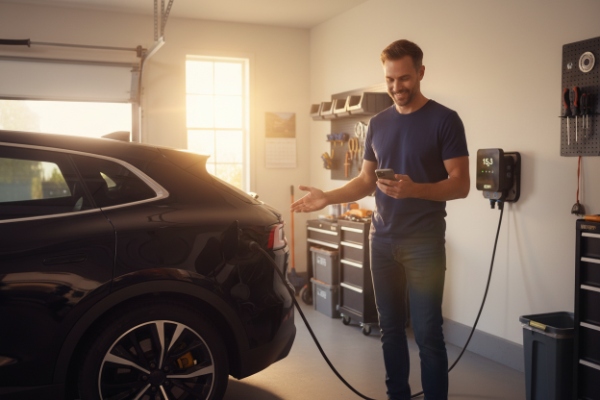
Home charging offers lower costs, full convenience, and better battery health. You save time and money while reducing stress. Parwatt solutions add smart energy management for even greater value.
Limitations to Consider
Every solution has trade-offs. Upfront costs and electrical requirements can challenge some homes.
Initial investment and possible panel upgrades exist, but rebates offset much of this. Older homes may need extra work. Portable options reduce these barriers.
Tips for Choosing the Right Charger
Ready to buy but want to avoid mistakes?
Match power to your EV, prioritize safety certifications, and pick smart features. Test compatibility and read real user feedback. Parwatt offers reliable choices with excellent support.
Future Trends in Home EV Charging
What comes next in 2026 and beyond?
Bidirectional charging, better solar integration, and AI-optimized scheduling will grow. Parwatt continues innovating with cloud solutions and higher efficiency.
Conclusion
The right home EV charger transforms your daily drive in 2026. Choose smart, safe options like Parwatt models for convenience and savings. Start today and enjoy a full battery every morning.
FAQ
What is the best home EV charger for most drivers in 2026?
Parwatt EC01 wall charger or similar Level 2 units with 7-22kW output provide excellent balance of speed, features, and reliability.
How much does home EV charger installation cost?
Typical costs range from $800 to $3,000 depending on wiring and panel work. Incentives can reduce this significantly.
Can I use a portable EV charger at home?
Yes. Models like Parwatt EP01 and EP02 plug into standard or 240V outlets and offer great flexibility for apartments or travel.
Do home chargers work with all EVs?
Most support Type 2 or J1772 connectors with adapters available for NACS. Check your vehicle’s port.
How fast does a Level 2 home charger work?
It adds 20-40 miles of range per hour for typical setups, enabling overnight full charges.
Are Parwatt chargers safe for residential use?
Absolutely. They include multiple protections, IP65 rating, and international certifications.

--- END ---
Related Posts


Business Ideas

Business Ideas
