

How Much Does It Really Cost to Install a Level 2 Home EV Charger in 2026? Complete Breakdown
Jul 01,2026
Imagine you just bought your new EV and now face the reality of home charging costs. Many homeowners feel surprised when the bill adds up beyond the charger price alone.
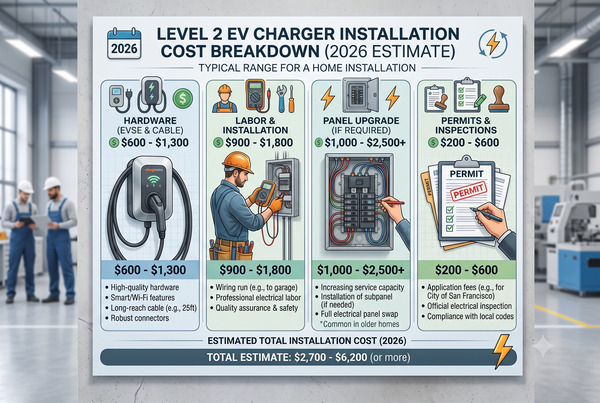
Installing a Level 2 home EV charger in 2026 typically costs between $800 and $3,500 total, including hardware, labor, and possible electrical upgrades. Basic setups stay under $1,500 while panel upgrades push costs higher. Incentives often cut the net price by 30-60%.
As the general manager at XIAMEN PARWATT NEW ENERGY TECHNOLOGY CO.,LTD, I have helped many customers navigate these expenses over the years. I see the same questions come up again and again. In this guide, I break down the real numbers so you can plan smartly and avoid surprises.
Why Most Homeowners Are Shocked by the Real Cost of Installing a Level 2 EV Charger
You think buying the charger solves everything. Then quotes arrive and the total feels much higher than expected.
The shock comes from hidden costs like electrical panel upgrades, permits, and longer wiring runs that many overlook at first. A simple install might stay low, but older homes often need extra work that adds thousands.
I remember one customer in 2025 who budgeted $600 for a charger. His 100-amp panel needed an upgrade, which added $2,800. Stories like this happen often. Let me explain what drives these costs and how you can prepare.
Many homeowners start with excitement about faster charging but hit reality when they learn about full project scope. Level 2 chargers need a 240-volt circuit, similar to a dryer or oven. If your home lacks capacity, expenses grow quickly.
First, consider your existing setup. Homes built before 2000 often have 100-amp or 150-amp panels. Modern EVs pull 30-50 amps for Level 2 charging. This demand forces many owners to upgrade. Panel upgrades alone run $1,500 to $4,000 or more depending on location and labor rates.
Wiring distance matters too. If your garage sits far from the main panel, you pay for conduit, wire, and labor to run new lines. Short runs under 20 feet cost less. Runs over 50 feet or through walls add $500 to $1,500 easily.
Permits and inspections add another layer. Most cities require them for safety. Fees range from $100 to $500. Inspections ensure code compliance and protect your insurance coverage. Skipping them risks problems later.
I always advise clients to get a professional load calculation first. At Parwatt, we recommend this step before buying any charger. It reveals true needs upfront. For example, our EC01 Wall Charger works great in many homes but needs proper circuit support.
Labor rates vary by region. In high-cost areas, electricians charge $100-$200 per hour. A full day job pushes costs higher. Supply chain issues in 2026 still affect some material prices, though they have stabilized.
Here is a quick table of typical surprise costs:
| Cost Factor | Typical Range | Why It Shocks People |
|---|---|---|
| Panel Upgrade | $1,500 – $4,000 | Not included in basic quotes |
| Long Wiring Run | $500 – $1,500 | Garage distance overlooked |
| Permits & Inspection | $100 – $500 | Often forgotten in initial plans |
| Unexpected Materials | $200 – $600 | Conduit, breakers, etc. |
Bullet points for key preparation tips:
- Check your electrical panel capacity now.
- Measure distance from panel to parking spot.
- Contact local utility for incentive info early.
- Get at least three quotes from licensed electricians.
Understanding these factors helps you control the budget. In my experience at Parwatt, informed customers make better choices and enjoy their EV more. We see many fleet operators and homeowners choose smart solutions like load management to avoid big upgrades.
Our EP01 Portable EV Charger offers flexibility for those testing home charging before full install. It reduces initial commitment while delivering reliable Level 2 performance.
Regional differences matter. California homeowners access strong rebates that offset panel work. Other states rely more on federal credits. Always research your area.
Another shock source comes from charger selection. Cheap units may lack safety features or smart capabilities. Investing a bit more upfront in quality models saves money long-term through efficiency and durability.
I have worked with automotive accessory wholesalers who buy in bulk. They face similar cost pressures. Smart planning turns potential shocks into manageable investments.
This section alone highlights why preparation beats reaction. Take time to assess your home. It pays off.
Common Misconceptions About Level 2 Charger Installation Costs
You hear simple numbers online and assume your project matches them exactly.
Many believe the charger price covers everything or that DIY saves the most. In reality, total costs vary widely based on home setup, and professional work ensures safety and compliance.
Over the years, I have corrected these ideas for many customers. Let us clear up the biggest ones.
Misconception one: "The charger itself is the main expense." Hardware usually costs $300 to $800 for good Level 2 units. But installation often doubles or triples that. Our EP02 Portable EV Charger with Display provides clear info at a fair price, yet full setup involves more.
People underestimate electrical work. A modern home with spare capacity might need only $500-$1,000 for circuit addition. Older homes face panel upgrades that change the math completely.
Another myth claims all installs cost the same nationwide. Local labor, codes, and utility rules create big differences. A job in a rural area differs from one in a city with strict permitting.
DIY sounds tempting for budget reasons. Some handle basic tasks, but electrical work carries risks. Mistakes void warranties, fail inspections, or create fire hazards. Professional installation protects your investment. Most experts recommend it for Level 2 systems.
I once advised a real estate developer client. He thought DIY worked for multiple properties. After one issue, he switched to pros and saved time overall.
Load management devices offer another misunderstood area. They cost extra upfront but prevent expensive upgrades. These systems balance power use and integrate with smart home setups.
Here is a comparison table:
| Misconception | Reality | Impact on Cost |
|---|---|---|
| Charger price = total cost | Installation adds major expense | Can double or triple budget |
| DIY is always cheaper | Safety risks and code issues arise | Potential rework costs |
| Incentives cover everything | They reduce but do not eliminate costs | Net savings 30-60% |
| All homes need same work | Depends on panel and wiring | Varies $800-$3,500+ |
Bullet points on avoiding traps:
- Verify electrician licensing and EV experience.
- Ask for detailed quotes breaking down each item.
- Research local rebates before buying.
- Consider smart chargers for future savings.
Our blog on Level 2 vs Level 3 Charging explains differences well. Many read it before deciding on home options.
Misconceptions about ongoing costs exist too. Electricity rates matter, but off-peak charging and smart scheduling keep bills low. Parwatt chargers support these features.
Government programs evolve. The federal 30C tax credit offers up to $1,000 in 2026. State rebates stack in many places. Ignoring them leads to overpaying.
Another point involves future-proofing. Installing now prepares for a second EV. Planning ahead avoids duplicate work later.
I share these insights from real projects at Parwatt. We serve charge point operators, fleet managers, and homeowners. Clear facts help everyone make confident decisions.
This knowledge removes guesswork. You gain control over your project costs and timeline.
2026 Level 2 Home EV Charger Installation Cost Breakdown: What You Actually Pay
You want clear numbers to budget properly.
Hardware runs $300-$800, labor and wiring $500-$1,500, panel upgrades $1,500-$4,000 if needed, and permits $100-$500. After incentives, many pay under $1,500 total for standard installs.
At Parwatt, we provide transparent info so partners plan accurately. Here is the full picture for 2026.
Let us examine each component carefully. Start with the charger unit. Quality Level 2 models like our EC01 offer reliable 7-11kW output with safety certifications. Prices stay competitive due to manufacturing improvements.
Installation labor forms a big part. Certified electricians handle wiring, breaker installation, and testing. Simple jobs take half a day. Complex ones require more time.
Materials include wire, conduit, breakers, and mounting hardware. Quality parts ensure long-term performance and code compliance.
Panel upgrades represent the largest variable. A 200-amp upgrade provides headroom for your EV and future appliances. Costs depend on existing service and local rates.
Permits protect everyone. They confirm safe work. Inspection fees cover final checks.
Incentives change the equation positively. Federal tax credits cover up to 30% or $1,000. Many utilities add rebates for chargers and wiring. Some programs help with panel upgrades directly.
Here is a detailed cost table for 2026:
| Component | Low End Cost | High End Cost | Notes |
|---|---|---|---|
| Charger Hardware | $300 | $800 | Smart models add value |
| Labor & Installation | $500 | $1,500 | Depends on complexity |
| Materials & Wiring | $200 | $600 | Conduit and breakers |
| Panel Upgrade (if needed) | $1,500 | $4,000 | Biggest variable |
| Permits & Inspection | $100 | $500 | Local requirements |
| Total Before Incentives | $800 | $3,500+ | Average around $1,500-$2,500 |
Bullet points for real-world examples:
- Basic attached garage, sufficient panel: $800-$1,200 total.
- Detached garage with moderate run: $1,500-$2,500.
- Full panel upgrade needed: $2,500-$5,000+ before rebates.
Smart chargers add slight upfront cost yet deliver savings. They manage load, schedule charging, and integrate with solar. This avoids grid strain and lowers bills.
Regional variations appear clearly. Coastal areas face higher labor but stronger incentives. Midwest homes often see lower material costs. Always get local quotes.
I recall helping a workplace client install multiple units. Bulk purchasing and proper planning kept costs per charger reasonable. Similar strategies work for homeowners.
Maintenance stays low for good units. Annual checks suffice. This keeps long-term ownership affordable.
Compare to public charging. Home setups pay back quickly through convenience and lower per-kWh costs. Our charge EV faster home vs public guide covers this well.
This breakdown gives you actionable numbers. Use it to discuss options with electricians confidently.
How to Reduce Your Level 2 Charger Installation Costs Without Sacrificing Quality
You want to save money but still get reliable charging.
Choose the right charger, use incentives fully, opt for load management instead of big upgrades, and get multiple quotes. These steps cut costs while maintaining safety and performance.
At Parwatt we focus on practical solutions that deliver value. Here is how to do it smartly.
Start by assessing your home honestly. A professional electrician load calculation costs little but saves a lot by revealing exact needs.
Select chargers with built-in intelligence. Models with app control and scheduling optimize energy use. They reduce demand charges and integrate with home systems. Our portable options let you start small and expand.
Stack incentives aggressively. Apply for federal credits, state rebates, and utility programs. Some cover wiring or panels directly. Timing matters — complete work within eligible periods.
Consider load management devices. These monitor usage and adjust charger output dynamically. They often eliminate panel upgrades entirely. Initial cost pays back fast through avoided expenses.
Shop around for quotes. Three or more from licensed pros reveals fair pricing. Ask about experience with EV installs specifically.
Buy quality but avoid overkill.
Bullet points for immediate actions:
- Schedule a free or low-cost home electrical assessment.
- Research all available rebates in your zip code.
- Prioritize ENERGY STAR or certified smart chargers.
- Bundle with other electrical work if possible.
- Explore financing options through utilities or manufacturers.
Long-term savings come from efficiency. Smart charging during off-peak hours lowers electricity bills significantly. Over years, this adds up.
I have seen fleet operators apply these principles successfully. They scale installations cost-effectively. Homeowners benefit the same way.
Another tip involves location choice. Mounting closer to the panel reduces wiring needs. Creative but code-compliant routing saves money.
Future-proof your setup. Install extra capacity now if budget allows. It prevents higher costs later when adding another vehicle.
Parwatt supports customers with guidance on these choices. Our products meet international standards and offer flexibility for different budgets.
Avoid cutting corners on safety. Certified components and professional work protect your family and property. True savings come from durable solutions.
This approach balances cost and quality. You enjoy reliable charging without regret.
Ready to Install Your Level 2 Home Charger? Here’s Your Next Step
You have the info and feel ready to move forward.
Assess your electrical panel, gather quotes from qualified electricians, apply for incentives, and select a suitable charger. Start today for faster EV enjoyment.
From my position at Parwatt, I encourage proactive steps.
First step: Contact your utility company. Ask about current incentives and load requirements. Many provide free assessments or rebates.
Second: Hire a licensed electrician for evaluation. Share your charger preferences. Discuss Parwatt models if interested.
Third: Compare options. Look at features, warranties, and support. Our team stands ready to answer questions.
Fourth: Apply for permits early. This keeps the project on track.
Fifth: Install and test. Monitor performance and adjust settings for optimal use.
Table of next steps timeline:
| Step | Timeframe | Key Actions |
|---|---|---|
| Assessment | Week 1 | Panel check, quotes |
| Incentives | Weeks 1-2 | Applications |
| Purchase & Permit | Week 2-3 | Order charger |
| Installation | Week 3-4 | Professional work |
| Activation | Week 4 | Test and enjoy |
Bullet points for smooth process:
- Document everything for tax credits.
- Choose OCPP-compliant options for smart features.
- Plan for potential solar integration.
- Join EV owner communities for real experiences.
Our FAQ page addresses common questions. The blog section offers ongoing insights.
I have guided many through this successfully. Proper planning leads to satisfaction.
Conclusion
Installing a Level 2 home EV charger in 2026 is more affordable than many expect, but the total cost depends heavily on your home’s existing electrical setup. While basic installations can start under $1,000, panel upgrades or complex wiring can push the price significantly higher. The good news is that federal and state incentives, along with falling charger prices, continue to improve the economics. Understanding the full cost breakdown upfront helps you budget accurately and avoid surprises. Smart planning turns EV charging from an expensive upgrade into a worthwhile long-term investment. Get multiple quotes and assess your electrical panel before making a decision.
FAQ
How much does a Level 2 EV charger installation really cost in 2026?
Typically $800-$3,500 total depending on home setup and upgrades. Incentives lower net costs.
What factors increase the cost of home EV charger installation?
Panel upgrades, long wiring runs, permits, and regional labor rates.
Do I need an electrical panel upgrade for a Level 2 charger?
Not always, but many older homes do. A load calculation tells you for sure.
How much can government incentives reduce the cost?
Often 30-60% through federal credits and local rebates.
Is it cheaper to install a charger myself?
DIY risks safety and compliance issues. Professionals are recommended.
What is the average payback period for a home Level 2 charger?
Usually 2-4 years through convenience, lower fuel costs, and time savings.
Explore more on our site for full details.

--- END ---
Related Posts


Business Ideas

Industry News
