

Single-Phase vs Three-Phase EV Chargers: Which Should Importers Source?
Nov 04,2026
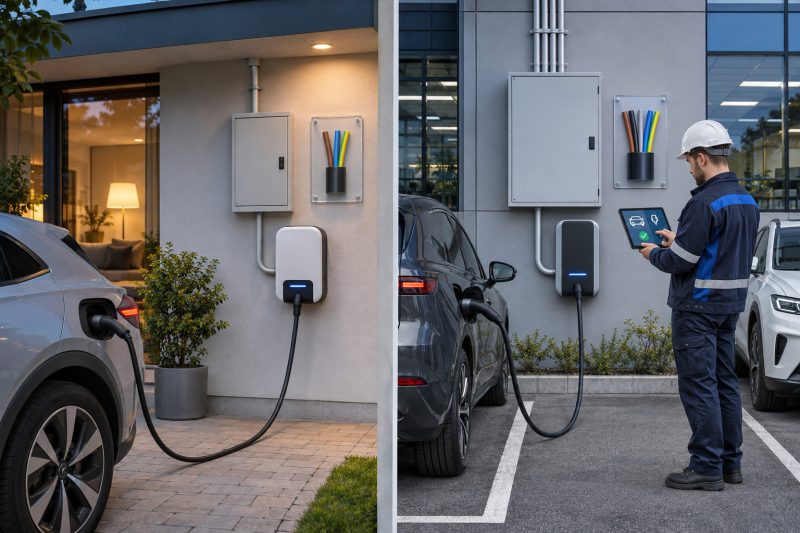
Selecting between single-phase and three-phase EV chargers is not simply a choice between a slower product and a faster one. The correct option depends on the destination market’s electrical infrastructure, the charging capability of local vehicles, customer parking behavior, installation costs and the sales channels that will carry the product.
A charger rated at 22kW does not automatically charge every vehicle at 22kW. Actual AC charging power is limited by the weakest part of the complete charging chain: the building supply, circuit capacity, charger configuration, cable and connector rating, or the vehicle’s onboard charger.
For importers, the objective should therefore be to build a product range around verified local demand. Single-phase chargers often provide the core volume for residential and price-sensitive channels, while three-phase models can serve selected homes, workplaces, hotels, fleets and commercial projects where the infrastructure and vehicles can use the additional power.
Why Charger Power Ratings Alone Can Lead to the Wrong Purchase
Power ratings such as 7kW, 11kW and 22kW are useful for comparing products, but they do not represent guaranteed charging speeds.
The charger controls and communicates the available current, while the vehicle’s onboard charger converts AC electricity into DC electricity for the battery. If an EV can accept only 7.4kW AC, connecting it to an 11kW or 22kW charger will not force the vehicle to charge at the higher rate.
The actual charging power is generally limited by the lowest capability among:
- The property’s electrical supply
- The dedicated charging circuit
- The charger’s configured current
- The charging cable
- The vehicle connector
- The vehicle’s onboard AC charger
- Site load-management settings
- Grid or utility restrictions
This means a 22kW wallbox may deliver approximately 22kW to one vehicle, 11kW to another and around 7kW or less to a third.
Importers should communicate this limitation clearly. Otherwise, distributors and end users may interpret the nameplate rating as a promise of charging speed and later report a correctly functioning product as defective.
Common AC charger configurations
| Comparison item | Single-phase EV charger | Three-phase EV charger |
|---|---|---|
| Common AC power ratings | 3.6/3.7kW and 7/7.2/7.4kW | 11kW and 22kW |
| Typical supply | Approximately 230V single-phase in many markets | Approximately 400V three-phase in many European-style systems |
| Common current configurations | 16A or 32A single-phase | 16A or 32A per phase |
| Main applications | Homes, private parking and small commercial sites | Higher-specification homes, workplaces, hotels, fleets and commercial sites |
| Charging advantage | More widely available installation conditions and usually lower system cost | Higher AC power when the site and vehicle both support three-phase charging |
| Main limitation | Maximum available AC power is normally lower | Requires three-phase supply and compatible vehicle charging capability |
| Installation cost | Often easier to control | May require more complex distribution and protection arrangements |
| Suitable sales channels | Home retail, e-commerce and automotive dealers | Installers, project sales, workplaces, fleets and commercial channels |
| Product-selection priority | Current settings, plug or hardwired input, and load management | 11kW or 22kW output, phase configuration, load balancing and vehicle compatibility |
| Inventory strategy | Suitable as a core volume product | Better stocked selectively according to projects and market demand |
These are common product configurations rather than universal limits. Importers must verify the voltage, frequency, current and installation rules in every destination market.
For a more detailed technical overview, buyers can review this guide to single-phase and three-phase EV charging.
Daily energy demand matters more than the highest rating
For many residential customers, the practical question is not how quickly the vehicle can charge from empty to full. It is whether the charger can replace the energy used during a normal day before the next journey.
A simple initial estimate is:
Required average charging power = energy to be restored ÷ available parking time
If a driver needs to replace 28kWh and the vehicle remains parked for eight hours, the theoretical average requirement is 3.5kW before accounting for losses and operational margins.
A 7kW-class charger may therefore provide more than enough overnight capacity for many households. The detailed calculation will still depend on battery size, starting state of charge, charging losses and the vehicle’s AC limit. Parwatt’s guide to 7kW home EV charger charging time explains how these variables influence a charging session.
The Single-Phase and Three-Phase Sourcing Mistakes Buyers Often Make
Sourcing mistakes usually occur when buyers treat the charger as an isolated product instead of one part of an electrical and vehicle system.
Assuming all homes have three-phase power
Three-phase electricity may be common in commercial buildings and available in some residential markets, but it should not be assumed for every household.
Even in countries where three-phase residential connections are available, the actual target customers may live in:
- Older homes with single-phase service
- Apartment buildings with shared electrical capacity
- Rented properties where major upgrades are impractical
- Homes without dedicated parking
- Areas where three-phase upgrades require utility approval
- Buildings where the charging circuit is intentionally limited
An importer should distinguish national grid standards from the electrical conditions of the actual target customer.
Treating 22kW as automatically better than 7kW or 11kW
A 22kW charger can create value when the site provides three-phase power at the necessary current and the vehicle accepts 22kW AC. If either condition is missing, the extra rating may remain unused.
The commercial comparison should include:
- Hardware price
- Cable and protection requirements
- Distribution-board capacity
- Installation labor
- Utility or grid approval
- Vehicle compatibility
- Customer parking time
- Expected daily energy demand
In many applications, an 11kW three-phase charger provides a better balance between charging speed and infrastructure requirements. A 22kW product is more appropriate when there is confirmed vehicle compatibility or a project requirement. Buyers can compare these configurations in Parwatt’s 11kW vs. 22kW home EV charger guide.
Ignoring the vehicle’s onboard charger
An EV may have a large battery and still have a relatively modest AC charging limit. Battery capacity and AC input power are separate specifications.
Before selecting inventory, importers should examine the local vehicle parc and record:
- Vehicle make and model
- Model year
- Battery capacity
- Single-phase or three-phase AC capability
- Maximum AC charging power
- Connector type
- Optional charging configurations
- Regional specification differences
A vehicle offered with an 11kW onboard charger in one market may use a different charging configuration elsewhere. Supplier claims such as “compatible with all EVs” should not replace vehicle-specific verification.
Approving the enclosure instead of the electrical configuration
A product family may use the same external housing for several configurations. A 7kW single-phase unit and a 22kW three-phase unit may look nearly identical while using different:
- Input wiring
- Terminal arrangements
- Contactors
- Cables
- Current settings
- Internal protection components
- Labels
- Installation instructions
- Test reports
Importers should approve the complete electrical configuration, not only the casing, app or model name.
The quotation, specification, product label, packaging, manual, declaration and certification documents should all identify the same version.
Overlooking cables and connectors
The charger body may support a particular current while the supplied cable or connector has another rating. Buyers should confirm:
- Number and size of conductors
- Current and voltage rating
- Cable length
- Temperature rating
- Outdoor-use specification
- Connector standard
- Tethered or socketed design
- Plug type, where applicable
- Strain relief
- Flexibility in cold conditions
- Replacement-cable availability
The cable assembly must match the charger’s phase and current configuration. It should not be treated as a generic accessory.
Assuming smart functions correct electrical limitations
App control and scheduling can improve the charging experience, but they cannot replace the correct circuit and product configuration.
Similarly, static current adjustment is not the same as dynamic load management. A charger manually limited to 16A remains at that setting. A dynamic system measures available building capacity and adjusts charging power according to other electrical loads.
Importers should verify exactly what “load balancing” means in the supplier’s documentation.
How to Verify Grid, Charger and Vehicle Compatibility
Compatibility should be checked across the complete charging chain before samples or bulk orders are approved.
Step 1: Identify the destination market’s supply conditions
Begin with the residential and commercial electrical systems relevant to the sales channel.
Record:
- Nominal voltage
- Grid frequency
- Single-phase availability
- Three-phase availability
- Common service capacity
- Typical circuit-breaker sizes
- Earthing system
- Utility approval requirements
- Local installation standards
- Permitted plug and socket systems
Do not assume that one “European version” or “North American version” covers every country in the region.
Step 2: Map local vehicles by AC charging capability
A vehicle database should connect every important model with its:
- AC charging phases
- Maximum AC input
- Connector
- Market version
- Model year
- Relevant optional equipment
This exercise reveals whether 11kW and 22kW models will create meaningful additional coverage or simply duplicate the use cases served by the core single-phase range.
Step 3: Verify the charger’s electrical architecture
The importer should request a configuration sheet showing:
- Rated input voltage
- Frequency
- Number of phases
- Maximum current per phase
- Maximum output power
- Adjustable current range
- Wiring arrangement
- Terminal specification
- Integrated protective functions
- Required external protection
- Communication options
- Load-management hardware
The model number should clearly distinguish single-phase and three-phase variants. Relying on a shared commercial name can create receiving, warehousing and installation errors.
Step 4: Review the installation and protection requirements
The charger supplier and local installer should clarify the division between integrated and external protection.
Depending on the market and product design, the installation may require consideration of:
- Circuit breakers
- Residual-current protection
- DC leakage detection
- Surge protection
- Overvoltage and undervoltage protection
- Overcurrent protection
- Overtemperature protection
- Protective earthing
- PEN-fault protection where relevant
- Emergency isolation
- Cable routing and mechanical protection
The exact requirements should be determined by the applicable regulations and a qualified local installer. Marketing phrases such as “multiple protection” are not a substitute for a circuit diagram and technical explanation.
Step 5: Test representative vehicles and supply conditions
A sample test should cover more than powering on the charger. Test the exact product configuration intended for sale.
Useful checks include:
- Correct startup and self-test
- Vehicle recognition
- Charging initiation
- Current negotiation
- Phase behavior
- Adjustable-current settings
- Scheduled charging
- Load-management response
- Controlled charging termination
- Error reporting
- Recovery after power interruption
- App and firmware functions
The test record should identify the vehicle, onboard-charger limit, supply voltage, available current, charger configuration and measured result.
Step 6: Confirm certification scope
A supplier may have a valid report for one member of a product family, but buyers must confirm whether it covers the exact unit being ordered.
| Purchasing check | Question the importer should confirm |
|---|---|
| Local power supply | Do target homes and commercial buildings mainly use single-phase or three-phase power? |
| Voltage and frequency | Does the charger input match the destination grid? |
| Available current | How much continuous current can the site safely allocate to EV charging? |
| Vehicle capability | Do leading EVs support single-phase or three-phase AC, and what is their maximum input? |
| Connector | Does the market require Type 1, Type 2, NACS or another interface? |
| Cable specification | Does the cable support the rated phases, current, voltage and temperature range? |
| Protective devices | Which protections are integrated, and which must be installed externally? |
| Load management | Is dynamic control required to avoid overloading the building supply? |
| Certification | Do reports cover the exact model, phase configuration, current and cable? |
| Installation support | Can the supplier provide diagrams, manuals, settings and troubleshooting support? |
Certificate numbers, ratings and model designations should match across the test report, declaration, product label and packaging.
When Single-Phase or Three-Phase Charging Makes Better Commercial Sense
The correct product depends on the customer’s site, vehicle and charging window. Importers should therefore assign each charger a clear commercial role.
When single-phase charging makes better sense
Single-phase chargers are often suitable for:
- Standard residential installations
- Overnight charging
- Plug-in hybrid vehicles
- Price-sensitive retail channels
- E-commerce sales
- Automotive dealerships
- Small commercial premises
- Drivers with moderate daily mileage
Their main advantages usually include broader residential accessibility, more controlled installation costs and simpler customer communication.
A single-phase range may include:
- Entry-level portable charger
- 3.6kW or 3.7kW option for lower-capacity circuits
- 7kW or 7.4kW wallbox
- Smart wallbox with scheduling
- Wallbox with dynamic load management
- Tethered and socketed versions where local demand supports both
Importers should not assume that portable means low power or that wall-mounted automatically means faster charging. Product format, circuit capacity and vehicle limits must be evaluated separately. Parwatt’s portable vs. wall-mounted EV charger guide provides a useful framework for comparing these installation models.
When three-phase charging makes better sense
Three-phase chargers become commercially attractive when the market contains suitable infrastructure and customer applications.
Typical opportunities include:
- Homes already equipped with three-phase service
- Multi-EV households
- Offices and workplaces
- Hotels and destination charging
- Commercial parking facilities
- Vehicle fleets
- New residential developments
- Installer-led projects
- Customers with compatible 11kW or 22kW vehicles
The commercial value of three-phase charging is not limited to maximum speed. It can also support more balanced use of a three-phase electrical system when the equipment and installation are designed correctly.
However, phase balancing and dynamic power sharing should be examined carefully. Importers should establish whether the system can:
- Monitor whole-building consumption
- Allocate power among several chargers
- Limit total site demand
- Balance phases
- Prioritize selected users or vehicles
- Continue operating if internet communication is lost
- Integrate with solar or energy-management systems
Comparing 7kW, 11kW and 22kW commercial roles
| Charger configuration | Strongest commercial role | Main qualification question |
|---|---|---|
| 3.6/3.7kW single-phase | PHEVs, low daily mileage and limited electrical capacity | Can the user restore enough energy during the available parking time? |
| 7/7.2/7.4kW single-phase | Mainstream home charging and small commercial sites | Does the property have the required dedicated circuit capacity? |
| 11kW three-phase | Three-phase homes, workplaces, hotels and fleets | Do both the property and important local vehicles support three-phase charging? |
| 22kW three-phase | Higher-power AC projects and selected compatible vehicles | Will enough customers use 22kW to justify the additional hardware and installation requirements? |
For importers developing a home-charging portfolio, Parwatt’s overview of home EV chargers and common power configurations can support the separation of entry, mainstream and premium products.
How to Build a Lower-Risk Product Mix for Your Target Market
A lower-risk range begins with the most common installation conditions and adds higher-power configurations only where demand is supported by data.
Establish one core residential platform
For many markets, a 7kW-class single-phase charger can serve as the principal residential product. The core model should have a clear position based on:
- Installation method
- Cable or socket configuration
- Connector
- Adjustable current
- Environmental rating
- App requirement
- Load-management option
- Retail price
Avoid stocking several nearly identical products that compete for the same customer.
Add three-phase models selectively
An 11kW version can be introduced when three-phase residential or commercial supply is sufficiently common and local vehicles can use the power.
A 22kW model should have a more specific purpose, such as:
- Confirmed installer demand
- Commercial project specifications
- Compatible premium vehicles
- Fleet requirements
- Real-estate development projects
- Customers requesting future-ready infrastructure
The product may remain available for project orders without receiving the same warehouse depth as the mainstream single-phase model.
Separate retail and project inventory
Residential retail products and commercial project equipment have different stocking patterns.
Retail inventory normally requires:
- Clear packaging
- Simple product selection
- Defined connector options
- Installation guidance
- Predictable consumer pricing
- Local-language support
Project equipment may require:
- Site assessment
- Configuration approval
- OCPP integration
- Load-management design
- Pedestal or mounting selection
- Backend setup
- Commissioning support
- Spare-parts planning
A project-based 22kW charger should not automatically receive the same opening quantity as a retail 7kW wallbox.
Approve complete saleable samples
The approved sample should include the final:
- Electrical configuration
- Connector
- Cable
- Input arrangement
- Protection functions
- Firmware
- App
- Product label
- Packaging
- Accessories
- Installation manual
- Certification references
If the same enclosure contains several electrical variants, each important version should be sampled and identified separately.
Use a controlled opening range
A practical starting structure may include:
- One portable single-phase charger
- One mainstream 7kW-class wallbox
- One smart single-phase wallbox with load management
- One 11kW three-phase wallbox
- One 22kW model for confirmed commercial or premium demand
- Required cables, holders or mounting accessories
The exact mix should reflect the destination market. In a heavily single-phase residential market, the first three products may receive most of the stock. In a market with established three-phase homes and installer-led sales, the 11kW model may deserve a larger allocation.
Track performance after launch
The second order should not repeat the first allocation automatically. Review:
- Enquiries by power rating
- Sales by model
- Quote conversion
- Installation completion
- Vehicle compatibility questions
- Actual charging power complaints
- App and communication issues
- Load-management demand
- Return reasons
- Warranty cases
- Installer feedback
- Inventory age
- Reorder frequency
A complaint that a 22kW charger delivers only 7kW may not indicate a product defect. It may reveal weak pre-sale education, an incompatible vehicle or an installation limitation. Return data should therefore separate hardware failures from specification misunderstandings.
Supplier approval checklist
Before placing a bulk order, confirm that the supplier can provide:
- Configuration-specific specifications
- Model-specific compliance documents
- Wiring diagrams
- Installation manuals
- Current-setting instructions
- App and platform documentation
- Firmware support
- Remote troubleshooting
- Spare parts
- Warranty procedures
- Installer training
- Change-control notifications
A supplier should notify the importer before changing key components, cables, protection devices, communication modules or firmware that could affect performance or compliance.
Conclusion
Single-phase and three-phase EV chargers serve different markets rather than representing a simple choice between slower and faster products. Single-phase chargers are often the practical core range for residential and price-sensitive channels, while three-phase 11kW and 22kW models can address higher-power residential, workplace, hospitality, fleet and commercial applications.
Before purchasing, importers should verify the local electrical supply, available current, vehicle onboard-charger capability, connector, cable rating, protection requirements and certification scope. A three-phase charger will not deliver its nameplate power when the site or vehicle supports only single-phase charging.
The lowest-risk sourcing strategy is to build the range around verified local demand. Start with products that match the most common residential infrastructure, add 11kW equipment where three-phase supply and vehicle compatibility justify it, and reserve 22kW inventory for confirmed customer or project requirements.
FAQ
1. What is the difference between single-phase and three-phase EV charging?
Single-phase charging uses one AC phase and commonly supports residential configurations such as 3.6kW or approximately 7kW. Three-phase charging uses three AC phases and commonly supports 11kW or 22kW configurations. Actual availability depends on the local electrical system, circuit and installation.
2. Can a three-phase EV charger work with a single-phase vehicle?
In many properly designed systems, a vehicle with a single-phase onboard charger can connect to a three-phase charging point, but it will normally draw power through only one phase and remain limited by its onboard charger. Importers must confirm compatibility for the exact charger, vehicle and connector.
3. Will every EV charge at 22kW from a three-phase charger?
No. Full 22kW AC charging generally requires a suitable three-phase supply, sufficient current, a correctly configured charger and a vehicle with 22kW AC capability. Vehicles limited to 11kW, 7.4kW or another rate will charge at their lower accepted power.
4. Is a 7kW or 11kW charger better for home use?
A 7kW-class single-phase charger is often practical for overnight residential charging. An 11kW charger can be beneficial when the home has three-phase supply, the vehicle accepts 11kW and the user needs the additional charging speed. The better option depends on daily energy demand and installation cost.
5. What should importers verify before sourcing three-phase chargers?
They should verify the destination voltage and frequency, three-phase availability, current per phase, vehicle compatibility, connector, cable rating, protection requirements, load-management functions and certification scope. The manual and product label must also identify the correct three-phase configuration.
6. Should distributors stock both single-phase and three-phase models?
Yes, when the market contains meaningful demand for both. Single-phase products can form the core residential range, while 11kW and 22kW three-phase products can be stocked selectively for compatible homes, installers, workplaces, hotels, fleets and commercial projects.

--- END ---
Related Posts
Business Ideas

Level 1 vs Level 2 EV Charging: What Buyers Should Check Before Ordering
November 20, 2026
Industry News

Company News

Company News


