

Is It Safe to Leave a Car Battery Charger Connected Overnight?
Apr 09,2026
Many people worry about fire risks or battery damage when they leave their charger plugged in overnight. I get those concerns because I have seen bad outcomes from old chargers in my years at Parwatt.
Yes, it is safe to leave a car battery charger connected overnight if you use a modern smart charger with automatic shut-off and overcharge protection. These chargers switch to a safe trickle mode once the battery reaches full charge and prevent damage or hazards.
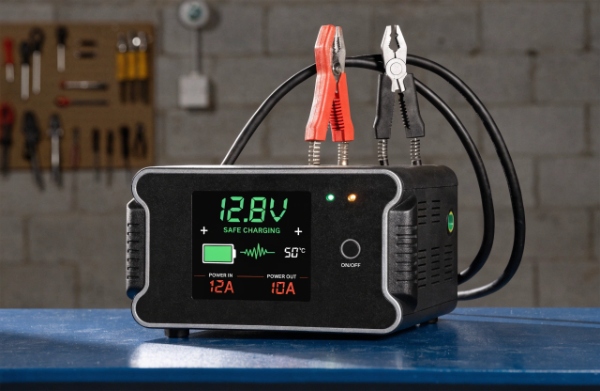
I remember when I first joined the team at XIAMEN PARWATT NEW ENERGY TECHNOLOGY CO.,LTD. A fleet operator called us after an old manual charger left on too long ruined several batteries. That experience taught me how important the right technology is for safety.
The Real Risks of Leaving Your Car Battery Charger Plugged in Overnight
Do you fear that leaving your charger on all night could start a fire or destroy your battery?
Old or cheap chargers without smart features can overcharge the battery, cause gassing, reduce battery life, or even create fire hazards. Modern chargers avoid these problems with built-in protections.
I have worked with many Charge Point Operators and Fleet Operators who faced downtime because of damaged batteries. One client in North America told me how a basic charger boiled the electrolyte in a lead-acid battery after just one night. The result was a swollen case and a complete failure.
Here is what happens with non-smart chargers:
- They keep pushing current even after the battery is full.
- This leads to excessive heat and hydrogen gas buildup.
- In closed spaces, the gas can become explosive.
- Plates inside the battery warp over time.
Lithium batteries in newer vehicles need special care too. The wrong charger can cause serious issues because lithium cells react differently to voltage.
Signs of trouble include:
- The battery feels hot to the touch.
- You smell a strong sulfur odor.
- The case starts to swell.
If you see any of these, stop charging right away and check the setup. At Parwatt, we design our chargers to stop these risks before they start. Our DC series models include multiple layers of protection to keep operations smooth for Automotive OEMs and Real Estate Developers who install chargers in busy locations.
I always tell our partners in the Automotive Accessory Wholesalers segment to educate end users on these risks. It saves everyone time and money in the long run.
Let me share a quick story. Last year, a Retail & Hospitality Chain client installed chargers in their parking lots. They used basic units at first and faced complaints about slow performance and occasional overheating. After switching to our smart solutions, the issues disappeared. Their tenants stayed happy and the system ran without downtime.
To make this clearer, here is a simple comparison table:
| Risk Factor | Old Manual Charger | Modern Smart Charger (like Parwatt DC Series) |
|---|---|---|
| Overcharge Protection | None | Automatic shut-off and float mode |
| Temperature Monitoring | No | Yes, with shutdown if too hot |
| Gas Buildup Risk | High in enclosed areas | Very low due to controlled charging |
| Battery Lifespan Impact | Shortens life significantly | Extends life by 2-3 years |
| Suitable for Overnight | Not recommended | Designed for safe use |
This table shows why so many Government & Municipalities and Energy Utilities now prefer smart options for their projects. They need reliable performance without constant checks.
For more details on general charging safety, check our Car Battery Charger Guide.
How Modern Smart Chargers vs Old Chargers Behave When Left Overnight
Are you confused about why some chargers seem fine overnight while others cause problems?
Modern smart chargers use multi-stage charging and automatically switch to maintenance mode after the battery is full. Old chargers keep charging at full power and risk overcharging.
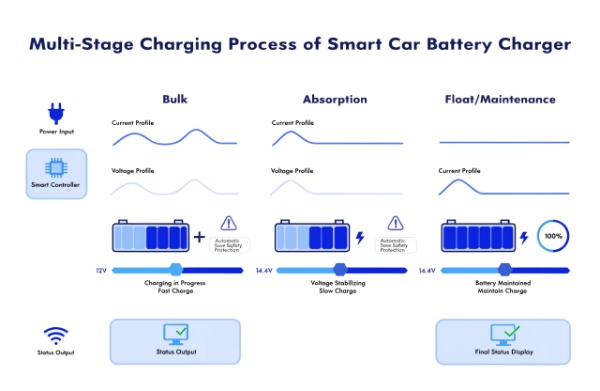
I test many units in our lab here at Parwatt. The difference is clear from the first charge cycle.
Old chargers work with simple transformers. They deliver constant current until you unplug them. Leave one on overnight and the battery can receive too much energy after it reaches 100%. This creates heat and shortens life.
Smart chargers like our DC10, DC80, and DC200 Plus do things differently. They follow these stages:
- Bulk stage for fast initial charge.
- Absorption stage to bring the battery close to full.
- Float or maintenance stage to keep it topped up safely.
- Desulfation and repair modes to restore health.
Our DC10 model is compact and perfect for everyday vehicles. It has 7-stage smart charging and 8-layer protection including over-temperature shutdown. Customers in the EV Resellers segment love how it fits in tight spaces while still delivering safe overnight maintenance.
The DC80 adds jump-start capability up to 80A peak. It includes 9 safety layers and works great for light trucks and SUVs. Fleet Operators tell me they leave it connected on vehicles that sit for days and never worry about damage.
For heavier needs, the DC200 Plus offers automatic temperature compensation. This feature adjusts voltage based on weather, which is crucial in places like California where temperatures swing a lot.
Here is a bullet list of key behavior differences:
- Current Control: Smart chargers reduce current as the battery fills. Old ones do not.
- Voltage Regulation: Smart models keep stable output. Manual ones can spike.
- Auto Detection: They identify battery type (lead-acid, AGM, GEL, LiFePO4) and adjust accordingly.
- Display Feedback: LCD screens show real-time status so you know exactly what is happening.
- Repair Functions: Many include desulfation to fix mild sulfation without extra tools.
I once helped an Workplace & Corporate Client who had mixed old and new chargers. Their maintenance team spent hours checking units every morning. After we supplied smart models, they cut that time in half and reported zero battery failures in six months.
You can read more about choosing the right unit in our blog post on the ultimate guide to portable air pumps, but the same principles apply to chargers — smart technology wins every time.
For technical specs on our popular models, visit the DC10 Car Battery Charger page or the DC80 Car Battery Charger details.
Safe Overnight Charging Guidelines: When It’s Okay and When It’s Not
Do you want clear rules to decide if overnight charging is safe for your setup?
It is okay with smart chargers that have automatic shut-off and temperature sensors, especially for maintenance on vehicles that sit unused. It is not okay with old manual chargers or if you notice heat or unusual smells.
I always give our B2B partners simple guidelines they can share with their teams. These rules come from real-world testing and feedback from clients across North America, Europe, and Asia-Pacific.
First, check your charger type. If it has an LCD display and mentions multi-stage or smart charging, it is likely safe. Our Parwatt units all include these features.
Next, match the charger to your battery. Use the correct mode for lead-acid, AGM, or lithium. Wrong settings can cause damage even with smart units.
Then, prepare the area. Charge in a well-ventilated space. Keep away from flammable materials. Wear safety glasses as a good habit.
Monitor the first few times. Watch for normal warmth but stop if the battery gets hot or you smell gas.
For long-term storage, smart maintainers are perfect. They keep the battery at 100% without overcharging. This works well for seasonal vehicles or fleet cars that sit between shifts.
Here is a practical checklist in table form:
| Situation | Safe Overnight? | Recommended Action |
|---|---|---|
| Daily driver with smart charger | Yes | Plug in once a week for maintenance |
| Old manual charger | No | Charge only under supervision and unplug when full |
| Vehicle in storage for weeks | Yes with maintainer | Use float mode on Parwatt DC series |
| Lithium battery | Yes with proper charger | Confirm lithium mode and BMS compatibility |
| Enclosed garage with poor ventilation | Caution | Improve airflow or move to open area |
These guidelines help Real Estate Developers and Retail Chains avoid tenant complaints and keep operations smooth.
One Automotive OEM partner integrated our modules into their service kits. They now train dealers on these exact rules and see fewer warranty claims on batteries.
If you want deeper info on charging types, see our article Level 2 vs Level 3 Charging, even though it focuses on EV, the safety principles overlap.
Best Practices and Smart Charger Features That Make Overnight Charging Safer
What steps can you take to charge overnight without any worry?
Use chargers with multi-stage charging, automatic shut-off, temperature monitoring, and spark-proof clamps. Follow proper connection order and check the battery regularly at first.
At Parwatt, we build these features into every unit because we know how much downtime costs our clients in the Fleet Operators and Energy Utilities sectors.
Best practice number one: Always turn the charger off before connecting clamps. Connect positive first, then ground. Reverse the order when you finish.
Practice number two: Choose units with IP54 or better rating for dust and splash protection. Our models handle garage conditions well.
Feature that makes the biggest difference: Automatic temperature compensation. It adjusts voltage in hot or cold weather so the battery charges safely year-round.
Another key feature is the repair or desulfation mode. It gently breaks down sulfate crystals and can recover capacity in older batteries. I have seen this save clients thousands in replacement costs.
Spark-proof technology prevents arcs when you connect in fuel-rich environments. This is crucial for workshops and logistics yards.
Let me break down the top safety features in our line:
- Reverse polarity protection – stops damage from wrong connections.
- Over-current and over-voltage cutoff – prevents spikes.
- Over-temperature shutdown – turns off if things get too hot.
- Low-voltage recovery – handles deeply discharged batteries safely.
- Real-time LCD display – shows voltage, current, and progress.
For Corporate Clients offering employee charging, these features align perfectly with brand safety standards.
I like to share this personal note. Early in my role as General Manager, we had a pilot project with a Middle East wholesaler. They tested our DC200 Plus in desert heat. The temperature compensation worked exactly as designed and the units ran flawlessly overnight for months. That feedback helped us refine the line for global markets.
You can explore the full details on our DC200 Plus Car Battery Charger page.
Another useful read is our post on how to choose a vacuum cleaner for a car, but remember, the same attention to quality and features applies when selecting any automotive accessory.
How to Choose a Safe Car Battery Charger for Overnight Use in 2026
Are you ready to pick a charger that gives you peace of mind for overnight use?
Look for smart chargers with at least 7-stage charging, multiple safety protections, temperature compensation, and clear display. In 2026, prioritize units certified for your region and compatible with your battery type.
The market has many options, but not all deliver real safety. I recommend focusing on proven brands like Parwatt that serve professional B2B users.
Key things to check in 2026:
- Number of charging stages (more stages mean gentler treatment).
- Safety layer count (aim for 8 or more).
- Compatibility list (lead-acid, AGM, GEL, lithium).
- Display quality and error alerts.
- Warranty length and local support.
Our DC series stands out because we design for bulk orders and long-term reliability. Automotive Accessory Wholesalers appreciate the consistent quality across SKUs.
For EV Resellers who want white-label options, we offer customization while keeping all the core safety features.
Here is a decision table to help you choose:
| Feature Needed | Why It Matters | Parwatt Recommendation |
|---|---|---|
| Automatic Shut-off | Prevents overcharging | All DC models |
| Temperature Compensation | Safe in extreme weather | DC200 Plus and above |
| Multi-stage + Repair Mode | Extends battery life | DC10, DC80, DC200 Plus |
| LCD Real-time Display | Easy monitoring | Standard on all smart units |
| IP Rating for Durability | Handles garage conditions | IP54 on DC series |
Many clients in the USA and Western Europe now require these features for their tenders. We help Government & Municipalities meet compliance needs with certified products.
If you operate a large fleet, our heavy-duty options reduce maintenance costs and keep vehicles on the road.
To see the full range, visit our main car battery charger category.
Conclusion
Leaving a car battery charger connected overnight is not inherently dangerous if you use a modern smart charger with proper safety features. However, using an old or low-quality charger can lead to overcharging, battery damage, or even fire hazards. The key is understanding your charger type, following basic safety precautions, and investing in a reliable smart charger with automatic shut-off and temperature monitoring. When in doubt, it’s always safer to unplug once the battery reaches full charge. Making the right choice protects both your battery and your vehicle.
Ready to find compatible EV chargers for your project?
Protect your battery and vehicle – choose the right charger today.
Request Free Charger Safety Checklist
Chat with Our Automotive Expert on WhatsApp
FAQ
Is it safe to leave a car battery charger plugged in overnight?
Yes, with modern smart chargers that have automatic shut-off. Avoid old manual units.
What happens if you leave a charger on too long?
It can overcharge the battery, cause heat buildup, gassing, and reduce lifespan.
What’s the difference between smart chargers and regular chargers for overnight use?
Smart chargers switch to float mode and protect the battery. Regular ones keep charging and risk damage.
Can leaving a charger plugged in damage my car battery?
Yes, if it is a non-smart model. Smart chargers prevent this with proper controls.
How long should I charge my car battery safely?
Follow the charger’s smart stages. Unplug after full charge unless using a dedicated maintainer.
What features should I look for in a safe car battery charger?
Multi-stage charging, temperature monitoring, overcharge protection, and clear status display.

--- END ---
Related Posts


Business Ideas

Industry News
